When Michael Phelps stepped onto the starting blocks at the 2016 Rio Olympics, the world noticed something unusual: the most decorated Olympian in history was covered in circular purple bruises. The marks, scattered across his shoulders and back, were the telltale signs of cupping therapy — an ancient healing practice that had suddenly become the hottest topic in sports medicine. Overnight, millions of people who had never heard of cupping were searching the internet to understand why the world's greatest swimmer looked like he had been attacked by a giant octopus.
The irony is that cupping therapy is not new. It is one of the oldest medical treatments in continuous use anywhere in the world, with a history stretching back at least two thousand years. From the Taoist alchemist Ge Hong in the fourth century to the training rooms of modern Olympic athletes, cupping has been used to treat pain, improve circulation, and promote healing. What Phelps and other athletes discovered is what Chinese practitioners have known for millennia: that the simple application of suction to the skin can produce remarkable therapeutic effects.
Ancient Origins: The Ge Hong Tradition
The earliest detailed description of cupping therapy in China comes from the Daoist scholar and physician Ge Hong, who lived during the Eastern Jin Dynasty. In his medical text A Handbook of Prescriptions for Emergencies, written around 340 CE, Ge Hong described using hollowed animal horns to create suction on the skin for the treatment of various ailments. This technique, known as jiaofa or "horn method," is the direct ancestor of modern cupping therapy.
Ge Hong's cupping technique was ingeniously simple. A hollow animal horn was placed against the skin, and the practitioner would suck air out through a small hole at the tip, then seal the hole with a plug. The resulting vacuum would pull the skin upward into the horn, creating suction that was believed to draw out pathogenic factors from the body. The technique was used to treat a variety of conditions, from joint pain and muscle stiffness to respiratory problems and digestive disorders.
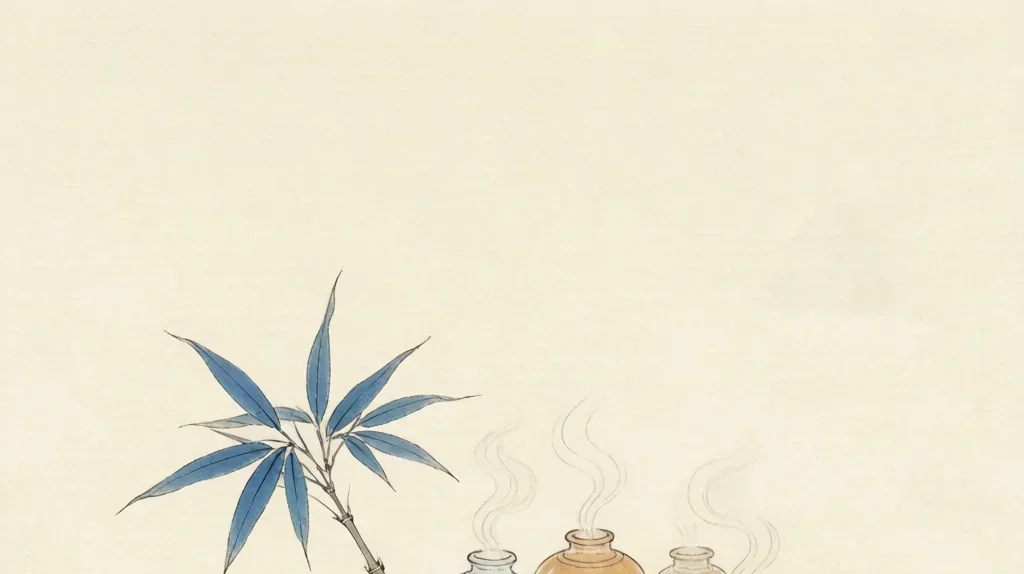
Over the centuries, the basic technique evolved. Bamboo cups replaced animal horns, providing a more consistent and hygienic vessel. The method of creating suction also improved — practitioners discovered that briefly heating the cup with a flame before applying it to the skin created a stronger vacuum, a technique known as fire cupping that is still widely used today. By the Tang Dynasty, cupping had become an established part of the Chinese medical repertoire, discussed in the great medical encyclopedias of the period.
How Cupping Works: The TCM Perspective
In Traditional Chinese Medicine, cupping is understood through the framework of qi — the vital energy that flows through the body along channels called meridians. According to TCM theory, illness occurs when the flow of qi is blocked or stagnant. Cupping therapy works by creating suction that opens the pores, stimulates the flow of qi and blood, and draws out pathogenic factors — described in TCM terms as "wind," "cold," "dampness," or "heat" — that have accumulated in the body.
The characteristic marks left by cupping — those circular bruises that attracted so much attention in Rio — are considered by TCM practitioners to be diagnostic as well as therapeutic. Darker marks indicate greater stagnation of qi and blood in the area, while lighter marks suggest less severe blockage. The marks typically fade within a few days to a week, and their gradual disappearance is seen as a sign that the body is processing and eliminating the pathogenic factors that were drawn to the surface.
TCM theory identifies several specific therapeutic effects of cupping. It is said to warm the channels and dispel cold, promote the free flow of qi and blood, reduce swelling and pain, and support the body's natural healing processes. Different types of cupping are used for different conditions: stationary cupping, where cups are left in place for several minutes; moving cupping, where lubricated cups are slid across the skin; and flash cupping, where cups are repeatedly applied and removed in quick succession.
Types of Cupping: Fire, Suction, and Wet Cupping
Modern cupping therapy encompasses several distinct techniques, each with its own characteristics and applications. The most dramatic — and the one most closely associated with traditional Chinese practice — is fire cupping. In this method, a cotton ball is soaked in alcohol, ignited, and briefly inserted into a glass cup to heat the air inside. The flame is removed, and the cup is quickly placed against the skin. As the air inside the cup cools, it contracts, creating a strong vacuum that pulls the skin upward into the cup.
For those who prefer not to have fire near their skin, modern suction cupping offers a convenient alternative. These cups are made of plastic or silicone and use a hand pump or a simple squeeze mechanism to create vacuum. Suction cupping is particularly popular for home use and for facial cupping, where the gentler, more controlled suction is preferred. The silicone cups can also be used for moving cupping, gliding across the skin with the help of massage oil.
A more intensive form of cupping is wet cupping, also known as hijama in Islamic medical traditions. In this procedure, small incisions are made in the skin before the cups are applied, allowing a small amount of blood to be drawn out along with the suction. Wet cupping is considered more powerful for removing toxins and stagnant blood, but it requires greater skill and carries more risks than dry cupping. It is less commonly practiced than dry cupping but remains an important technique in both Chinese and Islamic traditional medicine.
The Phelps Effect: Cupping Goes Global
The global visibility of cupping therapy exploded in 2016, but athletes had been using it for years before Michael Phelps made it famous. Chinese athletes had long incorporated cupping into their training and recovery routines. Swimmers, gymnasts, and track and field athletes found that cupping helped relieve muscle soreness, speed recovery from intense training, and address nagging injuries that conventional treatments had failed to resolve.
What made the Phelps moment so significant was that it brought cupping into the mainstream of Western sports medicine. When the world's greatest Olympian — an athlete with access to the most advanced sports science and medical care available — chose an ancient Chinese therapy, it forced a reconsideration of traditional healing practices. If cupping was good enough for Michael Phelps, the reasoning went, perhaps there was something to it after all.
In the years since Rio, cupping has maintained a significant presence in sports medicine. It is now a standard offering at many physical therapy clinics, sports medicine centers, and even some conventional medical practices. While the scientific evidence for cupping's effectiveness remains a subject of debate — with some studies showing benefits for pain relief and others calling for more rigorous research — the anecdotal evidence from elite athletes continues to drive interest in the therapy.
Cupping in the Modern Wellness Landscape
Beyond elite sports, cupping has found a place in the broader wellness and self-care movement. Spas and wellness centers offer cupping alongside massage, acupuncture, and other complementary therapies. Celebrities post photos of their cupping marks on social media. Wellness influencers extol the benefits of facial cupping for skin health and anti-aging. The ancient therapy has been thoroughly absorbed into the modern wellness culture.
Facial cupping deserves special mention as a distinct modern application. Using very small cups with gentle suction, facial cupping is promoted as a natural way to improve circulation to the skin, reduce fine lines and wrinkles, and promote a healthy glow. Unlike body cupping, facial cupping typically does not leave marks, as the cups are kept moving and the suction is much lighter. This gentler form of cupping has introduced the therapy to a new demographic — people interested in natural beauty treatments rather than pain relief.
The integration of cupping into modern wellness has not been without controversy. Critics argue that the therapy is being marketed with exaggerated claims and insufficient evidence. The characteristic bruises have led to misunderstandings — some people have mistaken cupping marks for signs of abuse, leading to awkward conversations and occasional investigations. And the commercialization of cupping, with expensive spa treatments and celebrity endorsements, has raised questions about cultural appropriation and the commodification of traditional healing practices.
The Science and the Skepticism
The scientific status of cupping therapy is complex and contested. Proponents point to a growing body of research suggesting that cupping can be effective for certain conditions, particularly chronic pain. A 2018 meta-analysis published in the journal BMJ Open found that cupping therapy showed statistically significant benefits for pain reduction compared to no treatment, though the quality of evidence was rated as low to moderate. Other studies have suggested mechanisms by which cupping might work: increasing local blood flow, stimulating the immune system, and triggering the release of endorphins and other natural pain-relieving compounds.
Skeptics, however, point to the lack of high-quality randomized controlled trials and the difficulty of designing placebo controls for a therapy that leaves visible marks. They note that many of the claimed benefits of cupping could be explained by placebo effects, the natural course of healing, or the concurrent use of other therapies. The scientific debate over cupping reflects broader tensions between evidence-based medicine and traditional healing systems, and it is unlikely to be resolved soon.
For the millions of people who continue to use cupping therapy — whether Olympic athletes seeking a competitive edge or ordinary people seeking relief from chronic pain — the theoretical debates are less important than practical results. The ancient therapy endures because, for many who try it, it works. In the end, cupping may be like many traditional healing practices: a therapy whose mechanisms are not fully understood by modern science, but whose benefits are real enough to those who experience them.
Cupping Across Cultures
Cupping is not unique to China. Similar suction therapies appear in the medical writings of ancient Egypt and Greece, and the Islamic tradition of hijama, wet cupping, remains widely practiced from North Africa to Southeast Asia. These parallel traditions arose from a shared intuition that drawing blood or fluid toward the skin could relieve internal distress. What differs is the framing: Chinese cupping sits inside a theory of qi, blood, and meridians, while hijama is often understood through humoral or prophetic-medicine teachings. The overlap shows that suction as therapy is a near-universal human response to pain and stagnation. Today the traditions meet again in global wellness clinics, where clients may receive Chinese-style dry cupping and Islamic wet cupping under one roof, evidence of a remedy that crossed civilizations long before the modern spa did.
Choosing a Practitioner and Staying Safe
As cupping has spread, so has the need for care in choosing who performs it. A trained practitioner knows which areas to avoid, such as over bones, large vessels, or broken skin, and understands how long cups should stay in place. Hygiene matters most for wet cupping, where the skin is broken and sterile tools are essential. Clients should also be candid about conditions like pregnancy, blood disorders, or skin disease, since cupping is not suitable for everyone. The marks, though dramatic, are superficial in routine dry cupping and should not conceal injury. The safest approach is to treat cupping as a complementary therapy used alongside, not in place of, medical care, and to view any practitioner who promises cures with healthy skepticism.
❓ Frequently Asked Questions
📝 Chinese Vocabulary
- 拔罐 (báguàn) — Cupping therapy; literally "pulling the cup"
- 气 (qì) — Vital energy; the fundamental concept in TCM that cupping aims to balance
- 火罐 (huǒguàn) — Fire cupping; the traditional method using flame to create suction
- 经络 (jīngluò) — Meridians; the channels through which qi flows in the body
- 活血化瘀 (huó xuè huà yū) — To invigorate blood and resolve stasis; the therapeutic goal of cupping
🎉 Fun Facts
- Cupping therapy is one of the oldest medical treatments still in use, with evidence of similar practices found in ancient Egyptian, Greek, and Chinese civilizations dating back over 3,000 years.
- The circular purple marks left by cupping are not actually bruises — they are caused by the suction pulling blood to the surface of the skin and typically fade within a few days.
- After Michael Phelps appeared at the 2016 Olympics with cupping marks, Google searches for "cupping therapy" increased by over 5,000%, introducing the ancient practice to a global audience overnight.
- In the Tang dynasty, cupping was described in major medical encyclopedias and was already a standard therapy taught to imperial physicians.
- Athletes in sports like gymnastics and track and field adopted cupping years before the 2016 Olympics, using it quietly for recovery between competitions.
- Traditional cups were made of bamboo or horn before glass became standard, and some practitioners still prefer bamboo for moving cupping because it is lighter.