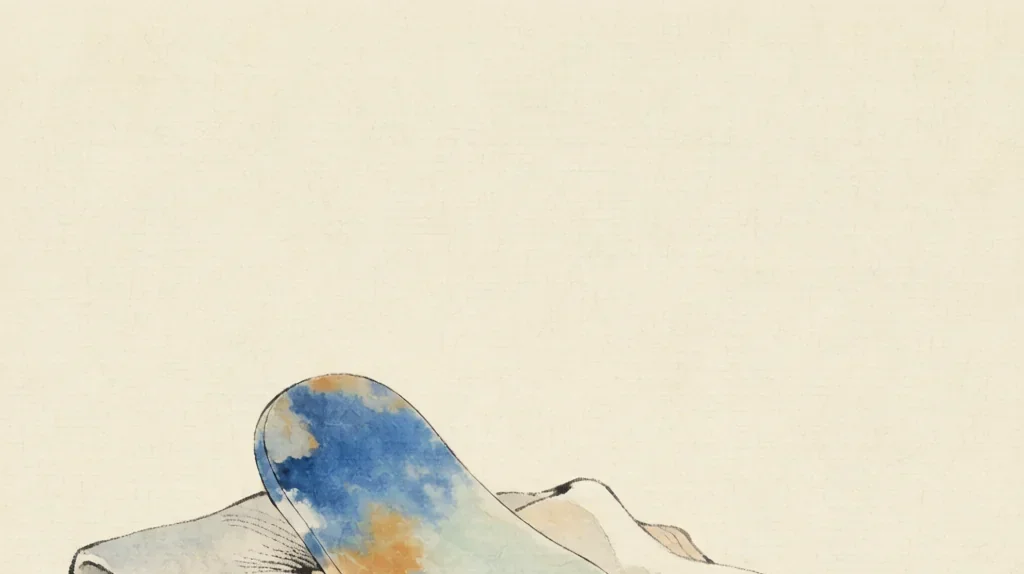
If you have spent any time on social media in recent years, you have likely encountered gua sha. Influencers glide smooth jade stones across their faces in elegant strokes, promising lifted cheekbones, reduced puffiness, and a radiant glow. The hashtag #guasha has billions of views on TikTok. Beauty brands sell rose quartz and jade gua sha tools alongside their serums and moisturizers. The ancient Chinese healing practice has been reborn as a global beauty trend.
But the gua sha that grandmothers across China have practiced for generations looks very different from the gentle facial massage trending on Instagram. Traditional gua sha is an intense therapeutic technique in which a smooth-edged tool is scraped firmly across the skin, creating red or purple marks called sha. The treatment can be uncomfortable, even painful, and the results — those dramatic red streaks — can be startling to the uninitiated. To understand gua sha is to understand both its traditional medical roots and its modern transformation into a beauty ritual that has captivated the world.
What Is Gua Sha?
The term gua sha combines two Chinese words: gua, meaning to scrape or rub, and sha, which refers to the reddish raised spots that appear on the skin during treatment. In Traditional Chinese Medicine, sha is understood as stagnant blood and qi that has been brought to the surface — visible evidence that pathogenic factors are being released from the body. The appearance of sha is not a side effect of treatment; it is the treatment itself.
A gua sha session typically begins with the application of oil or balm to lubricate the skin. The practitioner then uses a smooth-edged tool — traditionally made of jade, ox horn, or buffalo horn — to apply firm, repeated strokes along the skin in one direction. The strokes follow the body's meridians, the energy channels mapped by TCM theory. As the scraping continues, small red dots appear, which may develop into larger patches of purple or red discoloration. These marks, the sha, indicate that stagnant blood and qi have been mobilized.
The treatment is typically applied to the back, neck, and shoulders — areas where tension and stagnation commonly accumulate. It can also be applied to the chest for respiratory conditions, to the limbs for joint pain, and to the abdomen for digestive issues. The intensity of the scraping is adjusted according to the patient's condition and tolerance. A session usually lasts ten to twenty minutes, and the sha marks typically fade within two to five days.
The TCM Theory Behind Gua Sha
In Traditional Chinese Medicine, gua sha is understood to work by several interconnected mechanisms. The most fundamental is the concept of qi and blood stagnation. According to TCM theory, pain and illness arise when the flow of qi and blood through the body's meridians is obstructed. This obstruction can be caused by external factors (wind, cold, dampness, heat) or internal factors (emotional stress, poor diet, overwork). Gua sha works by physically stimulating the skin and underlying tissues, breaking up stagnation and restoring the free flow of qi and blood.
The scraping action is also believed to release sha — pathogenic factors that have accumulated in the body. By bringing these factors to the surface, gua sha allows the body to eliminate them. The appearance of sha marks is therefore seen as a positive sign — the more sha appears, the more stagnation was present and the more has been released. Patients often report feeling immediate relief after treatment, describing a sensation of lightness, warmth, and relaxation in the treated areas.
Modern research has suggested several physiological mechanisms that might explain gua sha's effects. Studies have found that gua sha increases blood flow to the treated area, reduces inflammation, and stimulates the immune system. The scraping action may trigger the release of endorphins and other natural pain-relieving compounds. Some researchers have proposed that gua sha works through the same mechanisms as other forms of mechanical stimulation, such as massage and foam rolling. While the scientific evidence is still developing, the combination of traditional knowledge and modern research suggests that gua sha has genuine therapeutic value.
A Brief History of Gua Sha
Gua sha is an ancient practice, though its exact origins are difficult to trace. The earliest written references to scraping therapy appear in medical texts from the Ming Dynasty, but the practice is almost certainly older. In traditional Chinese society, gua sha was a folk medicine practiced at home — mothers would scrape their children's backs to treat fever, grandmothers would scrape each other's shoulders to relieve pain, and the technique was passed down through generations without ever being recorded in formal medical literature.
The tools used for gua sha varied according to what was available. In rural areas, people used coins, soup spoons, or pieces of smooth stone. More affluent families used specially crafted tools of jade or horn. The choice of tool was partly practical — the edge needed to be smooth enough not to cut the skin — and partly symbolic, with different materials believed to have different therapeutic properties.
Gua sha remained a folk practice until the twentieth century, when it began to be incorporated into formal TCM education and practice. Today, gua sha is taught in TCM schools and practiced in clinics alongside acupuncture, cupping, and herbal medicine. It is used to treat a wide range of conditions, including chronic pain, respiratory infections, digestive disorders, and stress-related conditions.
Gua Sha vs. Cupping: Complementary Therapies
Gua sha is often mentioned alongside cupping therapy, and the two practices share many similarities. Both are based on TCM theory. Both aim to release stagnation and promote the flow of qi and blood. Both leave distinctive marks on the skin. And both have been embraced by athletes and wellness enthusiasts around the world. But there are important differences between the two therapies.
Cupping uses suction to pull the skin and underlying tissues upward, creating a negative pressure that draws blood to the surface. Gua sha uses scraping to apply pressure and friction along the skin's surface. Cupping is typically applied to specific points and left in place for several minutes. Gua sha involves repeated strokes over a larger area. The marks left by cupping are circular; the marks left by gua sha are streaks or patches that follow the direction of the scraping.
In clinical practice, gua sha and cupping are often used together, each complementing the other. Cupping may be used first to create suction and loosen deep-seated tension, followed by gua sha to mobilize the released stagnation along the meridians. The combination can be more effective than either therapy alone, particularly for conditions involving significant qi and blood stagnation.
Facial Gua Sha: The Beauty Revolution
The gua sha that has conquered social media is a far cry from the intense body treatment described above. Facial gua sha uses much gentler pressure, no marks are produced, and the focus is on beauty and relaxation rather than therapeutic intervention. The tools are smaller and often more ornate — carved from rose quartz, jade, or amethyst, shaped to fit the contours of the face. The technique is more delicate, with light, upward strokes designed to lift and sculpt rather than to release deep stagnation.
Facial gua sha is not entirely a modern invention. Gentle facial scraping has been practiced in China for centuries as part of beauty and skincare routines. But the global explosion of interest in facial gua sha is a recent phenomenon, driven by social media, celebrity endorsements, and the broader wellness and self-care movement. The practice appeals to a generation interested in natural beauty treatments and holistic self-care rituals.
Proponents of facial gua sha claim a range of benefits: improved circulation and lymphatic drainage, reduced puffiness and inflammation, relaxation of facial muscles, and a temporary lifting and sculpting effect. While the dramatic before-and-after photos circulating on social media should be viewed with skepticism — the effects of facial gua sha are temporary and subtle — there is genuine anatomical logic to the practice. The gentle massage stimulates blood flow, encourages lymphatic drainage, and relaxes tense facial muscles, all of which can contribute to a healthier, more radiant appearance.
Gua Sha Goes Global
The globalization of gua sha mirrors the journey of other traditional Chinese practices like acupuncture, tai chi, and cupping. What was once an obscure folk remedy has become a global wellness phenomenon, embraced by people who may have no other connection to Chinese culture. This global popularity has brought both opportunities and challenges.
On the positive side, the popularity of gua sha has introduced millions of people to Chinese healing traditions and has created economic opportunities for practitioners and manufacturers of gua sha tools. It has also spurred scientific research into the therapy's mechanisms and effectiveness, contributing to a more evidence-based understanding of traditional practices.
On the other hand, the commercialization of gua sha has raised concerns about cultural appropriation and the dilution of traditional knowledge. When a centuries-old healing practice is reduced to a beauty trend, when jade tools are mass-produced without connection to the cultural context that gave them meaning, something is lost. The challenge for the global wellness community is to honor the traditions from which practices like gua sha emerge while adapting them to new contexts and new audiences.
Learning to Gua Sha
For those interested in trying gua sha, the key is to understand the difference between therapeutic body gua sha and cosmetic facial gua sha, and to approach each appropriately. Facial gua sha is safe to practice at home with proper instruction — the gentle pressure and the absence of marks make it a low-risk beauty ritual. Countless tutorials are available online, and the basic technique is relatively easy to learn.
Therapeutic body gua sha, however, is best left to trained practitioners. The intense scraping, the potential for bruising, and the need to understand meridian theory and appropriate treatment protocols make body gua sha a professional therapy. A qualified TCM practitioner can assess your condition, determine whether gua sha is appropriate, and apply the treatment safely and effectively.
Whether you approach gua sha as a beauty ritual, a therapeutic treatment, or a cultural tradition worth understanding, the ancient practice offers something valuable: a reminder that healing and beauty are not separate domains, that the surface of the body reflects its interior state, and that the wisdom of traditional medicine has much to teach the modern world.
Everyday Home Remedies with Gua Sha
Long before clinics, gua sha lived in the home. A mother would scrape a feverish child's back with a coin or spoon, and neighbors would trade turns relieving each other's aching shoulders, so the practice passed down as practical family knowledge rather than formal medicine. The tools were whatever lay at hand, a smooth stone, a horn, a porcelain spoon, which is why the technique spread so widely across regions and classes. At home the goal was simple: ease a chill, clear a headache, loosen a stiff neck before it worsened. This domestic roots explain both its endurance and its modern revival, since the basic method is learnable by almost anyone. The clinic version only formalized what families had always done at the kitchen table.
❓ Frequently Asked Questions
📝 Chinese Vocabulary
- 刮痧 (guāshā) — Gua sha; literally "to scrape the sha"
- 痧 (shā) — The red or purple marks that appear during gua sha treatment, indicating released stagnation
- 活血化瘀 (huó xuè huà yū) — To invigorate blood and resolve stasis; the therapeutic goal of gua sha
- 经络 (jīngluò) — Meridians; the energy channels along which gua sha strokes are directed
- 美容刮痧 (měiróng guāshā) — Facial gua sha for beauty; the modern cosmetic application
🎉 Fun Facts
- Traditional gua sha tools were often made from everyday objects — coins, soup spoons, or smooth stones — reflecting its origins as a folk medicine accessible to everyone.
- The sha marks that appear during gua sha are not bruises — they are caused by the release of stagnant blood from the capillaries and typically fade within 2-5 days.
- The global gua sha tools market was valued at over $100 million in 2023, driven largely by the facial gua sha beauty trend on social media platforms.
- In many households gua sha is a first-response home remedy for a child's summer fever or a stiff neck caught from cold wind.
- Practitioners often rub a medicated balm or warming oil onto the skin first, which is believed to help the scraping release stagnation more smoothly.
- Beyond China, gua sha has been adopted by athletes and wellness clinics abroad, joining acupuncture and cupping as a familiar name in complementary care.