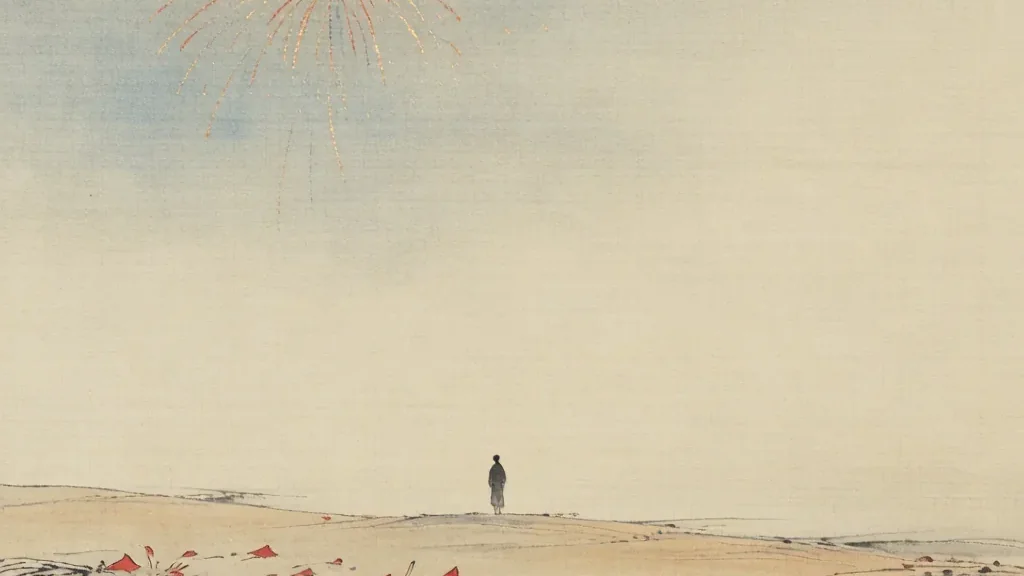
Fireworks, known in Chinese as yān huǒ or yān huā, flowers of fire, are explosive pyrotechnic displays that have lit Chinese celebrations for well over a thousand years. Invented in China from the accidental byproducts of alchemy, fireworks became central to festivals, weddings, and the expulsion of evil spirits, and their brilliant bursts remain the signature sound and light of Chinese New Year across the world. More than mere entertainment, they joined pleasure with protection, a loud clearing of the old year and a bright invitation to fortune, and the craft of making them grew into a major industry centered in places such as Liuyang that still supplies celebrations globally.
Origins in Alchemy
The roots of fireworks lie in the search for an elixir of immortality by Daoist alchemists, who heated sulfur, saltpeter, and charcoal in their furnaces. The volatile mixture they discovered was the precursor of gunpowder, and although the alchemists sought long life, their experiments instead produced the loud bang and bright flash that would thrill generations.
By the Tang and Song periods people stuffed the compound into bamboo tubes or paper shells to make loud reports. The same chemistry that failed to grant immortality succeeded in startling the senses, and the new device spread quickly from the laboratory to the festival street, where noise was already valued as spiritual defense.
This origin story ties fireworks to a deep current of Chinese experimentation, the practical discovery hidden inside a philosophical quest. The invention of gunpowder and its festive use are two branches of the same root, and both changed the world far beyond their original intent.
From Bamboo Crackers to Gunpowder
The transition from burning bamboo to packed gunpowder tubes marked a technological leap. Early firecrackers were simply green lengths of bamboo thrown on the fire; the trapped heating air inside made them explode with a bang, a natural firework that needed no chemistry. The gunpowder version soon replaced bamboo and gave rise to true fireworks with controlled force.
By the Song dynasty, written accounts describe markets selling fireworks and nighttime displays over rivers and lakes for imperial amusement. These entertainments were already tied to festivals, and the same loud report that delighted crowds was believed to scare away malicious spirits, joining pleasure with protection in a single burst.
The commercialization of fireworks in the Song period is significant, for it shows the device had become a consumer good, something ordinary families could buy to mark a holiday. What began as arcane alchemy was, within a few centuries, a staple of popular celebration.
The Legend of Nian
A popular folk tale explains fireworks at New Year through the monster Nián, who feared loud noise, bright light, and the color red. Villagers drove it off with firecrackers and red decorations, a story that encodes the real function of noise as spiritual defense against whatever lingers at the year's turning.
Whether or not the tale is ancient, it captures why fireworks belong to the year's edge, to shock awake the old year's lingering ghosts and welcome the new with brilliance. The monster is a convenient face for a vaguer dread, and the crackers are the remedy the folk imagination settled on.
The legend also binds together three New Year symbols, sound, light, and red, into one coherent practice. To set off fireworks is therefore to act out the story, repeating an old victory over fear each time the calendar turns, which is part of why the custom feels both necessary and joyful.
Types of Fireworks
Traditionally there are ground spinners, fountains, rockets, and aerial shells that bloom into chrysanthemum or peony shapes, each form suited to a different venue and mood. Waterfall displays let glowing sparks cascade from a line strung overhead, turning a street or bridge into a curtain of falling light.
Modern professional shows use computerized firing to synchronize bursts with music, achieving effects impossible by hand. Yet the humble single firecracker remains the most widespread device, heard in every neighborhood at midnight on New Year's Eve, a small personal celebration repeated a million times across the country.
The range of effects also reflects centuries of craft refinement. Color comes from metal salts, shape from the packing of the charge, and timing from the fuse, so that a skilled maker is part chemist, part sculptor, and part composer of brief, unrepeatable performances.
Role in Festivals
Fireworks crown the Spring Festival, the Lantern Festival, and weddings, and the Lantern Festival's night skies in imperial cities were famous for elaborate set pieces depicting scenes and characters in fire. The ability to draw pictures in the air made fireworks a kind of ephemeral painting admired by court and crowd alike.
Beyond holidays, fireworks mark store openings, building completions, and exam success. Their expense signals the host's joy and status, turning private happiness into public spectacle and announcing to a whole neighborhood that something worth celebrating has happened.
This versatility means fireworks function as a universal punctuation mark in Chinese social life, closing one chapter and opening another with a bang. From a birth celebration to a national holiday, the same device marks the moment as significant.
Fireworks and Opera
Historical accounts describe firework operas in which pyrotechnic tableaux illustrated stories as they exploded. Craftsmen built frames of spinning wheels and set pieces that enacted battles or myths in light, so that the sky became a stage and the sparks became actors for a few breathtaking seconds.
Though rare today, such displays show the artistry behind fireworks, not random noise but choreographed narrative in the sky, a fleeting theater of sparks that vanished even as the audience grasped its meaning. The form demanded both engineering and storytelling skill.
The idea that fireworks could tell a story also fed the broader Chinese taste for spectacle with content, where a display was judged not only by its brightness but by the recognizability of the scene it painted, a standard that still shapes ambitious shows.
Safety and Modern Concerns
The power that makes fireworks thrilling also makes them dangerous. Burns and fires from mishandled devices are a recurring public-health concern, prompting bans or restricted zones in many cities, and education campaigns repeatedly warn against homemade or illegal products.
Air pollution after heavy use has led megacities such as Beijing to limit or suspend fireworks during peak smog, and authorities balance tradition against health, often permitting short windows of celebration rather than blanket bans. The compromise tries to keep the custom while protecting the air.
These tensions are not new, since fireworks have always carried risk, but modern density and pollution have sharpened them. The result is a changing etiquette in which the right to celebrate is weighed against the right to breathe, and communities negotiate the balance year by year.
Cultural Symbolism
At a deeper level fireworks stand for transient beauty, brilliant yet gone in an instant, a visual echo of classical themes about the fleeting nature of life. Their red and gold colors carry wishes for luck and wealth, so that even the palette is a kind of prayer spoken in light.
To set off fireworks is thus both a purge and a blessing, a loud clearing of the old and a bright invitation to fortune. The custom links celebration to cosmology, treating noise and color as forces that shape the luck of the coming period rather than merely marking it.
This symbolism also explains the slight melancholy that can attend a great display. Knowing the beauty will vanish makes the watching more intense, and the briefness of the fireworks becomes a small lesson in valuing the present, a philosophical note hidden inside a popular pleasure.
Global Spread
Chinese fireworks traveled along trade routes and with emigrants, shaping global pyrotechnics and giving the world its basic vocabulary of the celebratory explosion. Today the largest fireworks festivals worldwide owe their form to Chinese invention, whether or not they know it.
The craft remains a point of national pride. Regions such as Liuyang in Hunan are renowned globally as fireworks manufacturing centers, carrying an ancient art into the modern economy and employing thousands in an industry that still begins with the same three alchemical ingredients discovered long ago.
The journey from a Daoist furnace to a harbor in every continent is a fitting arc for fireworks, a Chinese invention that became a shared human language of celebration, proving that the desire to mark joy with light and noise is genuinely universal.
❓ Frequently Asked Questions
Who invented fireworks?
Fireworks were invented in China, emerging from the gunpowder discovered by alchemists mixing sulfur, saltpeter, and charcoal.
What were the first firecrackers?
They were lengths of green bamboo thrown on fire; the trapped heating air made them burst, before gunpowder tubes replaced them.
Why are fireworks at New Year?
Their noise and light are believed to drive away evil spirits, a role captured in the legend of the monster Nian.
Are they used beyond holidays?
Yes; weddings, store openings, and building completions all use fireworks to mark joy and status.
Why are some cities restricting them?
Concerns over injuries, fires, and air pollution have led to bans or limited windows in many urban areas.
What is a firework opera?
It was a historical display in which pyrotechnic set pieces enacted stories and myths in the sky.