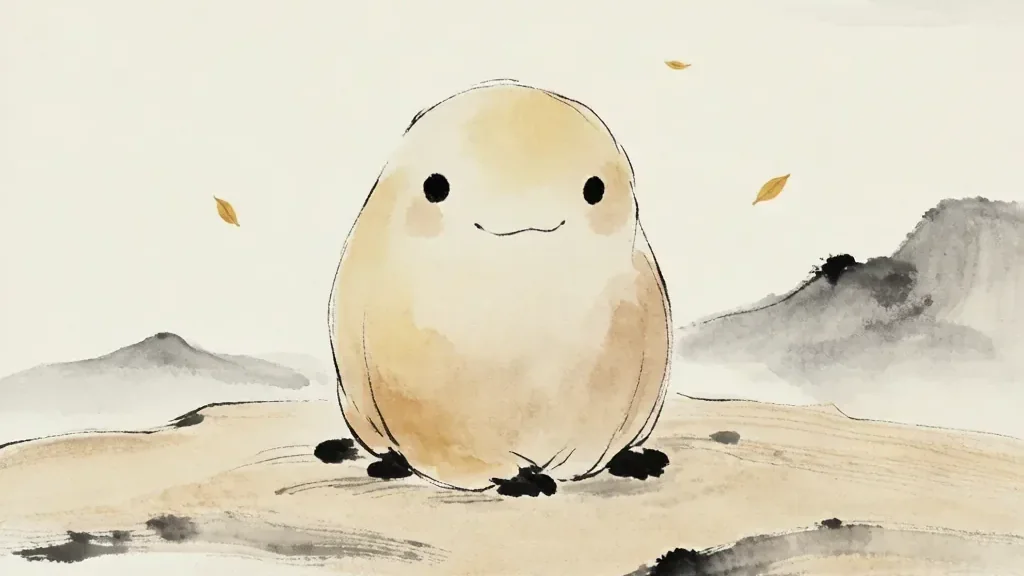
Baize, written with characters meaning "white" and "benevolence" and pronounced as a clear two-syllable name, is one of the most revered wise beasts in Chinese mythology, a creature of such knowledge that it could name every spirit, demon, and strange being in the world. According to legend, Baize appeared to the Yellow Emperor, Huangdi, and spoke to him at length, dictating a vast catalogue of the supernatural creatures that might trouble humanity, together with the means to recognize and drive them away. This gift made Baize the patron of spiritual protection and the original author of the demonography that later generations consulted for safety. To know Baize is to understand a distinctive strand of Chinese thought in which wisdom about the unseen world was itself a form of defense, and in which a single enlightened beast could arm humanity against every ghost.
The Legend of the Yellow Emperor
The core story places Baize in the reign of Huangdi, the Yellow Emperor, a culture hero credited with founding civilization and establishing order. In the account, Baize emerged from a journey the emperor made through the east, and the beast, endowed with speech and supreme insight, conversed with him about the myriad spirits that populate the world. From this conversation came a systematic account of the beings of the unseen realm, recorded so that people might learn their appearances and their weaknesses. The legend thus links Baize directly to the origins of ordered knowledge, presenting the beast as a teacher of the sage ruler and, through him, of all humankind.
This framing is important. In Chinese myth, the great emperors are often recipients of heaven-sent wisdom, and Baize's appearance to Huangdi follows that pattern: a benign power from beyond instructs the founder of culture, who then transmits the teaching to his people. The beast is not a mere wonder but a conduit of civilization, and his whiteness signals the purity and clarity of the knowledge he carries.
Appearance of the White Beast
Baize is traditionally described as white in color and composite in form, often portrayed with features resembling a lion or a fox and sometimes with multiple eyes or horns in later imaginative renderings. His whiteness is significant, marking him as apart from the dark spirits he catalogs, a creature of light and lucid understanding rather than of confusion or harm. Some depictions give him a mild, almost scholarly expression, befitting a being whose strength is knowledge rather than force, and whose mission is to enlighten rather than to fight.
The exact look of Baize varied across texts and images, since he was more a symbol of wisdom than a fixed zoological type, but the constant was his white body and his air of benign authority. Artists emphasized the contrast between the luminous beast and the shadowy demons in his catalogue, visually staging the victory of understanding over fear. In this he resembles other white auspicious animals, such as the white tiger, though his role is explicitly that of the knower of spirits.
The Catalogue of Spirits
The heart of the Baize legend is the catalogue he dictated to Huangdi, a register of the world's spirits and strange beings, often known by a title meaning the "Baize chart" or "Baize map of essences and anomalies." This work was said to list many hundreds of creatures, describing how each appeared and how it could be recognized or expelled, and it became the archetype for later Chinese demonographies and manuals of the strange. The very existence of such a catalogue reflects a pragmatic attitude: the unseen world was not to be denied but to be studied, named, and managed through knowledge.
In a society where illness and misfortune were often attributed to spiritual causes, a guide that named the responsible being was genuinely useful, offering both explanation and remedy. The Baize chart thus functioned as a kind of protective encyclopedia, and its reputation endured long after the original was lost, surviving in references, quotations, and the later compilations it inspired. The beast's gift was, in effect, the gift of literacy about the invisible.
Role as Protector Against Demons
Because Baize knew every spirit and how to counter it, his image became a protective emblem. Households and travelers invoked him, and pictures or charms bearing his likeness were used to ward off malicious beings, on the logic that the knower of demons could keep them at bay. This protective function made Baize a domestic as well as a legendary figure, a friendly power stationed at the boundary between the human and the haunted. Unlike warrior guardians who fought intruders, Baize defended by exposure, his gaze of understanding sufficient to dispel what it named.
The idea that naming a thing robs it of power is ancient and widespread, and Baize embodies it perfectly. To know the demon's form and name was already to have begun its defeat, and the beast's catalogue was therefore a weapon made of words. His white form promised that the light of knowledge would always outshine the dark of ignorance, a comforting assurance in a world felt to be full of unseen threats.
Connection to Later Demonographies
The Baize chart seeded a long Chinese literary tradition of cataloguing the strange, from collected tales of anomalies to illustrated guides to spirits and monsters. Later authors who compiled such works invoked Baize as their patron and precedent, presenting their own listings as continuations of the original divine catalogue. In this way the white beast became the tutelary spirit of an entire genre, the literature of the unseen, and his name carried the authority of the first and truest account of the spirit world.
Scholars of Chinese folklore trace the enduring habit of classifying ghosts and demons to this mythic origin, noting that the impulse to name and order the supernatural is itself a cultural achievement. Baize stands at the head of that achievement, the beast who first turned fear into a list, and the list into a shield.
Baize in Art and Charms
Throughout later imperial history, Baize appeared in painting and on charms as a benign white creature surrounded by or opposed to demonic forms, a visual assertion that wisdom guards the home. New Year and protective prints sometimes included him among the auspicious beings called upon to secure the household against misfortune, and his white figure offered a reassuring counterpoint to the more fearsome guardians of the threshold. The charm tradition translated his legend into daily practice, so that ordinary families could borrow the emperor's protection simply by displaying his likeness.
In illustrated books of mythology and in the decorative arts, Baize was shown in conversation with Huangdi or enthroned amid a host of named spirits, dramatizing the moment of teaching that founded the catalogue. These images kept the story alive for viewers who might never read the lost chart itself, embedding the lesson of spiritual literacy in the visual culture of the home and the temple.
Modern Cultural Memory
Today Baize survives as a recognized figure of Chinese heritage, appearing in illustrated mythologies, in games and media that draw on the classical bestiary, and in scholarly work on the literature of the strange. He is often presented as the wise white beast who taught humanity to know its ghosts, a symbol of the protective power of knowledge that resonates in an age still fascinated by the unseen. Museums and books keep his image before the public, and his story continues to be retold as a founding moment of Chinese demonology.
For modern readers, Baize offers more than quaint legend. He represents a coherent stance toward the unknown: do not merely fear it, but study it, name it, and thereby lessen its power. That stance, encoded in the white beast who spoke to the Yellow Emperor, remains a quiet but durable contribution of Chinese myth to the human toolkit for facing the dark.
Baize in Daily Protection
The practical devotion to Baize expressed itself in the home through images and charms that asked his white wisdom to stand at the threshold against unseen harm. During festivals and at the turning of the seasons, when households felt most exposed to spiritual disturbance, his likeness might be displayed among other auspicious beings to summon the protective clarity he represented. The charm did not require a temple or a priest; it relied on the shared belief that the knower of demons could keep them at bay simply by being present in representation.
This domestic use made Baize a friendly, accessible power, a wise beast one could invite onto the wall rather than a distant god to be feared. The practice reflects a broader Chinese habit of turning myth into daily ritual, folding the grand legends of the classics into the small protections of ordinary life, so that the White Emperor's teacher remained a quiet guardian of the household hearth.
❓ Frequently Asked Questions
What is Baize?
Baize is a white wise beast in Chinese myth who knows all spirits and demons and dictated a catalogue of them to the Yellow Emperor.
How did Baize help humanity?
He spoke to Huangdi and listed the world's spirits with ways to recognize and expel them, arming people with knowledge.
What is the Baize chart?
It is the register of spirits Baize dictated, the model for later Chinese demonographies and strange-tale compilations.
Why is Baize white?
White marks his purity and the lucid wisdom that sets him apart from the dark spirits he catalogs.
How was Baize used for protection?
His image appeared on charms and prints to ward off malicious beings by the power of recognition.
Is Baize still known today?
Yes, he appears in myth encyclopedias, games, and scholarship as a symbol of knowledge defending against the unknown.