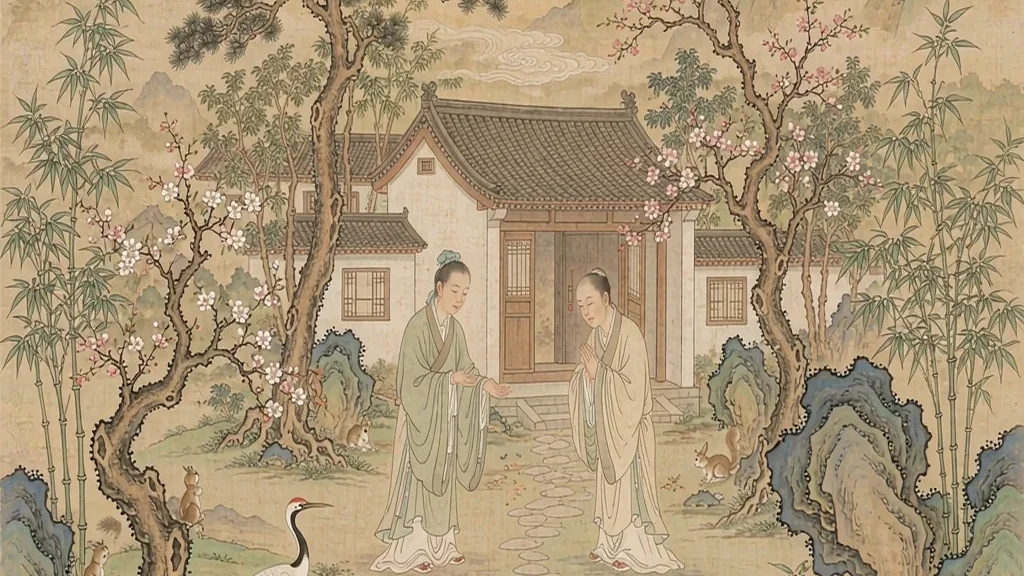
The clatter of woks in a Chinese Buddhist monastery kitchen signals more than the preparation of food — it announces a moral philosophy enacted three times daily, a commitment to non-harm that extends from the meditation cushion to the dining bowl. Buddhist vegetarianism (素食, sù shí) in China is not merely a dietary preference but a comprehensive ethical practice rooted in the first Buddhist precept: not killing. For over a millennium, Chinese Buddhists have transformed the simple act of eating into a vehicle for compassion, self-discipline, and spiritual progress.
The Scriptural Foundations: Why Buddhists Don't Eat Meat
The Buddhist case for vegetarianism rests on several scriptural foundations. The Lankavatara Sutra, a prominent Mahayana text, contains extended passages condemning meat-eating, arguing that it hardens the heart, increases cruelty, and is incompatible with the compassionate mind of a bodhisattva. The Surangama Sutra similarly warns that meat-eating cuts the "seeds of compassion" and prevents the attainment of deeper meditative states.
The core logic is straightforward: eating meat requires the killing of sentient beings, and the first Buddhist precept is to refrain from taking life. Even if one does not personally slaughter the animal, one's consumption creates economic demand that drives the killing. For Mahayana Buddhists, who aspire to universal compassion, this indirect participation in killing is unacceptable. The bodhisattva, who vows to save all beings, cannot sustain their own body through the death of others.
However, the scriptural tradition is not uniform. Early Buddhism, as recorded in the Pali canon, allowed monks to eat meat if it was "pure in three respects" — meaning they had not seen, heard, or suspected that an animal was killed specifically for them. This provision, known as the tri-dandaka rule, accommodated the reality of alms-begging in a society where monasteries could not maintain self-sufficient kitchens.
The Chinese Transformation: From Permission to Prohibition
Chinese Buddhism took a significantly stricter position on vegetarianism than its Indian predecessor. The shift is traditionally credited to Emperor Wu of Liang (梁武帝, r. 502–549 CE), a devout Buddhist monarch who issued an edict prohibiting meat consumption by monks and nuns throughout his realm. The emperor also wrote a treatise on the topic, arguing that the "pure in three respects" rule was a concession to the limitations of alms-begging and did not apply to settled monastic communities with their own kitchens.
Emperor Wu's edict was enforced with imperial authority. Monks who ate meat could face punishment, and the monastic community was reorganized around vegetarian kitchens. This was a watershed moment in Chinese Buddhist history. While Indian and Tibetan Buddhist traditions continue to allow meat-eating under certain conditions, Chinese Buddhism — along with its Korean, Japanese, and Vietnamese branches — adopted vegetarianism as a normative practice for monastics.
The lay Buddhist tradition followed more slowly. For centuries, lay Chinese Buddhists observed vegetarianism only on specific days of the month — the "six vegetarian days" or the "ten vegetarian days" — or during particular festivals. But by the Song dynasty, a significant minority of devout laypeople had adopted full vegetarianism. The tradition of "eating vegetarian" (吃素, chī sù) became a marker of Buddhist identity, distinguishing sincere practitioners from casual believers.
Mock Meat: Culinary Creativity and Religious Identity
One of the most remarkable products of Chinese Buddhist vegetarianism is the mock-meat tradition. Over centuries, Chinese Buddhist chefs developed sophisticated techniques for transforming tofu, wheat gluten (miàn jīn), seaweed, mushrooms, and root vegetables into convincing imitations of chicken, pork, beef, and seafood. These dishes — with names like "Buddha Jumps Over the Wall" (a famous vegetarian version of a meat dish) and "Vegetarian Goose" — are culinary masterpieces that serve a religious purpose.
The mock-meat tradition reveals the complexity of Buddhist attitudes toward food. On one level, the imitation of meat might seem self-defeating — why simulate the very thing one has renounced? But Buddhist practitioners explain that the purpose is not to pretend to eat meat but to demonstrate that vegetarian food can be delicious and satisfying, thereby removing the excuse that a vegetarian diet is a diet of deprivation.
The tradition also reflects the Buddhist emphasis on skillful means (upaya). For laypeople who are new to vegetarianism, mock meat provides a familiar entry point. Over time, as one's palate and mind become more refined, one may graduate to simpler, more natural preparations. The ultimate goal is not to eat food that looks like meat but to eat with mindfulness, gratitude, and compassion — whatever the form of the food.
The Monastic Kitchen: Precepts in Practice
A Chinese Buddhist monastery kitchen operates under strict rules. The five pungent vegetables (五荤, wǔ hūn) — garlic, onion, leeks, chives, and shallots — are prohibited because they are believed to stimulate desire and anger, disturbing meditative concentration. These are avoided even by vegetarian non-Buddhists who observe the "pure diet" for similar reasons. The prohibition is so strict that some temples refuse to allow these vegetables onto the premises at all.
Monks and nuns typically eat two meals per day: breakfast and lunch. According to monastic discipline, the evening meal is not permitted, though in practice most Chinese monasteries serve a "medicine meal" (药石, yào shí) in the evening — a light meal treated as a concession to health rather than a formal meal. All food is eaten mindfully, with gratitude for the donors who provided it and for the beings whose labor brought it to the table.
The monastery kitchen is staffed by monks or lay volunteers who take their work as seriously as any other aspect of practice. Preparing food for the sangha is considered a merit-generating activity, and the kitchen is treated as a place of meditation. The slicing of vegetables, the tending of fires, the cleaning of bowls — all are done with the same attention and presence as sitting on a cushion.
Modern Debates and Adaptations
Chinese Buddhist vegetarianism faces new challenges in the modern world. The rise of factory farming and global food supply chains has made it difficult to ensure that food is truly "pure" — free from animal products and produced without harm. Issues such as the use of bone char in sugar refining, animal-derived rennet in cheese, and insect-based food colorings require constant vigilance.
Environmental concerns have added a new dimension to the debate. Many contemporary Buddhists argue that the principle of non-harm should extend beyond the plate to encompass the ecological impact of food production. Organic farming, sustainable agriculture, and reducing food waste are increasingly seen as aspects of Buddhist practice. Some monasteries have established their own organic farms, practicing "green Buddhism" as an extension of traditional dietary ethics.
Globalization has also brought Chinese Buddhist vegetarianism into contact with other traditions. The international popularity of Asian vegetarian cuisine has introduced mock meat and tofu dishes to non-Buddhist audiences, while Chinese Buddhists have learned from the environmental and health arguments of secular vegan movements. The conversation between traditional Buddhist ethics and contemporary concerns continues to evolve, but the core commitment — to cause no harm through consumption — remains unchanged.
Vegetarianism and Chinese Dietetic Thought
Chinese Buddhist vegetarianism did not stand apart from native ideas about food. Traditional dietetic theory held that meat, especially red meat and pungent alliums, heated the blood and stirred desires, while plain vegetables cooled and calmed the body, a view that dovetailed with the monastic goal of stillness. The banned five pungent plants, including garlic and onion, were thought to excite the senses and disturb meditation. By framing abstinence in terms of bodily balance as well as ethics, Chinese culture made vegetarianism intelligible even to non-believers. Temple cooks therefore worked within a shared medical logic, producing meals that were at once pious, healthful, and in tune with the seasons, a fusion of Buddhist precept and Chinese regimen, so that abstaining from meat could be recommended by physicians as well as by monks. This dual logic helps explain why vegetarian restaurants later flourished far beyond the temple gate.
The Vegetarian Calendar
For many Chinese Buddhists, vegetarianism is not all-or-nothing but rhythmic. Beyond the permanent monastic rule, lay devotees traditionally observe six fasting days each lunar month, the eighth, fourteenth, fifteenth, twenty-third, twenty-ninth, and thirtieth, when they eat no meat and often no evening meal. Major festivals such as the Buddha's birthday and the Ullambana ghost month intensify the practice, and some believers adopt full vegetarianism for a month or a year as a vow. This calendar turns diet into a recurring spiritual discipline rather than a single decision, weaving restraint into the ordinary flow of the year. The result is a flexible spectrum of observance, from lifelong monks to occasional lay abstainers, all sharing the same symbolic food. The rhythm also taught children the link between compassion and the table, making restraint a habit formed early in life.
Food as Buddhist Identity
In China, what one eats became a quiet marker of Buddhist belonging. A vegetarian meal signaled devotion, purity, and separation from the ordinary worldly table, and the shared refectory bound monastics into a single disciplined community. For laypeople, offering vegetarian feasts to monks or hosting a temple meal was a primary way to earn merit and display piety. Mock-meat dishes, which mimic but do not kill, turned the cuisine into a kind of teaching, showing that compassion and enjoyment need not conflict. Even today, Buddhist vegetarian restaurants serve believers and the health-conscious alike, carrying an identity that is at once religious and cultural. The meatless table thus speaks without words, identifying who one is and what one values. In an increasingly affluent society, the Buddhist vegetarian table has even become a quiet statement of conscience, ecology, and care for living things.
❓ Frequently Asked Questions
📝 Chinese Vocabulary
素食 — : Vegetarian food; a vegetarian diet.
吃素 — : To eat vegetarian; the practice of following a plant-based diet.
五荤 : The five pungent vegetables (garlic, onion, etc.) avoided in temple cuisine.
斋饭 — : Monastic vegetarian meal; food eaten during a retreat or precept-observance period.
素菜仿荤 — : Mock meat; vegetarian dishes that imitate the appearance and flavor of meat.
三净肉 — : The three pure meats, the kinds of flesh the early Buddhist rules permitted if the animal was not seen, heard, or suspected to be killed for the eater.
放生 — : Fangsheng, the merit-making practice of releasing captive animals, often performed on Buddhist festivals.
杀生 — : Shasheng, the taking of life, the act most strongly prohibited by the Buddhist first precept and a root reason for vegetarianism.
🎉 Fun Facts
- Emperor Wu of Liang was so committed to vegetarianism that he required his court officials to take oaths of vegetarianism and forbade the use of animal sacrifices in Confucian rituals.
- Wheat gluten (mianjin), a staple of Chinese Buddhist cooking, was likely invented by Buddhist monks as a high-protein meat substitute.
- The phrase "Buddha Jumps Over the Wall" originally described a meat dish so fragrant that even a vegetarian Buddha would leap the wall to taste it; Buddhist chefs later created a vegetarian version.
- Many monasteries and devout households observe the first and fifteenth days of the lunar month as vegetarian days, when even lay supporters abstain from meat.
- Traditional pious families sometimes kept a separate set of pots, bowls, and chopsticks for vegetarian cooking, to avoid any trace of meat during observance.
- Buddhist discussion of the precept acknowledges that plants, too, are alive, but draws the line at obvious sentience and movement, making the rule a practical safeguard against killing rather than an absolute dietary law.