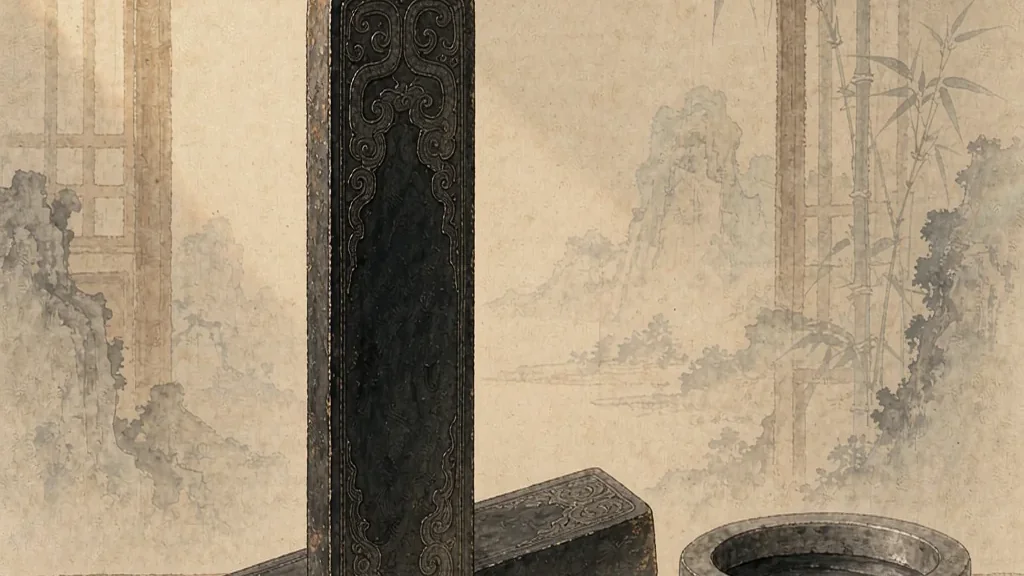
The ink stick (墨, mò) is one of the "Four Treasures of the Study" and the traditional source of black ink for Chinese calligraphy and painting. Rather than a liquid, the artist grinds a solid stick of compressed soot and binder against an ink stone with a little water to make fresh ink. This slow ritual is not merely practical; it prepares the mind and tunes the hand. Good ink sticks produce a deep, lustrous black that can glow with blue or brown undertones, and well-kept antique sticks are themselves collected as art. This article covers how ink sticks are made, graded, and used.
What an Ink Stick Is
An ink stick is a small, hardened block, usually rectangular or slender, made by mixing fine soot (lampblack or pine soot) with a binder of animal glue, then molding and drying it. To write, the calligrapher adds a few drops of water to the ink stone and rubs the stick in slow circles until the liquid reaches the right density. The ink is used immediately and not stored.
Because ink is made fresh each session, its concentration can be tuned to the task: pale washes for distant mountains, thick black for a bold signature. The physical act of grinding is also a moment of focus, a pause between preparation and creation that many artists treasure.
Soot: Pine and Oil
The carbon that gives ink its color comes from soot. Two classic sources dominate. Pine-soot ink is made by burning pine wood and collecting the smoke; it is valued for a warm, deep tone and a slight sheen. Oil-soot ink, made from burning tung or other plant oils, tends toward a cooler, blue-black and is favored for fine calligraphy.
The quality of soot depends on how cleanly it burns and how finely it is gathered. The finest particles yield smooth ink without grainy specks. Makers guard the temperature and airflow of their lamps as a core secret of their house style.
Binders and Additives
Soot alone would wash away, so it is bound with animal glue, traditionally from cow or deer hide and bone. The right amount of glue holds the stick together and lets it dissolve evenly without clotting. Too much glue makes ink dull and slow to dry; too little and the stick crumbles.
Fine sticks may include small amounts of fragrant spices, medicinal herbs, or even gold dust, both for prestige and to mask the glue smell. These additives rarely change the writing much, but they mark a stick as a luxury object and please the connoisseur's nose.
How Ink Sticks Are Made
Makers mix sifted soot with warm liquid glue, pound the paste to remove air, and press it into carved wooden molds that leave decorative patterns and inscriptions. The sticks are then dried slowly over weeks or months — fast drying causes cracks. Finally they may be polished, gilded, or painted.
The surface design is part of the appeal. Sticks often carry landscapes, dragons, or poetic lines in relief, turning a writing tool into a miniature sculpture. Some were commissioned as gifts, with the patron's name and a date molded into the back.
Grading and Famous Brands
Ink is graded by the fineness of its soot, the purity of its glue, and the skill of its molding. Top-grade sticks grind to a smooth, intense black that "enters the paper" — soaking in so it will not smudge or fade. Lower grades are grayer and may flake.
Historic centers such as Huizhou (in today's Anhui) became famous for ink, and certain old workshops are still revered by name. Collectors prize antique sticks not only for use but as historical objects, judging them by weight, sound, and the crispness of their relief.
Grinding Technique
Using an ink stick well is its own small discipline. The stone is given a little water, and the stick is held upright and rubbed with even, patient circles, never so hard that it scratches. The calligrapher tests the ink on the nail or a test corner until the sheen looks right.
Grinding too fast heats the mixture and can make ink uneven; grinding too little leaves it watery. A seasoned writer can judge the perfect moment by the sound and resistance of the stick — a quiet skill passed from teacher to student.
Ink and Paper Interaction
The behavior of ink depends on the paper as much as the stick. On raw Xuan paper, fresh pine-soot ink bleeds into soft clouds; on treated paper it sits sharp and black. The same stick thus yields different looks on different supports, which is why artists choose both together.
A good stick also ages well on the page. Unlike some modern liquid inks that can turn brown or brittle, quality stick ink made from stable soot and glue tends to stay black and flexible for centuries, which is why ancient scrolls still read clearly.
Collecting and Care
Old ink sticks are collected for their craft and history. They should be kept dry and away from pests, since the glue can attract insects or mold in humid climates. A stick that has cracked or lost its relief loses both value and usability.
Some collectors never grind prized antique sticks, treating them as display pieces. For daily practice, however, a fresh stick from a reputable workshop gives reliable results and keeps the living tradition of grinding ink alive at the desk.
Ink in Painting and Calligraphy
Although painters and calligraphers draw from the same ink stick, their needs differ. A calligrapher usually wants a crisp, deep black that defines each stroke, while a painter layers pale washes to suggest mist, water, and distance, sometimes building tone through many translucent passes. The same stick serves both, with only the water ratio changed to suit the task.
Modern liquid and bottled inks offer convenience, yet many serious artists still grind their own. Freshly ground ink simply behaves better on paper, and the act of making it centers the hand and mind before writing. The ink stick thus remains not a quaint relic but a working choice for those who care about the living quality of the line.
❓ Frequently Asked Questions
What is an ink stick made of?
It is compressed soot — from pine or oil — bound with animal glue, then molded and slowly dried into a solid block.
How do you turn it into ink?
You add a little water to an ink stone and rub the stick in slow circles until the liquid reaches the desired density.
Pine-soot or oil-soot — which is better?
Neither is simply better; pine gives warm depth, oil gives cool clarity. Choice depends on the calligrapher's taste and task.
Why grind ink instead of using liquid?
Grinding lets you control concentration, makes fresher black, and serves as a calming ritual before writing.
How should ink sticks be stored?
Keep them dry and pest-free; humidity can invite mold or insects that attack the glue binder.
Are old ink sticks valuable?
Yes. Antique sticks from famous workshops are collected for craft and history, sometimes kept unground as display pieces.