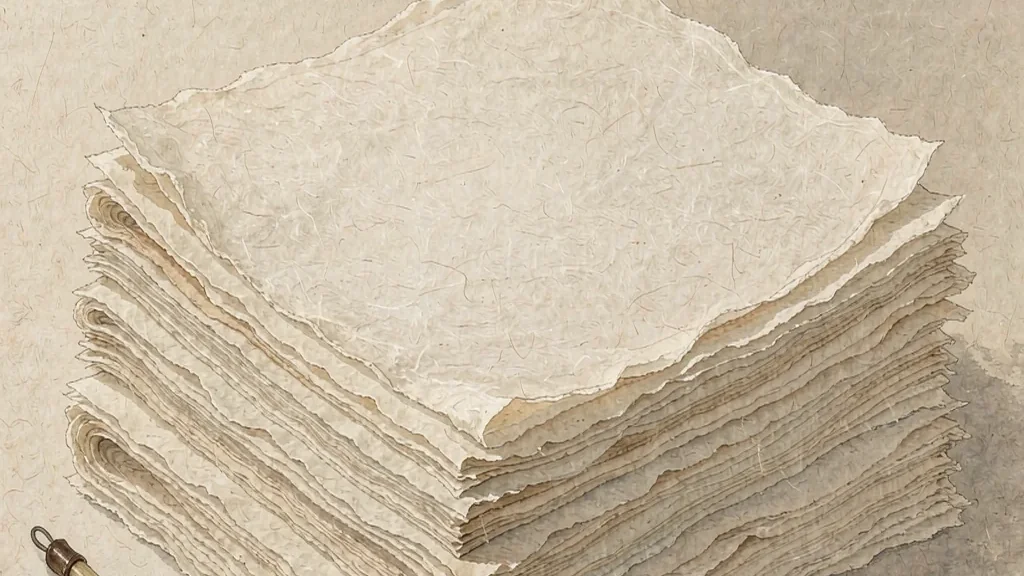
Xuan paper (宣纸, xuān zhǐ) is the celebrated paper traditionally used for Chinese calligraphy and ink painting. Made for centuries in the region around Jing County in Anhui province, it is prized for its smooth surface, remarkable strength, and its ability to absorb ink while still showing the subtlest gradations of tone. Often called "rice paper" in English, the name is misleading — the paper is not made from rice but usually from the bark of the blue sandalwood tree and rice straw. This article explains what makes Xuan paper special, how it is made, and why it remains the standard support for brush art.
What Is Xuan Paper
Xuan paper takes its name from Xuanzhou, the old prefecture that included the area where the craft flourished. True Xuan paper is defined by its materials and its long, careful making process rather than by a single factory. It is a handmade paper, not a machine product, and its reputation rests on consistency that rivals industrial goods.
The paper's defining trait is its "ink-splitting" quality: a single brushstroke can show both dark and pale tones because the fibers carry ink unevenly yet predictably. This lets an artist achieve the wet, breathing effects that define ink wash painting. It is also unusually durable, resisting yellowing and insect damage better than many papers.
Raw Materials
The best Xuan paper is made chiefly from the bark of the blue sandalwood (Pteroceltis tatarinowii), a tough, fibrous tree that grows in the local hills. Rice straw is added to soften the mix and adjust absorbency. Some papers use only bark for a more rigid, archival sheet; others blend in more straw for a softer, more absorbent one.
Water quality matters as much as fiber. Local spring water, low in impurities, is traditionally credited with giving the paper its clean color and even texture. Makers are reluctant to relocate the craft precisely because the water and climate are hard to reproduce elsewhere.
How Xuan Paper Is Made
Production is long and labor-intensive. Bark is steamed, soaked, and bleached in the sun for months, then beaten and washed to free the fibers. The pulp is floated in a vat, and a fine bamboo screen is dipped and shaken to lay an even sheet. Each sheet is pressed, dried on heated walls, and sorted by quality.
The whole cycle can take more than a year from raw bark to finished sheet. Much of the skill lies in the "papermaker's shake," a wrist movement that spreads fibers uniformly. Families have guarded these techniques for generations, passing them down as workshop secrets.
Types of Xuan Paper
Xuan paper is broadly divided into untreated (shengxuan, 生宣) and treated (shuxuan, 熟宣). Untreated paper is highly absorbent and favored for free, spontaneous ink work where bleeds are welcome. Treated paper has been coated with alum or starch so ink sits on the surface, suiting fine line work and detailed color.
There are also half-treated papers that fall between the two. Artists choose by temperament and subject: a bold cursive calligrapher wants raw paper that drinks the ink; a meticulous painter of birds and flowers may prefer the control of treated stock.
Why It Suits Brush and Ink
The paper's slight tooth and its balanced absorbency let the brush "talk." A confident stroke shows a dark center with feathered, paler edges; a hesitant one betrays itself at once. This honesty is exactly what literati artists valued — the paper records not just the form but the energy of the hand.
Because Xuan paper is thin yet strong, it can be mounted, remounted, and scrolled without tearing. That practical toughness is why so many surviving masterpieces from centuries ago are still legible and luminous today.
Mounting and Preservation
In Chinese practice, a finished scroll is mounted on backing paper and often silk borders before it can be hung or rolled. Xuan paper's strength makes this possible; weaker papers would split during the wet mounting process. Mounting also stabilizes the sheet against humidity.
For preservation, sheets are kept flat or loosely rolled, away from direct light and insects. Well-made Xuan paper is famously long-lived; collectors speak of papers that survive for hundreds of years without brittle decay, which is one reason archives and painters trust it.
Xuan Paper in Calligraphy Education
Beginners often start on cheaper practice paper, but serious students move to Xuan paper early so they can learn how real ink behaves. Practicing on highly absorbent sheet teaches control, since mistakes cannot be hidden. Teachers treat the paper as a demanding partner.
In graded exams and formal works, Xuan paper is the expected support. Knowing which type to choose — raw, half-treated, or treated — is itself part of a calligrapher's training and a mark of maturity.
Cultural Status and Heritage
Xuan paper making is recognized as an important part of Chinese intangible cultural heritage. The craft supports whole villages and is taught through apprenticeships. Despite modern competition from printed and imported papers, handmade Xuan paper keeps a loyal market among artists and collectors.
The paper has also become a cultural symbol: to give a fine sheet of Xuan paper is to give a serious tool for creation. Its quiet, warm white surface is so tied to Chinese art that many people abroad simply call all Chinese paper "rice paper," even when the material differs.
Choosing and Caring for Sheets
When selecting Xuan paper, buyers judge evenness of tone, freedom from flaws, and how predictably the surface takes ink. A sheet that blotches or resists the brush is a poor tool no matter how pretty it looks. Experienced users also feel the paper's weight and tooth, since these hints reveal absorbency and the kind of strokes the sheet will favor.
For storage, sheets should lie flat or be loosely rolled, kept away from damp, direct light, and insects. Well-made paper rewards patience: a stack kept properly can outlast its owner and still perform beautifully decades later, which is part of why fine Xuan paper is both a working supply and a quiet investment for the serious artist.
❓ Frequently Asked Questions
Is Xuan paper made from rice?
No. Despite the English name "rice paper," it is mainly made from blue sandalwood bark with some rice straw added.
What is the difference between raw and treated Xuan paper?
Raw (shengxuan) is very absorbent and suits free ink work; treated (shuxuan) is coated so ink stays on the surface for fine detail.
Why is Xuan paper good for calligraphy?
Its balanced absorbency records both the form and the energy of the brushstroke, showing subtle tonal gradations.
How long does it take to make?
From harvesting bark to finished sheet, the process can span more than a year of soaking, beating, and drying.
Can Xuan paper last a long time?
Yes. Well-made Xuan paper resists yellowing and insects and can remain stable for centuries when stored well.
Should beginners use Xuan paper?
Many start on cheaper paper, but practicing on absorbent Xuan paper teaches control because errors cannot be hidden.