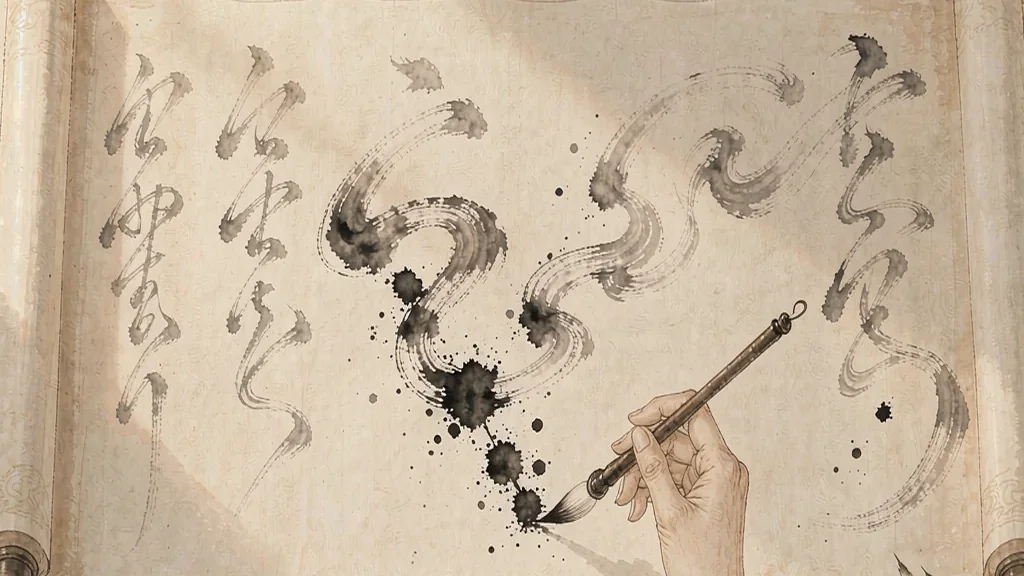
Running script (行书, xíngshū), often called "running hand," is one of the major styles of Chinese calligraphy, sitting between the squared regularity of regular script and the wild freedom of cursive. It keeps the basic forms of characters recognizable while linking strokes with swift, flowing connections, so a line of running script looks as if it is almost walking rather than standing still — hence the name. Beloved for its balance of legibility and vitality, running script became the most common handwriting style for letters, drafts, and informal art. This article traces its origins, masters, and enduring appeal.
Where Running Script Sits
Chinese calligraphy is often described through a family of scripts: seal, clerical, regular, running, and cursive. Running script is best understood as a "half-cursive" mode — faster and more connected than regular script (kaishu), but far more readable than full cursive (caoshu), where characters can merge beyond easy recognition.
Because it is both personal and legible, running script became the natural choice for everyday elegant writing. A scholar might draft a poem in running hand, keep accounts in it, or write a friend a letter that was itself a small work of art. It is the script of conversation on paper.
Origins and Early Development
Running script grew out of the relaxed, expedient writing that appeared as clerical script evolved toward regular script in the later Han and Three Kingdoms periods. Writers seeking speed began joining strokes and simplifying turns, and a distinct flowing manner took shape. By the Eastern Jin dynasty it was a polished art.
The style matured as brushes, papers, and seated writing habits changed, letting the hand move more continuously. What began as a shortcut for speed became, in the hands of great masters, a deliberate aesthetic of motion and ease.
Wang Xizhi and the Orchid Pavilion
No name is more tied to running script than Wang Xizhi, honored as the "Sage of Calligraphy." His Preface to the Orchid Pavilion (兰亭序), written in running hand, is celebrated as the supreme model of the style — spontaneous yet perfectly balanced, intimate yet grand.
According to tradition, Wang wrote the preface in one flow during a spring gathering with friends, then could never reproduce it so well. Whether or not the story is exact, the work set the standard that later calligraphers copied for generations, making running script the heart of the literati canon.
Structure and Rhythm
In running script, strokes that are separate in regular script may join with a light connecting line, and sharp corners soften into curves. Characters lean slightly, as if mid-step, yet keep their internal proportion. The result feels alive without breaking intelligibility.
Rhythm matters more than in regular script. A line should breathe, with faster and slower passages, heavier and lighter presses. The best running script reads like music — a sequence of accents rather than a grid of equal marks.
Connecting Strokes and "Flying" Lines
A signature feature is the "flying connection" (牵丝, qiānsī): hair-thin threads linking one stroke or character to the next, suggesting movement even where the brush left the paper. These threads are not written as separate lines but are the trails of a quick, continuous hand.
Used well, such links give a cascade effect, characters tumbling gently toward the line's end. Used poorly, they clutter the page. Controlling when to connect and when to lift is a core skill of the running-script writer.
Running Script vs Cursive
Beginners often confuse running and cursive. The practical difference is legibility: in running script a reader can still identify each character with study, while cursive may omit whole strokes and fuse characters into abstract swirls. Running is the safer art for communication; cursive the freer one for pure expression.
Many calligraphers move between the two, using running hand for the body of a text and a few cursive flourishes for emphasis or feeling. The two scripts share a family resemblance in their connected, speedy gestures.
Famous Masters After Wang Xizhi
The Tang dynasty produced regular-script giants, but running script kept flourishing in letters and drafts. In the Song dynasty, scholar-artists such as Su Shi, Huang Tingjian, Mi Fu, and Cai Xiang made running hand their personal voice, valuing feeling over flawless form — a shift toward expressive individualism.
Later masters from Zhao Mengfu in the Yuan to Dong Qichang in the Ming continued to treat running script as the most congenial mode for combining poetry, personality, and brush. The style never lost its central place in educated life.
Running Script Today
Running script remains the most practiced informal style among modern calligraphers and students. It appears on couplets, gift scrolls, and everyday practice because it shows character without demanding the stern discipline of regular script or the risk of unreadable cursive.
Contemporary artists also push running script into new territory, mixing it with modern design, signs, and even digital media, yet the old ideal persists: a line that moves like a walk, clear enough to read and lively enough to feel.
Learning Running Script
Most students approach running script only after some grounding in regular script, because the flowing style assumes you already know each character's correct structure. Teachers have learners copy model sheets by Wang Xizhi and later masters, paying attention to where strokes join and where the brush should lift. Repetition builds the muscle memory that makes connection look effortless rather than messy.
A common beginner mistake is to over-connect, smearing characters into an unreadable tangle, or to rush so fast that proportions collapse. The discipline is to keep every character intact in the mind even as the hand moves quickly. With steady practice, the writer finds a personal pace — neither stiff nor sloppy — where the line finally seems to walk on its own across the page.
❓ Frequently Asked Questions
What is running script?
It is a semicursive calligraphic style that connects strokes for speed while keeping characters recognizable — between regular and cursive script.
Is running script the same as cursive?
No. Cursive is far freer and often unreadable; running script stays legible while still flowing and connected.
Who perfected running script?
Wang Xizhi of the Eastern Jin is revered as its supreme master, above all for the Orchid Pavilion Preface.
Why is it called "running"?
The name images characters as if walking or jogging rather than standing still, capturing the style's motion.
How many scripts relate to it?
It sits within the main family: seal, clerical, regular, running, and cursive, with running as the legible middle ground.
Why learn running script today?
It shows personality without the strict grid of regular script or the risk of unreadable cursive, so it stays popular.