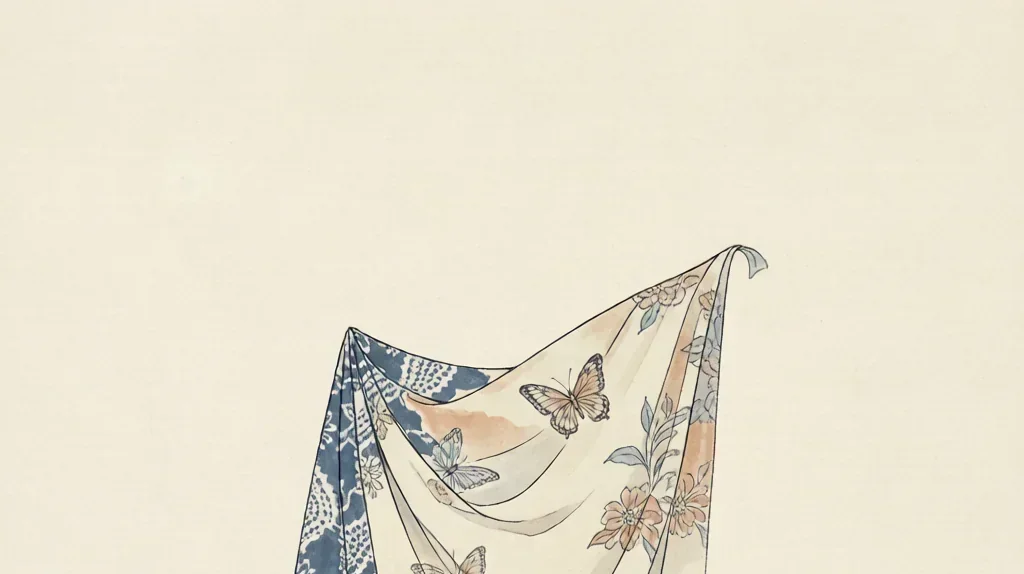
Batik, known in Chinese as là rǎn (蜡染), is a wax-resist dyeing tradition in which hot beeswax or a wax mixture is painted or stamped onto cloth, which is then dipped in dye; the waxed areas resist the color, and after the wax is removed the pattern appears in the original cloth tone against the dyed ground. Practiced for centuries among several of China's ethnic minorities — especially the Miao, Bouyei, and Yao of Guizhou and Guangxi — batik produces the indigo cloth crisscrossed with fine crackle lines that is among the most recognizable of Chinese ethnic textiles. The craft is a conversation between two opposites: the hot, fluid wax that the artisan draws like ink, and the cold, patient indigo that waits in the vat, and the pattern lives in the tension between them. What makes batik distinct from every other resist method is the crackle, the net of fine lines that appears when the wax cools and fractures, letting dye seep into the gaps, so that even the "mistakes" of the material become the signature of the art, a proof of the hand and the wax that no printer can counterfeit.
Origins and Ethnic Roots
Batik is not a Han Chinese mainstream craft but belongs to the textile heritage of southwestern ethnic groups, where it has been practiced for many generations as a domestic and ceremonial art. The Miao in particular are celebrated for batik skill, and the craft is woven into the identity of the communities that keep it.
Oral tradition among some groups credits women ancestors with discovering that wax could block dye, and the craft has long been transmitted mother to daughter as part of a girl's upbringing and marriage preparation. A daughter learned batik as she learned to manage a household, and the cloth she made became part of who she was and whom she married.
The ethnic roots explain the look. Unlike the blue-and-white restraint of Han tiedye, ethnic batik often fills the whole cloth with dense, all-over pattern, because the cloth was made for skirts and baby carriers where coverage mattered, and the fullness of the design reflects a different idea of what cloth is for.
The Miao and Guizhou
Guizhou province is the heartland of Chinese batik, where Miao, Bouyei, and other communities produce indigo cloth for skirts, baby carriers, and aprons. Village markets display racks of waxed and dyed cloth, and the making is a visible part of daily economic and social life.
Among the Miao, batik patterns carry ethnic identity and sometimes encode historical memory and cosmology, making the cloth a cultural document as much as a garment. Certain motifs recall migrations and ancestors, so the cloth is a kind of portable history worn on the body and read by those who share the code.
The village market is the craft's stage. There a woman sells her cloth alongside her neighbor's, and the subtle differences in hand become a local reputation, so the market both distributes the art and judges it, rewarding the steadiest wax line with the quickest sale, a gentle but real quality control.
Tools and the Wax
The core tool is a small metal funnel or ladle called a là dāo (wax knife) on a bamboo handle, through which molten wax is drawn in a thin stream onto the cloth. Stamps and resist-paste methods exist too, but freehand drawing defines fine batik, and the wax knife is the artisan's pen.
The wax is typically beeswax mixed with paraffin for the right flow and crackle; it must be kept molten over a small heater while the artisan works quickly before it cools. The timing is the maker's discipline: a line drawn too slow pools, too fast skips, and only practice finds the pace that lets the wax sing.
The tool's design is clever. The tiny funnel holds a reservoir of wax and releases it through a fine spout, so the artisan can draw a continuous line without re-dipping, much as a calligrapher lifts a full brush, and the kinship with writing is real, because batik is in essence drawing with hot wax instead of ink.
The Dyeing Process
After the design is waxed, the cloth is immersed in indigo, the favored dye. Where wax covers the fiber, no color enters. The cloth is then boiled or scraped to remove the wax, revealing the pale pattern, and the reveal is the craft's small moment of truth, when the hidden drawing appears.
A signature of batik is the network of fine cracks that form as the cooled wax fractures; dye seeps into these cracks, leaving the characteristic veins that collectors prize as proof of genuine wax-resist work. The crackle is the material's handwriting, and a cloth without it looks printed rather than made.
Multiple dips build depth. A cloth may be waxed, dyed pale, waxed again, and dyed deep, so a single piece carries several blues, and the layering lets the maker compose in time as well as space, much as in tiedye, though the wax rather than the bind does the resisting.
Pattern Language
Motifs include butterflies, birds, fish, flowers, and geometric totems, many with auspicious or ancestral meaning. Miao batik often features dense, all-over fields where figures float in rhythmic repetition, and the density is both aesthetic and cultural, filling the cloth the way a chant fills a ceremony.
Because designs are drawn freehand, they have a lively, irregular quality distinct from the mechanical repeat of printed cloth, and master women are known by their personal "hand." A connoisseur of the village can name the maker by the tilt of a wing or the weight of a spiral, so the cloth carries a signature the maker may never have signed.
The butterfly is central. Among the Miao the butterfly is a creator-ancestor figure, and its repeated appearance on skirts and carriers is not mere decoration but a statement of origin, so the pattern language of batik is also a language of belief, worn close to the body and passed to the next generation with the technique.
Batik and Indigo
As with tiedye, indigo is central: a fermented plant vat gives the blue ground. Multiple dips deepen the shade, and some cloth is dyed to a near-black indigo that sets the white wax lines glowing, and the depth of the ground is the frame for the pale drawing.
The combination of blue ground and pale, crackled figure is the visual signature of Guizhou batik and a touchstone of ethnic textile aesthetics. The contrast is stark and calm at once, and the eye rests in the pale lines as the blue recedes, so the cloth reads as light emerging from darkness, a fitting image for a craft born of resist.
The indigo vat, again, is a living thing. The dyer feeds and tends it through the seasons, and the same wax line dipped in a strong or weak vat yields two blues, so the batik maker is really two artisans — the wax drawer and the indigo tender — and the cloth is their joint work, even when one woman does both.
From Village Cloth to Market
In recent decades batik has moved into tourism and fashion, with cooperatives selling cloth and garments beyond the village. This has brought income but also pressure toward faster, less careful production, and the market that saves the craft also tempts it to cheapen, a familiar double edge.
Some artists now make large batik "paintings" on cloth for galleries, treating the crackle and wax line as fine-art media rather than only as clothing decoration. The shift to the wall frees the pattern from the body and lets it speak as image alone, and some of the most ambitious batik being made today is made to be looked at, not worn.
The change also changes the maker's status. A village woman whose cloth once clothed her family may now be called an artist and invited to demonstrate for strangers, and the reclassification is welcome income but also a displacement, because the craft was always domestic before it was theatrical, and something of that intimacy is lost on the stage.
Preservation Efforts
Miao batik has been recognized on China's lists of intangible cultural heritage, and local governments support training to keep the craft among younger women. Museums document historic examples and master artists, recording patterns and names before the oldest makers are gone, because the knowledge is held in people, not in books.
Nevertheless, the slow, fume-producing work of waxing and indigo dyeing competes with factory cloth, so sustaining genuine batik depends on both cultural pride and fair markets for handwork. The heritage label helps, but the real test is whether a young woman can earn a living by the wax knife, and that is a question of buyers as much as of policy.
The threat of imitation is real. Machine-printed "batik-style" cloth mimics the crackle with ink and undercuts the genuine article, so teaching buyers to read the difference — the real seep, the irregular line, the living blue — is now part of preservation, and the informed customer becomes an ally of the craft.
❓ Frequently Asked Questions
What is Chinese batik?
It is là rǎn, a wax-resist method in which hot wax is applied to cloth, the cloth is dyed, and the wax is removed to leave a pale pattern against an indigo ground.
Which groups practice batik in China?
Mainly the Miao, Bouyei, and Yao peoples of Guizhou and neighboring provinces, where it is a long-standing domestic and ceremonial art.
What causes the crackle lines in batik?
As the wax cools it fractures, and dye seeps into the cracks, producing the fine veins known as ice-crackle that mark genuine wax-resist work.
How is batik different from tiedye?
Batik uses painted hot wax as the resist, giving crackled linear edges, while tiedye physically binds the cloth for feathered, radial edges.
What tool draws the wax?
A small heated metal funnel called a wax knife, which lets the artisan trail molten wax in fine lines across the cloth.
Is batik protected as heritage?
Yes; Miao batik is recognized as intangible cultural heritage, with training programs to pass the craft to younger makers.