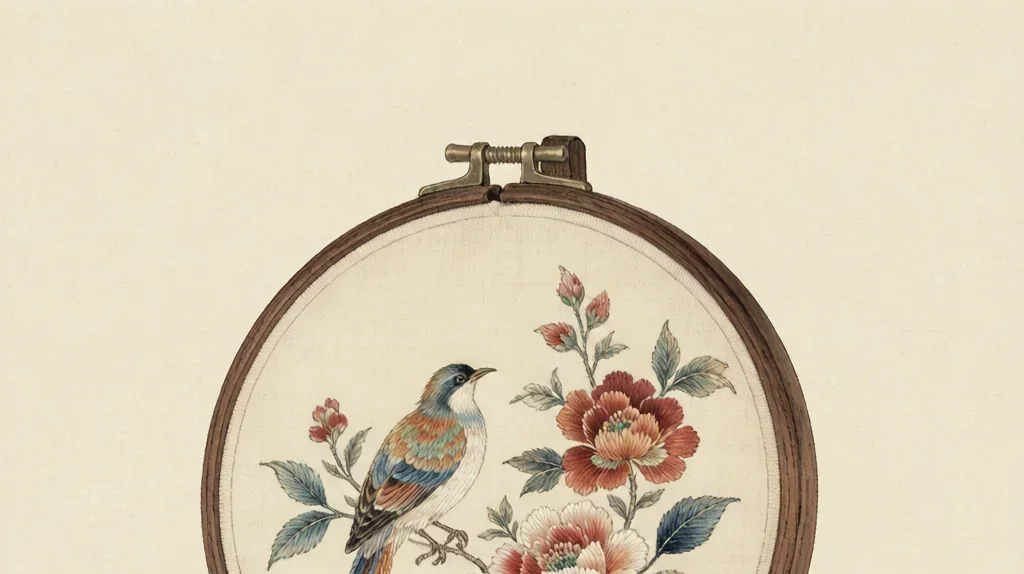
For over three thousand years, Chinese artisans have transformed silk threads into works of breathtaking beauty through the art of embroidery (刺绣, cìxiù). More than mere decoration, Chinese embroidery has served as a medium of cultural expression, social status, gender identity, and even political diplomacy. Archaeological evidence from the Western Zhou Dynasty (1046-771 BCE) reveals embroidered silk garments in aristocratic tombs, while the Silk Road, established during the Han Dynasty, carried Chinese embroidered textiles as far as Rome, where they were valued more than gold. Over the centuries, four distinct regional schools emerged: Suzhou embroidery from Jiangsu, known for its refinement and realism; Hunan embroidery, celebrated for its bold tiger motifs; Sichuan embroidery, distinguished by its vibrant colors; and Guangdong embroidery, famous for its three-dimensional effects and gold and silver threads.
Suzhou Embroidery (苏绣): The Art of Elegance and Realism
Suzhou embroidery, originating in the city of Suzhou, Jiangsu Province, is widely regarded as the most technically sophisticated of the four schools. The tradition can be traced back to the Spring and Autumn period (770-476 BCE), but it reached its golden age during the Song Dynasty (960-1279 CE), when Suzhou's thriving silk industry provided both materials and patronage. The defining characteristic of Suzhou embroidery is its extraordinary realism: artisans use silk threads as fine as a single filament — sometimes splitting a thread into 1/48th of its original thickness — to create gradations of color and texture that rival oil painting. A single Suzhou embroidery piece may employ over 1,000 different shades of silk thread. The most celebrated technique is double-sided embroidery, in which a single piece of silk fabric displays two completely different images on its front and back, with all thread ends concealed within the fabric. The artist Shen Shou (1874-1921) revolutionized the tradition by incorporating Western techniques of light, shadow, and perspective learned during her 1904 visit to Japan.
Hunan Embroidery (湘绣): Tigers, Landscapes, and Bold Expression
Hunan embroidery, centered in Changsha, developed its distinctive style under the influence of the region's bold artistic traditions. Unlike the delicate refinement of Suzhou work, Hunan embroidery is characterized by its vigorous brush-like strokes, relatively thick silk threads, and its preference for powerful subjects — most famously, the tiger. The Hunan tiger embroidery is a genre unto itself: using a technique called pengmao zhen (disheveled hair stitch), embroiderers create the illusion of individual tiger hairs by layering stitches of varying lengths and directions, producing a fur texture so realistic that viewers instinctively want to touch it. The tradition traces its modern revival to the late Qing Dynasty, when the Hunan embroiderer Hu Lianxian (1832-1899) opened a workshop in Changsha and trained a generation of women artisans. Her work was exhibited at the 1915 Panama-Pacific International Exposition in San Francisco, where a Hunan embroidery portrait of U.S. President Woodrow Wilson won a gold medal.
Sichuan Embroidery (蜀绣): Vibrant Colors and Imperial Patronage
Sichuan embroidery, from the Chengdu region, is the oldest of the four schools, with a documented history extending back to the Han Dynasty. The Chengdu Plain's warm, humid climate made it ideal for sericulture, and by the Western Han period, Sichuan silk was renowned throughout the empire. Sichuan embroidery is distinguished by its use of satin stitch as the dominant technique, creating smooth, lustrous surfaces that catch the light. The color palette is notably vibrant, reflecting Sichuan's exuberant cultural character — deep reds, bright greens, golden yellows, and rich blues dominate. The school's most characteristic subjects include carp (symbolizing abundance), pandas (native to Sichuan's mountains), and the hibiscus flower (the city flower of Chengdu). During the Tang Dynasty (618-907 CE), the imperial court maintained workshops in Chengdu, and Sichuan embroidered garments were designated as tribute items. In 2012, a monumental Sichuan embroidery work titled Panda Playing in Bamboo, measuring 12 meters in length, was installed at the Chengdu Shuangliu International Airport.
Guangdong Embroidery (粤绣): Gold, Silver, and Three-Dimensional Splendor
Guangdong embroidery, from the Pearl River Delta region, represents the southernmost tradition and is distinguished by its opulent use of metallic threads, bold three-dimensional effects, and incorporation of diverse materials including peacock feathers, horsehair, and even gold foil. The school divides into two sub-traditions: Guangzhou embroidery, centered on the provincial capital, and Chaozhou embroidery, from the culturally distinct Chaoshan region. The signature technique is gold cushion embroidery, in which cotton padding is built up on the fabric surface and then covered with gold or silver wrapped threads, creating a raised, sculptural effect. During the Qing Dynasty, Guangdong embroidery workshops employed thousands of artisans, and the products were exported in vast quantities through the Canton System of regulated foreign trade. Master embroiderer Chen Shaofang (born 1937) was recognized as a National Master of Arts and Crafts in 1993. In 2006, both Guangzhou and Chaozhou embroidery were jointly recognized as National Intangible Cultural Heritage.
The Art of the Craft
The creation of this craft requires years of patient practice. From the selection of raw materials to the final finishing touches, every step reflects an artisan's deep knowledge and devotion. In an age of mass production, these handmade objects carry a special value — each piece is unique, bearing the subtle marks of the hands that shaped it. Collectors and museums around the world have come to recognize the extraordinary skill involved, and this craft stands as a proud testament to Chinese artistic heritage.
A History Spanning Three Millennia
Chinese embroidery is among the oldest textile arts in the world. Fragments of embroidered silk survive from the Western Zhou dynasty, found in the tombs of aristocrats who were buried in richly worked garments. During the Han dynasty, embroidered textiles moved along the Silk Road and were prized as far as Rome, where they were valued above gold. The craft reached new heights under the Tang and Song, when imperial workshops set exacting standards and court painters supplied designs. The Ming and Qing dynasties saw the four regional schools crystallize, each tied to a city and its local silk industry. Throughout this long history the basic gesture never changed: a needle drawing colored silk through cloth, one painstaking stitch at a time, turning utility into beauty.
Threads, Fabric, and the Embroidery Frame
The materials of embroidery are deceptively simple yet exacting. The ground is usually silk satin or gauze, stretched tight on a rectangular frame so the cloth will not pucker as the needle works. The thread is silk, reeled from cocoons and often split into extraordinarily fine strands so the artist can build subtle gradients of tone. Dyes range from traditional vegetable and mineral colors to modern aniline hues, though connoisseurs prize the soft, slightly uneven tones of natural dyes. The embroiderer's tools are few: needles of varying fineness, small scissors, and thimbles, plus a steady lamp. What looks like magic is in fact control, the artist must plan the order of stitches, the direction of each thread, and the buildup of layers before the first piercing of the cloth.
Embroidery as Status, Gift, and Diplomacy
Beyond decoration, Chinese embroidery has long carried social meaning. The rank badges stitched onto official robes used specific birds and animals to signal a civil or military officer's grade, making embroidery a coded language of the state. Brides' trousseaux and festival hangings proclaimed wealth and good wishes through peonies, cranes, and characters for longevity. As diplomatic gifts, fine embroideries traveled to tributary courts across Asia and, later, to world's fairs, where they won international medals. In daily life a well-embroidered pouch or shoe was a mark of a woman's skill and a favored present between friends. Because the work was so labor-intensive, an embroidered object announced both the taste of its owner and the countless hours of its maker, a quiet statement of value in a culture that revered patience.