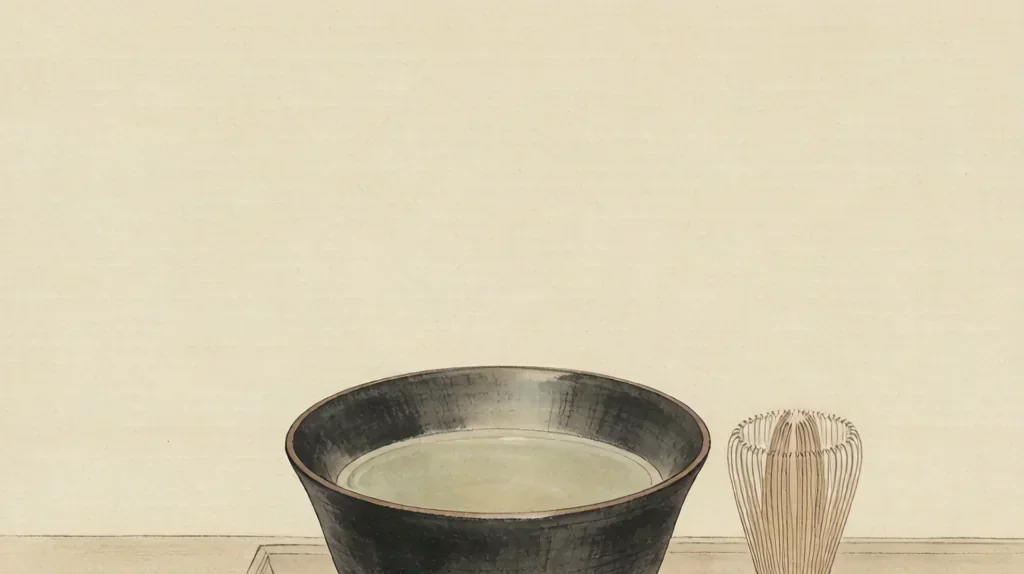
The Japanese tea ceremony, or chanoyu (茶の湯, 'hot water for tea'), is widely regarded as one of the world's most refined cultural practices — a choreographed ritual of hospitality, aesthetics, and Zen spirituality that has captivated the global imagination. Yet the roots of this quintessentially Japanese tradition lie not in Japan but in Tang and Song Dynasty China, carried across the East China Sea by Buddhist monks seeking the deepest teachings of their faith and returning with something unexpected: tea. The story of how Chinese tea culture was transmitted to Japan, transformed over centuries, and ultimately crystallized into the disciplined art of chanoyu is one of the most fascinating examples of cultural diffusion in world history. It is a story that spans over a thousand years, involves emperors and monks, warriors and merchants, and reveals how a borrowed practice can be so thoroughly absorbed and reimagined that it becomes inseparable from the identity of its adoptive culture. Understanding this connection is essential not only for appreciating Japanese tea culture but also for recognizing the profound cultural debt that Japan owes to Tang and Song China — a debt acknowledged by Japanese tea masters themselves throughout history.
The First Seeds: Saicho and Kukai in Tang China
The introduction of tea to Japan is traditionally dated to the early Heian Period, specifically the early 9th century, when Japan was actively importing Chinese civilization through official diplomatic missions known as kentōshi (遣唐使, 'envoys to the Tang'). Two Japanese Buddhist monks who traveled to China on these missions would become the founding figures of Japanese tea culture. The first was Saicho (最澄, 767–822 CE), the founder of the Tendai school of Japanese Buddhism. In 804, Saicho journeyed to Mount Tiantai (天台山) in Zhejiang Province, one of the great centers of Chinese Buddhism, where he studied Tiantai teachings and Chan (Zen) meditation practices. When he returned to Japan in 805, he brought back not only Buddhist scriptures and teachings but also tea seeds, which he planted at the foot of Mount Hiei near Kyoto, at the site of his new monastery, Enryaku-ji. The tea garden he established there is considered the oldest tea plantation in Japan, and tea bushes descended from Saicho's original seeds are said to still grow on Mount Hiei today.
The second pivotal figure was Kukai (空海, 774–835 CE), the founder of the Shingon school of esoteric Buddhism and one of the most brilliant minds in Japanese religious history. Kukai traveled to China in 804 (the same year as Saicho, though on a different ship) and studied at the great Tang capital of Chang'an. Upon his return to Japan in 806, he too brought back tea seeds and, more importantly, the sophisticated tea-drinking customs of the Tang elite. Kukai is credited with introducing the practice of serving tea to the Japanese imperial court. Historical records indicate that in 815, Kukai served tea to Emperor Saga, who was so impressed that he ordered tea to be cultivated in the provinces around the capital. The emperor himself composed poems celebrating tea, and for a brief period during the early Heian era, tea drinking became fashionable among the Japanese aristocracy, closely mimicking the Tang Chinese style — tea was compressed into cakes, ground into powder, boiled in cauldrons with salt and other flavorings, and consumed as a medicinal and aesthetic beverage. However, this early wave of tea culture did not endure; after the official missions to Tang China ceased in 894, tea drinking in Japan declined and nearly disappeared outside of Buddhist monasteries, where monks continued to use tea as a meditation aid. The seeds planted by Saicho and Kukai had taken root, but it would take another three centuries before tea culture truly blossomed in Japan.
Eisai and the Zen Revival: Kissa Yojoki
The true revival and permanent establishment of tea culture in Japan occurred during the Kamakura Period (1185–1333), driven by a second wave of cultural transmission from China — this time from the Southern Song Dynasty. The central figure in this revival was the Zen monk Eisai (荣西, also read as Yōsai, 1141–1215), who traveled to China twice, in 1168 and 1187, spending a total of five years studying at Chan monasteries, including the great Jingshan Temple. Eisai returned to Japan not only with the Rinzai Zen lineage but also with a deep conviction about the value of tea, both as a spiritual aid and as a medicinal substance. In 1211, he composed 'Kissa Yōjōki' (喫茶養生記, 'Drinking Tea for Health'), Japan's first book devoted entirely to tea, which he presented to the shogun Minamoto no Sanetomo.
'Kissa Yōjōki' is a remarkable document that reveals how tea was understood in the context of Song Dynasty Chinese medicine and Buddhist practice. Eisai wrote that 'tea is a divine remedy and a secret of long life,' arguing that it was the supreme medicine for nourishing health and prolonging life. Drawing on Chinese medical theory of the five organs and the balance of elements, he claimed that tea was bitter in taste and therefore particularly beneficial for the heart, the organ associated with bitterness in Chinese medicine. He described the proper methods of picking, processing, and preparing tea leaves, all based on the practices he had observed in Song monasteries. Importantly, Eisai also connected tea to Zen practice, writing that tea 'drives away sleepiness' and 'refreshes the spirit,' making it the ideal companion for the long hours of seated meditation. 'Kissa Yōjōki' was instrumental in re-establishing tea drinking among the Japanese elite, and Eisai's promotion of tea as a health-giving beverage resonated deeply in a culture already attuned to Chinese medical wisdom. He also brought back seeds of the tea plant from China, which he gave to the monk Myoe (明恵) of Kozan-ji Temple in Kyoto. Myoe planted these seeds in the temple grounds, and the tea produced there — known as Toganoo tea — became renowned as the finest in Japan, the ancestor of the celebrated Uji tea region that would later supply the imperial court. Through Eisai's efforts, tea became permanently woven into the fabric of Japanese monastic and aristocratic life, setting the stage for the cultural flowering that was to come.
Sen no Rikyu and the Birth of Wabi-Cha
The transformation of tea drinking from a Chinese-inspired practice into a uniquely Japanese art form reached its culmination in the 16th century with the tea master Sen no Rikyu (千利休, 1522–1591), the most revered figure in the history of chanoyu. Rikyu did not invent the tea ceremony — tea gatherings had been held in Japan for centuries, and important precedents had been established by earlier masters like Murata Juko (村田珠光) and Takeno Joo (武野紹鴎) — but he refined and codified the practice into the form that is recognized today as the quintessence of Japanese tea culture. Under Rikyu's influence, the Japanese tea ceremony shed its Chinese origins and became something entirely new: wabi-cha (侘茶), a tea of rustic simplicity, quiet contemplation, and profound spiritual depth.
Rikyu's innovations were both philosophical and practical. He distilled the spirit of the tea ceremony into four characters: wa (和, harmony), kei (敬, respect), sei (清, purity), and jaku (寂, tranquility). These principles, known collectively as wa-kei-sei-jaku, became the ethical and aesthetic foundation of chanoyu. Harmony refers to the accord between host and guest, between the utensils and the season, between human activity and the natural world. Respect is the mutual regard that governs every interaction in the tea room, from the way the host cleans the utensils to the way the guest receives the tea bowl. Purity is both physical cleanliness and spiritual clarity — the act of purifying the tea scoop and tea container with a silk cloth is simultaneously a ritual cleansing of the mind. Tranquility is the ultimate goal: the state of undisturbed peace that the tea ceremony seeks to cultivate in both host and guest.
Rikyu also transformed the physical environment of tea. He rejected the opulent Chinese-style tea pavilions favored by the warrior elite and instead championed the soan (草庵, 'thatched hut') tea room — a small, rustic space, often only four and a half tatami mats in size, entered through a low door called the nijiriguchi (躙口) that required guests to bow and crawl inside, symbolically humbling themselves regardless of social rank. He favored simple, locally made utensils over expensive Chinese imports — rough Raku ware tea bowls, bamboo tea scoops carved by the master himself, flower arrangements of a single wild blossom in a bamboo container. This aesthetic of wabi-sabi (侘寂) — finding beauty in imperfection, impermanence, and rustic simplicity — was a radical departure from the Chinese aesthetic of refinement and elegance, and it reflected Rikyu's deep engagement with Zen philosophy. While the Chinese origins of the tea utensils, the powdered tea, and many of the ritual gestures remained visible to those who knew the history, Rikyu had created something that was no longer Chinese tea culture but a distinctly Japanese spiritual discipline. His legacy was so profound that the three main schools of Japanese tea ceremony today — Urasenke, Omotesenke, and Mushanokojisenke — are all descended from his direct lineage.
Two Paths Diverging: Matcha and Sencha
An intriguing aspect of the Chinese-Japanese tea connection is the historical divergence in brewing methods. The tea culture that Saicho, Kukai, and Eisai encountered in Tang and Song China was based on powdered tea (抹茶, mǒchá in Chinese, matcha in Japanese) — tea leaves ground into a fine powder and whisked with hot water in a bowl. This was the standard method of tea preparation in China during the Tang and Song dynasties, and it was this method that was transmitted to Japan, where it became the basis for the Japanese tea ceremony. However, during the Ming Dynasty (1368–1644), a revolution occurred in Chinese tea culture: the Hongwu Emperor, Zhu Yuanzhang, issued a decree in 1391 abolishing the production of compressed tea cakes in favor of loose leaf tea. This imperial edict, motivated partly by a desire to reduce the burden of tribute tea production on the people, had the effect of completely transforming Chinese tea practice. The powdered tea method was abandoned, and China adopted the whole-leaf infusion method that is standard today — loose leaves steeped in a pot or cup, the method used in the Gongfu Tea Ceremony and everyday Chinese tea drinking.
Japan, which had ceased sending official missions to China after 894, did not receive this update. The Japanese tea tradition, having been established during the Song Dynasty, remained frozen in the powdered tea form that had been transmitted by Eisai and other monks. This historical accident — the cessation of regular cultural exchange between China and Japan during precisely the period when Chinese tea practice was undergoing its most fundamental transformation — created a fascinating divergence. The matcha that is today considered the most 'Japanese' of teas is actually a preserved form of Song Dynasty Chinese tea culture, while the whole-leaf tea that Chinese people drink every day represents a later evolution that Japan largely bypassed. It was not until the 17th century, during the Edo Period, that whole-leaf infused tea — known in Japan as sencha (煎茶) — was introduced by the Chinese monk Yinyuan Longqi (隐元隆琦, known in Japan as Ingen), the founder of the Obaku school of Zen. Ingen brought Ming Dynasty tea practices to Japan, and the sencha tradition developed alongside the older matcha tradition, eventually giving rise to its own ceremony, senchadō (煎茶道, 'the Way of Sencha'), which is less formal and more influenced by Chinese literati culture. Thus, within Japanese tea culture, one can trace two distinct Chinese lineages: the Song Dynasty lineage preserved in matcha and the Ming Dynasty lineage expressed in sencha — a living museum of Chinese tea history preserved in the tea rooms of Japan.
The Tang and Song Tea That Japan Preserved
The tea that Saicho, Kukai, and Eisai carried home was not the loose leaf Chinese people drink today. In Tang and Song China, tea was compressed into cakes, broken, ground into powder, and whisked with hot water in a bowl, a method the Chinese called dian cha. This was the everyday elite practice of the era, documented in Lu Yu's Classic of Tea and refined in the Song court. Japan received this form during the Heian and Kamakura periods and, because official missions to China ceased in 894, simply kept brewing it the Song way. Centuries later, when China moved on to steeping whole leaves, Japan remained a living museum of Song tea preparation. So the matcha at the heart of chanoyu is best understood not as a Japanese invention but as a preserved chapter of Chinese tea history, maintained across the sea long after its homeland moved on.
Chinese Teaware and the Prestige of Tang Goods
Early Japanese tea culture measured status by access to Chinese things. The objects known as Tang goods, porcelain, lacquer, and metalware imported from the continent, were treated as treasures, and fine Chinese tea bowls and jars became heirlooms of powerful families and temples. For the first centuries of Japanese tea, owning a beautiful Chinese vessel was itself a mark of refinement, and the great tea masters collected and displayed them with reverence. This taste began to shift with Sen no Rikyu, who championed humble local ware such as rough Raku bowls over expensive imports, arguing that beauty lay in simplicity rather than provenance. Yet the prestige of Chinese teaware never fully faded, and the story of Tang goods reveals how Japanese tea was, from the start, in dialogue with Chinese material culture as much as with Chinese leaves.
Zen Buddhism: The Bridge of Tea
The deepest reason tea traveled from China to Japan was religion. Chan Buddhism, which the Japanese called Zen, used tea to stay alert during long seated meditation, and the monks who studied in Tang and Song China learned to drink it as a spiritual aid rather than merely a refreshment. When they returned home, they brought both the seeds and the habit, planting tea at monasteries and serving it to fellow practitioners. Eisai explicitly linked tea to Zen practice, writing that it drives away sleep and refreshes the spirit. This monastic framing is the seed from which the Japanese tea ceremony later grew, transforming a meditation aid into a full aesthetic and ethical discipline. The famous phrase tea and Zen are one taste, often associated with later Japanese masters, expresses a unity that Chinese Buddhist practice had already implied centuries earlier.
A Living Link: Tea Exchange in Modern Times
The connection between Chinese and Japanese tea is not only historical but active today. Japanese tea masters and scholars continue to visit China's Tiantai and Jingshan regions, the places where their tradition was born, to study temple grounds and early tea sites firsthand. Chinese interest in matcha has surged in recent years, with cafes and bakeries across China embracing powdered tea in new forms, reconnecting the homeland with the Song practice it once exported. Academic conferences, museum exhibitions, and cultural exchanges now routinely frame Japanese chanoyu as part of a shared East Asian tea heritage. Even the vocabulary betrays the bond: nearly all Japanese tea terms are Chinese in origin. Far from a closed national ritual, the Way of Tea remains a two-way bridge, with each side still discovering something of itself in the other.