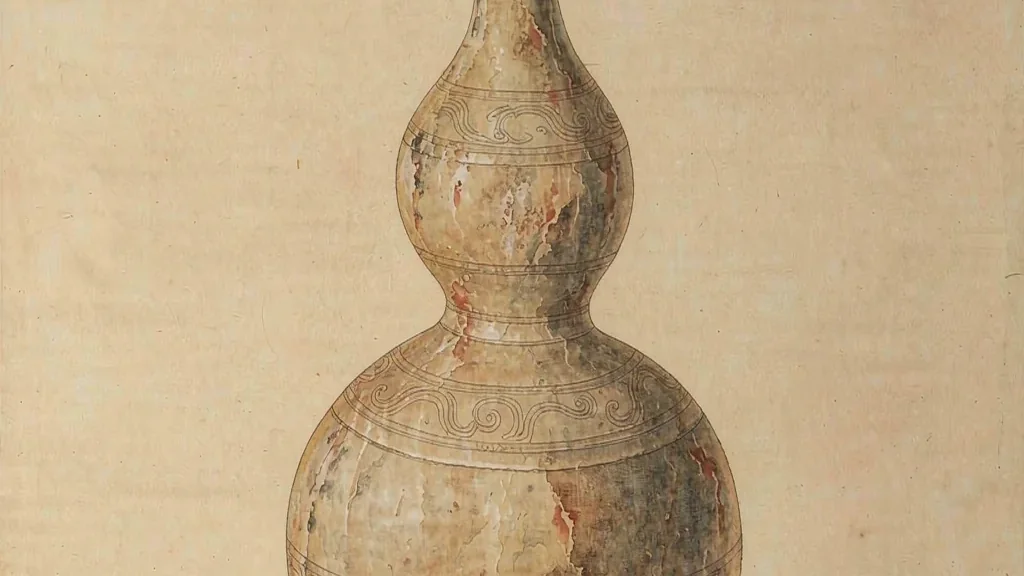
No plant is more deeply woven into Chinese folk art than the bottle gourd (葫芦, húlu). Dried and hollowed, gourd vessels have been used for over 3,000 years as containers for water, medicine, and wine. By the Ming and Qing dynasties, the humble gourd had been transformed into an art form: carved, painted, burned, and molded into objects of extraordinary beauty.
The Symbolism of the Gourd
The gourd is a powerful symbol in Chinese culture. Its name (hulu) sounds like 'blessings and fortune.' Its bottle shape suggests the female womb, making it a symbol of fertility. In Daoism, the gourd is the container of the elixir of immortality.
Techniques of Gourd Decoration
Gourds were decorated by several methods. Carving: the dried skin was cut with fine knives. Pyrography: the surface was burned with hot tools. Painting: colors were applied to the dry surface. The most sophisticated technique was mold-gourd carving, where the growing gourd was enclosed in a carved mold and grew to fill it.
Gourd Containers
Gourds were made into snuff bottles, cricket cages, wine containers, and medicine bottles. The natural shape of the gourd provided the basic form, and the decoration enhanced its beauty.
The Daoist Symbolism of the Gourd
In Daoist tradition, the gourd is the vessel of the immortals. The Eight Daoist Immortals (八仙, Bāxiān) are often depicted carrying gourds that contain their magical tools or the elixir of immortality. The gourd's narrow neck and swollen body made it an ideal container for holding substances that were believed to have transformative powers.
The most famous Daoist gourd is the one carried by Li Tieguai (李铁拐), the Iron Crutch Li, one of the Eight Immortals. His gourd contained medicine that could heal any illness and even raise the dead. Daoist priests used gourds as containers for their medicines, and the gourd became a symbol of the healing arts.
Mold-Grown Gourds: The Marriage of Nature and Craft
The most sophisticated gourd technique involved training the growing gourd inside a carved mold. The mold was made from wood or clay, with the desired design carved in intaglio. The young gourd was placed inside the mold while still on the vine, and as it grew, it filled the mold, taking on its shape and assuming the carved design.
The mold-grown gourd technique required careful timing and great patience. The gourd had to be placed in the mold at exactly the right stage of growth; too early and it would not fill the mold; too late and it would be too rigid. The growing gourd had to be watered and monitored daily. A successful mold-grown gourd was a triumph of cooperation between nature and human craft.
The Gourd in Chinese Folk Art
Beyond the refined works of the scholar class, gourds were decorated in folk traditions that were lively and colorful. Farmers and villagers painted gourds with bright, simple designs — peonies, fish, children, and auspicious symbols. These decorated gourds were used as water containers, wine jugs, and storage vessels in daily life.
The gourd also played a role in Chinese festivals. During the Dragon Boat Festival, gourds were hung on doors to ward off evil spirits. During the New Year, gourd decorations were placed in homes to bring good fortune. The humble gourd, in its many forms, was present at every stage of Chinese life.
The Gourd as a Musical Instrument
The same hollow fruit that held wine and medicine also gave China some of its oldest wind instruments. The sheng, a mouth organ of bamboo pipes set in a gourd wind-chamber, has been played for more than two thousand years and still leads folk and ceremonial ensembles. In the southwest, the hulusi, a gourd flute, uses a gourd as the air chamber feeding free reeds, producing a soft, breathy tone loved in Dai and other minority musics. Because the gourd is light, resonant, and naturally hollow, it made an ideal body that needed little working beyond drying and drilling. In this role the plant left the shelf and the altar to become sound itself, a quiet example of how Chinese craft turned one humble form to many ends.
Gourd Charms and Folk Beliefs
Beyond decoration and Daoist lore, the gourd served as a protective charm in everyday life. Hung at the eaves or above a door, a dried gourd was thought to absorb or deflect illness and misfortune, a use echoed in the feng shui 'wu lou' symbol of health. Small gourds were tied to children's clothing or cradles as apotropaic toys, and the paired shape made natural love tokens. Folk healers displayed a gourd to signal their trade, a custom that survives in the stylized medicine-gourd sign. These beliefs rested on the plant's punning name and on its rounded, containing form, which people read as a vessel for luck itself, a tiny object charged with a whole vocabulary of hope. In markets today the dried gourd still sells as both charm and curio, a small survivor of a very old way of wishing.
❓ Frequently Asked Questions
📝 Chinese Vocabulary
葫芦 — : bottle gourd.
葫芦雕 — : gourd carving.
火画葫芦 — : fire-painted gourd.
葫芦 — : bottle gourd; symbol of immortality
葫芦雕 — : gourd carving
范制葫芦 — : mold-grown gourd; gourd grown inside a carved mold
福禄 — : A punning phrase: 'gourd' sounds like 'good fortune and salary'.
匏 — : A large calabash gourd used as a vessel.
🎉 Fun Facts
- The gourd is one of the Eight Treasures (八宝) of Chinese Buddhism.
- Some Qing gourd carvings were so detailed they took years to complete.
- The largest gourd ever recorded in China was over 2 meters tall and weighed over 100 kilograms.
- Qing dynasty cricket cages were often made from carved gourds, as the gourd's acoustic properties enhanced the cricket's song.
- Because the words for gourd sound like 'good fortune and salary,' the shape became a popular wedding and birthday gift promising prosperity.
- Daoist immortals such as Li Tieguai carried a gourd said to hold medicine or even a miniature world, making the humble fruit a symbol of the sage's power.