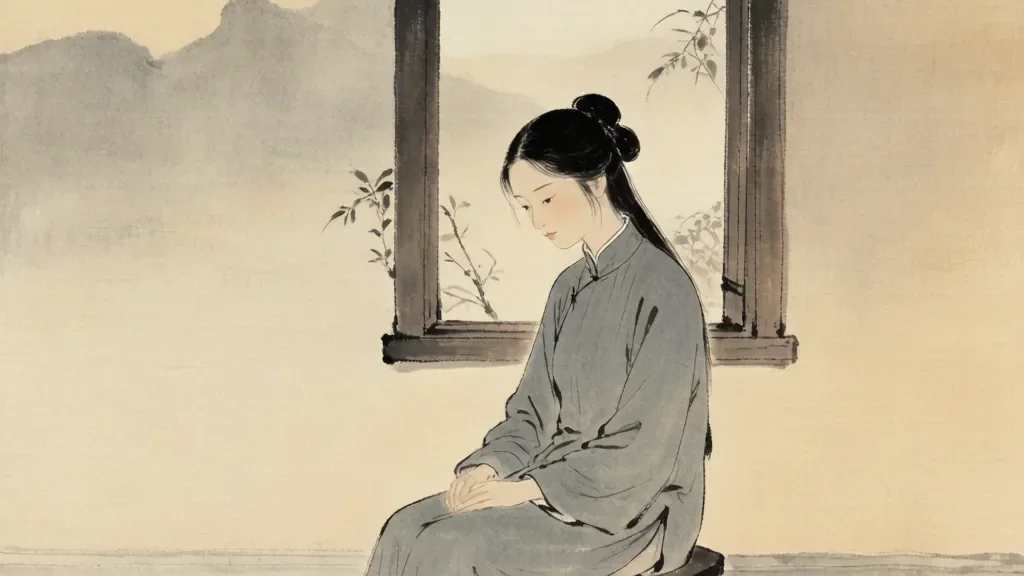
Long after the reunion dinner is cleared away, many Chinese families do something that seems simple yet carries deep meaning: they stay awake together until the morning of the new year. This is 守岁 (Shǒu Suì), "keeping the year" or "guarding the old year," the cherished custom of staying up through the final night of the lunar calendar. Far from a mere test of endurance, Shǒu Suì is an intimate family vigil that blends farewell with welcome, honoring the year that is passing while standing watch for the one about to arrive. In an age of bright screens and short nights, the old practice of sitting up until dawn remains a tender emblem of family togetherness and respect for time itself.
The Meaning Behind Staying Awake
The word shou means to guard or keep, and sui refers to the year, so Shǒu Suì literally describes the act of keeping the year from slipping away unseen. Folk belief holds that staying awake helps "see off" the old year and "welcome" the new one, and that the vigil grants longevity to one's parents. A well-known saying goes that the longer the younger generation stays up, the longer the elders will live, turning a late night into a quiet gift of filial devotion.
There is also a protective dimension. The lunar new year transition was traditionally a vulnerable threshold, a moment when the boundary between worlds thinned. By keeping lamps lit and company present, families warded off lingering misfortune and made sure the household greeted the new year awake, alert, and united. The darkness outside was met with warmth and light inside.
Historical Development
Shǒu Suì is documented as early as the Wei and Jin dynasties, more than seventeen hundred years ago, and appears in poetry of the Tang and Song periods as a refined literati habit as well as a folk one. The great Song statesman and poet Su Shi wrote of staying up on New Year's Eve, and Yuan and Ming records describe commoners burning incense, playing games, and chatting through the night. By the Qing dynasty the custom was firmly woven into the national calendar of celebration.
What began as a somewhat solemn watch gradually became a cozy social occasion. Historically the vigil included offerings to ancestors, the lighting of lanterns that burned until dawn, and the sharing of food and talk. Over time the religious tension softened, and the night became above all a chance for family members, often scattered by work, to be physically present with one another for one unhurried stretch of hours.
How Families Keep the Vigil Today
In contemporary homes, Shǒu Suì usually begins after the reunion dinner and runs through midnight, when firecrackers and fireworks mark the official arrival of the new year. Many families then continue until one or two in the morning, or, among the devoted, all the way to sunrise. The television broadcast of the national Spring Festival Gala has become a modern companion to the night, providing songs, comedy, and countdown right up to the bell.
The activities are deliberately low-key: eating melon seeds and sweets, playing cards or mahjong, telling stories, and exchanging the first red envelopes of the season. Children, thrilled to defy bedtime, dart about with sparklers, while grandparents recount tales of new years past. The point is presence rather than performance; the clock is the only schedule that matters.
Symbolism of Light and Warmth
Light is central to the vigil. Doors are often decorated, lanterns glow in windows, and a lamp may be left burning in a main room to symbolize continuity and to guide good fortune inward. In older custom, every lamp in the house was kept lit so that no corner fell dark on the year's turning. This radiance is both practical and poetic: it keeps the cold and the unknown at bay while announcing to the neighborhood that this household is awake and ready.
Warmth, too, is symbolic. The hearth or hot pot at the center of the reunion meal is kept going, and the shared heat mirrors the emotional warmth of the gathered family. To sit together through the cold small hours is to insist, year after year, that human closeness can outlast the longest night.
Shǒu Suì and the Life Cycle
The custom takes on special resonance at the two ends of life. For the very old, being kept company through the night is a sign of honor and a wish for many more years. For the very young, the excitement of staying up "like a grown-up" plants an early memory of belonging. Anthropologists note that the vigil functions as a gentle transmission of values: patience, family loyalty, and hope, passed not through lecture but through a shared, sleepy, happy night.
In migrant families separated for most of the year, Shǒu Suì can be the emotional peak of the holiday, the one night when absence is suspended. The act of waiting together for dawn becomes a quiet promise that, however far work or study may carry people, the family clock still ticks in unison at the year's turning.
A Custom That Crosses Borders
Chinese communities abroad keep Shǒu Suì alive in apartments and community centers from Singapore to San Francisco. Where fireworks are restricted, families substitute noise-makers and group video calls that link several time zones into one long vigil. The form bends to local law and circumstance, but the essence is constant: a family refuses to let the new year arrive unwitnessed.
That refusal is the whole point. In a culture that measures time by cycles rather than straight lines, Shǒu Suì is the knot that ties one cycle to the next. To stay up is to say that the passing year mattered and the coming one is worth meeting with open eyes, a sentiment as modern as it is ancient.
Shou Sui and the Kitchen Hearth
At the heart of the vigil lies the hearth. The reunion meal is cooked over a fire that is then kept alive through the small hours, because letting the stove go cold on the year's turning was thought to invite barrenness and bad luck into the home. The warm pot at the center of the table thus becomes a small furnace of continuity, linking the meal just eaten to the new year about to arrive. In older custom the kitchen god's shrine was also tended that night, for he was the household's witness to whether the family honored the threshold properly. The persistence of heat, like the persistence of light, framed the vigil as an act of keeping the family's vital energy burning until dawn.
Poetry and the New Year's Eve Vigil
Beyond family warmth, the vigil has long been an occasion for poetry. Scholars and officials far from home wrote verses on New Year's Eve to mark the passage of time and their separation from kin, and many such poems survive as quiet records of the same custom described here. The great Song poet Su Shi, among others, left lines composed during the night watch, turning insomnia and reflection into literature. This literary habit shows that Shou Sui was never only folk belief; it was also a cultivated moment of introspection in which the year's end prompted writing. The custom therefore bridges the popular and the learned, uniting kitchen, lamp, and brush in one shared act of seeing the old year out.
❓ Frequently Asked Questions
📝 Chinese Vocabulary
守岁 — : staying up on New Year's Eve to see out the old year.
除夕 — : New Year's Eve, the evening that drives out the old.
守 — : to guard, keep, or watch over.
岁 — : year, as counted in the traditional cycle of age.
辞旧迎新 — : to bid farewell to the old and welcome the new.
压岁钱 — : New Year red envelope given to children, originally meant to suppress evil and protect them through the year.
守岁火 — : The vigil fire or lamp kept burning through the night of the old year.
爆竹 — : Firecrackers set off at midnight to welcome the new year and drive away misfortune.
🎉 Fun Facts
- The national Spring Festival Gala, watched during many Shǒu Suì vigils, is among the most viewed television broadcasts in the world.
- In the past, every lamp in the house was kept burning through the night so no room fell dark at the year's turning.
- The custom is attested in Chinese literature for over seventeen hundred years.
- Some families abroad link video calls across time zones so relatives can keep the vigil together.
- The first red envelopes of the season are traditionally exchanged during the Shou Sui vigil, passed from elders to children as the clock nears midnight.
- In rural homes some families still prepare dumplings or noodles just before the turn of the year, eaten as a late-night feast of good-omen foods.