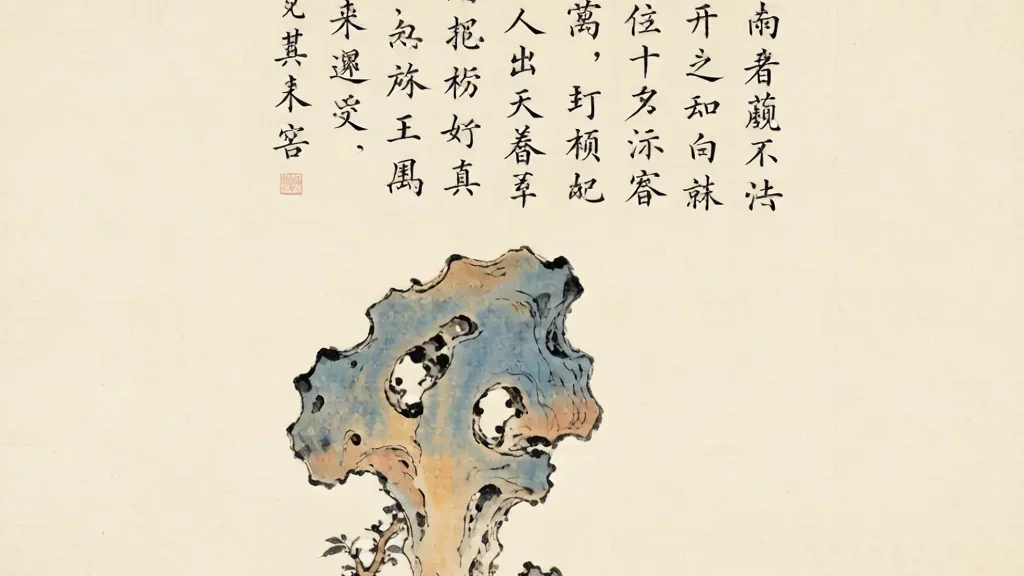
Of all the arts China has given the world, none is more intimately tied to the Chinese soul than calligraphy. In the West, handwriting is a practical skill; in China, 书法 (shū fǎ), "the way of writing," is one of the highest fine arts — ranked alongside poetry and painting as a measure of a person's cultivation. A single character, brushed in a few seconds, can reveal the calligrapher's temperament, education, energy, and even moral character. Emperors selected officials by their brushwork. Poets wrote their finest verses in flowing ink. Monks meditated through every stroke.
To understand Chinese calligraphy is to understand how a civilization came to see the act of writing as a mirror of the self. This guide traces the art from its origins on oracle bones three thousand years ago, through the five major script styles that every student learns today, to the Four Treasures of the Study and the first steps a beginner can take to pick up the brush.
From Oracle Bones to Brushwork: Three Thousand Years
The story of Chinese calligraphy begins in the late Shang Dynasty (around 1200 BCE) with oracle bone script (甲骨文, jiǎ gǔ wén). Diviners carved questions onto turtle plastrons and ox scapulae — "Will it rain?" "Will the king's tooth heal?" — then heated the bones until they cracked, reading the answers in the fracture lines. These carvings are the earliest known Chinese characters, and already they show a careful sense of balance and proportion: not just labels, but designed marks.
By the Zhou Dynasty, characters had moved from bone to bronze, cast into ritual vessels in what is called bronze script (金文, jīn wén) — rounder, richer, more deliberate. When Qin Shi Huang unified China in 221 BCE, he ordered his minister Li Si to standardize the writing system. The result was the small seal script (小篆, xiǎo zhuàn), an elegant, symmetrical style still used today on name chops and ceremonial inscriptions. From that moment, China shared a single written language — and calligraphy as an art was born.
The brush, not the chisel, is what made calligraphy an art of motion. The soft animal-hair brush — responsive to the slightest pressure, speed, and angle — allowed the writer to capture energy and emotion in a way no hard tool could. Over the centuries, calligraphers developed new styles, each reflecting the spirit of its age: the disciplined dignity of the Han, the wild freedom of the Tang, the refined introspection of the Song.
The Five Major Script Styles
Chinese calligraphy is traditionally classified into five major script styles (书体, shū tǐ), each with its own character, history, and use. Every calligrapher learns them in roughly the order they developed.
1. Seal script (篆书, zhuàn shū) is the oldest style still in use. Its lines are even in thickness, symmetrical in structure, and elongated in shape. It is slow, formal, and ceremonial — the script of imperial proclamations and personal name chops. To write seal script well is to master absolute control: every stroke must be as steady as if drawn with a compass.
2. Clerical script (隶书, lì shū) emerged in the Han Dynasty (206 BCE–220 CE) as a practical hand for government clerks handling mountains of paperwork. It broke the symmetry of seal script, flattening characters and introducing the distinctive "silkworm head and swallow tail" wave at the end of horizontal strokes. Clerical script is dignified and broad-shouldered — the foundation of all later styles.
3. Regular script (楷书, kǎi shū), also called "standard script," is the style every Chinese child learns in school. Its strokes are clear, balanced, and structurally complete; each character fits neatly into an imaginary square. The Tang Dynasty (618–907) was the golden age of regular script, producing masters like Yan Zhenqing (颜真卿), whose vigorous, weighty style became the model for centuries, and Liu Gongquan (柳公权), known for his clean, bony strength.
4. Running script (行书, xíng shū) is where calligraphy begins to flow. Strokes are connected, abbreviations appear, and the brush moves faster — but the characters remain legible. Running script is the everyday handwriting of the educated, and the most expressive of the practical styles. Its most celebrated masterpiece is the Lantingji Xu (兰亭序, "Preface to the Poems Collected from the Orchid Pavilion") by Wang Xizhi (王羲之), written in 353 CE. Wang was called the "Sage of Calligraphy," and the Lantingji Xu — dashed off at a poetry gathering after a few cups of wine — is so revered that Emperor Taizong of Tang reportedly had it buried with him.
5. Cursive script (草书, cǎo shū) is calligraphy at its most wild. Characters are radically simplified, strokes merge into single sweeping motions, and the brush barely leaves the paper. To the untrained eye, cursive script can look like abstract art — and in a sense, it is. Masters like Zhang Xu (张旭) and Huai Su (怀素) of the Tang Dynasty, both Buddhist monks, were famous for their "wild cursive" (狂草), written in states of inspiration (and, reportedly, drunkenness). Cursive script is the most personal of all styles — a direct trace of the calligrapher's mood and energy in the moment.
The Four Treasures of the Study
To practice calligraphy is to enter into a relationship with four humble tools, known together as the 文房四宝 (wén fáng sì bǎo), "Four Treasures of the Study." These are not just equipment — they are companions that a serious calligrapher comes to know as intimately as a musician knows an instrument.
The brush (笔, bǐ) is made from animal hair — typically goat, wolf (weasel), or rabbit — set into a bamboo handle. Goat hair is soft and supple, wolf hair stiffer and more responsive; many brushes blend both. Unlike a Western pen, the brush has no fixed point. The tip can produce a hair-thin line or a broad sweep, depending on pressure. A single brush, in the hand of a master, contains the range of an entire orchestra.
Ink (墨, mò) comes as a solid stick, made from pine soot or lampblack bound with glue and perfume. Before writing, the calligrapher grinds the stick on an inkstone with a little water, controlling the ink's density by the speed and length of grinding. The process is itself a meditation — a quiet ritual that prepares the mind for the work ahead. Cheap liquid ink exists, but traditionalists insist that freshly ground ink has a liveliness no bottled ink can match.
Paper (纸, zhǐ) is traditionally Xuan paper (宣纸), made from the bark of the blue sandalwood tree and rice straw. Xuan paper is thin, absorbent, and unforgiving: every hesitation of the brush shows, and no stroke can be erased. This is part of its virtue. The paper records the calligrapher's state of mind with the fidelity of a seismograph, making each piece an unrepeatable performance.
The inkstone (砚, yàn) is the most permanent of the four. A fine inkstone, carved from slate or ceramic, can last for generations and is often passed down as a family heirloom. The most prized are Duan inkstones (端砚) from Guangdong, whose fine grain produces a smooth, even ink.
How to Begin: The First Strokes
Starting calligraphy is surprisingly simple. You need only the Four Treasures and a copybook (字帖, zì tiè) — a printed model of a master's work to copy. Most beginners start with regular script, copying Tang masters like Yan Zhenqing or Liu Gongquan. The discipline is to copy exactly, stroke by stroke, until the hand learns the structure of each character.
The eight basic strokes of the character 永 (yǒng, "eternal") — known as the "Eight Principles of Yong" (永字八法) — are said to contain every stroke a calligrapher will ever need: dot, horizontal, vertical, hook, rising, left-falling, short left-falling, and right-falling. Master the character 永, the saying goes, and you have mastered the foundation of all Chinese calligraphy.
The deeper discipline, however, is not in the hand but in the mind. A calligrapher must be calm, focused, and present — what the Chinese call 入静 (rù jìng), "entering stillness." Before writing, the calligrapher sits, breathes, and visualizes the character. Only when the mind is settled does the brush move. This is why calligraphy has always been considered not just an art, but a form of meditation — a way of cultivating the self through the simple act of writing a single character well.
Women Calligraphers in History
Although the literate elite were mostly men, women also practiced and shaped calligraphy. Imperial consorts such as the Tang princesses and later ladies of the court produced respected works, and the Empress Wu Zetian commissioned stele inscriptions in her own hand. In gentry households girls learned regular script alongside boys, and some became known for a refined, restrained style associated with the inner chambers. A few, like the poet-and-calligrapher Li Qingzhao's circle, exchanged inscribed fans and scrolls as literary friendship. Their contributions were long overshadowed by the canon of male masters, but recent scholarship recovers them as proof that the brush was never exclusively male, and that the art's standards of grace and control were pursued across the genders.
Calligraphy and Seal Carving
Calligraphy and seal carving, or zhuàn kè, are twin arts of the scholar's desk. The seal, usually cut in seal script on stone, was pressed in red paste and stamped on a finished work to sign it, much as a painter's mark. A good seal balances the composition and confirms authorship, so collectors prized carved stones by famous artists as highly as the writing they authenticated. The carver must itself write fluently in seal script, then translate that into the resistant medium of stone with a knife. The two practices fed each other: the discipline of the brush informed the carved line, and the carved line refreshed the brush worker's sense of structure.
Calligraphy in the Digital Age
Keyboards have not ended calligraphy; they have changed its role. In schools it survives as a graded subject and a bridge to cultural identity, while hobbyists fill evening classes and park corners with water brushes that leave fading marks on stone. Typefaces modeled on regular and running script let everyone use the look of calligraphy in print and on screens, though purists note that a font cannot carry the writer's breath. Competitions, museum shows, and social media accounts devoted to brushed work have drawn a young audience, so the art persists less as daily writing and more as chosen practice, a deliberate slowness against the speed of digital life.
Regional and Court Styles
Calligraphy took on distinct flavors by place and period. The Tang court standardized regular script and made it the measure of official handwriting, while the Song literati prized a more personal, relaxed running script that showed temperament. The Jiangnan region around Suzhou and Hangzhou became a cradle of elegant scholarly styles, and the north produced bolder, monument-inspired work copied from stone steles. Court academies patronized calligraphers whose hands defined an era's taste, and regional teacher-student lines carried a local manner for generations. This variety means that even within one script style, a trained eye can often place a work by its regional accent of pressure, spacing, and flow.
❓ Frequently Asked Questions
📝 Chinese Vocabulary
书法 — : calligraphy; literally "the method of writing," but carrying the deeper sense of "the way of writing" as a fine art and spiritual discipline.
文房四宝 — : the Four Treasures of the Study — brush, ink, paper, and inkstone — the essential tools of every Chinese scholar.
楷书 — : regular script; the clear, balanced style taught in schools and used as the foundation of calligraphic training.
行书 — : running script; a flowing, semi-cursive style that connects strokes and is considered the most expressive of the practical hands.
永字八法 — : the Eight Principles of Yong; the eight basic strokes found in the character 永, traditionally used to teach the foundations of brushwork.
入静 — : Entering stillness, the calm meditative state a calligrapher seeks before the brush moves.
笔锋 — : The tip or edge of the brush, whose angle and pressure decide the quality of every stroke.
临帖 — : Copying a master's model as the fundamental practice of learning calligraphy.
🎉 Fun Facts
- The Lantingji Xu by Wang Xizhi (353 CE) is so prized that Emperor Taizong of Tang loved it so deeply he reportedly ordered it buried with him in his tomb — meaning the original is forever lost, and only later traced copies survive.
- Calligraphy was once a civil service exam subject: in imperial China, a candidate could be brilliant in policy and classics, but if his brushwork was poor, he would not be appointed to office.
- The soft hair of the calligraphy brush can produce a line as thin as a thread or as broad as three fingers — from the same tip, in the same stroke — making it more responsive than any metal pen ever made.
- The scholar's desk was sometimes described as having 'Five Treasures' once a water bowl and brush rest were added to the Four Treasures, so the writing table grew into a small ecosystem of tools.
- In the imperial examinations a candidate's regular-script neatness could affect his ranking, so boys drilled the same characters thousands of times from childhood.
- A single character brushed by a revered master was often framed and hung as a household treasure, and scrolls were a standard gift exchanged between emperors and envoys.