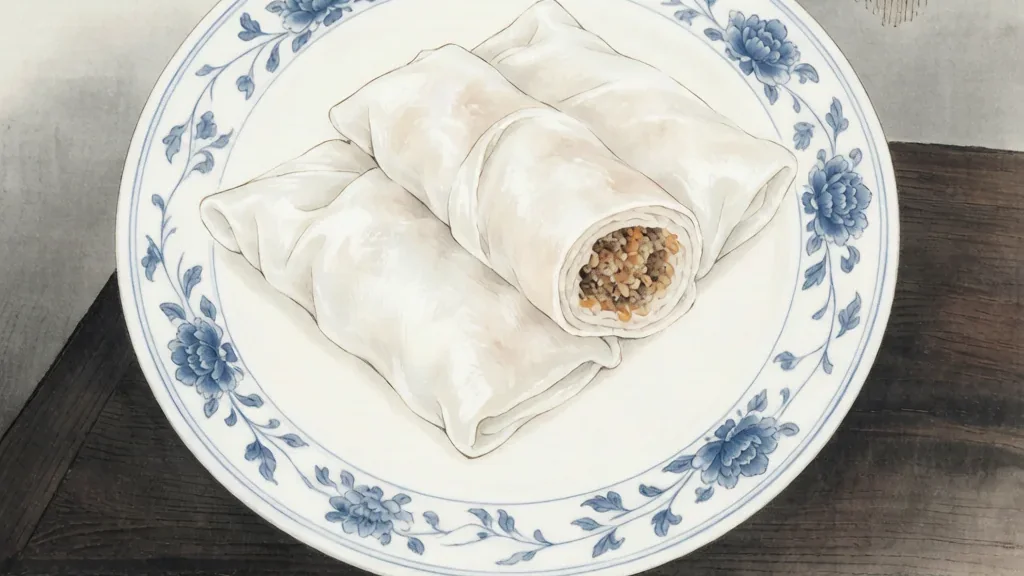
Changfen (肠粉, chángfěn), often called rice noodle rolls, are a cornerstone of Cantonese dim sum: silky sheets of steamed rice batter rolled around a savory filling and slicked with a sweetened soy or sesame sauce. The name literally means "intestine noodle," a nod to the roll's tubular, gut-like shape rather than any ingredient. Born in the teahouses of Guangzhou in the late Qing, changfen are now eaten across Guangdong, Hong Kong, and overseas Chinatowns as a breakfast, a dim-sum staple, and a late-night snack. Their appeal is textural above all—a tender, almost weightless slip of rice that carries filling and sauce in every bite.
What Changfen Are
A changfen is made by spreading a thin layer of watery rice batter (mǐ jiāng, 米浆) onto a tray or cloth, steaming it into a delicate sheet, laying a filling across it, and rolling it up into a log. The roll is cut into segments and sauced.
The wrapper is not a noodle in the strand sense but a sheet—hence "rice noodle roll." It is neutral, faintly sweet, and prized for a "shuǎng huá" (cool and slippery) mouthfeel that defines good Cantonese starch cookery.
Fillings are added before rolling, so each slice reveals a neat spiral of rice and center.
Origins in Guangzhou
Changfen are generally traced to Guangzhou (Canton) in the late Qing dynasty, emerging from the city's teahouse culture as a light, cheap item to accompany morning tea (zǎo chá, 早茶). Hawkers also sold them from pushcarts in the streets.
One popular origin story credits a Guangzhou inventor who, inspired by the silk trade, devised a cloth-steaming method to make the sheets; whether literal or not, the cloth method (bù lā cháng, 布拉肠) remains the artisanal standard.
From Guangzhou the roll spread through the Pearl River delta and to Hong Kong, becoming a dim-sum essential and later a global Cantonese export.
The Rice Slurry
The base is rice, soaked and ground with water into a fluid batter, sometimes with a little tapioca or wheat starch for elasticity. Freshness matters: old batter ferments and turns sour.
The consistency is critical—too thick and the sheet is doughy; too thin and it tears. Masters adjust the water daily for humidity and flour, aiming for a pourable but coating batter.
Some shops keep a fermented "mother" batter for tang, but most home and restaurant versions use a clean, neutral slurry for maximum silkiness.
Steaming on Cloth or Tray
Traditional "bula" (cloth-pull) changfen are steamed on a framed muslin cloth stretched over a tray; the batter is poured on, fillings added, and the cloth lowered into a steamer. The cooked sheet is peeled off with a cloth-whisk and rolled.
Modern shops use perforated stainless trays that are faster and easier, sacrificing a little of the cloth's subtle texture. Either way, steaming is brief—seconds—so the sheet stays tender, not rubbery.
The cloth method is slower and more skilled, which is why it signals a higher-end or more traditional shop.
Fillings
Classic fillings include shrimp (xiā rén, 虾仁), beef (often marinated velvety), char siu (chā shāo, 叉烧, barbecued pork), and egg, either alone or with the others. Mushroom and vegetarian versions also appear.
The filling is kept modest so the rice remains the star; a good changfen is about the sheet as much as what's inside. Shrimp rolls showcase the cleanest contrast of sweet seafood and neutral rice.
Char siu rolls lean savory-sweet, carrying the smoky perfume of Cantonese barbecue into the mild wrapper.
The Sauce
Changfen are finished with a light sauce, typically a sweetened soy blend, sometimes with oyster sauce and a drop of sesame or hoisin. The sauce is poured over the cut rolls so it pools in the spiral.
Some shops offer a thin "clear" sauce to keep flavors delicate, while others use a darker, sweeter one. A scatter of scallion or sesame may top it.
The sauce's job is to lift, not mask; over-saucing drowns the fragile rice, a common mistake of careless makers.
Types and Names
"Bula chang" (cloth-pulled) denotes the artisanal cloth method; "zhuān lǔ" or tray versions are the everyday fast kind. "Zhi ma changfen" add sesame; "ji dan" rolls fold in egg for richness and color.
Regional tweaks exist across Guangdong and among overseas communities, but the family resemblance is strong: steamed rice sheet, filling, sauce.
In Hong Kong the roll is a breakfast and lunch staple sold in specialist shops as well as dim-sum halls.
Role in Morning Tea and Dim Sum
In the Cantonese "yum cha" (drinking tea) tradition, changfen arrive among the small plates pushed on carts or ordered from the kitchen, eaten with tea as a gentle, soothing bite between richer dim sum.
They suit the rhythm of long, lazy tea sessions: light enough to keep eating, substantial enough to satisfy. Children and elders alike favor them for the soft texture.
Beyond dim sum, street and shop versions serve as a quick breakfast or supper, often with a bowl of congee alongside.
Regional Spread and Overseas Life
Guangzhou, Hong Kong, and Macau all claim vibrant changfen cultures, and the dish traveled with Cantonese immigrants to Southeast Asia, North America, and beyond, where it anchors Chinatown brunch menus.
Overseas, fillings diversified to local tastes, but the steamed-rice-sheet identity held firm. Frozen and fresh versions now appear in Asian supermarkets worldwide.
The dish's mildness made it an ideal ambassador for Cantonese cuisine, approachable to newcomers while authentic to insiders.
Modern Convenience and Home Making
Home cooks use ready rice-flour mixes and specialized steaming trays, making changfen achievable outside restaurants, though achieving true silkiness takes practice. Savory and sweet (red-bean) versions both exist for home play.
Chain shops and food courts offer speedy made-to-order rolls, and delivery keeps the dish relevant to busy city dwellers. The cloth method survives in heritage shops as a mark of quality.
Through every format, the test is the same: a sheet so tender it barely holds together, carrying filling and sauce in a single cool, slippery bite.
❓ Frequently Asked Questions
What are changfen made of?
A thin sheet of steamed rice batter rolled around a filling such as shrimp, beef, char siu, or egg, then sauced.
Why are they called "intestine noodles"?
The name describes the rolled, tube-like shape, not the ingredients; there is no intestine in the dish.
Where did changfen originate?
In Guangzhou in the late Qing, as a teahouse and street snack of the Pearl River delta.
What is the cloth method?
The traditional "bula" technique steams batter on a muslin cloth for a more delicate sheet than modern trays.
How are they served?
Cut into segments and drenched in a light sweet soy or sesame sauce, eaten with tea as dim sum.
Are they gluten-free?
The rice sheet is rice-based, but sauces may contain wheat; ask or check if strict gluten-free is needed.