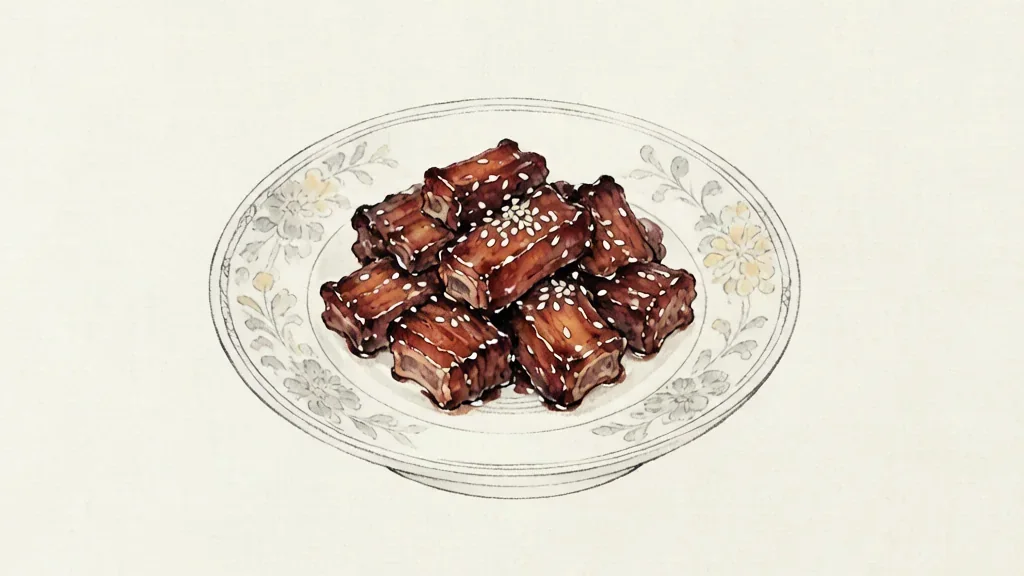
Tangcu paigu (糖醋排骨, tángcù páigǔ) is the beloved Chinese dish of pork spare ribs braised or fried and glazed in a sweet-and-sour sauce—glossy, sticky, and lacquered red-brown. Found across northern, eastern, and Sichuan kitchens in distinct regional forms, it is one of the most family-friendly dishes in the repertoire: children and adults alike reach for the caramelized ribs. The dish's genius lies in balance—sugar against vinegar, richness against brightness—and in the contrast of a crisp or tender bite with a clinging, mouth-puckering glaze. Whether served at a banquet or a weeknight table, tangcu paigu is comfort with a shine.
What the Dish Is
"Tangcu" (糖醋) means "sugar-vinegar," the sweet-sour flavor; "paigu" (排骨) means pork ribs, usually the meaty spare-rib section cut into short, bite-sized lengths. The ribs are cooked until tender and coated in a reduced sauce that clings like lacquer.
Two broad methods dominate: a deep-fried-then-glazed version prized for its crisp shell, and a braised version where the ribs simmer slowly in the sauce until it reduces and shines. Both aim for the same glossy, tangy result.
The visual cue is color—a deep amber to red-brown sheen that signals caramelized sugar and reduced vinegar.
Regional Styles
Northern and eastern China favor a bright, sweet-sour profile close to the "sweet and sour" known internationally, with a crisp fry and a vivid glaze. Jiangsu and Zhejiang versions lean balanced and slightly less sweet, often braised.
Sichuan makes a related "lizhi kou" (lychee-profile) tangcu paigu: sweet first, then sour, with a whisper of chili and the fragrance of scallion and ginger rather than heavy heat. It is part of the province's "lazhi" family.
Shanxi, proud of its vinegar, produces an especially tart rendition that lets the grain vinegar sing. Each region tweaks the sugar-to-vinegar ratio to local taste.
Ingredients
Spare ribs are the cut of choice, chopped through the bone into two- to three-inch pieces so they cook quickly and eat neatly by hand. The sauce is built from sugar (or rock sugar), vinegar, soy, and sometimes ketchup or tomato for color in home versions.
Aromatics—ginger, scallion, a little garlic—underpin the sauce, and a starch slurry thickens it to a coat. Sichuan styles may add a dried chili or two for fragrance without burn.
The quality of the vinegar matters most: black, white, or aged grain vinegar each lend a different sour character to the final glaze.
The Fried-and-Glazed Technique
In the crisp version, the ribs are blanched or marinated, coated lightly, and deep-fried until golden and the surface seals. The sauce is cooked separately to a syrup, the ribs tossed in, and the heat used to caramelize the coat.
The reward is a shell that shatters, giving way to juicy meat and a sticky glaze. The risk is sogginess if the sauce is added too early or the ribs aren't dry enough before frying.
This method is festive and a little indulgent—the one for company and holidays.
The Braised Technique
The homier method simmers the ribs directly in the seasoned liquid, letting them turn tender while the sauce reduces around them. No deep fry means less oil and a softer, fall-off-the-bone bite.
Patience is the ingredient: a gentle simmer coaxes collagen into silk and concentrates the sweet-sour into a shiny lacquer. The cook "shou zhi" (reduces the juice) at the end over higher heat to glaze.
This version reads as comfort rather than spectacle, the weeknight answer to the same craving.
The Sauce Balance
The heart of tangcu paigu is proportion. Too much sugar and it is cloying; too much vinegar and it puckers. Cooks learn a ratio—often roughly equal sugar and vinegar, adjusted by the sourness of the vinegar used.
Rock sugar gives a cleaner, more amber glaze than white; a touch of soy adds salt and depth so the sweetness doesn't float. The finished sauce should coat a spoon and cling to the rib without pooling.
This balance is why the dish translates across regions: everyone agrees on the target even if the exact ratio differs.
Color and Presentation
A well-made tangcu paigu glows. The glaze should be translucent and even, the ribs distinct rather than drowned in sauce. A scatter of toasted sesame or sliced scallion adds contrast and a hint of freshness.
Served on a plain white plate, the red-brown meat reads as celebration. At banquets it appears among colorful dishes as the sweet-sour counterpoint to rich braises.
Presentation is restrained; the food's own shine is the decoration.
Serving Context
Tangcu paigu is a shared dish eaten over rice, usually with other plates. Its sweet-sourness refreshes the palate between heavier, savory items, which is why it fits banquet menus so well.
At home it is a children's favorite and a reliable crowd-pleaser for guests, mild enough for cautious eaters yet flavorful enough for addicts of the glaze. Cold leftovers are surprisingly good, the sauce set like candy.
It also appears at holiday tables and restaurant special occasions as a symbol of sweetness in life.
Variations
The formula extends to other proteins and even vegetables: tangcu liji (pork loin), tangcu yu (fish), and tangcu lotus root or hawthorn all use the same glaze logic. "Guo shao" ribs skip the bone for nuggets.
Some cooks add pineapple, bell pepper, or onion in the international "sweet and sour" style, blurring into the takeout classic. The purist Chinese home version, though, keeps the ribs and sauce central.
Whether crisp or braised, bony or boneless, the dish's identity is the sugar-vinegar mirror.
Cultural Role and Modern Life
As a gentle, sweet-sour dish, tangcu paigu bridges generations and regions, taught early to new cooks as a lesson in balancing flavors. It is a fixture of home cooking and of the "home-style" (jiachang) section of menus.
Today it appears both as a carefully plated restaurant dish and as a quick home stir-fry using ready sauce mixes, a sign of how thoroughly it belongs to everyday Chinese eating.
Its enduring appeal is simple: few things satisfy like a sticky, tangy rib pulled from the bone with fingers and a smile.
❓ Frequently Asked Questions
What is tangcu paigu?
Pork spare ribs cooked and glazed in a sweet-and-sour sauce, either deep-fried for a crisp coat or braised until tender and shiny.
Is it the same as takeout sweet and sour pork?
Similar in flavor but the Chinese home dish centers on bony ribs with a cleaner glaze; takeout versions often add batter, pineapple, and bell pepper.
Which vinegar is best?
It depends on region: black, white, or aged grain vinegar each give a different sour note; the vinegar's quality strongly shapes the glaze.
Can I make it without deep-frying?
Yes, braise the ribs in the sauce and reduce it at the end; you get tender meat and a lacquer with far less oil.
How do I get the shiny glaze?
Balance sugar and vinegar, use rock sugar, and reduce the sauce over higher heat at the end until it coats the ribs.
Is the Sichuan version spicy?
Not really; it carries a fragrant "lychee-profile" sweet-sour with scallion and ginger, at most a hint of chili aroma.