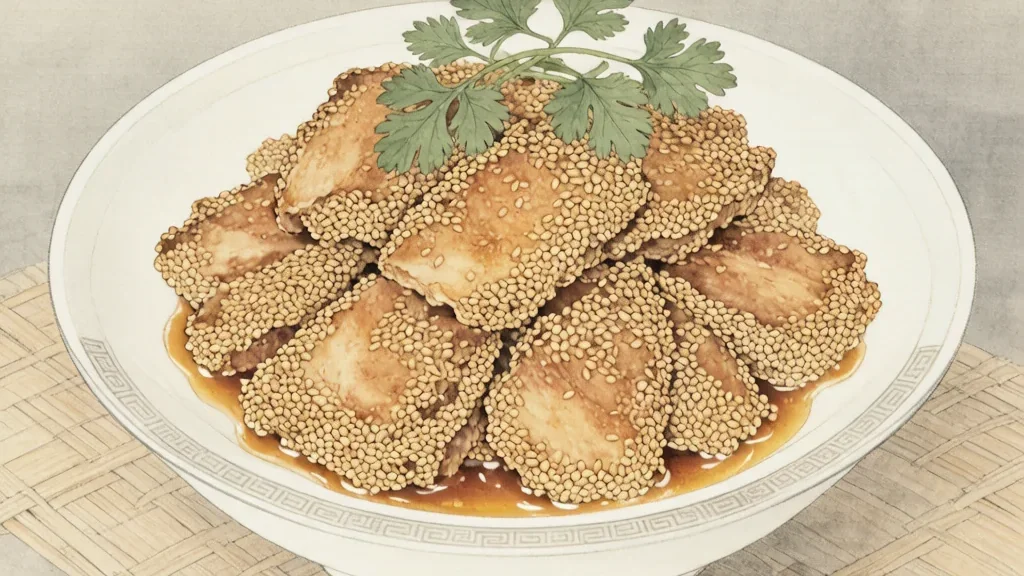
Zhi ma rou (芝麻肉), "sesame pork," refers to a family of Chinese preparations in which pork—usually a tender cut such as tenderloin or a thin slice of belly—is coated in sesame seeds and fried or glazed, producing a nutty, aromatic crust over savory meat. Sesame (芝麻) has been a valued oil and seasoning crop in China for millennia, and coating meat in its seeds is a way to add fragrance, texture, and a subtle visual elegance (the pale seeds recalling coins or snow). The dish appears across regions in both home and banquet forms, from crisp sesame-crusted pork slices to sweet-and-sour sesame pork popular in overseas Chinese restaurants.
The Place of Sesame in Chinese Cooking
Sesame has been cultivated in China for thousands of years, valued for its oil, its ground paste, and its whole seeds used as a garnish. White and black sesame both appear in cooking, with white seeds favored for coating and black for contrast in pastes and desserts.
The seed's toasty aroma makes it a natural partner for fried and roasted foods. Sprinkled or pressed onto meat, it adds a layer of fragrance that survives the heat, which is the simple logic behind sesame-crusted dishes.
Form of the Dish
Most zhi ma rou recipes start with thin pork slices or small medallions, which are marinated, dredged in starch or egg, pressed into sesame seeds, and fried until the coating sets and turns golden. The seeds cling in an even crust that crisps at the edges.
Some versions finish the meat in a light sauce—sweet-and-sour, honey, or a savory glaze—while others serve it dry with a dip. The constant is the sesame crust, which defines both the name and the eating experience.
Texture and Flavor
The appeal is contrast: a crisp, nutty exterior against tender pork, with the sesame's bitterness rounding the meat's savor. When a sweet glaze is added, the seeds' toastiness keeps the dish from tasting merely sugary.
Because the coating is delicate, the pork inside is usually kept thin so it cooks quickly and stays juicy. Thick pieces risk an undercooked center or a burnt crust, so the technique rewards restraint in sizing the meat.
Regional Expressions
In home cooking across central and eastern China, sesame pork may be a simple fried slice rolled in seeds. In banquet and restaurant contexts it becomes more elaborate—sometimes shaped into nests or fans, or paired with vegetables for color.
Overseas, "sesame pork" (often "sesame chicken" by the same logic) is a takeout favorite, usually sweet-glazed and crimson, showing how the seed-crust idea traveled and adapted to new palates while keeping its name.
Sesame as Symbol
Beyond flavor, sesame carries folk meaning. Sesame flowers grow upward in sequence, giving the phrase "芝麻开花节节高" (sesame blooms step by step higher), a wish for steady rise in life—a nice fit for a festive pork dish.
The pale seeds also read as small coins or as snow, both auspicious at New Year. Coating meat in sesame thus adds a quiet blessing to an already celebratory food, blending omen and taste.
Making It at Home
A home cook coats thin pork medallions in egg and cornstarch, presses them firmly into white sesame, and shallow-fries until golden, then drains on paper. A light honey or sweet-sour sauce can be brushed on, or the slices served plain with a dip.
The key steps are pressing the seeds on well so they adhere, and frying at a steady temperature so the crust sets without burning. Eaten fresh, the contrast of crisp seed and soft pork is the point.
Variations and Relatives
Zhi ma rou sits within a wider family of seed- and nut-crusted meats: sesame beef, almond chicken, and peanut-crusted dishes all use the same idea of a fragrant crust. The pork version is among the most common in Chinese home kitchens.
It also relates to dishes that use sesame paste or oil rather than whole seeds, such as cold sesame-sauced noodles. Together they show how one crop supplies Chinese cooking with oil, paste, and decoration.
Nutrition and Modern Notes
Sesame adds healthy fats, protein, and minerals to the dish, though frying keeps it in the indulgent category. Modern cooks may bake or air-fry the coated pork to cut oil while keeping most of the crunch.
As with many festive fried foods, zhi ma rou is best understood as an occasional treat whose value is sensory and symbolic as much as nutritional. The seeds make a small, fragrant celebration of ordinary pork.
Sesame Across the Chinese Larder
Zhi ma rou is only one face of a crop that runs through the entire Chinese pantry. Sesame oil finishes cold noodles and drizzles over dumplings; sesame paste (芝麻酱) anchors the sauces of Beijing hot pot and northern cold dishes; and ground black sesame fills glutinous rice balls at the Lantern Festival.
The seed thus moves from aromatic crust to seasoning to dessert without leaving the menu. A single harvest might supply oil for the wok, paste for the dip, and whole seeds for coating meat, which is part of why sesame is so deeply woven into daily eating rather than reserved for special occasions.
Regional preference splits along color: the north favors fragrant white sesame for oil and coating, while black sesame is prized in sweet soups and tonic foods of the south for its deeper, nuttier note. Knowing which seed a dish uses often tells you something about where it comes from.
Serving Suggestions
Zhi ma rou is best served hot and crisp, straight from the fryer or reheated in an oven to revive the crust, since trapped steam quickly softens the seeds. A light dipping sauce of sweet vinegar or a sprinkle of salt lets the sesame speak.
It pairs well with plain rice and a sour vegetable side that cuts the richness, and it fits a festive spread where a few crisp, golden bites add both texture and a quiet auspicious note. Arrange the slices fanned for a simple, handsome presentation.
❓ Frequently Asked Questions
What is zhi ma rou?
It is pork coated in sesame seeds and fried or glazed, giving a nutty crust over tender meat; the form ranges from home slices to sweet banquet versions.
What cut of pork is used?
Usually a tender, thin cut such as tenderloin or thin belly slices, so it cooks quickly and stays juicy under the seed crust.
Is it sweet or savory?
Both exist; some versions are served dry with a dip, while others are finished with a sweet-and-sour or honey glaze.
Why coat meat in sesame?
The seeds add toasty aroma, crisp texture, and a subtle auspicious look, while their bitterness balances rich pork or sweet sauce.
Can it be made healthier?
Yes; baking or air-frying the coated pork reduces oil while keeping much of the crunch, though traditional frying is richer.
Is it related to sesame chicken?
Yes; overseas sesame chicken uses the same seed-crust idea, usually sweet-glazed, showing how the technique traveled and adapted.