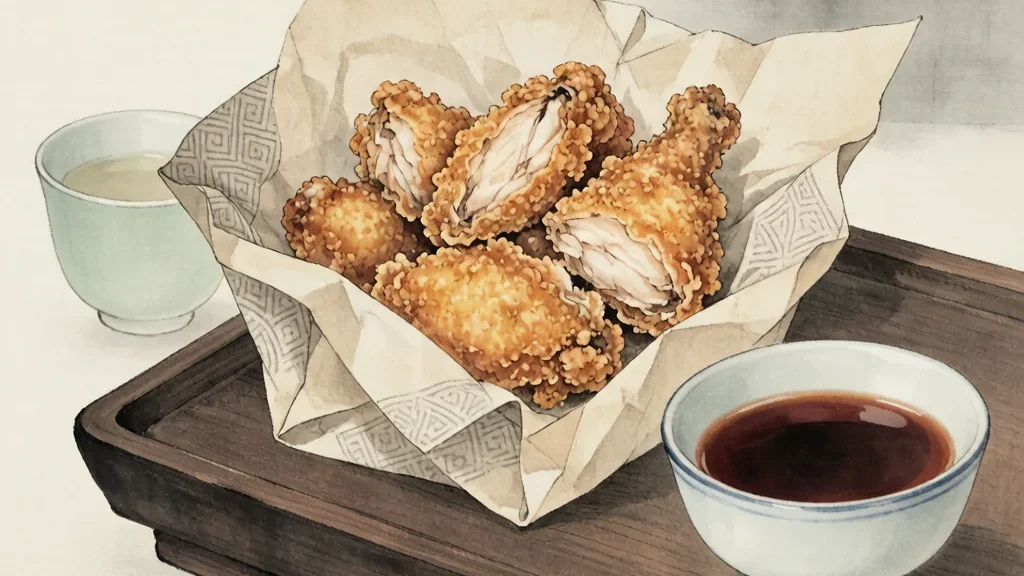
Zhizha (炸扎), a traditional Beijing snack built from fried tofu skin, belongs to a family of northern Chinese treats that turn the humble by-product of soy-milk production into something crisp, fragrant, and festive. Thin sheets of doufu pi—the film that forms on the surface of simmering soy milk—are rolled, filled, and deep-fried until golden, then eaten plain or dressed with sweet or savory sauces. Once a street-food specialty sold by peddlers in the old capital, zhizha survives today as a nostalgic delicacy tied to Beijing's culinary heritage and to the lunar festivals where fried foods carry wishes for a bright, prosperous year.
What Tofu Skin Is
Doufu pi (豆腐皮), also called yuba in some regions, is the thin protein-rich layer that congeals on top of soy milk as it heats. Skimmed and dried, it becomes a pliable sheet that can be folded, rolled, or used like a wrapper. Because it is made almost entirely of soy protein, it carries a clean, bean-like flavor and a texture that crisps beautifully when fried.
In northern China, these sheets were historically a thrifty way to capture nutrition from soy milk that might otherwise be lost. Cooks learned to dry them in sheets or fold them into sticks (known as fuzhu), creating a versatile pantry item that keeps for months.
The Zhizha Technique
To make zhizha, the dried tofu skin is softened, spread with a filling—often a seasoned mash of the same soy skin, vegetables, or sweetened paste—and rolled into a tight cylinder. The roll is then deep-fried so the outer layer blisters and turns golden while the inside stays tender.
The name evokes the sizzling sound of frying, and the finished roll is sliced into discs that reveal a spiral of skin and filling. The contrast of crisp exterior and soft interior is the dish's defining pleasure, and it can be eaten hot from the fryer or cooled and sliced for later.
A Beijing Street Tradition
Old Beijing was famous for its snack culture (小吃), and zhizha was among the items hawked by mobile vendors and sold in temple-fair stalls. Fried tofu-skin fit the quick, handheld logic of street food and could be seasoned to taste on the spot with salt, spice, or a sweet glaze.
Like many capital snacks, zhizha was shaped by the city's position as a crossroads where court, merchant, and commoner tastes met. It was humble in ingredient yet exacting in technique, a combination that defined much of Beijing's civilian cuisine.
Sweet and Savory Forms
Zhizha is flexible enough to appear in both sweet and savory registers. A savory version might be dusted with spice or served alongside a soy-vinegar dip, while a sweet version can be coated in caramel or filled with red-bean paste, blurring the line between snack and confection.
This duality made it useful at festivals, where tables balance salty and sweet. A plate of golden fried rolls reads as both treat and token of abundance, since fried foods are associated with the wish that life "flourish" (the word for frying, 炸, can be linked in folk wordplay to bursting prosperity).
Place in Festival Foodways
During Lunar New Year and temple fairs, fried snacks like zhizha appear alongside niangao, fried dough, and candied fruits. The act of deep-frying in quantity suited a season when households cooked ahead and welcomed drop-in visitors with shareable bites.
Because tofu skin is vegetarian, zhizha also fits Buddhist and fasting contexts where meat was avoided but texture and celebration were still wanted. Its golden color and crisp bite made it appropriate even on tables that excluded animal products.
Decline and Revival
As industrial snacks and imported sweets spread through twentieth-century Beijing, many handmade soy-skin treats receded from daily life. Zhizha became something remembered rather than routinely eaten, preserved mainly by older vendors and by heritage restaurants.
Recent interest in "old Beijing" foodways has brought revived attention. Cultural districts and museum kitchens demonstrate the rolling and frying, and younger cooks experiment with fillings, treating zhizha as a craft ingredient rather than a fading street bite.
How It Differs from Similar Snacks
Zhizha is sometimes confused with spring rolls or fried tofu, but its wrapper is pure soy film rather than wheat flour, giving a distinct bean aroma and a more delicate crisp. It also differs from fuzhu (dried tofu sticks), which are usually rehydrated and braised rather than fried fresh in rolls.
Understanding these distinctions matters for accuracy: zhizha is defined by the fried, rolled tofu skin itself, not by any single filling. The technique, more than the contents, is what makes the dish itself.
Making It at Home
A home version uses packaged dried tofu sheets soaked until pliable, filled, rolled, and pan-fried or deep-fried until golden. While authentic street zhizha demands a steady fry, a shallow pan works for a small batch, and the rolls can be sliced and served with a dipping sauce.
The key is not overfilling, so the spiral stays tight, and frying at a temperature high enough to crisp without burning the thin skin. Eaten fresh, zhizha captures the simple appeal of turning a soy by-product into something celebratory.
Eating Zhizha Today
In contemporary Beijing, zhizha survives mostly as a heritage bite rather than a daily snack, found at cultural fairs, in old-brand shops, and on "old Beijing" tasting menus aimed at curious locals and tourists. Its very rarity has become part of its charm, a edible souvenir of a vanishing street life.
Cooks keep the technique alive by teaching it in demonstrations and by pairing it with modern dips, proving the simple fried roll can still surprise. However it is served, zhizha remains a small argument that the humblest soy by-product can be treated with real craft.
❓ Frequently Asked Questions
What is zhizha made from?
It is made from doufu pi, the thin film that forms on simmering soy milk, rolled with a filling and deep-fried until golden.
Is zhizha vegetarian?
It can be; the wrapper and many traditional fillings are soy-based, though some versions add other ingredients, so it depends on the filling.
Where does it come from?
Zhizha is a traditional snack of Beijing, associated with the city's old street-food and temple-fair culture.
How is it different from a spring roll?
Its wrapper is soy film rather than wheat flour, giving a bean aroma and a more delicate crisp, and the filling is typically soy-based.
Is it sweet or savory?
Both forms exist; savory versions are spiced or dipped, while sweet versions may be filled with red-bean paste or caramel-coated.
Can I make it at home?
Yes, using softened dried tofu sheets, a filling, and a fry or shallow pan until golden, then slice and serve with a dip.