🍜 Festival Foods
79 articles — Iconic foods tied to celebrations
In China, no festival is complete without its signature food. A holiday is often remembered by what is on the table — mooncakes at Mid-Autumn, zongzi at the Dragon Boat Festival, dumplings at New Year, and sweet tangyuan on the Lantern Festival. Behind each dish lies a pun, a wish, or a story: round foods mean reunion, long noodles mean long life, and a fish on the plate means surplus for the year. This guide gathers the iconic festival foods and the meanings they carry.

Spring Rolls: Crispy Gold Bars of Spring
There is a sound that defines Chinese New Year in kitchens around the world — the furious sizzle of spring rolls hitting hot oil, the crackle of thin wheat wrappers transforming from pale, floury sheets into golden, blistered cylinders that gleam like stacked bullion. When the platter arrives at the table, steam still rising from the shattered ends where eager teeth have already bitten through, no one can resist.
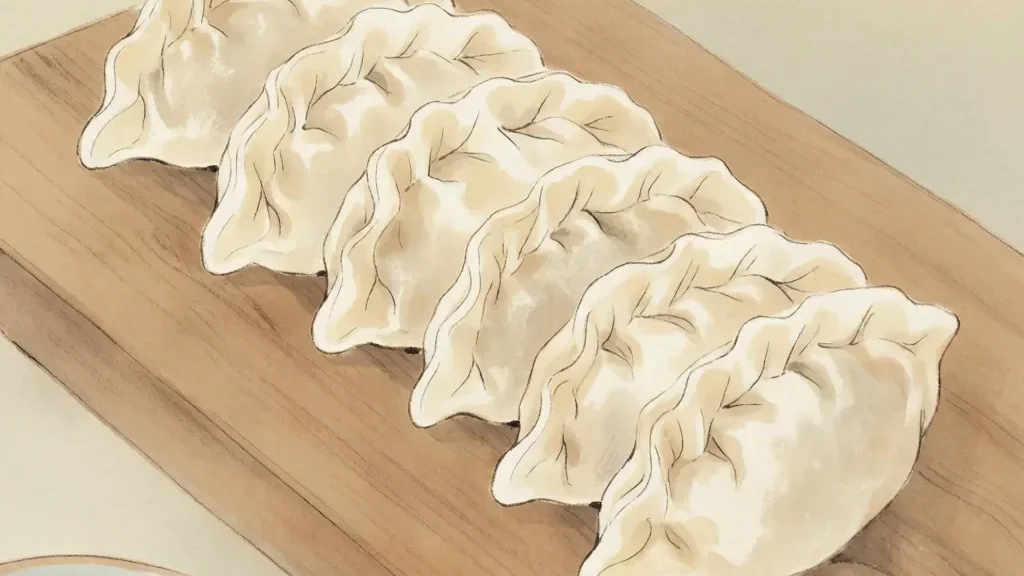
Jiaozi: The Dumpling That Unites China
On the stroke of midnight every Lunar New Year's Eve, something remarkable happens simultaneously in millions of Chinese homes. Steaming platters emerge from kitchens across the country, each carrying crescent-shaped parcels of joy that have brought families together for nearly two millennia.
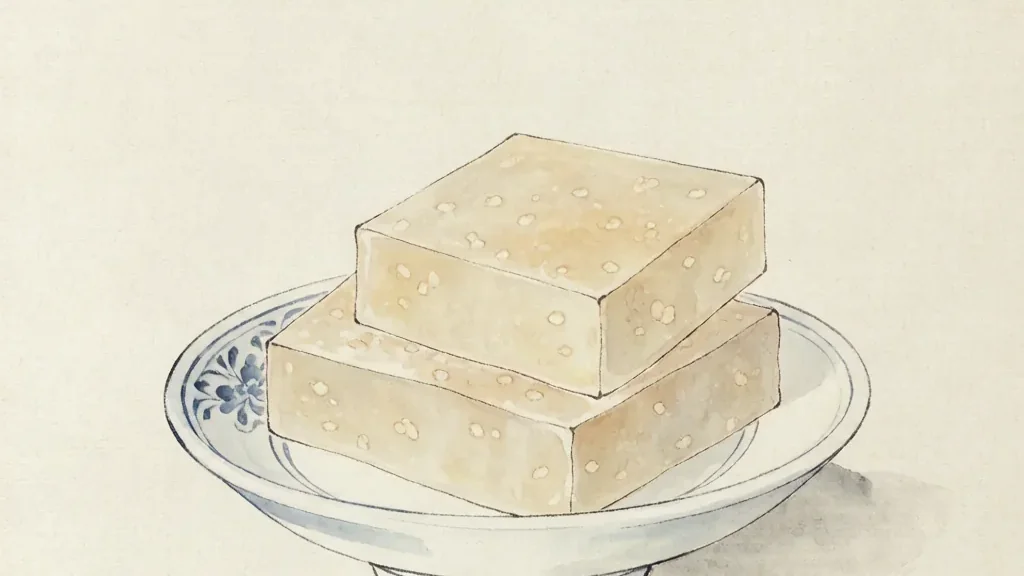
Nian Gao: The Cake of Rising Fortune
In the kitchen of a Chinese home preparing for New Year, amid the flurry of dumpling wrapping and fish scaling, sits a humble slab that seems almost too simple for its importance. It's pale, dense, and slightly translucent — a cake made from nothing more than glutinous rice flour, sugar, and water, steamed until it becomes something between a solid and a gel.
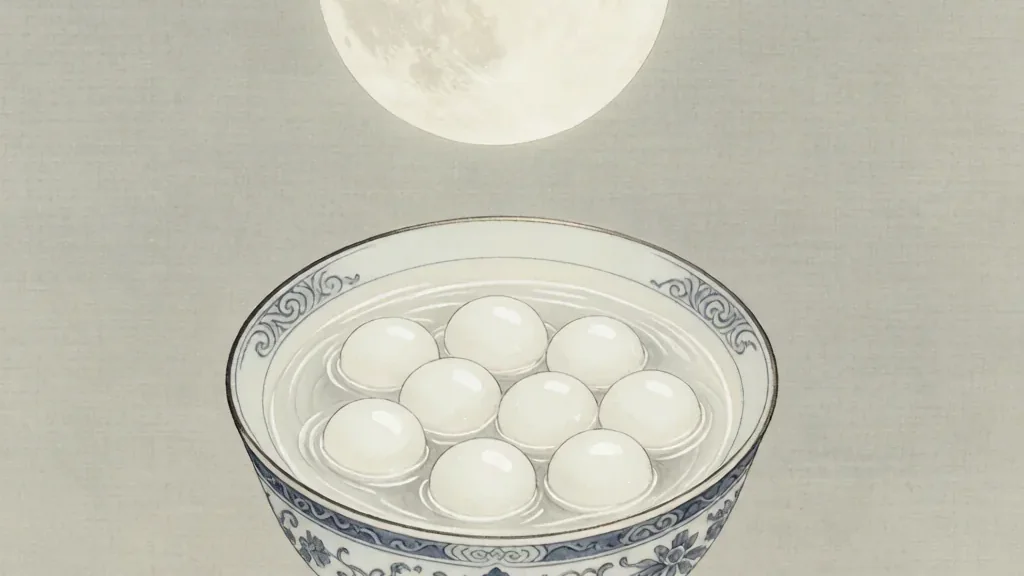
Tangyuan: Sweet Balls of Family Unity
Picture a porcelain bowl filled with a clear, faintly sweet soup, floating within it a cluster of pristine white spheres. As your spoon breaks through the tender, chewy exterior, a river of molten black sesame paste flows out, filling the air with its nutty, caramelized fragrance.

Mooncakes: The Taste of Mid-Autumn
On the fifteenth day of the eighth lunar month, when the moon swells to its fullest and brightest of the entire year, millions of hands across China and the Chinese diaspora unwrap a small, dense pastry stamped with intricate designs. It fits in the palm like a precious artifact, its golden-brown skin glistening with a thin wash of egg yolk.
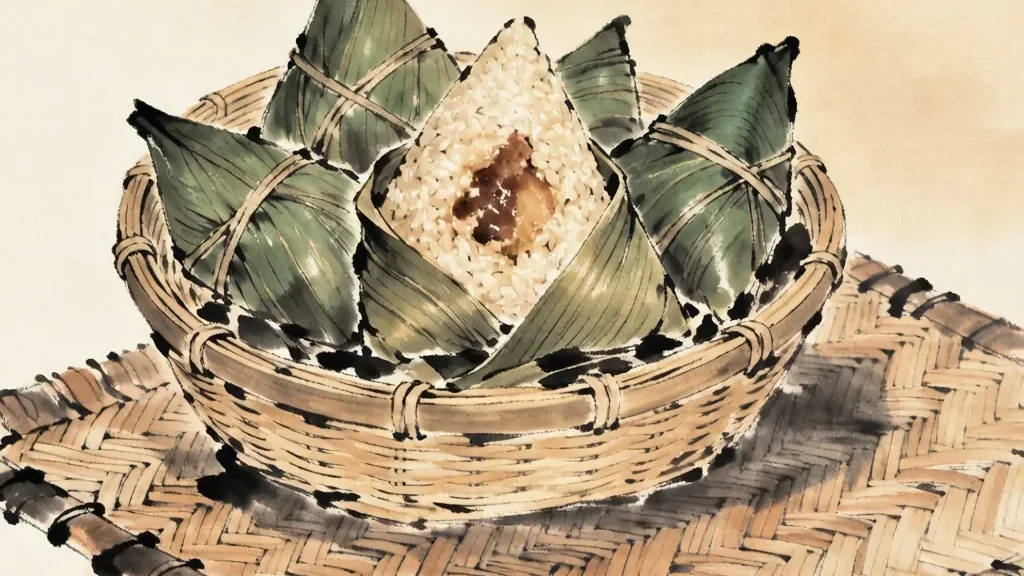
Zongzi: The Dragon Boat Festival Treasure
The scent reaches you before the sight — a vegetal, almost tea-like aroma that drifts through alleyways and apartment corridors each year when the fifth lunar month arrives. It's the smell of bamboo leaves steaming, releasing their essence into parcels of sticky rice that have been tied with kitchen string into neat tetrahedral pyramids.
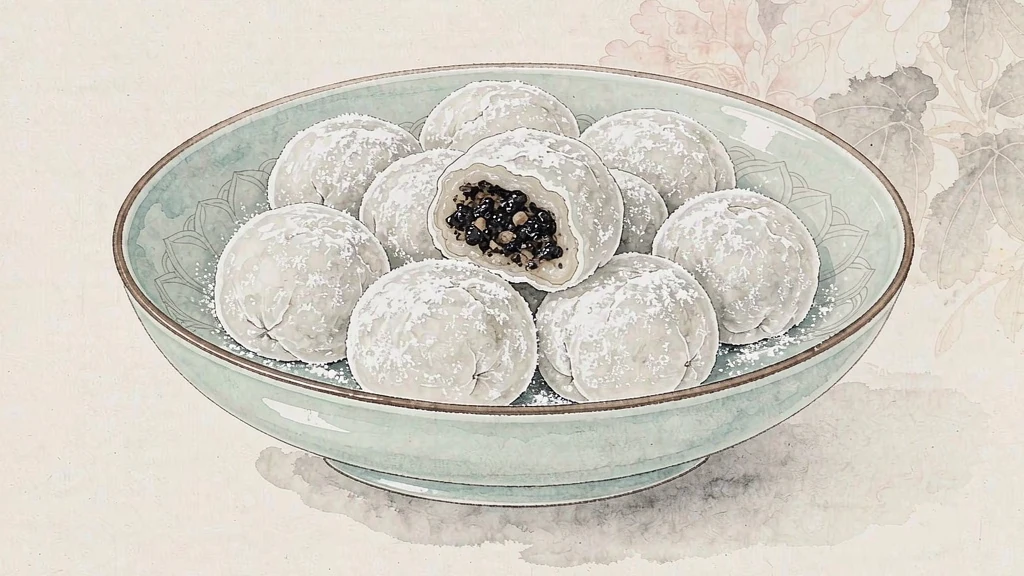
Aiwowo: Steamed Rice Balls with Filling
In the gentle pantry of old Beijing sweets, ài wō wo (艾窝窝) is the quiet one — a round, snowy ball of steamed glutinous rice cradling a sweet filling, dusted with dry rice flour so it looks like a tiny snowball. Its name is onomatopoeic and folkish, and the snack has been a favorite of the capital's children and elders for centuries.
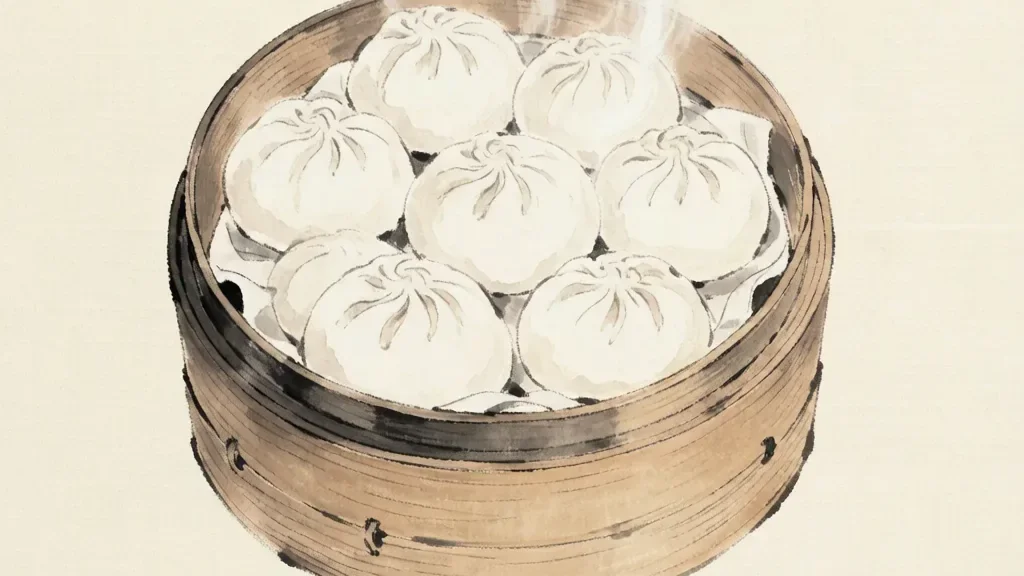
Baozi: The Humble Steamed Bun
Ask any traveler in China what they ate for breakfast, and the answer is often the same: a warm, pillowy 包子 ( bāo zi ), a steamed bun with a savory or sweet filling tucked inside a soft, snow-white shell. More than a snack, the baozi is a daily companion to millions, sold from street carts at dawn, stacked in bamboo steamers outside subway stations, and folded by hand in family kitchens.
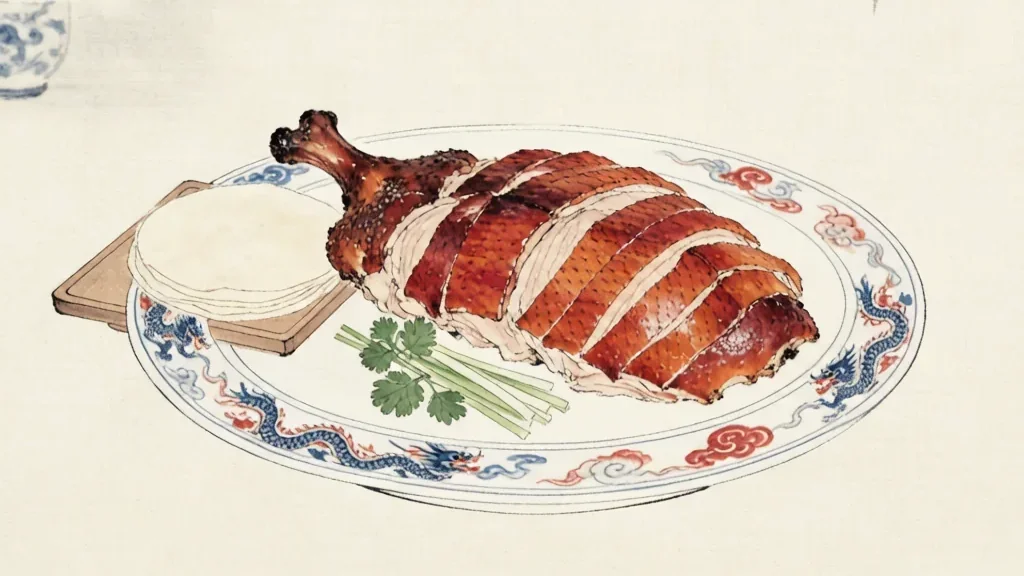
Peking Duck: Crisp Skin, Imperial Taste
Glazed mahogany, shatteringly crisp, and carved tableside in slices so thin they seem to dissolve — 烤鸭 ( kǎo yā ), or Peking duck, is China's most famous ceremonial meat. Born in the imperial kitchens of Beijing, it turned a humble farm bird into an art form requiring days of preparation and a master's hand.
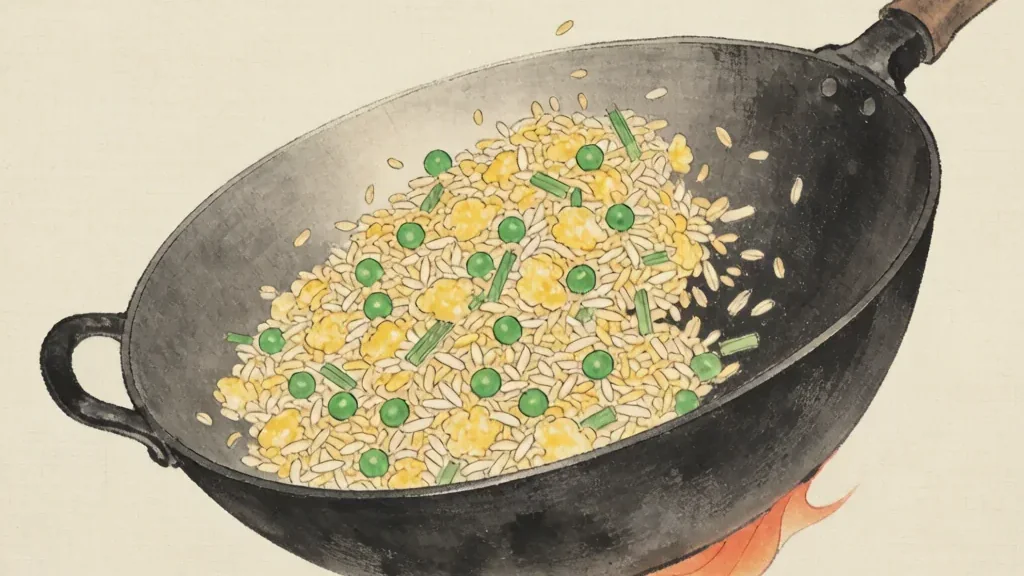
Fried Rice: The Art of the Wok
Scattered, glistening, and freckled with egg, peas, and scallion, 炒饭 ( chǎo fàn ) — fried rice — is the dish that turns leftovers into treasure. Born of necessity in home kitchens across China, it is now a global staple, from Yangzhou's ornate restaurant version to the late-night egg fried rice of student dormitories.

Chaogan: Beijing Liver Stew
Among Beijing's most unapologetically local breakfast dishes is chǎo gān (炒肝), a thick, glossy stew of pork liver and intestine simmered in a savory, starch-thickened broth with garlic and soy. The name means "stir-fried liver," though the dish is actually braised and thickened rather than wok-fried, and it is eaten not with a spoon but by tipping the bowl to sip the rich gravy and fishing out the tender morsels with a toothpick.
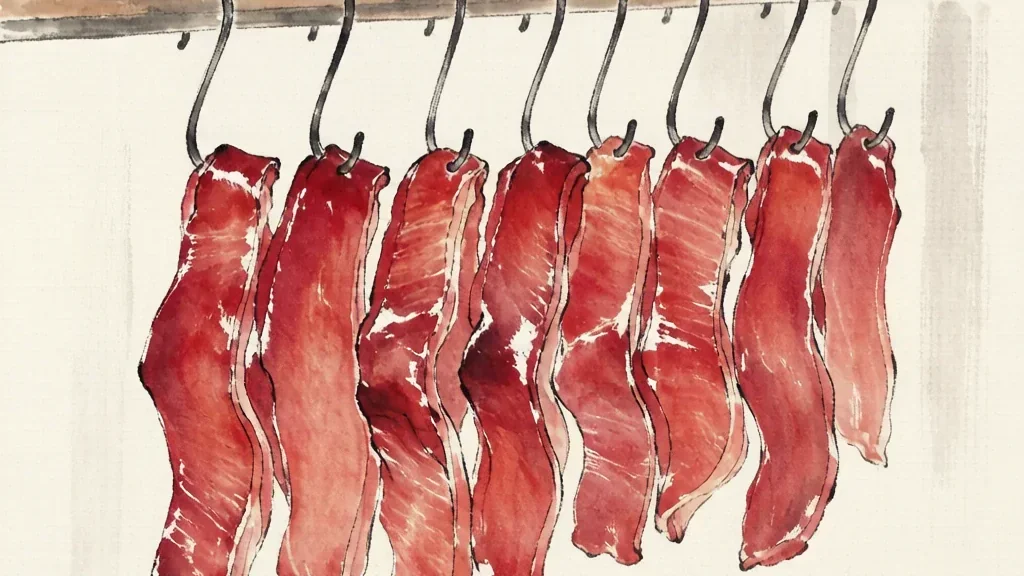
Char Siu: Cantonese Barbecue Pork
Lacquered red, sweet-glazed, and faintly smoky, 叉烧 ( chā shāo ) — Cantonese barbecue pork — is the jewel of southern China's roast shops. Strips of marinated pork are hung on hooks in wood-fired ovens and roasted until the exterior caramelizes into a glossy, ruby coat while the inside stays tender and juicy.

Chongyang Cake (重阳糕): The Layered Pastry of the Double Ninth Festival
On the ninth day of the ninth lunar month, when autumn chrysanthemums bloom and the air carries the crisp promise of winter, Chinese families across the country celebrate the Double Ninth Festival (重阳节, Chongyang Jie) by climbing mountains, drinking chrysanthemum wine, and eating a distinctive layered pastry known as chongyang cake (重阳糕). This steamed cake, whose name is a homophone for high (高, gāo) — suggesting ascension, promotion, and elevated status — embodies the festival's central themes of longevity, familial respect, and the aspiration to rise above misfortune.
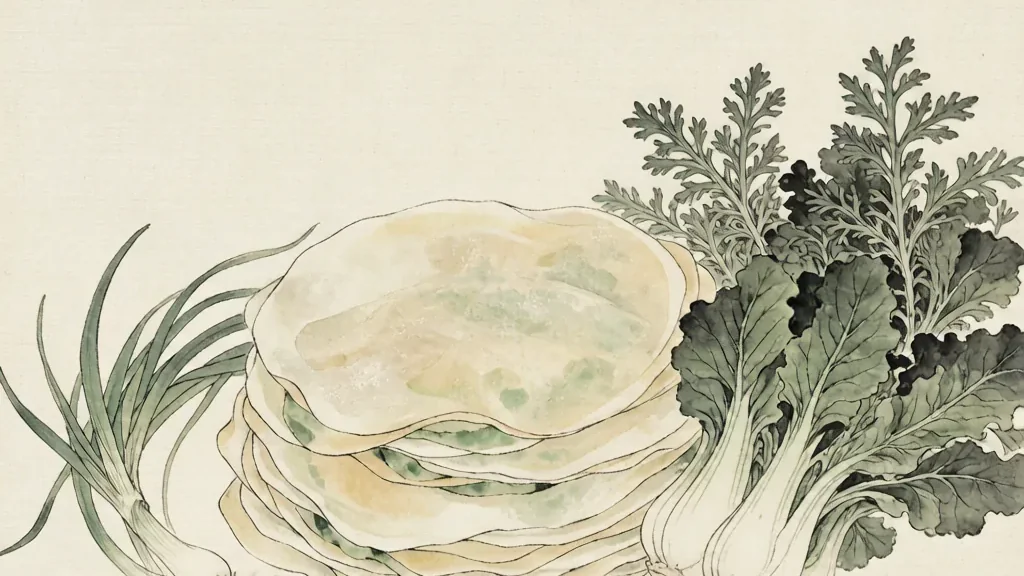
Spring Pancakes: The Wrapper of Spring
When the first breath of spring arrives in northern China, families mark it not with a cake but with a wafer-thin pancake called chūn bǐng (春饼), the "spring pancake. " These soft, translucent wraps are used to roll up fresh spring vegetables, strips of meat, and savory sauces in a ritual meal that welcomes the season and, traditionally, honoured the Lichun (beginning of spring) solar term.
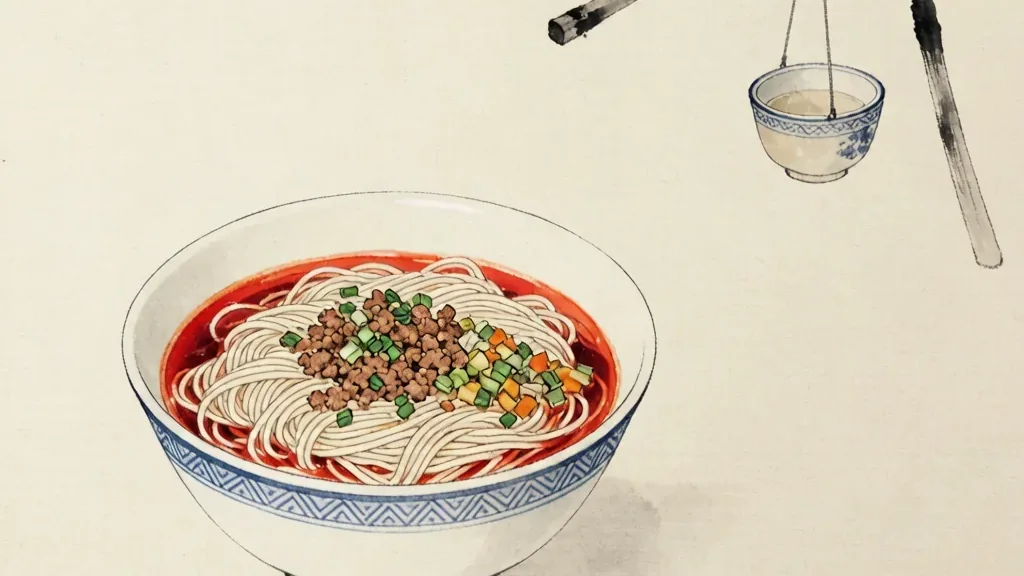
Dandan Noodles: Sichuan Street Food
Some dishes travel from the street corner to the royal table and back again, and dàn dàn miàn (担担面) is the perfect example. Born as a cheap, portable meal carried on a shoulder pole through the lanes of Chengdu, this Sichuan noodle bowl is now served in fine restaurants around the world.
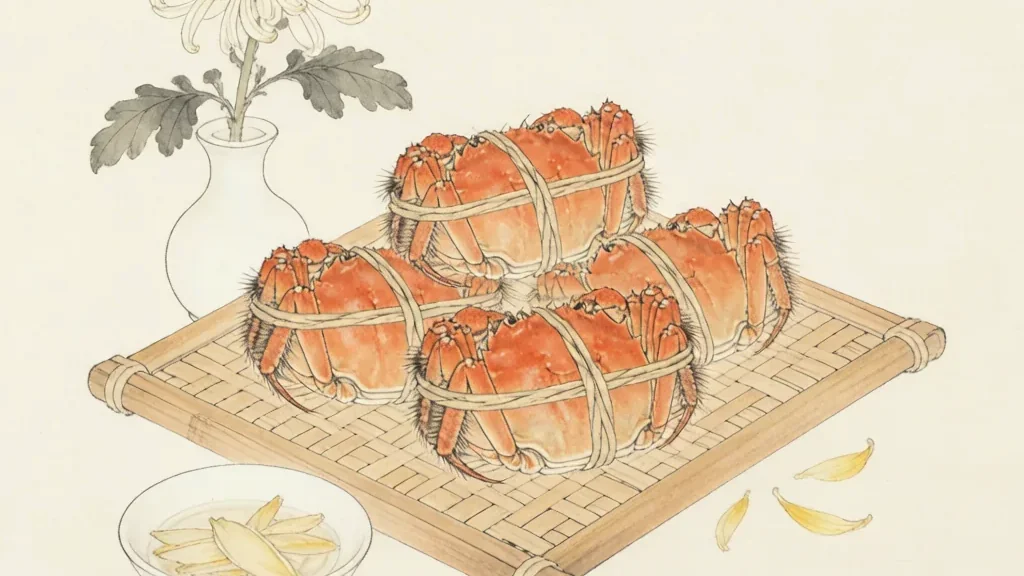
The Hairy Crab of Autumn
Every autumn, a quiet frenzy grips the lower Yangtze region: the harvest of dà zhá xiè (大闸蟹), the Chinese mitten crab, also called the "hairy crab" for the fuzz on its claws. From September to November, restaurants, gift boxes, and river towns devote themselves to this small, orange-fleshed crab whose roe and cream are considered among the finest flavors in Chinese cuisine.
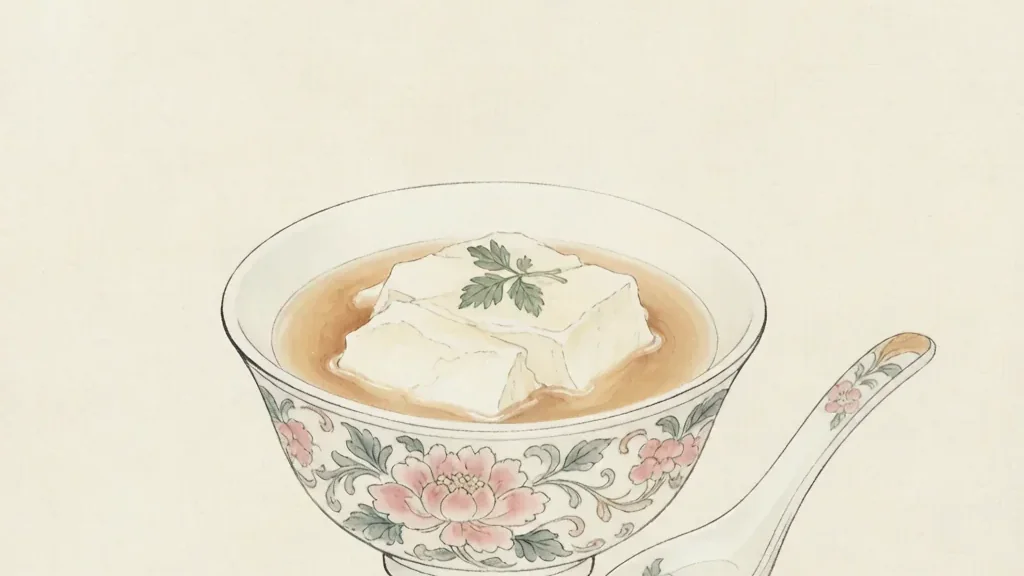
Douhua: Silken Tofu Pudding
Spoonable, trembling, and barely set, 豆腐花 ( dòu fu huā ) — often called douhua or tofu pudding — is the silkiest thing in the Chinese dessert and breakfast repertoire. Made by coagulating soy milk into a custard-soft curd, it is served either sweet, drowned in ginger-sugar syrup, or savory, topped with soy sauce, pickles, and chili.

Fermented Tofu: The Cheese of China
Walk past a Chinese market and you may catch a sharp, salty, almost cheesy aroma rising from a row of small ceramic jars — that is dòu fu rǔ (豆腐乳), fermented tofu, often called "the cheese of China. " Made by curing tofu in salt, rice wine, and spices until it softens into a spreadable, intensely savory paste, doufuru is a condiment rather than a main dish, used to lift plain congee, noodles, or steamed vegetables.
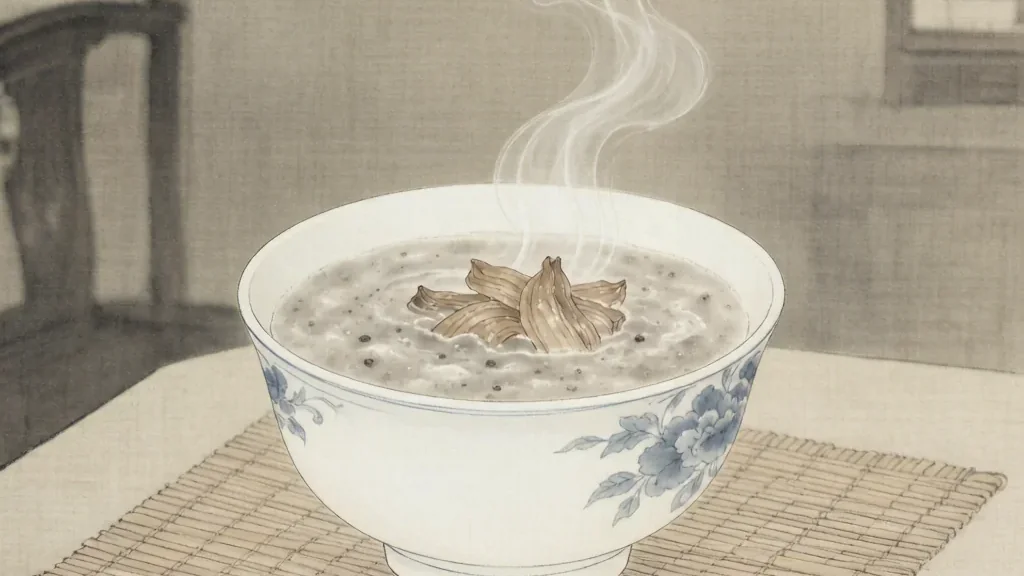
Douzhi: Beijing's Fermented Mung Bean Drink
Every great food city has a local drink that divides visitors from natives, and in Beijing that drink is dòu zhī (豆汁) — a grayish, faintly sour fermented mung bean beverage that inspires devotion in locals and bafflement in newcomers. Served hot in a bowl, it looks unassuming but carries an aroma and taste that newcomers often describe as challenging.

Dou Jiang (Soy Milk): A Warming Winter Solstice Tradition
Few drinks are as quietly essential to Chinese daily life as dou jiang (豆浆) — fresh soy milk. Steaming, faintly sweet, and endlessly comforting, it anchors breakfasts from Beijing alleyways to Shanghai street corners and warms the winter solstice table.
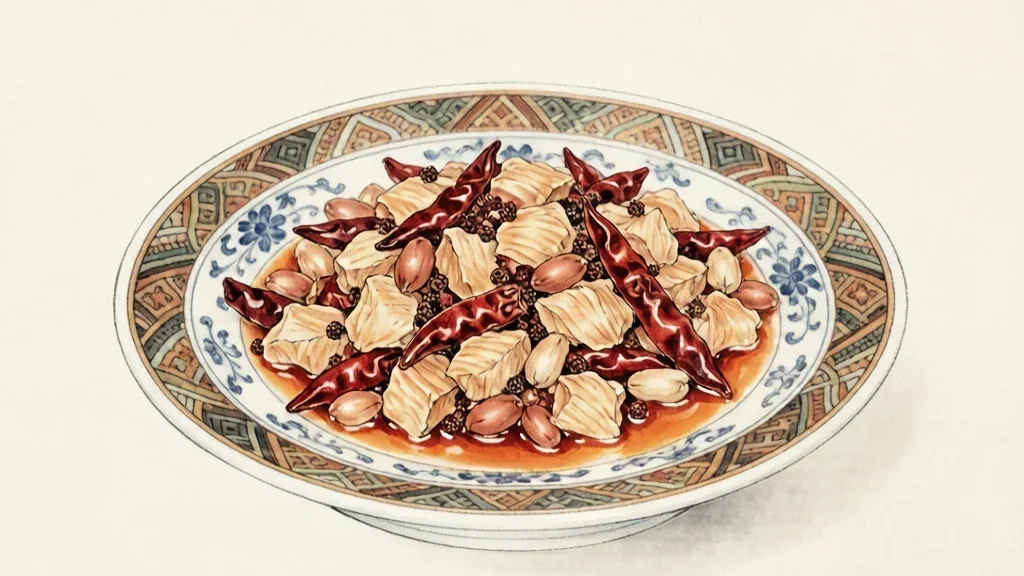
Kung Pao Chicken: A Governor's Legacy
Known in the West as "Kung Pao Chicken," 宫保鸡丁 ( gōng bǎo jī dīng ) is a stir-fry of diced chicken, peanuts, dried chili, and Sichuan pepper in a sweet-sour-savory glaze. Behind its familiar menu presence lies a story of Qing-dynasty officialdom: the dish is named for Ding Baozhen, a governor whose title 宫保 ("palace guardian") was attached to his favorite chicken.
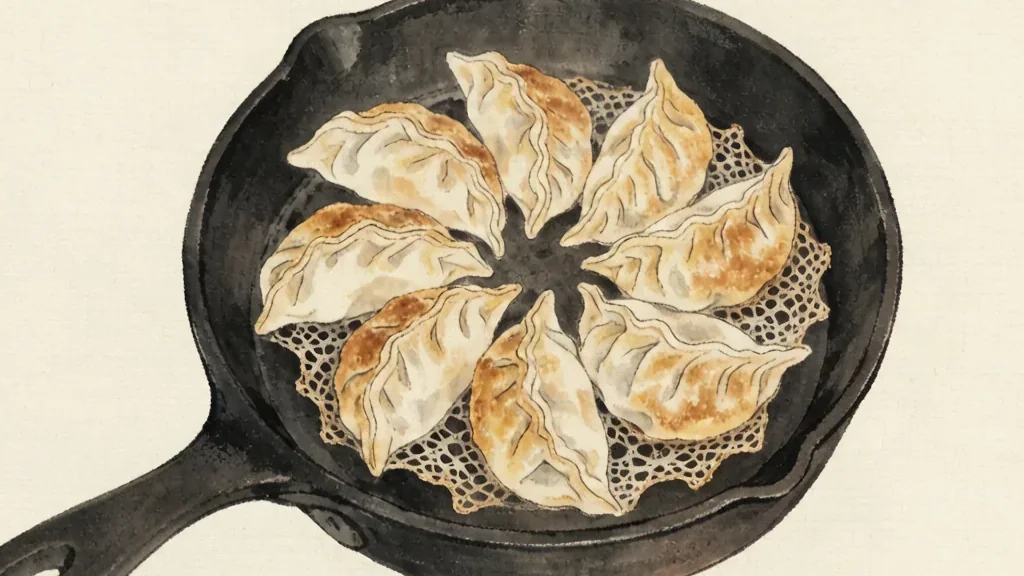
Potstickers: The Crispy Dumpling
There is a sound that signals comfort in millions of Chinese kitchens: the sizzle of dumplings hitting a hot pan, followed by the patient wait for a golden, lace-like crust to form. That dish is guō tiē (锅贴), the "potsticker," a Northern Chinese dumpling that is fried on one side and steamed on the other, giving it a texture no boiled dumpling can match.
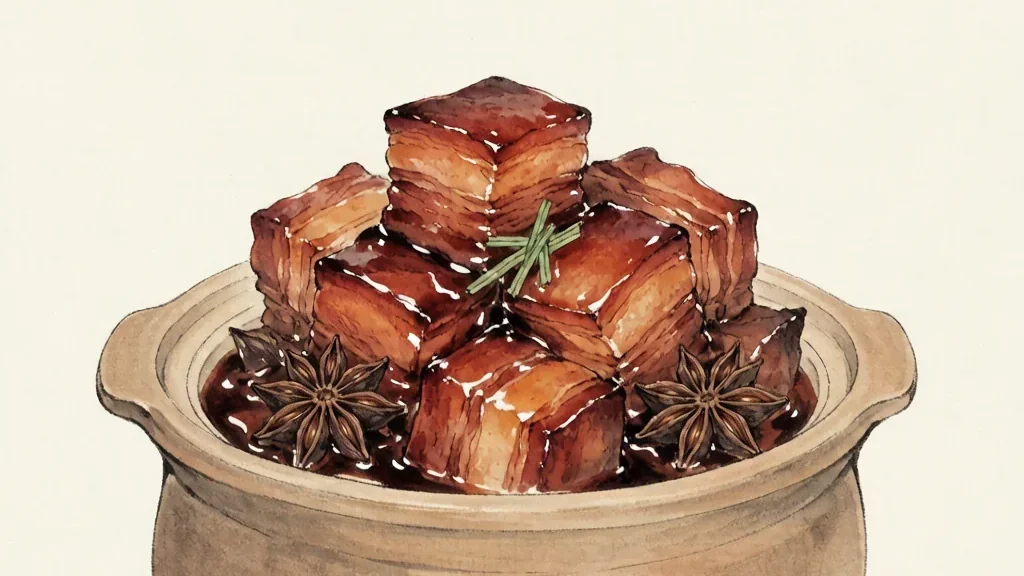
Braised Pork Belly in Soy Sauce
Glistening, mahogany, and meltingly tender, 红烧肉 ( hóng shāo ròu ) — braised pork belly in soy sauce — is the dish Chinese home cooks turn to when they want to show love through slow cooking. Cubes of pork belly are simmered long in soy sauce, rice wine, sugar, and aromatics until the fat turns translucent and the meat falls apart at a chopstick's touch.
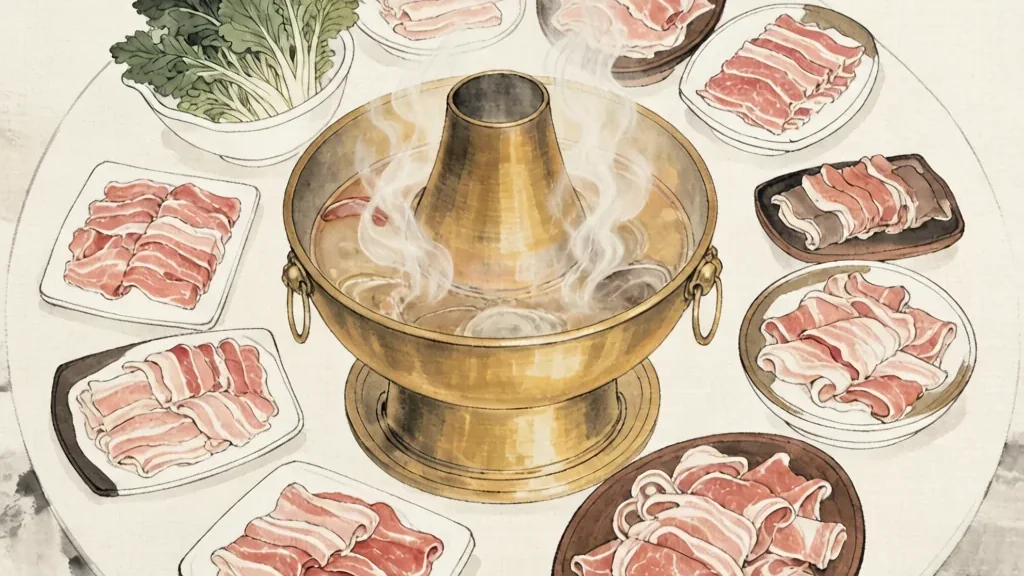
Hot Pot: A Boiling Bond of Friendship
Few meals in China are as social as 火锅 ( huǒ guō ), the hot pot: a simmering cauldron of broth set in the center of the table, around which friends and family cook thin slices of meat, webs of leafy greens, and an array of dumplings in shared water. More than a way to eat, hot pot is a way to gather.
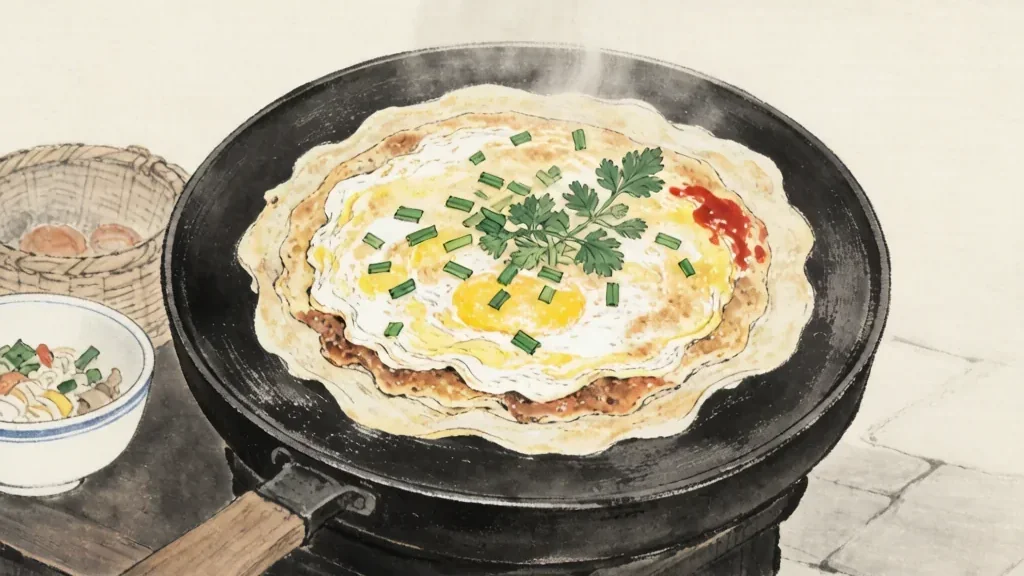
Jianbing: The Savory Breakfast Crepe
At a Beijing street corner at seven in the morning, a vendor spreads a pale batter onto a sizzling griddle in one fluid circular motion, cracks an egg over it, sprinkles scallions and cilantro, flips it, brushes on sweet bean sauce, and folds it into a warm parcel — within ninety seconds you hold a jiān bǐng (煎饼), China's savory breakfast crepe. The name means "fried pancake," but the result is closer to a crispy-edged, egg-topped wrap that puts many Western breakfast sandwiches to shame.
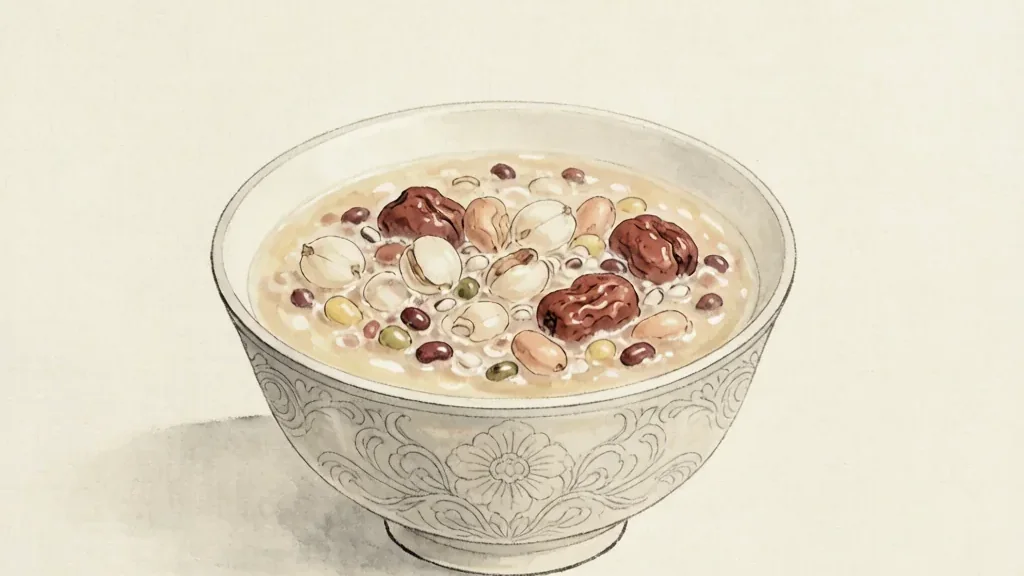
Laba Porridge (腊八粥): The Eight-Treasure Porridge of the Laba Festival
The observance of th twelfth lunar month — known as the Laba Festival (腊八节, Làbā Jié) — the aroma of simmering grains, beans, nuts, and dried fruits wafts from kitchens across China. This is the day when millions of families prepare laba porridge (腊八粥, làbā zhōu), a hearty, nutritious congee whose origins weave together Buddhist piety, ancient harvest rituals, and the practical wisdom of winter nutrition.
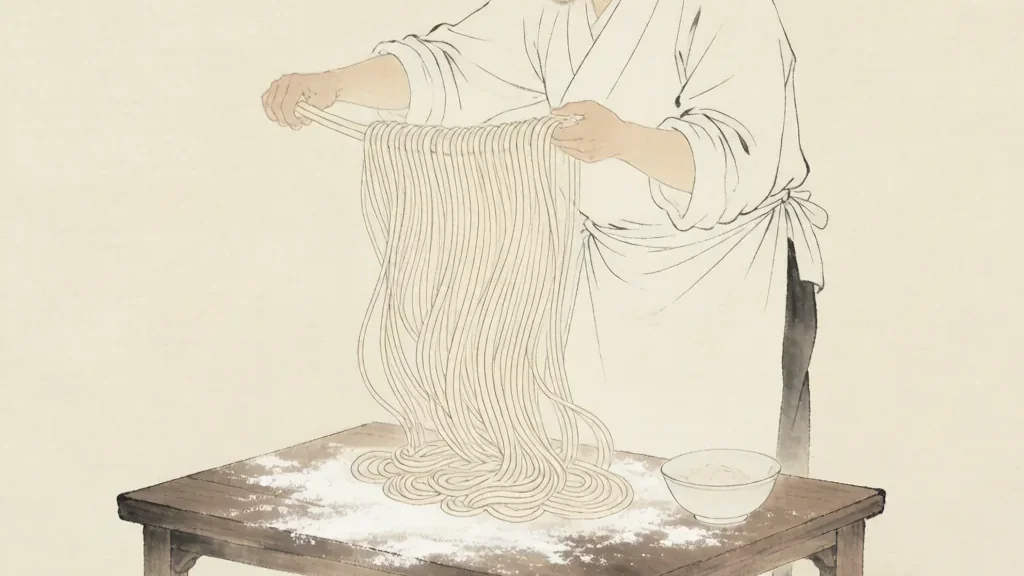
Lamian: Hand-Pulled Noodles
There is perhaps no dish in China that turns cooking into theater quite like 拉面 ( lā miàn ), the hand-pulled noodle. Watch a skilled cook and you see a rope of dough lifted, slapped, and stretched into thinner and thinner strands until it becomes a cascade of noodles dancing through the air.
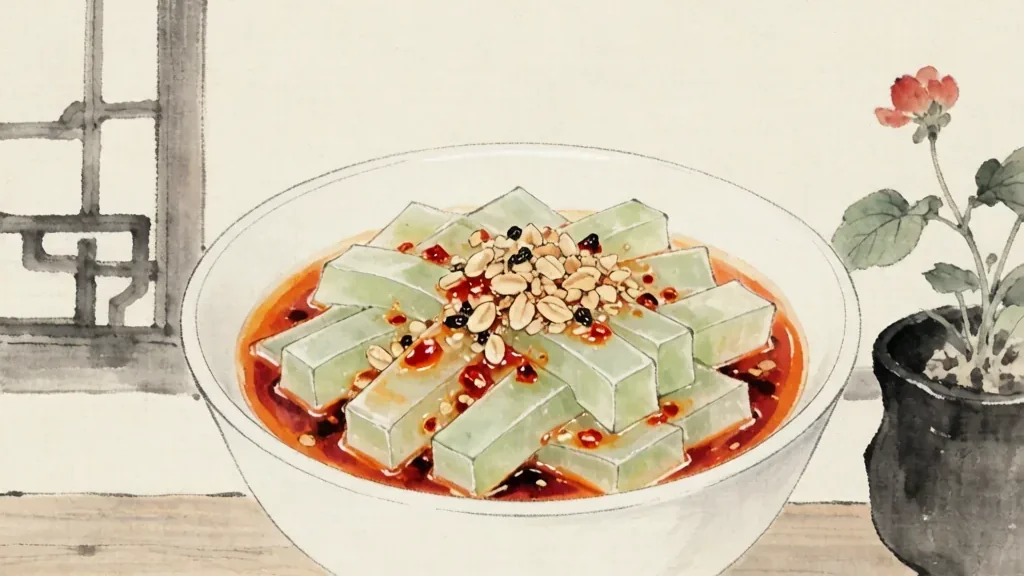
Liangfen: Mung Bean Jelly
On a sweltering summer day in Sichuan or Gansu, the most welcome sight is a bowl of liáng fěn (凉粉) — "cold jelly" — a quivering slab of mung bean or pea starch dressed in chili oil, black vinegar, garlic, and crushed peanuts. The name simply means "cool powder," and the dish is exactly that: a neutral, slippery, springy jelly whose only job is to carry a bright, spicy, sour sauce.
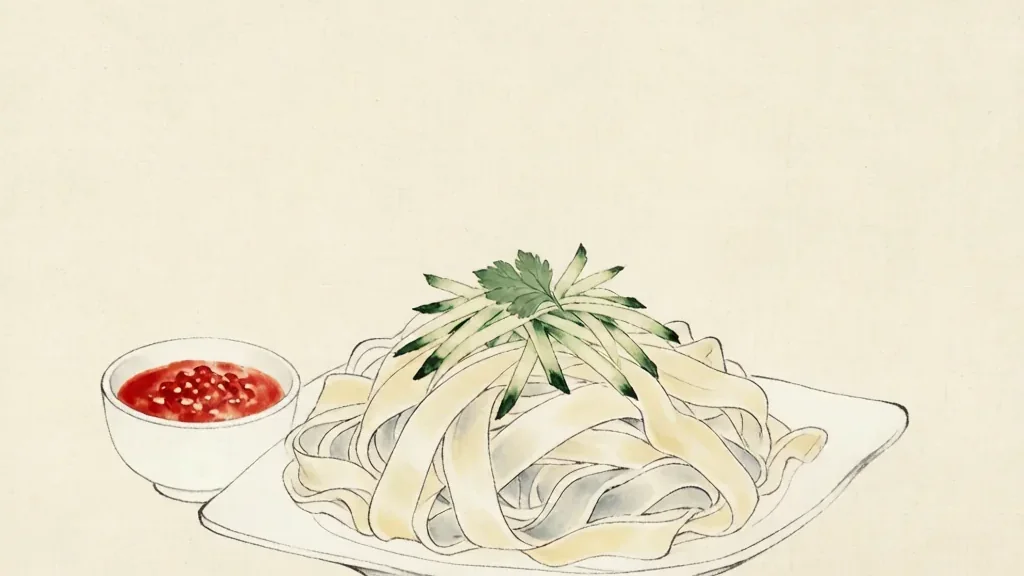
Liangpi: Cold Noodles of the Northwest
Cool, chewy, and slicked in a tingling chili-garlic sauce, 凉皮 ( liáng pí ) — "cold skin" noodles — is the summertime obsession of China's northwest, especially Shaanxi and Gansu. Despite the name, liangpi contains no skin; it is a sheet of wheat or rice starch, steamed and cut into ribbons, then dressed with vinegar, chili oil, garlic, and cucumber.
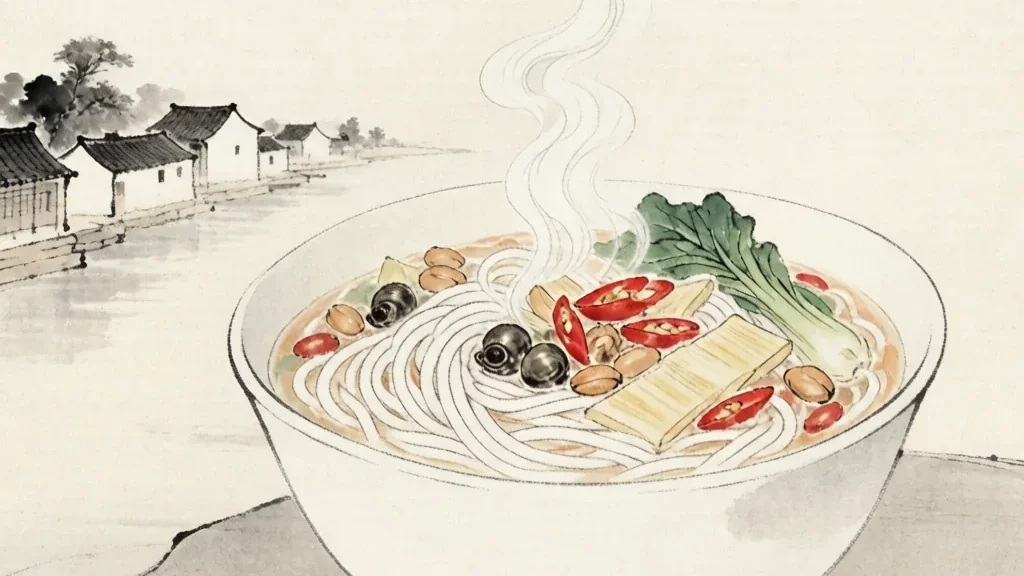
Luosifen: The Pungent Snail Noodles of Liuzhou
Some foods announce themselves before they are seen, and luó sī fěn (螺蛳粉) — the snail rice noodle soup of Liuzhou — is the undisputed champion of aromatic entrance. Steam rising from a bowl carries a funk that has launched a thousand jokes and a great many addictions.
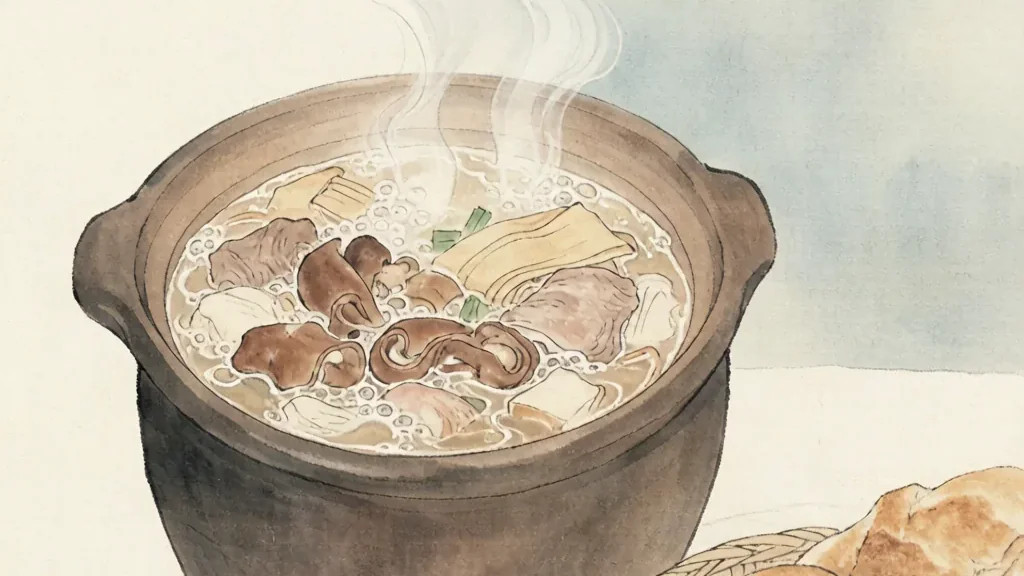
Luzhu: Beijing's Hearty Offal Stew
Not for the faint of heart, 卤煮 ( lǔ zhǔ ) is Beijing's ultimate working-class stew: a bubbling pot of pork intestines, lung, liver, and tofu skin, simmered in a master 卤 ( lǔ , spiced braising liquor) and served over torn pieces of 火烧 ( huǒ shāo , baked wheat bread). Born from the offcuts of imperial banquets, luzhu is the city's most unapologetically rustic dish — pungent, rich, and deeply beloved by locals who grew up on its funky broth.
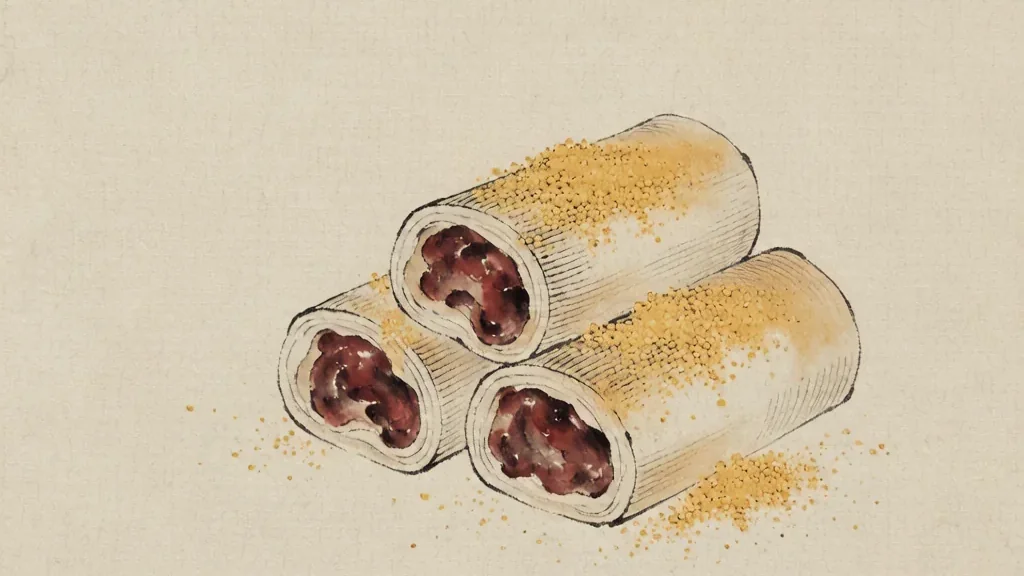
Lüdagun: The Rolling Donkey Soybean Roll
Among the gentle, sweet snacks of old Beijing, few have a name as playful as lǘ dǎ gǔn (驴打滚), the "rolling donkey. " It is a soft roll of glutinous rice flour coated in toasted soybean flour, with a red bean paste center, and its name comes from the way the finished roll is tumbled in golden soy powder — evoking a donkey rolling in dust.
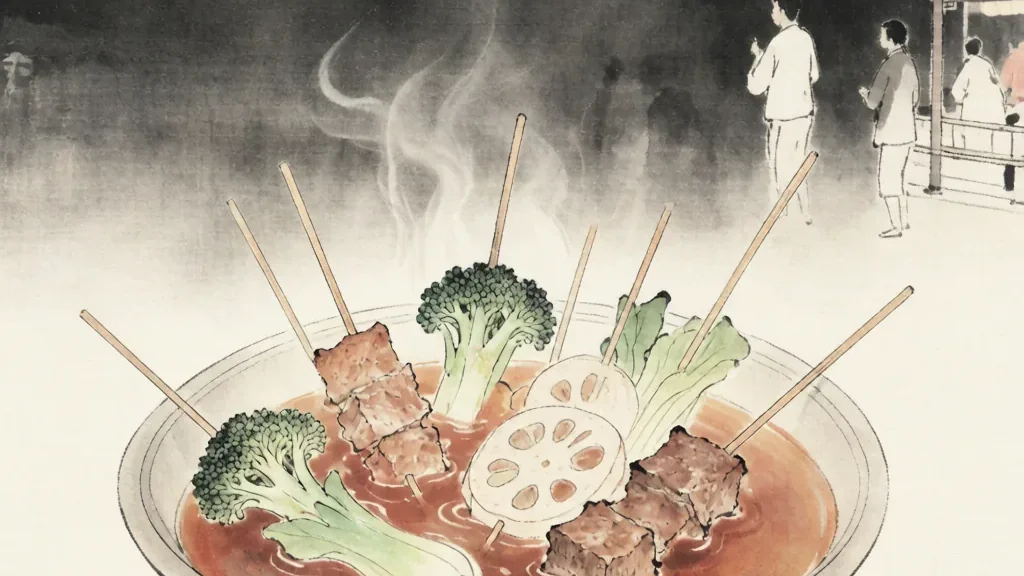
Malatang: Numbing-Spicy Hot Broth
Walk into any Chinese food street in the evening and you will likely meet a steamy, fragrant cloud rising from a row of simmering pots — that is má là tàng (麻辣烫), the "numbing-spicy hot broth" that turns choosing dinner into a hands-on game. The name says it plainly: má (numbing) from Sichuan peppercorn, là (spicy) from chili, and tàng (hot, both in temperature and in the broth sense).
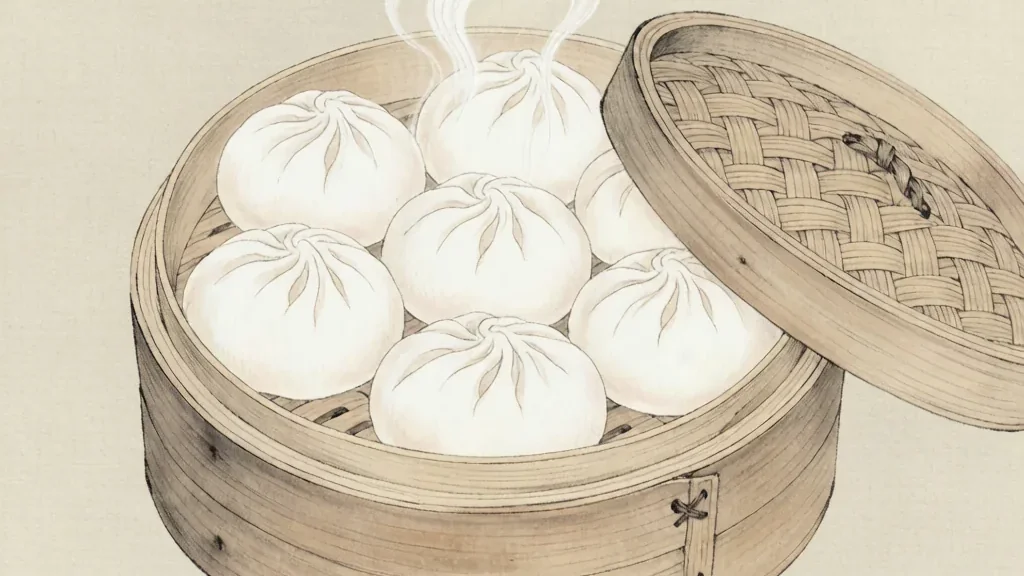
Mantou: The Plain Steamed Bread
Before there were dumplings, noodles, and elaborate banquets, there was the 馒头 ( mán tou ) — the plain steamed bread that has fed northern China for well over a thousand years. Shaped like a rounded dome of pure white dough, mantou contains no filling and no sugar, relying entirely on the gentle sweetness of fermented wheat and the soft, cloud-like crumb that steaming produces.

Mapo Tofu: The Spicy Sichuan Classic
Few dishes announce themselves as boldly as 麻婆豆腐 ( má pó dòu fu ), mapo tofu: a sizzling bowl of silken bean curd bathed in a chili-and-bean sauce, flecked with minced beef, and tingling with Sichuan pepper. Born in a Chengdu street kitchen in the nineteenth century, it became the global face of Sichuan cooking's signature "numbing-spicy" (mala) profile.
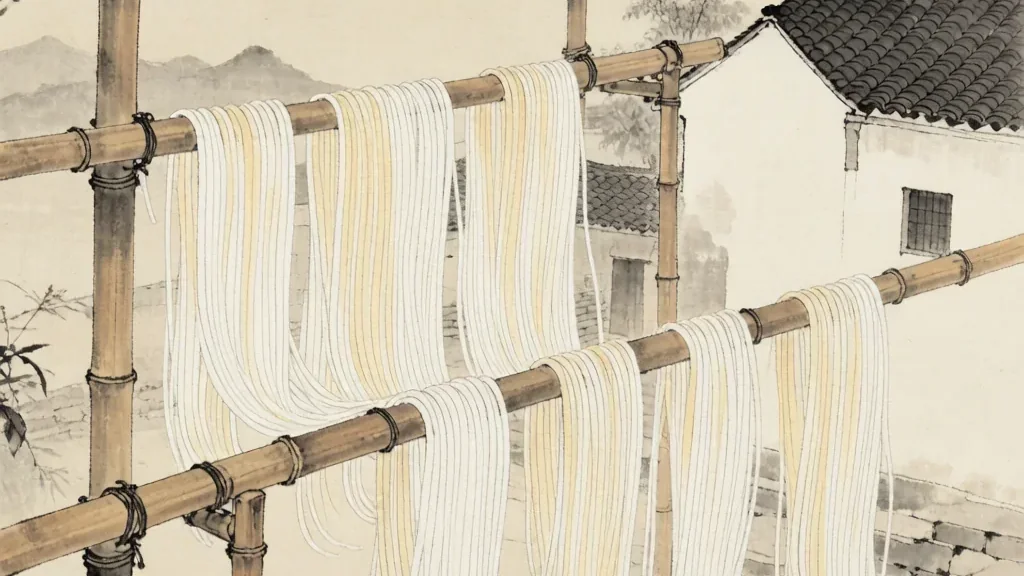
Rice Noodles: Threads of the South
Where wheat dominates the north, 米粉 ( mǐ fěn ) — rice noodles — are the staple threads of southern China. Made by grinding rice into a slurry, steaming it into sheets or extruding it into strands, and cutting or shaping it, rice noodles range from thin vermicelli to wide, flat ribbons.

Qingtuan (青团): Green Rice Balls for Qingming Festival
When spring arrives in the Jiangnan region of China, the markets fill with a distinctive seasonal treat: qingtuan (青团), emerald-green glutinous rice balls that herald the arrival of the Qingming Festival (清明节), also known as Tomb-Sweeping Day. These jade-colored dumplings, whose vibrant hue comes from the juice of mugwort or barley grass, are more than a seasonal delicacy — they are a living connection to ancient spring rituals, ancestral veneration, and the agricultural rhythms that have shaped Chinese culture for millennia.
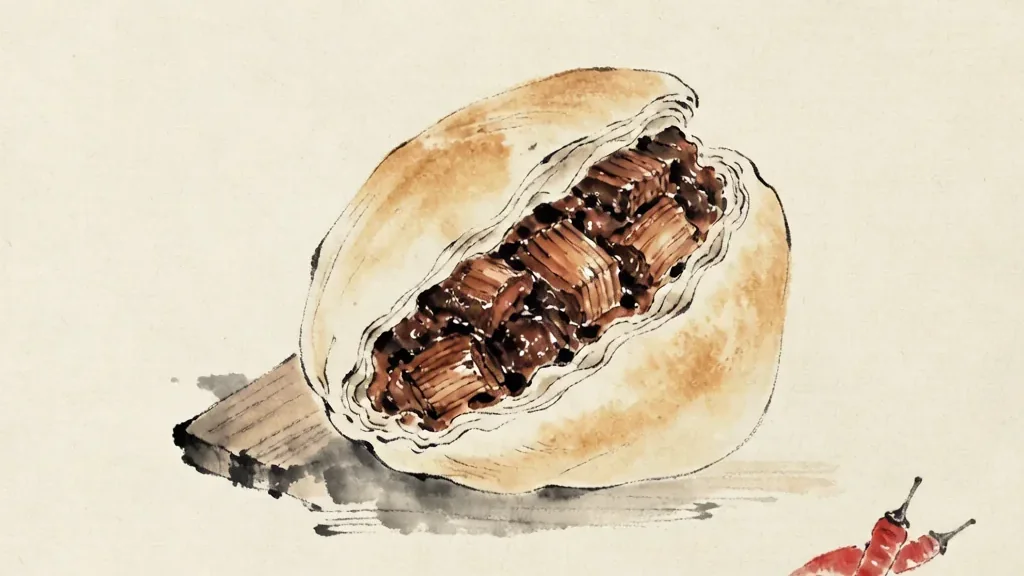
Roujiamo: The Chinese Hamburger
If China has a hamburger, it is ròu jiā mó (肉夹馍) — a slow-braised, fragrantly spiced meat stuffed into a crisp, hollowed wheat bun, eaten hot and messy in the hand. The name literally means "meat sandwiched in mo," and despite the word order it is essentially a filled bun rather than bread around a patty.

Shaobing: The Sesame Flatbread
Crisp on the outside, layered and faintly savory within, the 烧饼 ( shāo bing ) is the sesame flatbread that has traveled China's roads for over a millennium. Baked against the wall of a clay oven or on a griddle, scattered with white sesame seeds, and often hiding a smear of scallion or a swirl of sweetened filling, shaobing is the grab-and-go bread of the north.

Shaomai: The Open-Faced Dumpling
Open a bamboo steamer in a Cantonese dim sum house and among the sleek har gow and fluffy buns you will spot a small, pleated cup of dough with a frilly top and a jewel of filling peeking out — that is shāo mai (烧麦), the open-faced dumpling. Its name, written with characters meaning "to burn" and "wheat," evokes the early cooking method over an open flame, though today it is almost always steamed.
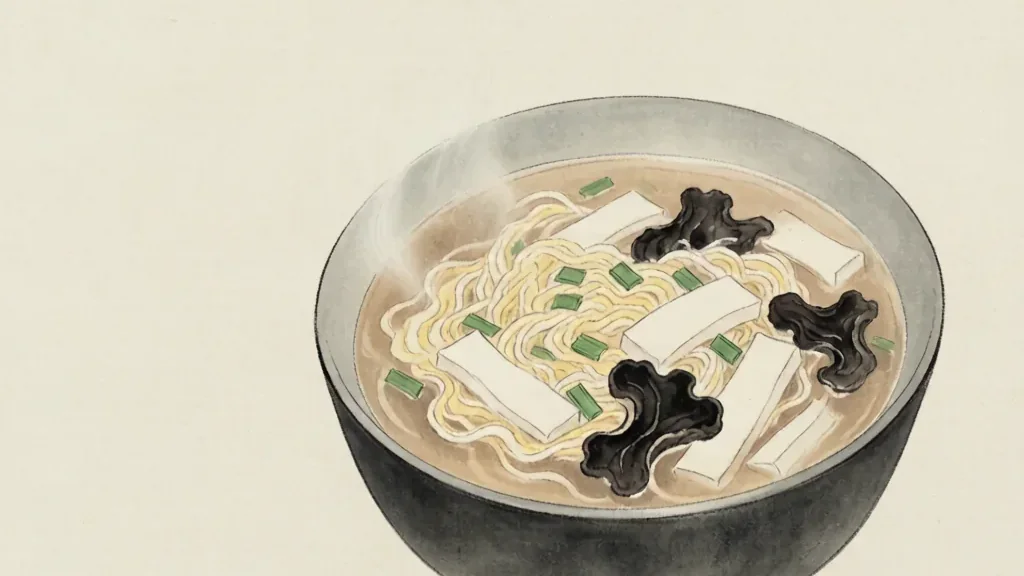
Hot and Sour Soup
Ask for a soup in a Chinese restaurant almost anywhere in the world and one name will likely appear: suān là tāng (酸辣汤), hot and sour soup. Dark, aromatic, and faintly trembling with egg ribbons and tofu, it is the comfort soup of northern Chinese cuisine — tangy from vinegar, hot from white pepper and chili, and thickened just enough to coat a spoon.
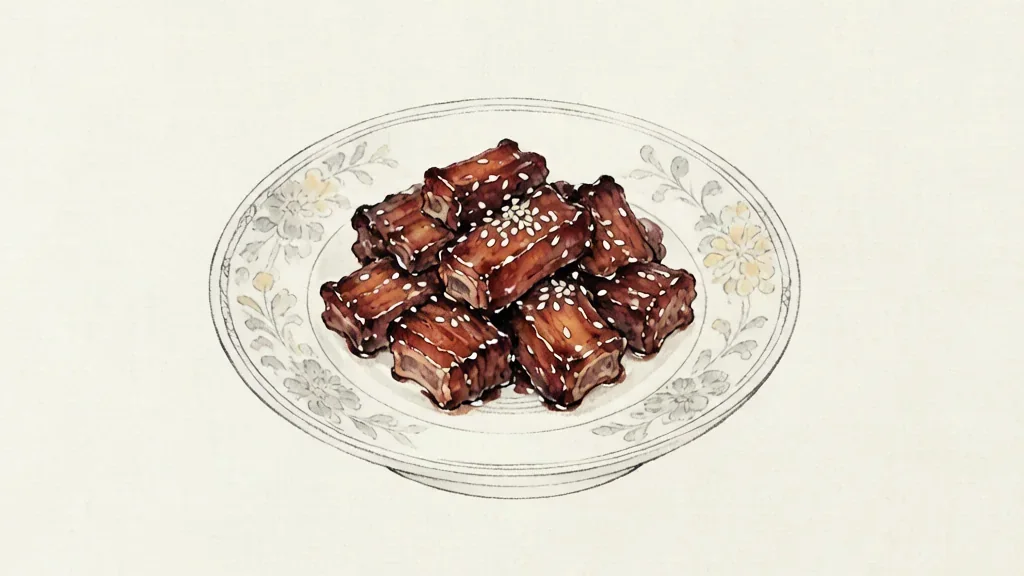
Sweet and Sour Spareribs
Sticky, glossy, and bright with the sweet-and-sour tang that defines a whole genre of Chinese cooking, 糖醋排骨 ( táng cù pái gǔ ) — sweet and sour spareribs — is a dish that bridges home kitchen and banquet hall. Bite-sized pork ribs are braised or fried, then lacquered in a sauce of sugar, vinegar, and soy until they glisten like candied mahogany.
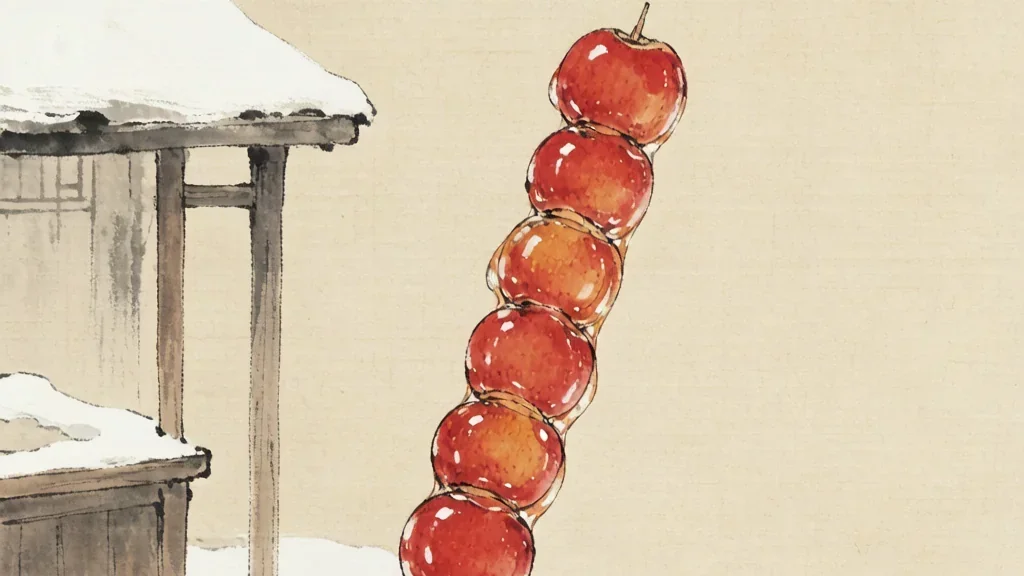
Tanghulu: Candied Hawthorn on a Stick
There is perhaps no winter street sound more nostalgic in northern China than the tap of a stick of táng hú lú (糖葫芦) against a vendor's tray — a column of glossy red haws glazed in hard sugar, like rubies frozen in amber. The name means "sugar gourd," a playful reference to the round fruit stacked like the ridges of a gourd.
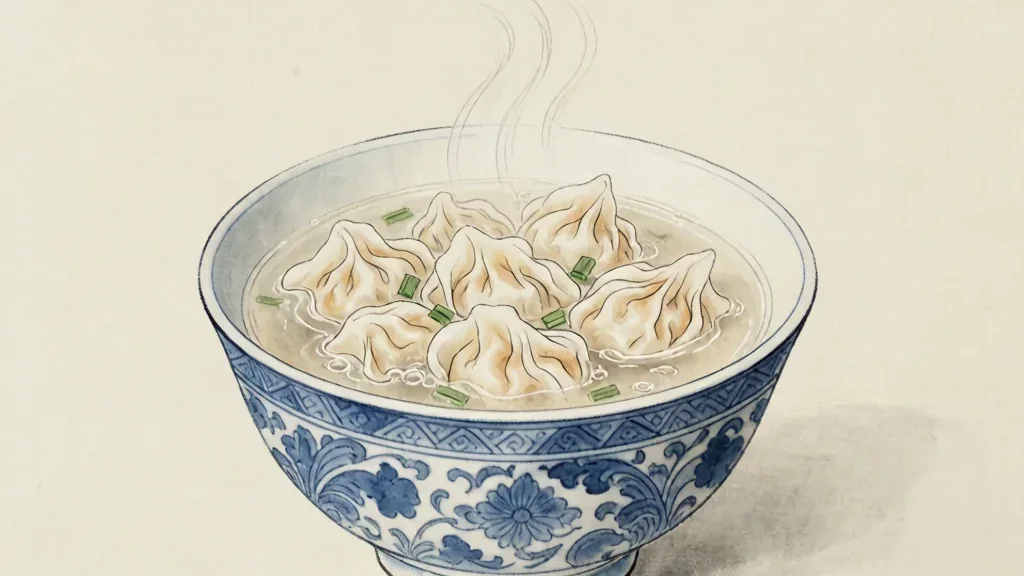
Wonton: The Little Swimming Dumpling
Shaped like a tiny envelope and named for the "swallowing of clouds," the 馄饨 ( hún tun ) is one of China's most ancient and adaptable foods. Western menus usually call it a "wonton," but that word barely captures the range: a delicate dumpling of thin dough wrapped around a small filling, served in clear broth, dry with sauce, or fried to a crisp.
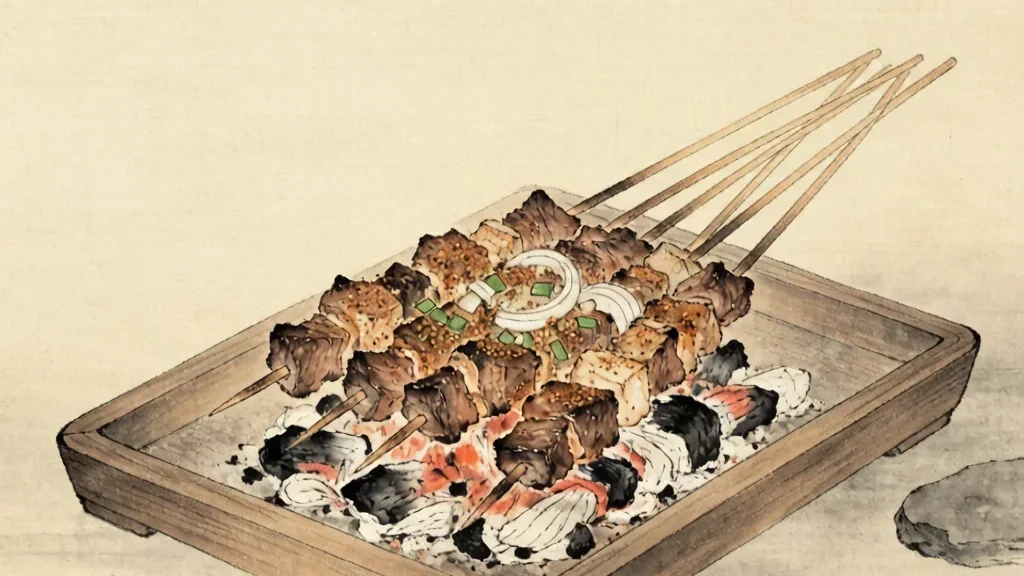
Yangrou Chuan: Mutton Skewers of the Northwest
Follow the smoke and the rhythm of sizzling fat on coals in almost any northern Chinese city after dark, and you will find yáng ròu chuàn (羊肉串) — mutton skewers, the quintessential street barbecue of the northwest. These are not dainty kebabs; they are chunks of lamb threaded on slender metal or bamboo sticks, dusted with cumin, chili, and salt, and blasted over open flame until the edges char and the fat renders.
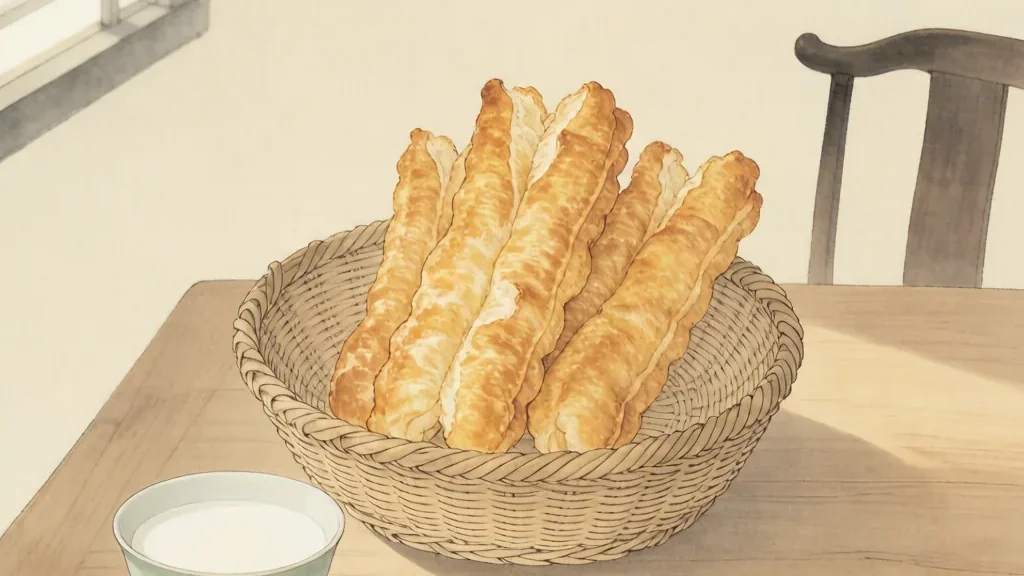
Youtiao: The Golden Fried Dough Sticks
Golden, blistered, and faintly chewy inside with a crisp exterior, the 油条 ( yóu tiáo ) is China's beloved fried dough stick. Sold from dawn carts outside every subway entrance and breakfast shop, youtiao is the country's default morning carb: torn into a soy-milk bowl, wrapped in a thin pancake, or eaten plain while walking to work.
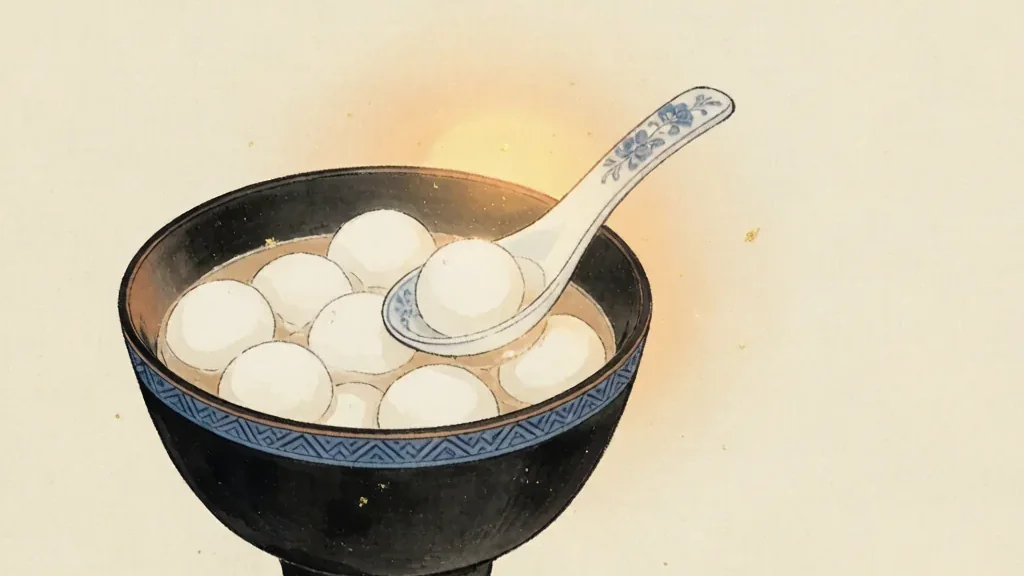
Yuanxiao and Tangyuan (元宵): Sweet Rice Balls for the Lantern Festival
As the first full moon of the lunar new year rises on the fifteenth day of the first month, millions of Chinese families gather to celebrate the Lantern Festival (元宵节, Yuanxiao Jie) by eating a simple yet profoundly symbolic food: round, white glutinous rice balls filled with sweet or savory fillings, floating in a clear, fragrant broth. These rice balls are known as yuanxiao (元宵) in northern China and tangyuan (汤圆) in the south, and while the two terms are often used interchangeably, they refer to distinctly different preparations that reflect the deep culinary divide between China's wheat-eating north and rice-eating south.
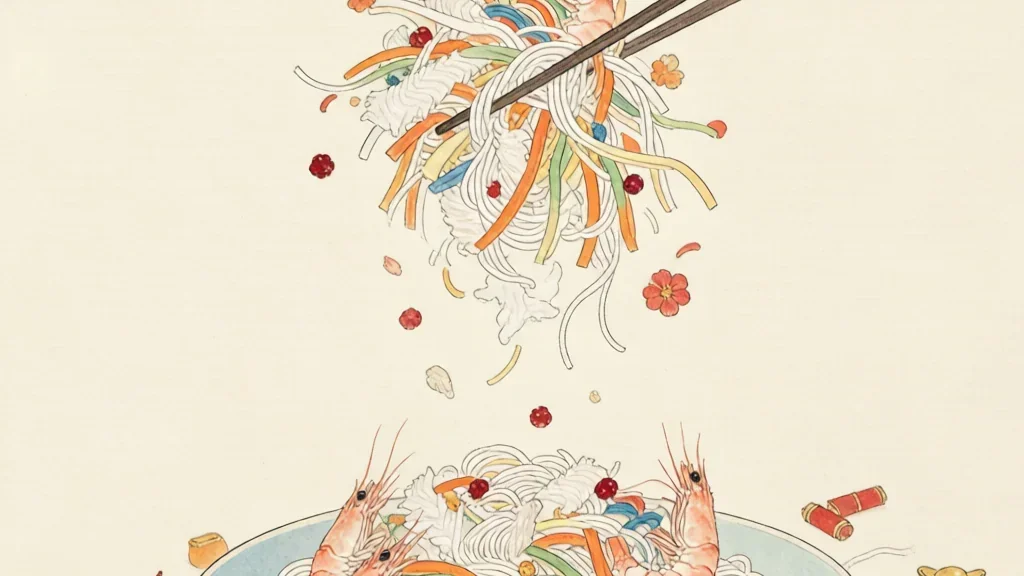
Yusheng: The Prosperity Toss Salad
At the heart of a southern Chinese New Year banquet sits a plate of uncooked fish and shredded vegetables, and the moment it arrives the table erupts — everyone stands, chopsticks raised, and tosses the ingredients high into the air while shouting "lo hei! " This is yú shēng (鱼生), the "prosperity toss" salad, most famously associated with Singapore and Malaysia's Cantonese communities but rooted in Chinese traditions of eating raw fish for luck.
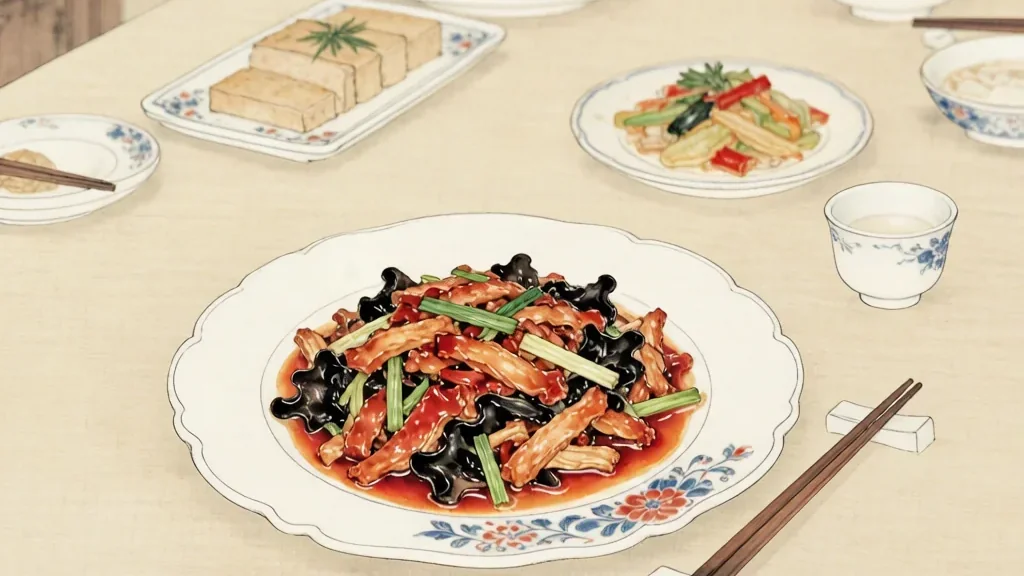
Fish-Fragrant Shredded Pork
One of Sichuan cuisine's great paradoxes is 鱼香肉丝 ( yú xiāng ròu sī ), "fish-fragrant shredded pork" — a dish that contains no fish at all. The name refers to a flavor profile, not an ingredient: the sweet, sour, salty, and spicy seasoning once used to cook fish, here applied to strips of pork with wood-ear mushrooms, bamboo shoots, and scallion.
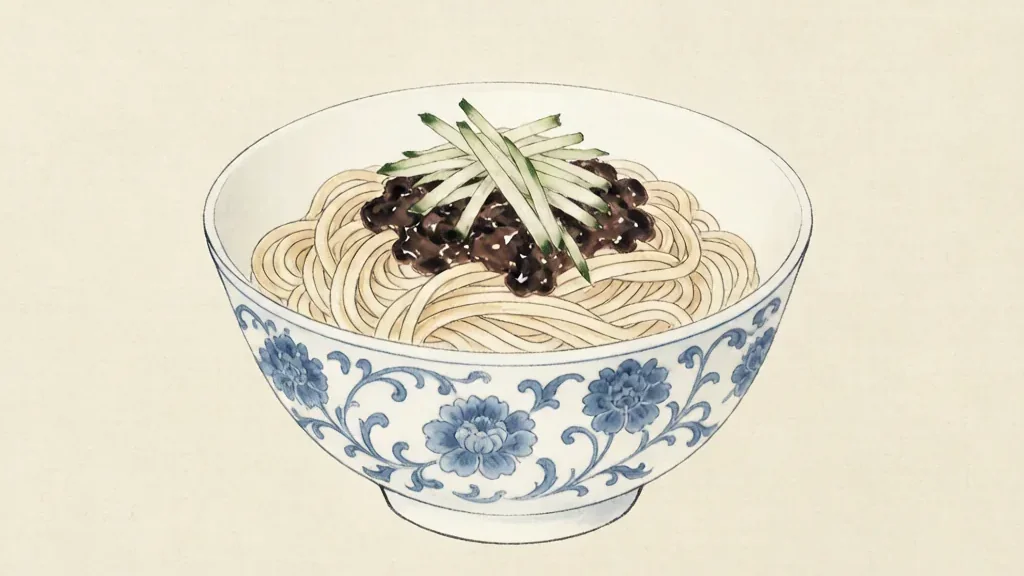
Zhajiangmian: Noodles with Soybean Paste
If Beijing had an official weekday lunch, it might well be 炸酱面 ( zhá jiàng miàn ) — noodles with soybean paste. The dish is gloriously plain in concept: chewy wheat noodles topped with a dark, glossy mound of fried soybean paste and ground pork, then buried under a colorful pile of raw and blanched vegetables.
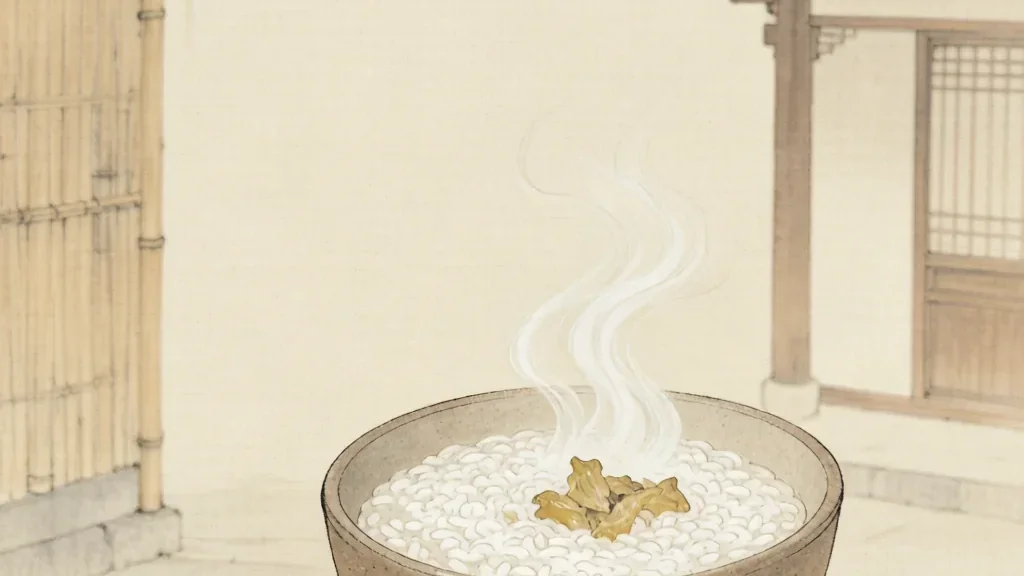
Congee: The Comfort of Rice Porridge
When Chinese families want to soothe a sick child, warm a winter morning, or stretch a handful of rice into a meal for many, they turn to 粥 ( zhōu ) — congee, or rice porridge. Made by simmering rice in many times its weight of water until it breaks down into a soft, spoonable gruel, congee is the quietest hero of the Chinese table.
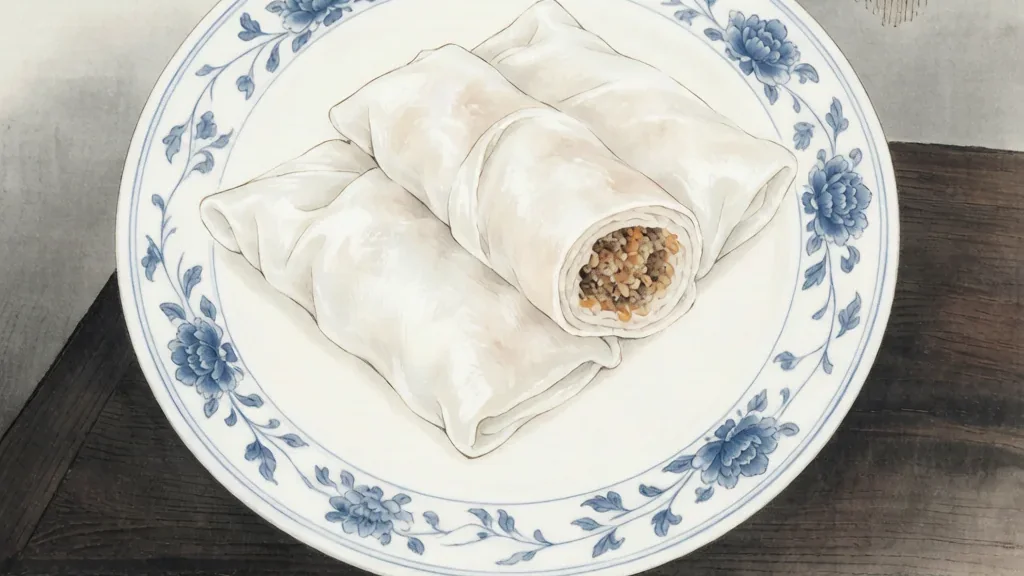
Rice Rolls: The Silk of Cantonese Breakfast
Rice rolls (肠粉) are the silken Cantonese breakfast — steamed rice sheets rolled with shrimp or beef and slicked with sweet soy.

Chuan Chuan: Everything on a Stick
Chuan chuan (串串) is 'everything on a stick' — the Sichuan street skewers boiled or grilled in a shared, fiery pot.
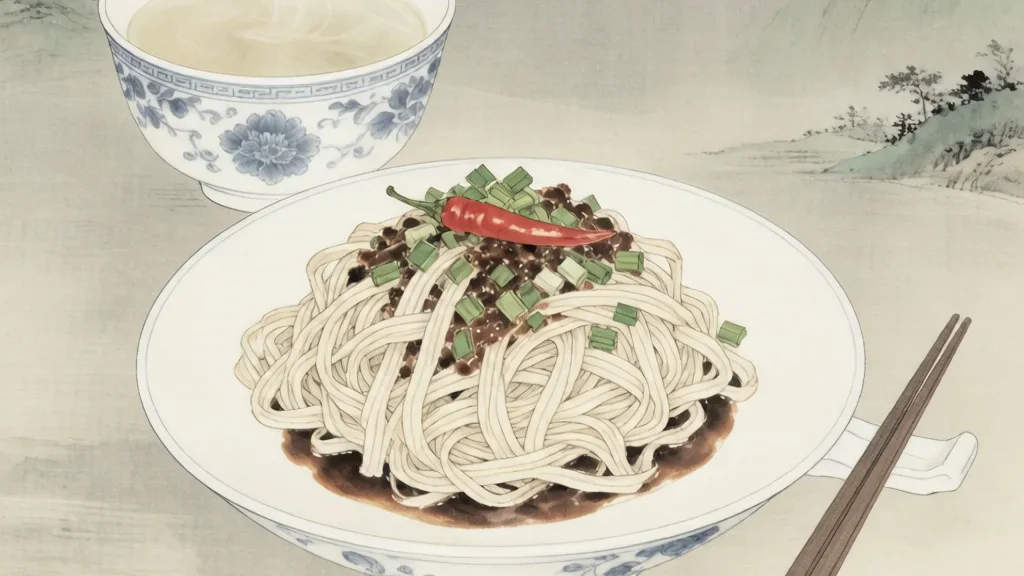
Knife-Cut Noodles: The Sliced Masterpiece
Knife-cut noodles (刀削面) are the sliced masterpiece of Shanxi — ribbons of dough shaved mid-air into the boiling pot.
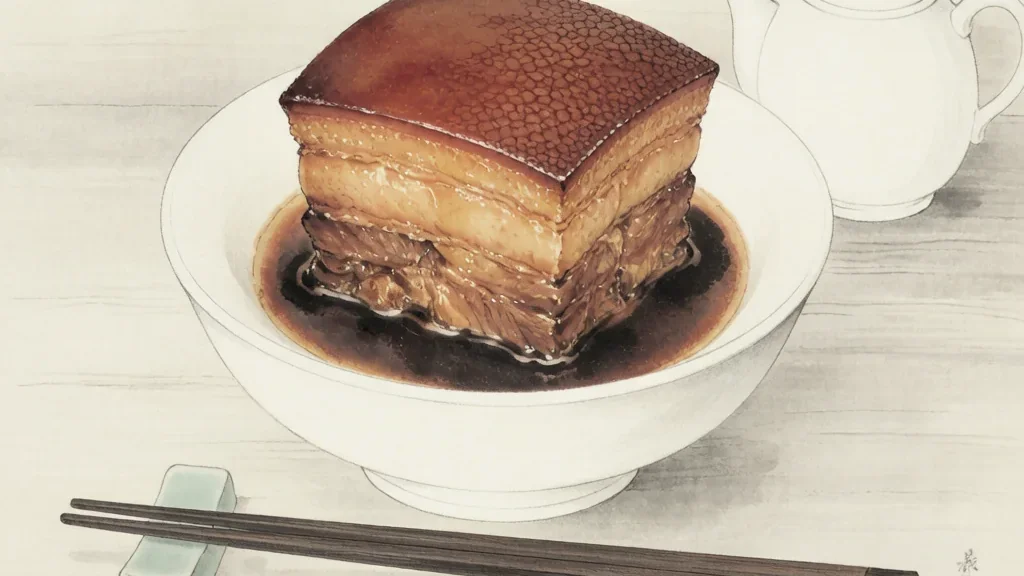
Dongpo Pork: The Poet Braised Belly
Dongpo pork (东坡肉) is the poet's braised belly — Su Shi's slow-cooked squares of pork, rich yet never greasy.
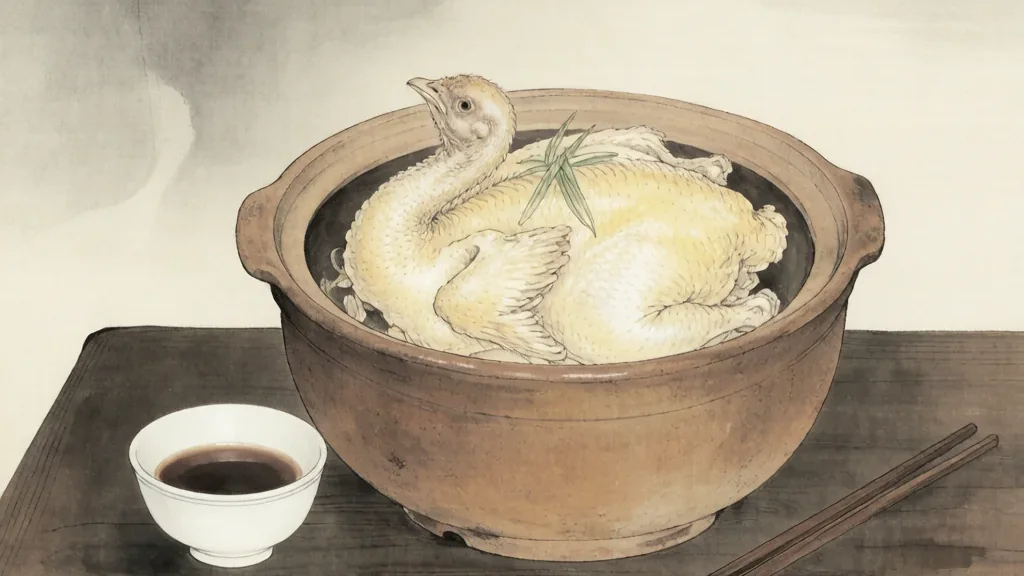
Beggar Chicken: The Emperor Favorite
Beggar's chicken (叫花鸡) is the emperor's favorite — a whole chicken mud-baked in lotus leaves, peasant ingenuity turned royal.
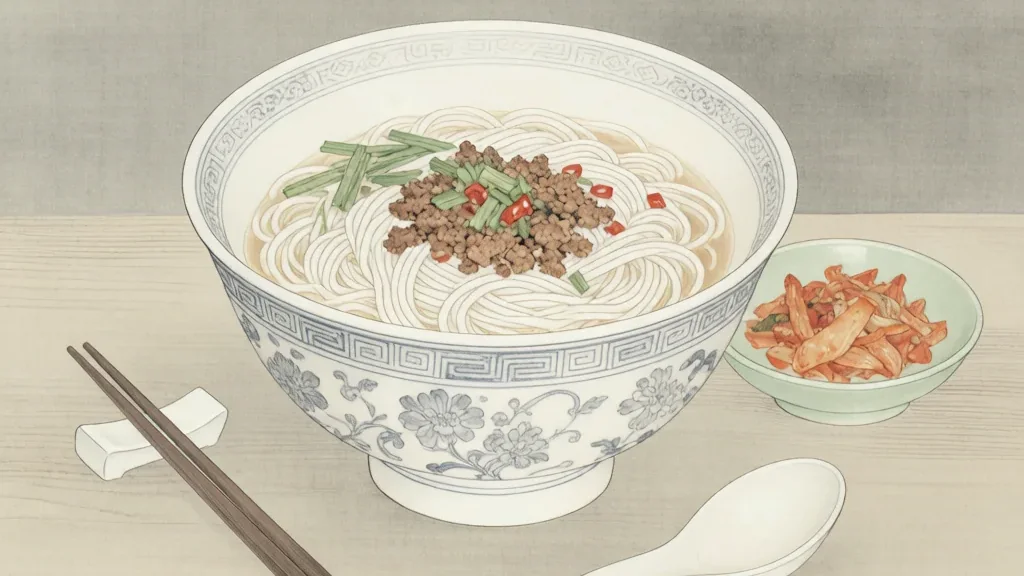
Guilin Rice Noodles: A Morning Ritual
Guilin rice noodles (桂林米粉) are a morning ritual — slender noodles in savory broth topped with fried pork and pickles.
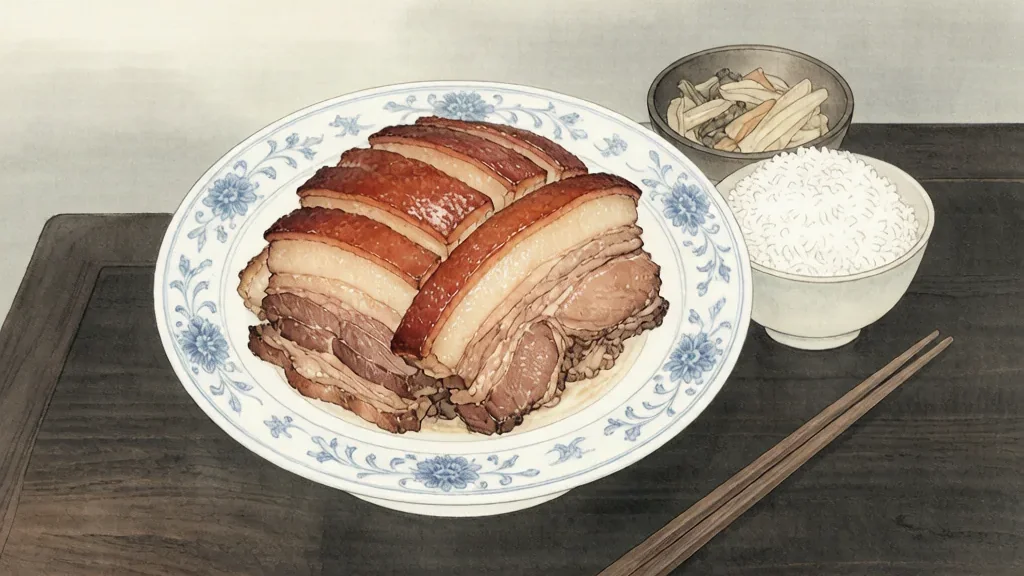
Twice-Cooked Pork: The Sichuan Classic
Twice-cooked pork (回锅肉) is the Sichuan classic — boiled then wok-seared with douban paste and leeks.
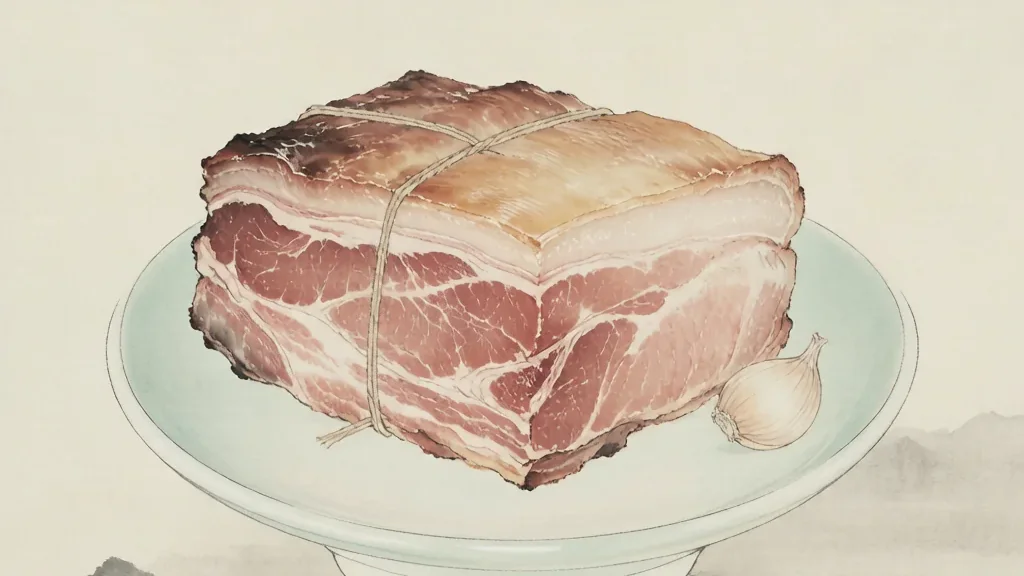
Cured Meat: The Preserved Taste of Winter
Cured meat (腊肉) is the preserved taste of winter — pork salted and smoked to last the cold and feast at New Year.
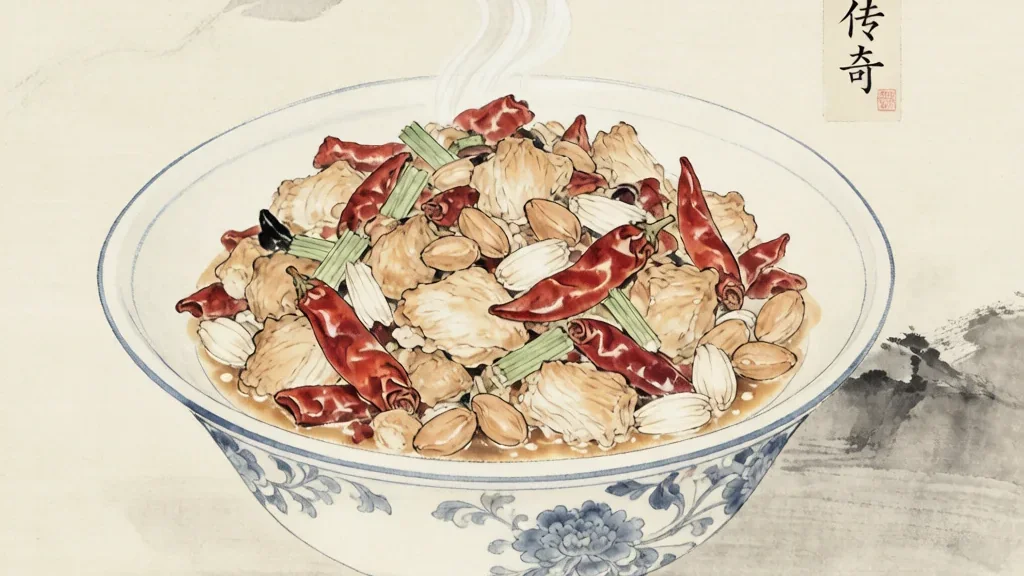
Kung Pao Chicken: The Governor Fiery Legacy
Kung Pao chicken (宫保鸡丁) is the governor's fiery legacy — diced chicken with peanuts in a sweet-sour, numbing sauce.
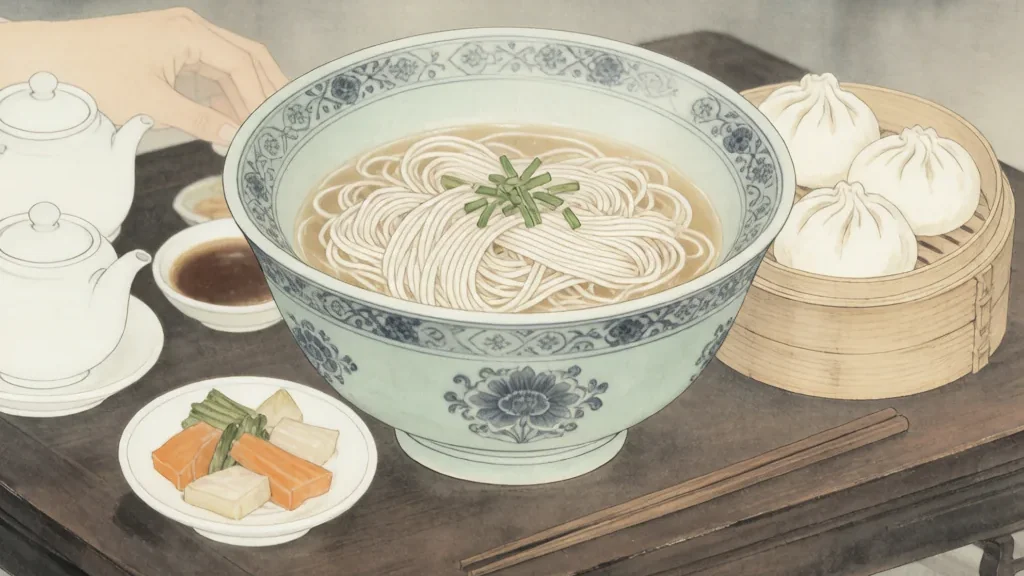
Old Ma Noodles: A Wuhan Breakfast Ritual
Old Ma noodles (老马碗) are a Wuhan breakfast ritual — a hot, savory noodle bowl grabbed at the curb at dawn.
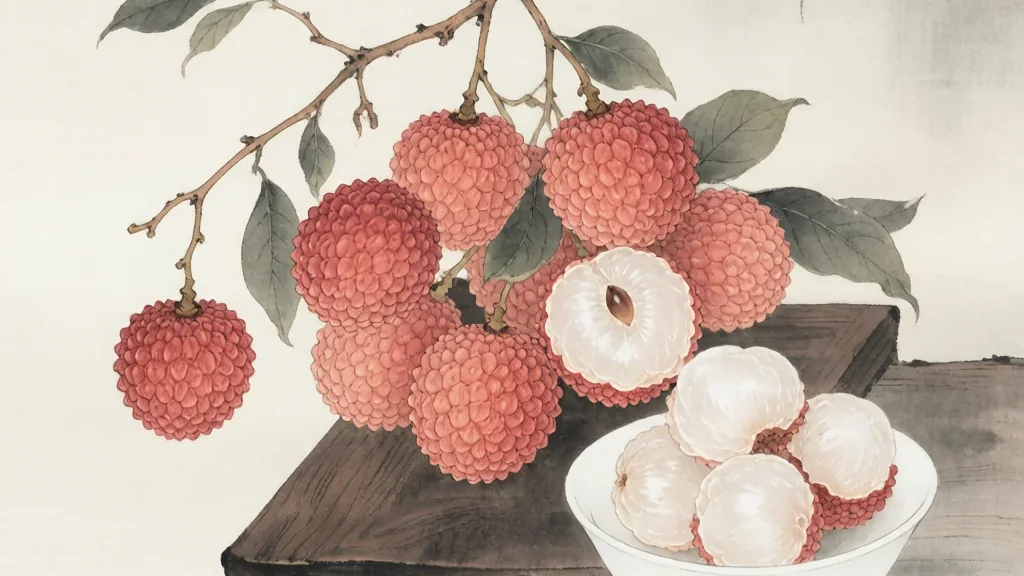
Lychee: The Emperor Fruit
Lychee (荔枝) is the emperor's fruit — the perfumed, rosy berry that launched a Tang craze and a famous poem of haste.
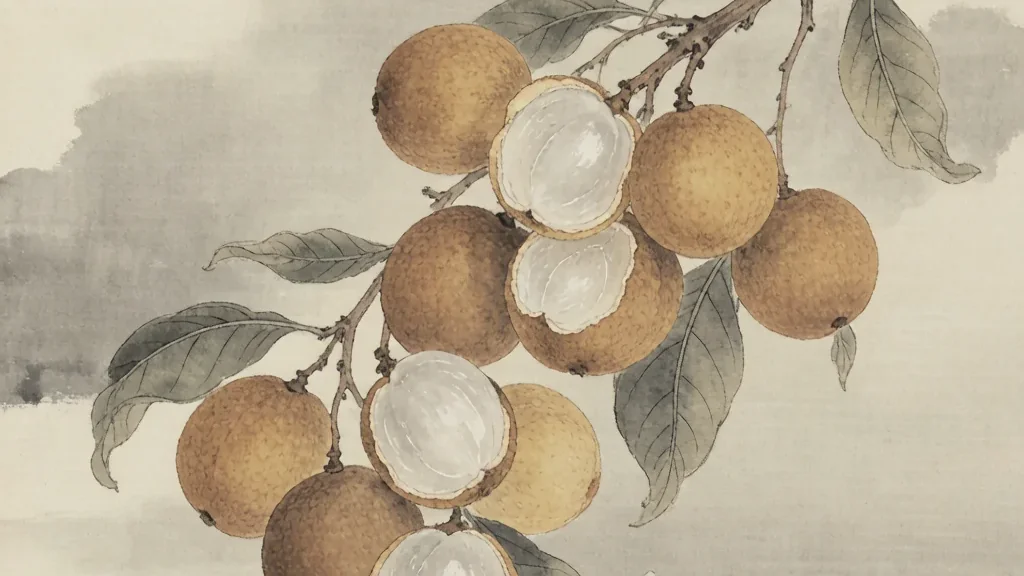
Longan: The Dragon Eye Fruit
Longan (龙眼), the 'dragon eye' fruit, is lychee's mild cousin — a round, sweet fruit named for its glossy black seed.
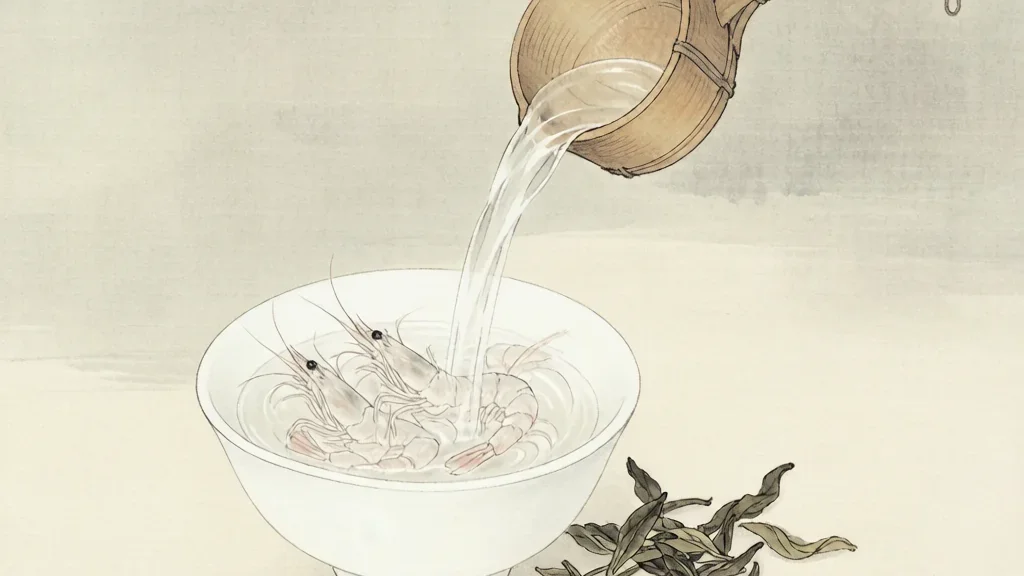
Longjing Shrimp: Tea Leaves and River Freshness
Longjing shrimp (龙井虾仁) pairs tea leaves and river freshness — West Lake shrimp lightly fried with tender Longjing buds.
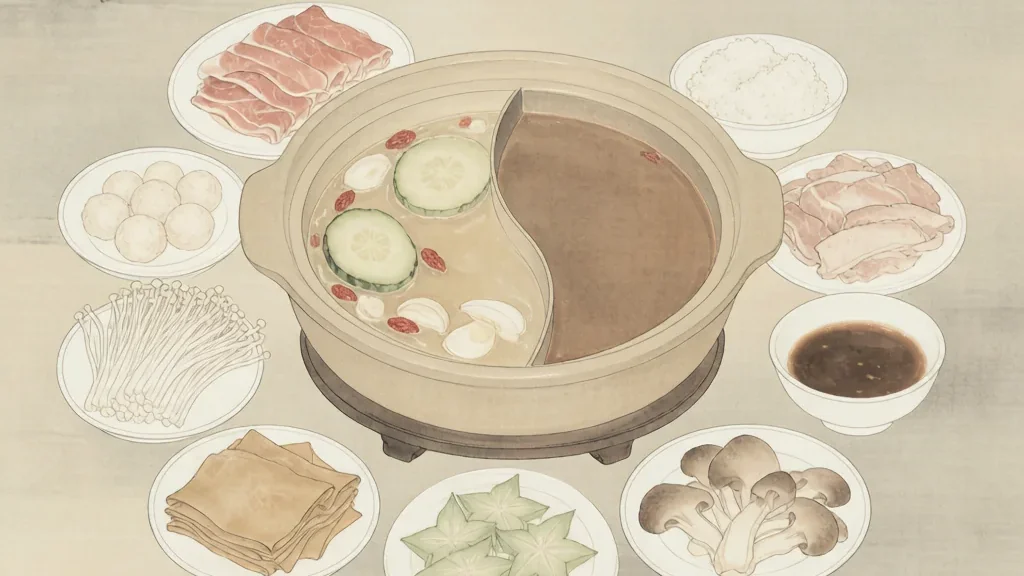
Maocai: The Solo Hot Pot Adventure
Maocai (冒菜) is the solo hot pot adventure — a personal bowl of boiled meats and greens in numbing broth.
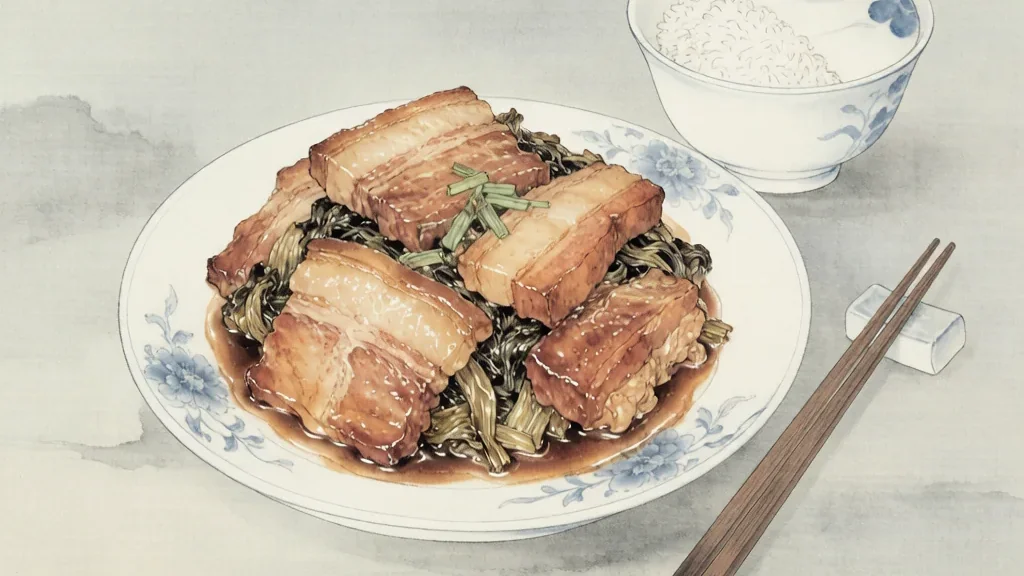
Meicai Kou Rou: The Sweet and Savory Pork Belly
Meicai kou rou (梅菜扣肉) is the sweet-savory pork belly — fat layered over salted preserved mustard and steamed soft.
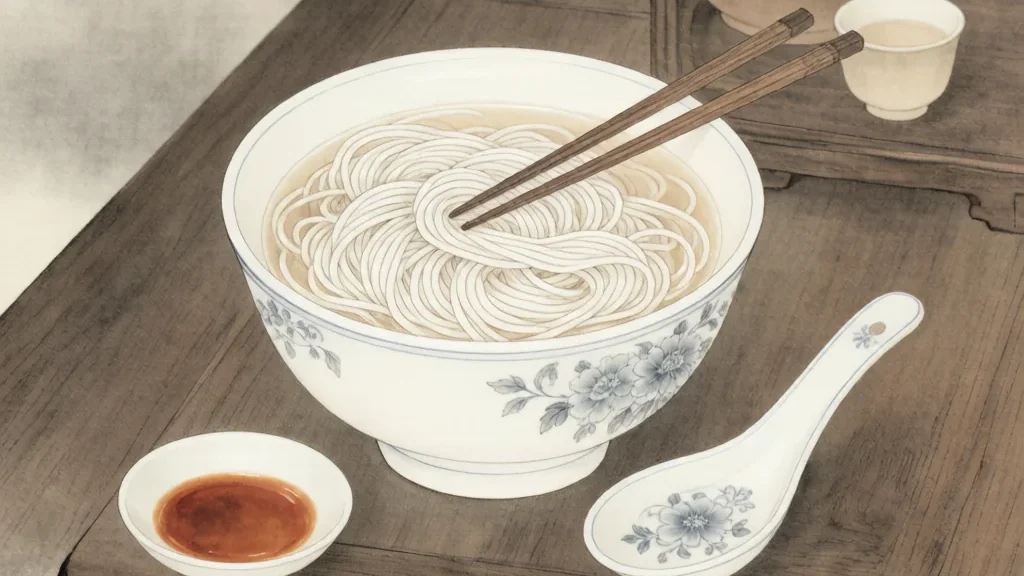
Rice Noodles: The Staple of the South
Rice noodles (米粉) are the staple of the south — slippery ribbons in broth or stir-fried across the Yangtze's south.
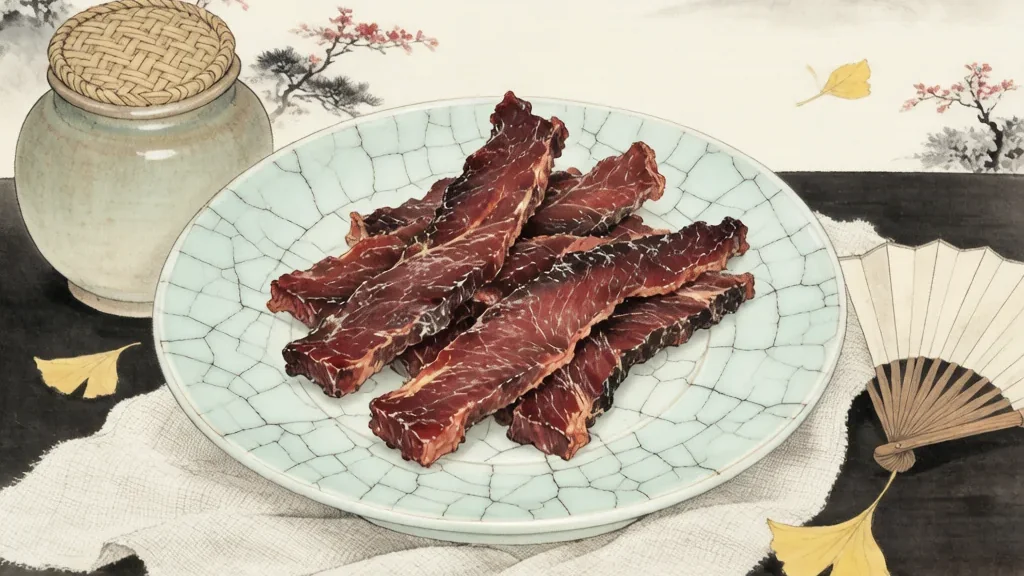
Beef Jerky: The Snack of the Steppes
Beef jerky (牛肉干) is the snack of the steppes — air-dried, spiced beef carried on the long ride.
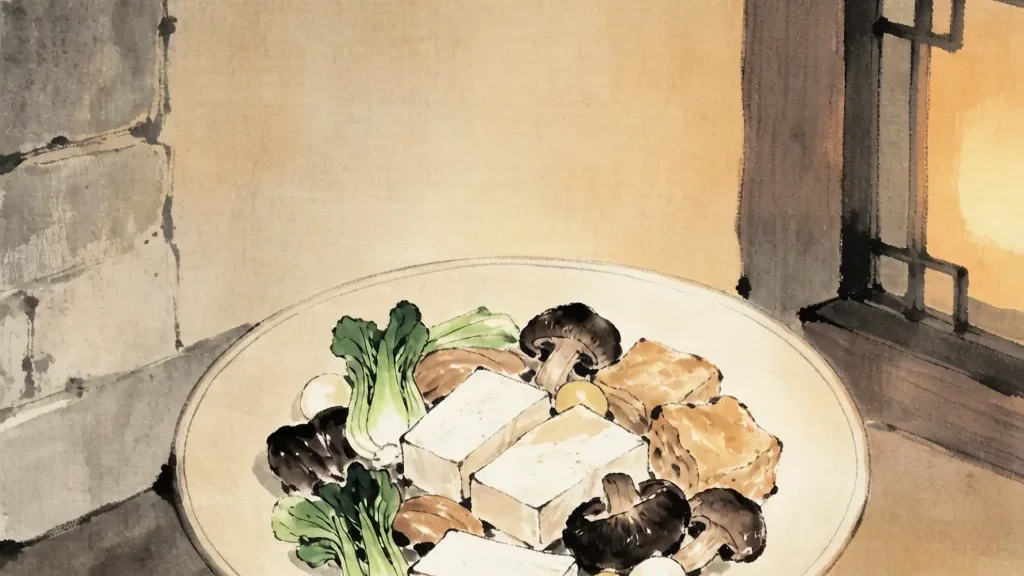
Buddhist Vegetarian Cuisine: Compassion on the Plate
Buddhist vegetarian cuisine (素斋) is compassion on the plate — temple cooking that mimics meat with tofu and mushroom.
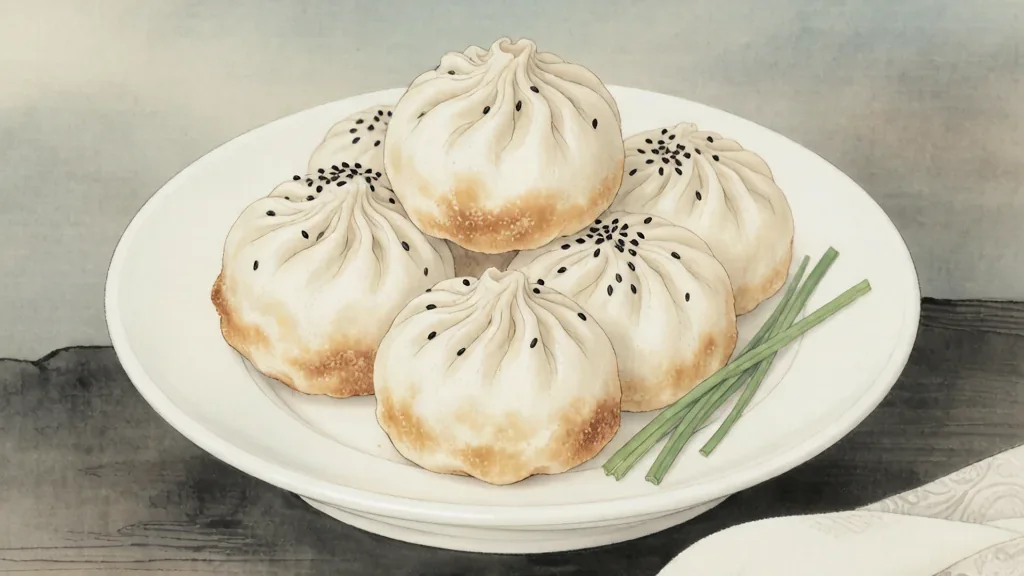
Shengjian: The Pan-Fried Pork Bun of Shanghai
Shengjian (生煎) are the pan-fried pork buns of Shanghai — crisp-bottomed, juicy, and dusted with sesame and scallion.
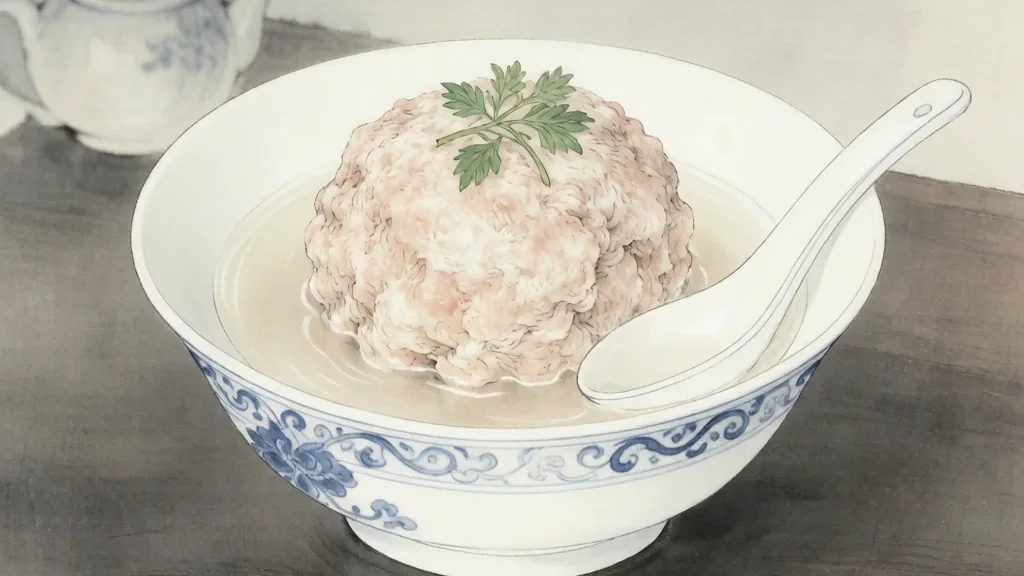
Lion Head: The Giant Meatball of Jiangsu
The Lion's Head (狮子头) is the giant meatball of Jiangsu — a soft, braised mound of pork that 'roars' with flavor.
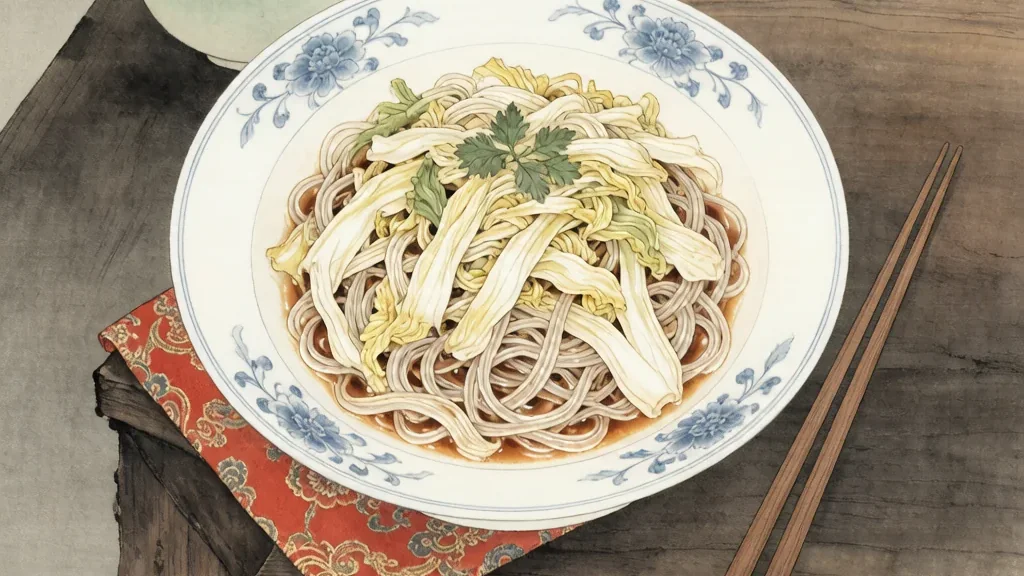
Sour Cabbage: The Taste of the North
Sour cabbage (酸菜) is the taste of the north — cabbage fermented in brine to outlast the long winter.
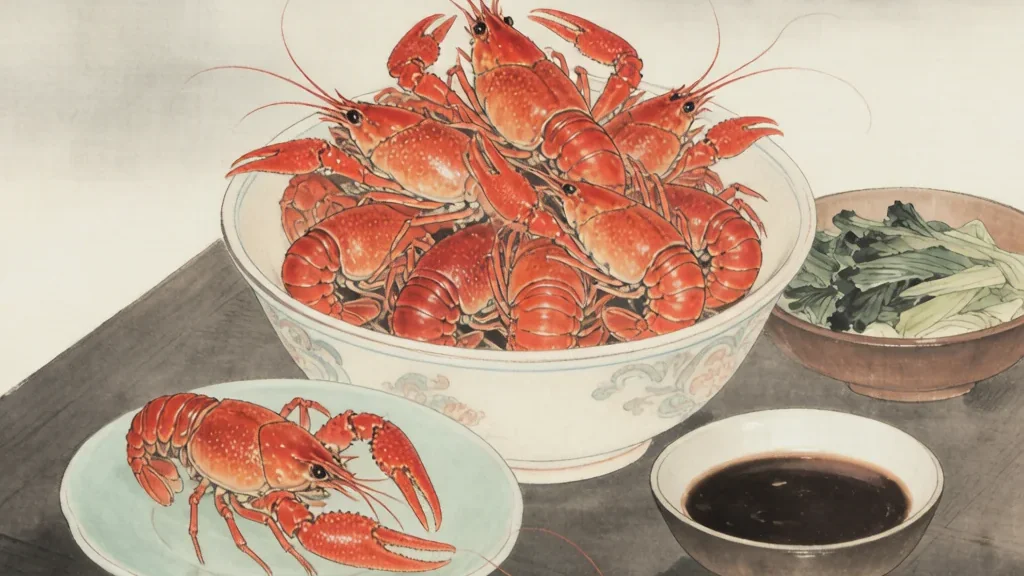
Crayfish: The Summer Night Feast
Crayfish (小龙虾) are the summer night feast — piles of spicy, numbing river shrimp cracked over beer.
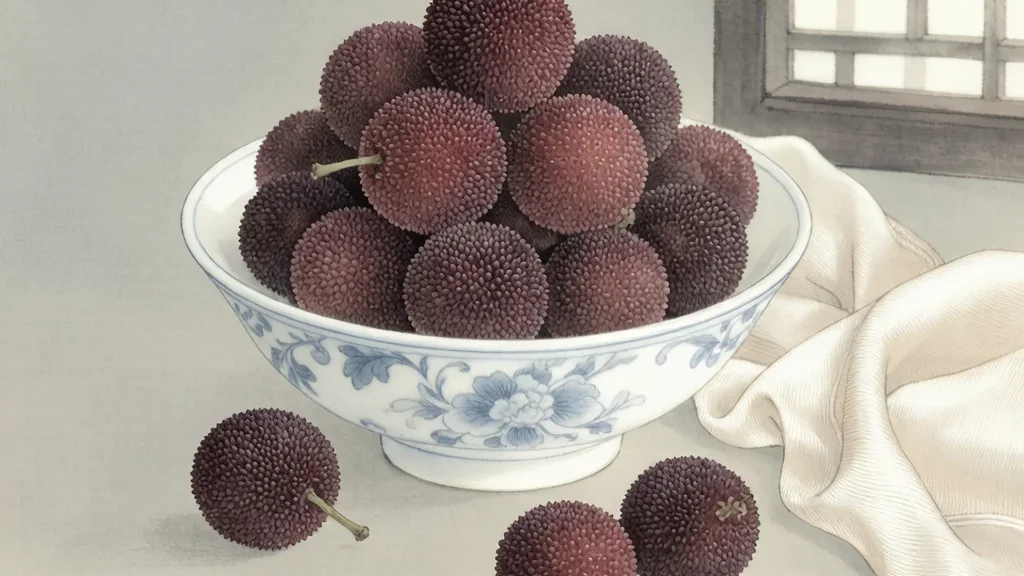
Bayberry: The Sweet and Tart Summer Berry
Bayberry (杨梅) is the sweet-tart summer berry — a knobby red fruit that stains the lips and cools the heat.
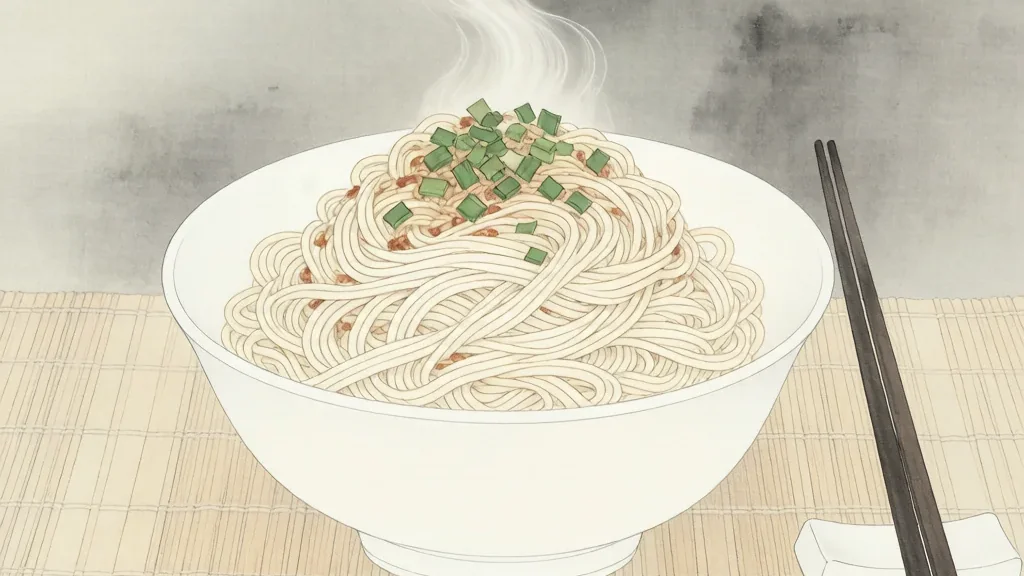
Yibin Burning Noodles: The Fiery Dish of Sichuan
Yibin burning noodles (宜宾燃面) are the fiery dish of Sichuan — dry-tossed noodles lit with chili oil and numbing heat.
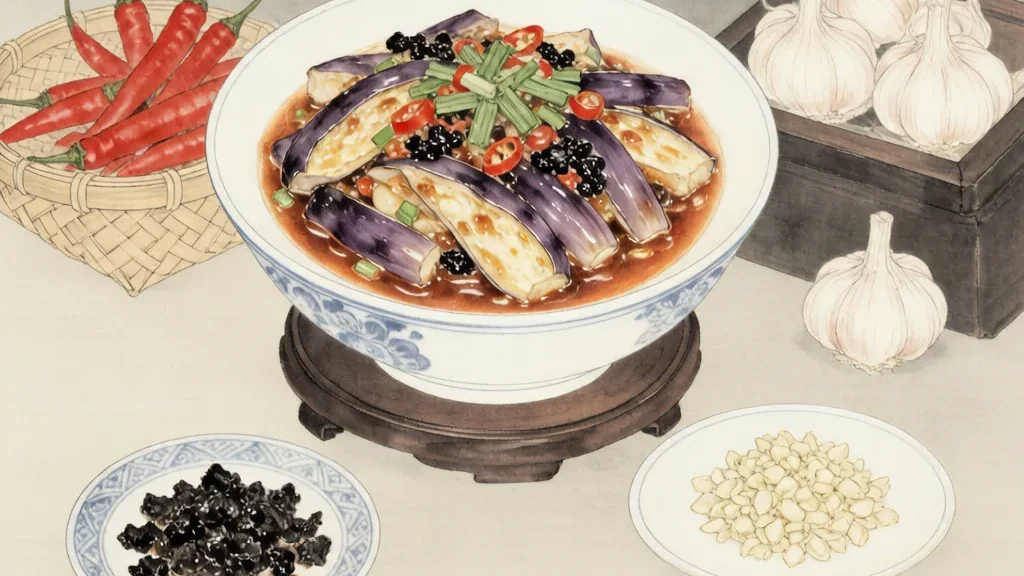
Fish-Fragrant Eggplant: The Taste of Sichuan
Fish-fragrant eggplant (鱼香茄子) is the taste of Sichuan without fish — the sweet-sour, garlicky 'fish-fragrant' sauce on soft eggplant.

Pickled Mustard: The Crunch of China
Pickled mustard (榨菜) is the crunch of China — salted, pressed mustard stems that sharpen congee and noodles.
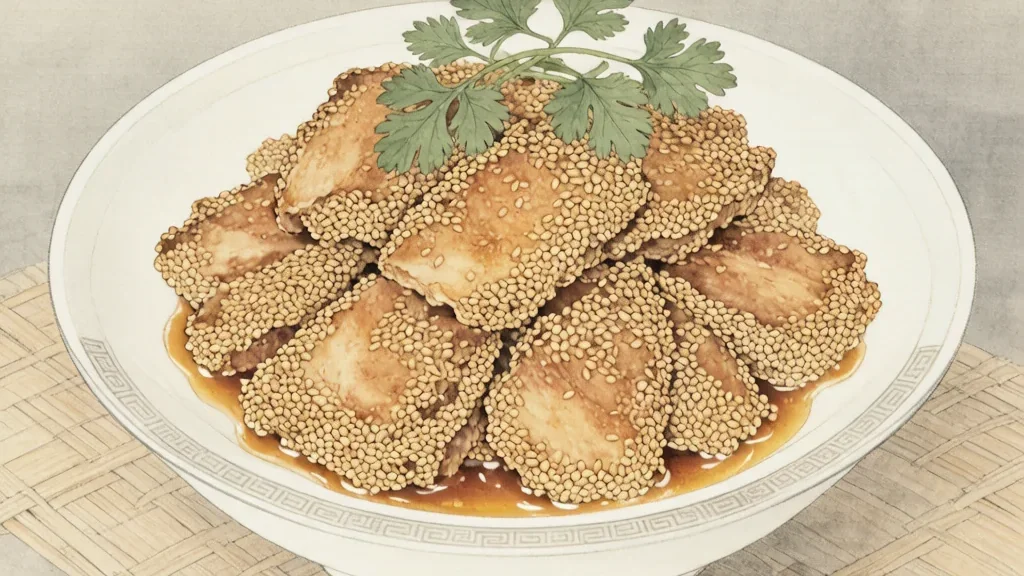
Sesame Meat: The Aromatic Dish of the North
Sesame meat (芝麻肉) is the aromatic dish of the north — pork glazed with toasted sesame for a nutty crunch.
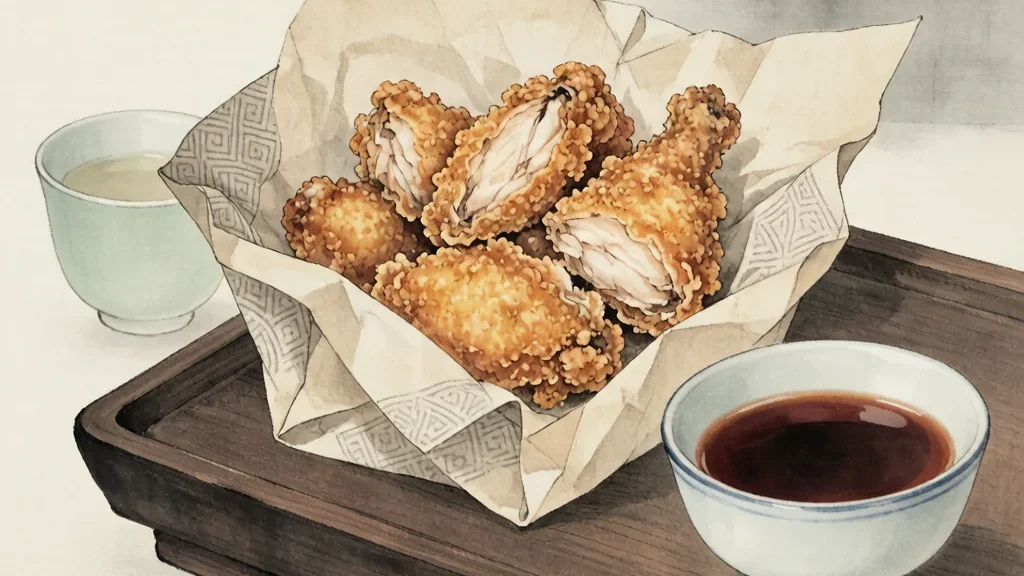
Paper-Wrapped Fried Chicken: A Cantonese Delight
Paper-wrapped chicken (纸包鸡) is a Cantonese delight — marinated chicken steamed inside a paper parcel that seals in the juice.