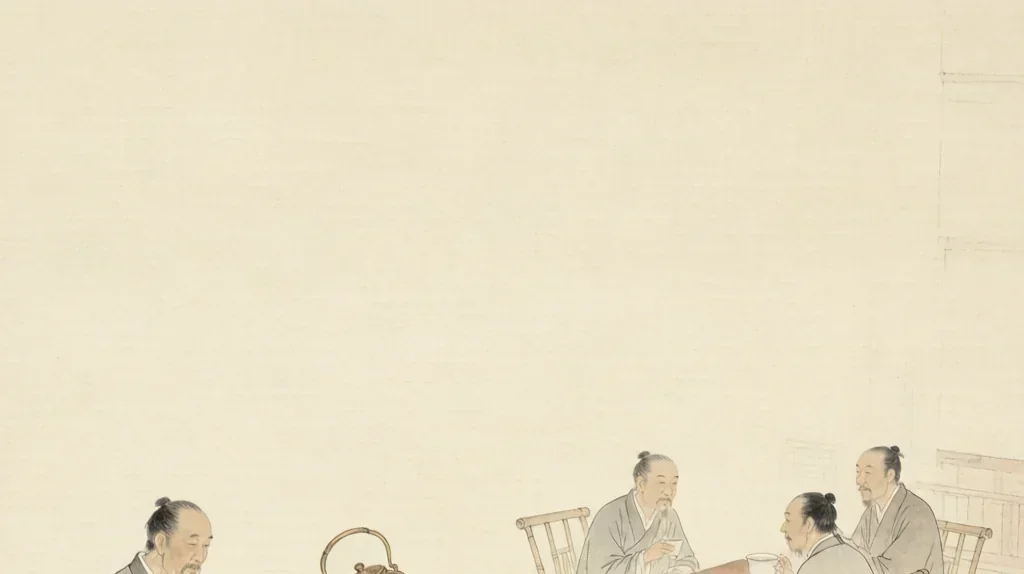
The Chinese teahouse (茶馆, cháguǎn) is far more than a place to drink tea — it is one of the most enduring and beloved social institutions in Chinese civilization, a microcosm of community life where conversation flows as freely as hot water from a copper kettle. For over a thousand years, teahouses have served as China's living rooms, town squares, entertainment venues, and informal courts of public opinion, all wrapped into one. From the elegant garden pavilions of Suzhou to the bustling covered-bowl teahouses of Chengdu, from the smoky storytelling halls of Beijing to the raucous dim sum palaces of Guangzhou, each region of China has developed its own distinctive teahouse culture, reflecting local customs, aesthetics, and ways of life. To step into a Chinese teahouse is to step into the heart of Chinese society — a space where class distinctions dissolve over a shared pot of tea, where business deals are sealed and marriages are arranged, where retired uncles spend entire afternoons and poets find their muses. The teahouse is China in miniature, and its story is the story of Chinese social life itself.
Chengdu: Covered-Bowl Tea and the Art of Longmenzhen
No city in China is more synonymous with teahouse culture than Chengdu (成都), the capital of Sichuan Province and a city whose leisurely pace of life has been celebrated in Chinese literature for centuries. Chengdu teahouses are legendary for their sheer number — at the height of the tradition, it was said that every street in the city had at least one teahouse — and for their distinctive style, centered on the gaiwan (盖碗, 'covered bowl'). The gaiwan is the quintessential Sichuan tea vessel: a porcelain cup with a saucer and a lid, which the drinker uses to gently push aside the floating tea leaves before sipping. The ritual of drinking gaiwan tea involves a graceful, almost choreographed series of gestures — lifting the lid slightly, blowing across the surface to cool the tea, tilting the cup just enough to drink without swallowing the leaves — that have become emblematic of Chengdu's refined leisure culture.
The true soul of the Chengdu teahouse, however, is not the tea itself but the practice of 'bai longmenzhen' (摆龙门阵, literally 'setting up the dragon gate formation'), the uniquely Sichuanese art of casual, meandering conversation. 'Longmenzhen' refers to the sprawling, free-flowing talk that fills a Chengdu teahouse — a blend of gossip, storytelling, philosophical musing, political commentary, and good-natured argument that can stretch from morning until dusk. Friends gather around bamboo tables, order a pot of jasmine tea (the local favorite), and settle in for hours of unhurried talk. The teahouse provides everything needed for a long stay: hot water is refilled endlessly from long-spouted copper kettles wielded by skilled servers who navigate the crowded room with acrobatic precision, pouring from a height without spilling a drop; snacks of sunflower seeds and spiced beans are always at hand; and the atmosphere is one of absolute permissiveness — no one is rushed, no one is pressured to order more, and a single pot of tea can buy a person an entire afternoon of social belonging. This culture of leisurely, communal tea drinking is so central to Chengdu's identity that the city government has designated teahouses as intangible cultural heritage and supports their preservation as living embodiments of the city's famed 'slow life' (慢生活, màn shēnghuó) philosophy.
Beijing: Big-Bowl Tea and Lao She's Teahouse
Beijing's teahouse tradition has a distinctly different character from that of Chengdu — more formal, more performative, and deeply intertwined with the cultural life of the imperial capital. During the Qing Dynasty and the early Republican era, Beijing teahouses were categorized into several distinct types, each serving a different clientele and purpose. The 'pure teahouse' (清茶馆, qīng cháguǎn) catered to tea purists and scholars who came primarily for the tea itself. The 'storytelling teahouse' (书茶馆, shū cháguǎn) featured professional storytellers (说书人, shuōshū rén) who would recount episodes from classic novels like 'Romance of the Three Kingdoms' or 'Water Margin' to rapt audiences, pausing at cliffhanger moments to pass a hat for donations. The 'chess teahouse' (棋茶馆, qí cháguǎn) was the domain of serious xiangqi (Chinese chess) players who would battle for hours over their boards, surrounded by a cloud of tobacco smoke and the click of game pieces. And the 'opera teahouse' (戏茶馆, xì cháguǎn) combined tea with performances of Peking opera, providing entertainment for patrons who appreciated the high arts.
The most democratic form of Beijing tea culture was 'big-bowl tea' (大碗茶, dà wǎn chá) — strong, inexpensive tea served in large ceramic bowls from roadside stalls, catering to laborers, rickshaw pullers, and ordinary citizens who needed quick refreshment. This tradition of accessible, egalitarian tea service has been revived in modern Beijing at the famous Laoshe Teahouse (老舍茶馆), named after the beloved 20th-century writer Lao She (老舍) and his classic play 'Teahouse' (茶馆, Cháguǎn). Lao She's play, first performed in 1957 and now considered one of the masterpieces of modern Chinese drama, is set entirely within a Beijing teahouse called Yutai (裕泰茶馆) and spans fifty years of Chinese history, from the fall of the Qing Dynasty to the eve of the Communist Revolution. Through the conversations, conflicts, and fates of the teahouse's patrons — a cross-section of Chinese society that includes Manchu bannermen, fortune tellers, court eunuchs, human traffickers, and revolutionary students — Lao She uses the teahouse as a metaphor for China itself: a place where all of society converges, where tradition collides with modernity, and where individual lives are swept up in the currents of history. The play's enduring popularity has made the teahouse a powerful symbol in the Chinese imagination, representing both the richness of traditional culture and the turbulence of modern Chinese experience.
Jiangnan: Tea, Poetry, and the Sound of Pingtan
The Jiangnan region (江南) — the culturally rich area south of the Yangtze River encompassing cities like Suzhou, Hangzhou, Nanjing, and Shanghai — developed its own refined teahouse tradition that reflected the region's identity as China's historic center of scholarship, art, and commerce. Jiangnan teahouses were often built in picturesque locations: on the shores of West Lake in Hangzhou, along the canals of Suzhou, in the landscaped gardens of wealthy merchant families. The architecture itself was part of the experience — pavilions with upturned eaves, latticed windows framing views of bamboo groves and lotus ponds, calligraphy scrolls hanging on the walls, and the ever-present sound of water, whether from a garden stream or the gentle patter of rain on the roof tiles.
The defining cultural feature of Jiangnan teahouses was pingtan (评弹), a traditional form of musical storytelling that originated in Suzhou and became wildly popular throughout the region. Pingtan combines narrative singing (tanci, 弹词) with spoken storytelling (pinghua, 评话), typically performed by a duo — one playing the three-stringed sanxian lute and the other the pipa — who together recount romantic tales, historical epics, and stories of star-crossed lovers. The performers' voices rise and fall with dramatic intensity, their instruments providing rhythmic punctuation, as the audience sips their tea and loses themselves in the unfolding narrative. The teahouse was the natural home for this art form: the intimate setting, the attentive audience, and the relaxed atmosphere created the perfect conditions for the slow, detailed storytelling that pingtan demands. The relationship between tea and pingtan was so close that the phrase 'listening to the book' (听书, tīng shū) became synonymous with going to the teahouse in Suzhou and Shanghai. Jiangnan teahouses also served as gathering places for the region's famous literati culture. Poets would meet to compose verse, painters would sketch the scenery, and scholars would engage in the refined social rituals of tea tasting, incense appreciation, and the evaluation of antiques and artworks. The Jiangnan teahouse was thus both a cultural salon and a popular entertainment venue — a space where high culture and folk culture comfortably coexisted over a shared pot of Longjing or Biluochun.
Guangdong: Yizhong Liangjian and the Morning Tea Ritual
In Guangdong Province, particularly in Guangzhou (Canton) and the Pearl River Delta, the teahouse tradition evolved into a form that is unique in China — and perhaps the world — known as 'yum cha' (饮茶, yǐn chá, literally 'drinking tea'). While the name suggests a simple act, yum cha is in fact a full-scale culinary experience that combines tea drinking with dim sum (点心, diǎnxīn), the vast repertoire of small, exquisitely crafted dishes that are the glory of Cantonese cuisine. The quintessential yum cha experience is captured in the phrase 'yizhong liangjian' (一盅两件), which means 'one pot of tea and two dim sum dishes' — the minimum order that entitled a customer to a table, and a phrase that has become shorthand for the entire Cantonese morning tea ritual.
The Guangdong teahouse, known as a 'cha lou' (茶楼, 'tea building'), is typically a large, multi-story establishment that opens in the early morning and fills quickly with families, retired couples, and business people who treat yum cha as both a meal and a social occasion. The tea served is most commonly pu'er (普洱), tieguanyin (铁观音), or jasmine tea (茉莉花茶, mòlìhuā chá), and the ritual of pouring tea for others at the table — particularly for elders — is an important expression of respect and social bonding. When someone pours tea for you, it is customary to tap the table with two fingers as a gesture of thanks, a practice derived from the 'finger kowtow' legend. The dim sum arrives not from a menu but from trolleys pushed through the dining room by servers who call out the names of their dishes — 'har gow' (虾饺, shrimp dumplings), 'siu mai' (烧卖, pork and shrimp dumplings), 'char siu bao' (叉烧包, barbecue pork buns), 'cheung fun' (肠粉, rice noodle rolls), 'feng zhao' (凤爪, chicken feet in black bean sauce) — and diners select what appeals to them as the trolleys pass. The meal is unhurried, stretching over two or three hours, with the tea continuously replenished and new dishes ordered as the conversation flows.
The historical roots of yum cha lie in the 'yili guan' (一厘馆, 'one-cent house'), humble roadside stalls that served tea and simple snacks to travelers and laborers along the trade routes of southern China. Over time, these evolved into the grand cha lou of Guangzhou and Hong Kong, multi-story establishments with ornate interiors, crystal chandeliers, and elaborate menus. Today, yum cha has become a global phenomenon, with dim sum restaurants found in Chinatowns and city centers around the world, but its essence remains the same as it was centuries ago: the shared experience of tea, food, and conversation that transforms a meal into a celebration of community. The Cantonese morning tea ritual is, in many ways, the most socially inclusive of all Chinese teahouse traditions — it brings together multiple generations of a family, crosses class boundaries, and turns the simple act of eating and drinking into a sustained, joyful exercise in togetherness.
The Teahouse as Social Space: A Living History
Throughout Chinese history, the teahouse has functioned as far more than a commercial establishment — it has been one of the primary arenas of public life, a 'third space' between home and work where social relationships are formed, information is exchanged, and community is enacted. In traditional China, where most people lived in cramped quarters with little private space for entertaining, the teahouse provided a democratic public sphere accessible to anyone with the price of a pot of tea. It was where disputes were mediated by community elders rather than taken to court; where news and gossip were disseminated through word of mouth; where itinerant entertainers, fortune tellers, ear cleaners, and snack vendors plied their trades; and where people of all social classes — from high officials to rickshaw pullers — could occupy the same physical space, even if they sat at different tables.
The teahouse has also played a significant role in China's political and revolutionary history. During the late Qing and Republican periods, teahouses served as gathering places for reformers and revolutionaries who would meet under the cover of casual tea drinking to discuss politics and plan actions. Sun Yat-sen and other early republican figures were known to use teahouses for clandestine meetings. The teahouse's function as a space of free (if discreet) discourse made it both valuable and suspect to authorities; during various periods of Chinese history, teahouses have been monitored by government agents, and proprietors were required to post signs warning patrons against 'discussing state affairs' (莫谈国事, mò tán guó shì). Today, the Chinese teahouse is undergoing a renaissance. While traditional neighborhood teahouses have declined in many cities, they have been replaced by a new generation of tea houses that blend traditional aesthetics with modern sensibilities — minimalist spaces that serve premium single-origin teas, tea houses that offer tea ceremony classes to young urbanites rediscovering their cultural heritage, and chains that have made tea culture accessible to a new generation. The form may have evolved, but the essential function of the Chinese teahouse endures: it remains a place where people come together, where time slows down, and where, over a cup of tea, the bonds of community are strengthened and renewed.
Tea Ritual And Etiquette: The Unspoken Rules
A Chinese teahouse runs on a quiet etiquette that regulars absorb without thinking. The host pours for guests and elders first, and a drinker thanks the pourer with a light two-finger tap on the table, a habit said to echo a Qing-era tale of an incognito emperor. Refilling your own cup before others is poor form, and empty cups are continually topped so no one's tea goes cold. In the Cantonese yum cha tradition these gestures frame the whole meal, turning eating into a polite social dance. The rules are light but meaningful: they signal respect, belonging, and the shared understanding that time here is meant to be spent, not saved. Outsiders who learn them are quickly made welcome.
Teahouses In Modern China: A Renaissance
After decades in which neighborhood teahouses declined, Chinese tea culture is enjoying a clear revival. Young urbanites flock to minimalist shops that serve single-origin leaves and offer ceremony classes, while chains have made good tea convenient and affordable. The older generation still claims the bamboo chairs of Chengdu and the dim sum floors of Guangdong, so the tradition now spans ages rather than belonging to one. Social media has helped, turning tea preparation into a calm, photogenic counterpoint to coffee-shop hustle. Cities market their teahouse heritage as tourism, and festivals celebrate local styles from gaiwan to yum cha. The form keeps changing, but the function, a public room where people slow down together, endures.
Famous Historic Teahouses To Visit
A handful of teahouses have become destinations in their own right. In Chengdu, the Heming Teahouse inside People's Park has poured for over a century and remains the classic place to watch the city's slow-life philosophy in action. Beijing's Lao She Teahouse revives the old storytelling and opera tradition under the name of the playwright whose work made the teahouse a national symbol. In Suzhou and Hangzhou, lakeside and garden teahouses let visitors drink Longjing or Biluochun amid the scenery that inspired the Jiangnan style. Guangzhou's multi-story cha lou still hum with trolleys of dim sum each morning. Together these houses show the range of Chinese tea culture, from scholarly calm to raucous community feast, and each is a working museum of daily life.