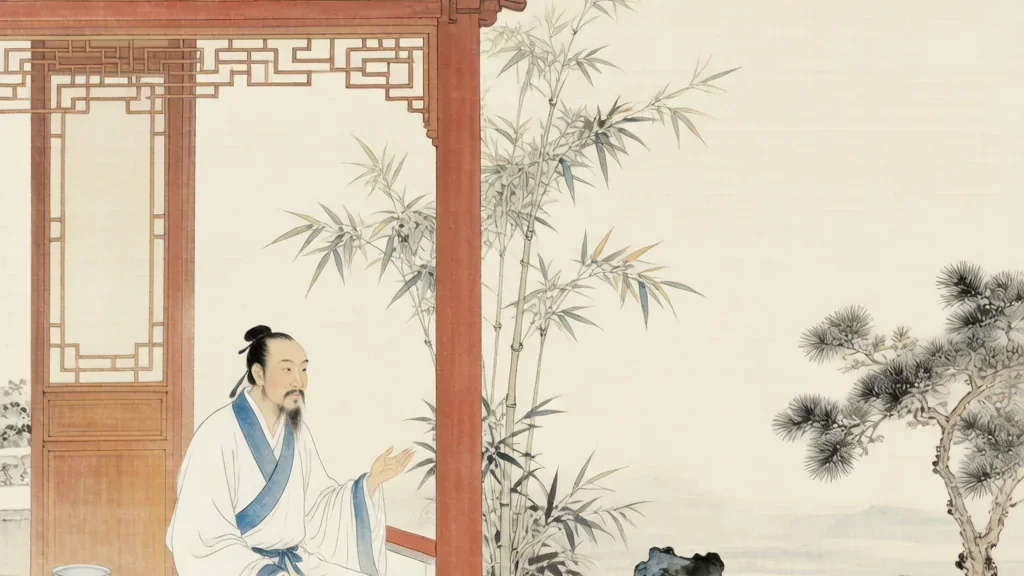
On a sweltering summer day in ancient China, a scholar sat in his garden pavilion, gently waving a fan. But he was not merely cooling himself. The fan in his hand was a work of art — its surface covered in his own calligraphy, a poem he had composed that morning. To his friends, the fan announced his identity as a man of letters, taste, and refinement. To himself, it was a portable canvas, a companion in solitude, and a medium for self-expression. The Chinese fan has always been more than a tool for moving air. It is a cultural artifact of extraordinary richness, carrying layers of meaning that have accumulated over thousands of years.
From the rigid ceremonial fans of ancient emperors to the folding fans that became the signature accessory of the literati class, from the coded messages of the "fan language" to the graceful fans of classical dance and opera, the Chinese fan embodies the principle that even the most mundane objects can be transformed into vehicles of art, meaning, and social communication. To hold a Chinese fan is to hold a piece of cultural history.
Origins: From Ceremony to Everyday Life
The earliest Chinese fans were not folding fans but rigid, flat fans mounted on long handles. Archaeological evidence suggests that fans of this type were in use by the Shang Dynasty, over three thousand years ago. These early fans were ceremonial objects, held by attendants to shield the ruler from the sun and to symbolize his authority. The fan was associated with power and prestige, and its use was governed by strict ritual protocols.
During the Zhou Dynasty, fans began to appear in more varied forms. Fans made of feathers — particularly pheasant and peacock feathers — became associated with Daoist immortals and were used in religious ceremonies. The feather fan would later become an iconic attribute of Zhuge Liang, the great strategist of the Three Kingdoms era, who was always depicted holding a white feather fan as a symbol of his wisdom and composure.
By the Han Dynasty, fans had entered everyday life. The round fan — a flat, circular fan made of silk stretched over a bamboo frame — became popular, particularly among women. These fans, known as tuanshan or "round fans," were often decorated with paintings of flowers, birds, and landscapes. They became associated with feminine grace and beauty, appearing in countless poems and paintings in which a beautiful woman is depicted holding a round fan, sometimes using it to hide a coy smile.
The Folding Fan Revolution
The folding fan — the type most familiar to the world today — was a relatively late arrival in China, but it revolutionized fan culture when it appeared. The folding fan was probably invented in Japan during the Heian period and was introduced to China through Korea during the Song Dynasty. The earliest Chinese records of folding fans date to the eleventh century, when they were presented as tribute gifts from Korean envoys.
The Chinese quickly adopted and transformed the folding fan, making it their own. The basic design — a series of flat sticks riveted together at one end, with a flexible material (paper or silk) attached to form the fan surface — remained the same, but Chinese craftspeople elevated the folding fan to new heights of artistry. The sticks were made of precious materials: sandalwood, ivory, tortoiseshell, or lacquered bamboo. The fan surface became a canvas for painting and calligraphy by the greatest artists of the age.
The folding fan had practical advantages over the round fan: it could be collapsed to a compact size and carried in a sleeve or at the waist. This portability made it the perfect accessory for the scholar-official class, who could carry a folding fan at all times, ready to produce it for practical use, for display of their artistic taste, or for the social rituals that governed elite interaction. By the Ming Dynasty, the folding fan had become an essential element of the literati lifestyle.
Calligraphy Fans: Portable Art
For the Chinese literati, the fan surface was a medium for artistic expression. A fan painted or inscribed by a famous calligrapher was a prized possession, valued as highly as a scroll painting. The unique shape of the fan surface — a curved arc that widened from the pivot — presented a creative challenge that inspired artists to develop new compositional approaches. Paintings and calligraphy on fans had to work within the constraints of the format while exploiting its possibilities.
Fan painting became a distinct genre within Chinese art. Artists specialized in fan compositions, developing techniques for arranging landscapes, flowers, birds, and figures within the fan's curved frame. Calligraphers composed poems specifically for the fan format, arranging characters to follow the fan's radiating lines. The fan was both a functional object and a portable art gallery, allowing its owner to carry beauty and culture wherever they went.
The exchange of fans became an important social ritual among the elite. A scholar might inscribe a fan with a poem for a friend, turning a practical object into a token of friendship and shared culture. Fans were given as gifts to mark special occasions. The quality of a person's fan — the materials, the artistry of the painting or calligraphy — communicated their taste, wealth, and cultural sophistication. In a society where social status was displayed through cultural accomplishment, the fan was an essential accessory.
The Fan Language: Speaking Without Words
One of the most fascinating aspects of Chinese fan culture is the "fan language" — a system of gestures and positions by which fans could be used to communicate silently. In the highly regulated social environment of traditional China, particularly for women, direct verbal communication between strangers or between men and women was often restricted. The fan provided a subtle means of communication that could convey messages without words.
The fan language was never a standardized system like sign language, but it was widely understood within certain social circles. A fan held to the lips might indicate a desire for discretion. A fan opened and closed rapidly could signal impatience or agitation. A fan passed from one hand to the other might be a sign of romantic interest. The position of the fan, the speed of its movement, and the manner in which it was handled all carried potential meanings.
This silent communication was particularly important in the context of courtship. In the romantic literature and drama of the Ming and Qing dynasties, fans frequently appear as props in scenes of flirtation and seduction. A young woman might drop her fan to give a young man an excuse to approach her. A fan decorated with a particular flower or poem might convey a message to someone who knew how to read it. The fan was an instrument of social navigation as much as an instrument of cooling.
Fans in Performance: Dance and Opera
In Chinese classical dance and opera, the fan transcends its everyday functions to become a powerful performance prop. Fan dances, in which dancers manipulate fans in synchronized patterns, are among the most beloved forms of Chinese dance. The fans — often brightly colored, sometimes enormous — become extensions of the dancers' bodies, creating flowing lines and dramatic visual effects.
In Chinese opera, the fan is one of the most important props. Different types of fans indicate different characters: a scholar carries a folding fan with calligraphy, a military officer might carry a larger, more imposing fan, a young woman carries a round fan. The way a character handles their fan reveals their personality and emotional state. A nervous flutter indicates anxiety; a sharp snap closed signals determination; a slow, graceful wave suggests calm and refinement.
The fan's role in performance reflects a deeper Chinese aesthetic principle: the idea that everyday objects, when used with skill and artistry, can transcend their practical functions and become vehicles of beauty and meaning. The fan dancer does not merely wave a fan — they make the fan speak, expressing through its movements emotions that words cannot capture.
Fans in the Modern World
In an age of air conditioning and electric fans, the practical function of the handheld fan has diminished. Yet the Chinese fan continues to thrive as a cultural symbol and an art form. Fans are still produced by traditional craftspeople, and the best examples — hand-painted by master artists, made of precious materials — command high prices from collectors. Fan dancing remains a popular form of performance, taught in dance schools and performed at cultural events. And the fan continues to appear in fashion, design, and popular culture, a recognizable symbol of Chinese elegance and tradition.
The fan has also found new meanings in the modern world. It appears in corporate logos and brand identities, symbolizing hospitality, culture, and Asian heritage. It is used in interior design as a decorative motif. And it continues to be a popular souvenir for tourists visiting China, a tangible piece of Chinese culture that can be carried home and displayed. The fan's journey from ceremonial object to everyday accessory to cultural symbol reflects the broader story of Chinese civilization — a story of continuity through change, of tradition adapting to new circumstances while retaining its essential character.
Fans as Status and Gender Markers
In traditional China a fan was rarely neutral. The material and type a person carried signaled class, gender, and upbringing. Scholar-officials favored folding fans of paper or silk mounted on bamboo or sandalwood, inscribed with their own verse to display literacy. Women, especially in the inner quarters, preferred round silk fans associated with grace and sometimes used them to hide a smile or a blush. A coarse palm-leaf fan marked the laborer, while a fragrant sandalwood fan spoke of wealth. Even the way a fan was opened, waved, or closed became a learned social gesture. The fan thus operated as a quiet costume of identity, readable to anyone who knew the code of materials and manners.
The Craft of Fan Making
A fine folding fan is the product of several specialized crafts. The ribs are cut, shaped, and polished from bamboo, sandalwood, or rare woods, sometimes inlaid with ivory or mother-of-pearl, and must close to a slim sliver yet open to a perfect arc. The leaf, of paper or thin silk, is then mounted so it fans without tearing, and painters add scenes of mountains, birds, or figures that follow the curved field. Decorative openwork in the ribs, a tasseled pendant at the base, and a custom-made case complete the object. Centers such as Suzhou and Hangzhou became famous for this combined carpentry, painting, and carving, and the best fans were collected as much as used, a small alliance of several arts in one handheld thing.
❓ Frequently Asked Questions
📝 Chinese Vocabulary
- 扇子 (shànzi) — Fan; the general term for all types of Chinese fans
- 团扇 (tuánshàn) — Round fan; the flat, circular fan popular since the Han Dynasty
- 折扇 (zhéshàn) — Folding fan; the collapsible fan introduced from Japan and Korea
- 扇面 (shànmiàn) — Fan surface; the paper or silk face of the fan used as a canvas for art
- 扇子舞 (shànzi wǔ) — Fan dance; the traditional dance form using fans as props
🎉 Fun Facts
- The folding fan was not invented in China but was introduced from Japan via Korea during the Song Dynasty. The Chinese quickly adopted it and elevated it to new artistic heights.
- In traditional Chinese society, a "fan language" existed — a system of gestures using fans that allowed people to communicate silently in situations where direct speech was restricted.
- Zhuge Liang, the legendary strategist of the Three Kingdoms, is always depicted holding a white feather fan, which has become a symbol of wisdom and strategic thinking in Chinese culture.
- The fan pendant, often a small carved piece of jade or ivory on a silk cord, acted as both decoration and a counterweight so the closed fan hung gracefully from the waist.
- During the Qing dynasty the imperial court held fan-painting contests, and a beautifully inscribed fan could be bestowed by the emperor as a mark of personal favor.
- In traditional opera the type of fan a character carries instantly tells the audience their role: a round fan for a young woman, a feathered fan for a strategist, a folding fan for a scholar.