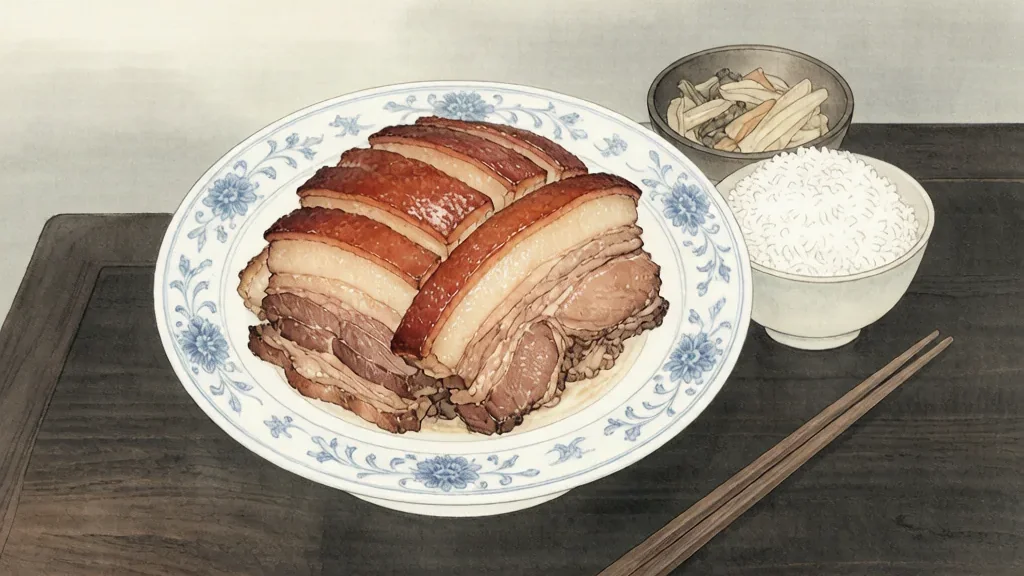
Huiguorou (回锅肉), "twice-cooked pork," is often called the quintessential home dish of Sichuan—a stir-fry of pork belly that is first boiled, then sliced and returned to the wok with fermented broad-bean paste (doubanjiang), sweet bean paste, and garlic sprouts. The "twice-cooked" method renders much of the pork's fat before the high-heat finish, giving a dish that is rich yet not greasy, fragrant with chili and fermented bean, and addictive with plain rice. Beloved for generations, it sits between everyday comfort and regional pride, and it is one of the first dishes many people associate with Sichuan home cooking beyond the restaurant's numbing heat.
What "Twice-Cooked" Means
The defining step is the boil-then-fry sequence. Pork belly is simmered in water with ginger and scallion until just cooked, then cooled and sliced thin. Returning the slices to a hot wok renders further fat and browns the edges, concentrating flavor.
This two-stage approach is practical as well as tasty: boiling firms the meat so it can be cut into neat, thin pieces, and the second cooking drives off excess grease. The result is pork that is savory and slightly chewy, never flabby.
Sichuan Home-Cooking Icon
Unlike the showy numbing dishes of banquet Sichuan, huiguorou is the food of the family wok—what a Sichuan household cooks on an ordinary evening. Its status is such that it is sometimes called the "number one home dish" of the province.
The dish shows the soul of Sichuan home style: layering fermented pastes, balancing salty, spicy, and aromatic notes, and treating pork belly not as a luxury cut but as a canvas. It is both humble and exacting.
The Flavor Base
Doubanjiang (豆瓣酱), the fermented broad-bean and chili paste of Pixian, is the dish's backbone, giving salty depth and gentle heat. Sweet bean paste (甜面酱) or a little soy adds rounded sweetness, and garlic, ginger, and sometimes a touch of huajiao complete the aromatics.
The pastes are fried briefly in the rendered pork fat to "redden the oil" (红油), coaxing out their fragrance before the meat and vegetables join. This blooming of the seasoning in fat is a signature move of Sichuan stir-frying.
Garlic Sprouts and Variations
The classic vegetable partner is jiu cai bai (garlic sprout or green), whose sharp bite cuts the pork's richness. Depending on season and region, cooks also use green peppers, onions, or leeks, and some add black beans or wood ears.
What stays constant is the contrast: fatty pork, pungent allium, and fermented paste. The vegetable is not a side but a structural part of the flavor, refreshing the palate between bites of rich meat.
Pork Belly and the Fat Question
Traditionally the dish uses streaky belly with skin, prized for the way it crisps at the edges while staying tender. The first boil and second fry together remove enough fat that the dish eats lighter than it looks—a point Sichuan cooks stress.
Modern adaptations may use leaner pork to cut calories, but purists argue the belly's fat is what carries the doubanjiang's aroma. The ongoing debate is itself part of the dish's living tradition.
Technique Tips
Success hinges on details: slice the cooled pork thin and evenly; get the wok very hot; fry the pastes until the oil turns red; and add the garlic sprouts last so they stay crisp. Overcooking turns the sprouts mushy and the pork tough.
Because it is a quick stir-fry, timing matters more than fancy equipment. A home gas flame and a seasoned wok are enough. The dish rewards the cook who respects heat and sequence.
Cultural Standing
Huiguorou appears in surveys of China's most-loved dishes and in cookbooks that define regional identity. For Sichuanese abroad, cooking it is a way to taste home; for outsiders, it is a gentle entry into a cuisine often reduced to "spicy."
Its fame also makes it a benchmark: a kitchen's doubanjiang quality and wok control show in how the pork turns out. Few dishes carry so much regional meaning in so plain a package.
Everyday and Festival
Though everyday, huiguorou also appears at gatherings because it is hearty, shareable, and pairs with many other dishes. Leftovers re-fry well the next day, a convenience that fits busy households.
In the end its appeal is simple: salty, spicy, aromatic pork that makes rice disappear. That is why, across decades and migrations, the twice-cooked slice remains a constant of the Sichuan table.
A Dish That Defines a Region
Ask a Sichuan native to name the dish that tastes most like home, and huiguorou is a common answer, rivaled only by mapo tofu. Its everyday status means nearly every family has a slightly different version—different paste ratio, different vegetable, different level of heat—yet all recognize the same dish in each other's woks.
This shared standard makes it a kind of regional dialect spoken in food. A cook can judge another's skill, and another region's imitation, by how the pork is cut and how the oil reddens. The dish thus carries identity as much as flavor, a edible marker of belonging to Sichuan.
For the diaspora, cooking huiguorou is a way to rebuild a hometown kitchen abroad, often with substituted greens when garlic sprouts are unavailable. The adaptability is itself the point: the dish travels because its logic—boil, slice, fry with fermented paste—survives translation better than its exact ingredients.
Pairing and the Full Meal
On a Sichuan table, huiguorou is rarely the only dish; it sits among mapo tofu, a clear soup, blanched greens, and plenty of rice, each component balancing the others. The pork's richness is answered by something sour or bitter, the chili by something cooling.
This companionship places the dish in its true context: not a solo star but part of a balanced spread where no single flavor dominates. A home cook thinks in that whole-meal logic, adding the twice-cooked pork precisely because the rest of the table needs its savory weight.
❓ Frequently Asked Questions
What is huiguorou?
It is Sichuan twice-cooked pork: belly boiled, sliced, then stir-fried with fermented bean paste and garlic sprouts.
Why cook the pork twice?
Boiling firms it for thin slicing; the second fry renders fat and browns the edges, making it rich but not greasy.
Is it very spicy?
It is savory and aromatic with mild chili heat from doubanjiang, not the numbing intensity of some Sichuan dishes.
What cut of pork is used?
Traditionally streaky pork belly with skin; leaner cuts are sometimes substituted, though belly is preferred for flavor.
What vegetable goes with it?
Garlic sprouts are classic, but green peppers, onions, or leeks are common alternatives depending on region and season.
Why is it so beloved?
It captures Sichuan home cooking—fermented paste, balanced heat, and rich-yet-light pork—in a simple, rice-friendly dish.