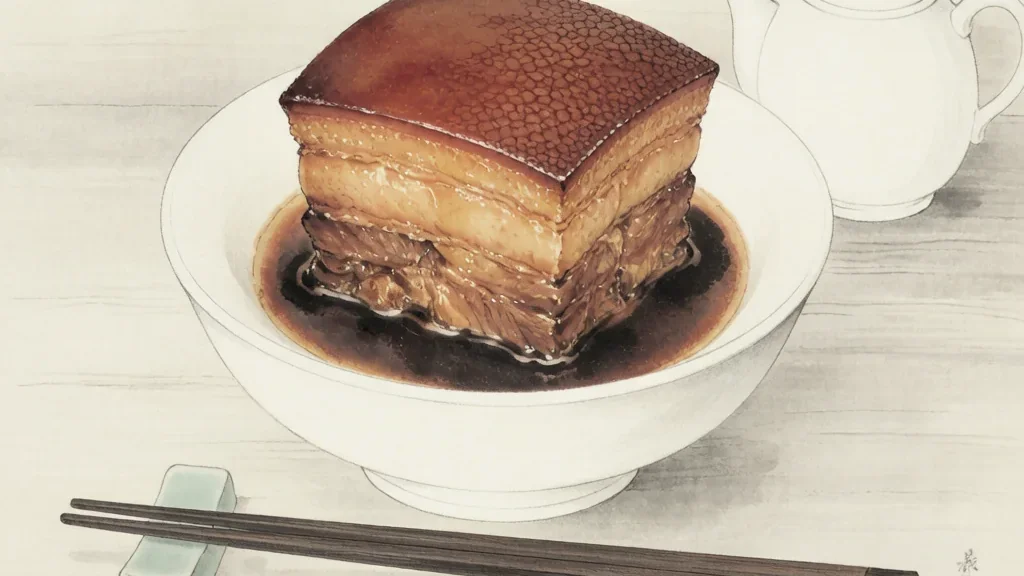
Dongpo rou (东坡肉) is one of China's most famous braised pork dishes: square, skin-on cubes of pork belly slow-cooked in soy sauce, rice wine, ginger, and sugar until the fat is translucent and the meat is luxuriously tender. It is named for Su Dongpo (Su Shi), the Song-dynasty poet and gourmet who is credited in legend with perfecting the method. More than a recipe, it is a cultural artifact—tied to Hangzhou and the West Lake, celebrated in literature, and revered as the pinnacle of "red-cooking" (hong shao). A well-made piece holds its cube shape yet yields to a chopstick, glossy and melting.
The Su Dongpo Legend
Su Shi (1037–1101), styled Dongpo, was a statesman, poet, and enthusiastic cook exiled at various points in his life. Folklore links him to the dish during his time in Hangzhou, where he is said to have slow-braised pork for laborers or friends, hit on the wine-and-soy method, and lent the dish his name.
Whether or not the story is literal, the association is powerful: Dongpo rou carries the aura of a scholar's table, where food, writing, and friendship mixed. The dish is as much literary heritage as culinary technique.
Hangzhou and the West Lake
Hangzhou claims Dongpo rou as a local treasure, served in restaurants near the West Lake (西湖) where Su Shi once governed and wrote. The city's refined Zhejiang cooking favors clear, mellow flavors, and the dish fits that gentle tradition better than heavier braises elsewhere.
Visiting Hangzhou, many travelers seek the dish as a taste of history. Its tie to a specific place and poet makes it a rare "readable" food—one that comes with a story printed on the menu and in the city's memory.
The Signature Cut and Shape
The defining form is a neat square cube of pork belly, skin included, tied or simply cut so it holds together through long cooking. Each cube is a self-contained portion, presenting clean layers of fat and lean with glossy skin on top.
The squareness is partly aesthetic and partly practical: even cubes cook evenly and look composed on the plate, in keeping with the scholarly refinement the dish evokes. The tie (often with string) keeps the cube from falling apart as it softens.
The Red-Cooking Method
Dongpo rou is a master class in hong shao (red-braising). The pork is often first blanched, then placed skin-down in a pot with soy, sugar, ginger, scallion, and a generous pour of rice wine (Shaoxing), with little or no added water—the wine and meat juices do the braising.
It is cooked low and slow, sometimes sealed and steamed after braising, so the collagen melts and the cube turns lacquer-glossy. The result is sweet-savory, wine-aromatic, and rich without being oily, because the fat renders and the skin gelatinizes.
Wine, Soy, and Sugar
Shaoxing wine is essential, contributing acidity and fragrance that lift the pork. Soy gives color and salt; rock sugar rounds the edge and builds the glossy sheen. The balance of these three—wine, soy, sugar—is the cook's art.
Good Dongpo rou is not merely salty or sweet but harmonious, with the wine's warmth lingering. Cooks guard their ratios, and slight changes produce noticeably different results, which is why the dish is a test of skill.
Texture as the Measure
The ideal cube is firm enough to lift yet yields instantly, the fat having turned from solid to silk. The skin should be gelatinous, not rubbery, and the lean should not dry out—achieved only by gentle, patient heat.
This texture is the dish's real difficulty. Too much heat and the cube collapses or the meat tightens; too little and the fat stays waxy. The name promises indulgence, but the execution demands restraint.
Serving Traditions
Dongpo rou is served as a shared centerpiece, usually one cube per person or one large cube presented and divided. It goes with plain steamed buns or rice to absorb the sauce, and with light vegetables to balance the richness.
In banquets it signals both heritage and generosity. Because it is labor-intensive and luxurious, serving it conveys respect for guests, much like other great braises of the Chinese table.
Cultural Legacy
The dish appears in cookbooks, poems, and tourism as a symbol of Hangzhou and of the cultured enjoyment of food. Su Dongpo's name on it has made it a rare dish that is also a piece of literary history, taught as much as cooked.
Variants exist across Zhejiang and beyond, but the classic Hangzhou version—square, wine-braised, melting—remains the standard. To eat it is, in a small way, to share a meal with a thousand-year-old poet.
Home Cooking Today
Modern home cooks make Dongpo rou in a clay pot or even a rice cooker, sealing in the wine and simmering for hours. Some reduce the sugar or use leaner belly for health, but purists keep the traditional ratio.
However simplified, the dish rewards patience over technique. Its enduring popularity shows that a food tied to story and place can outlast trends, remaining a benchmark of Chinese braising craft.
Why the Cube Endures
The square shape of Dongpo rou is not merely pretty; it encodes the dish's philosophy. A neat cube presents the layers of fat and lean as architecture, and it cooks evenly so every bite carries the same balance. The form insists that indulgence can also be order.
Centuries of imitators have tried round meatballs or sliced pork, but the cube remains the standard because it captures the story: a scholar's patient, wine-slow method rendered as a small, perfect block. To serve anything else is to miss the point the name already promises.
❓ Frequently Asked Questions
What is Dongpo rou?
It is a Hangzhou braised pork dish of square pork-belly cubes slow-cooked in soy, sugar, and rice wine until meltingly tender, named for poet Su Dongpo.
Who was Su Dongpo?
He was a Song-dynasty poet, statesman, and food lover; legend credits him with developing the dish's wine-and-soy braising method.
What makes it special?
Its balance of wine, soy, and sugar, the glossy square shape, and a texture where fat turns to silk—achieved only by patient low heat.
Is it very fatty?
It uses pork belly, but slow braising renders the fat so the cube is rich yet not greasy, with gelatinous skin and tender lean.
How is it served?
Usually one cube per person, with steamed buns or rice and light vegetables to balance the richness; it is a shared banquet centerpiece.
Can I make it at home?
Yes; a clay pot or rice cooker with wine, soy, sugar, and long gentle simmer works, though the traditional ratio is worth keeping.