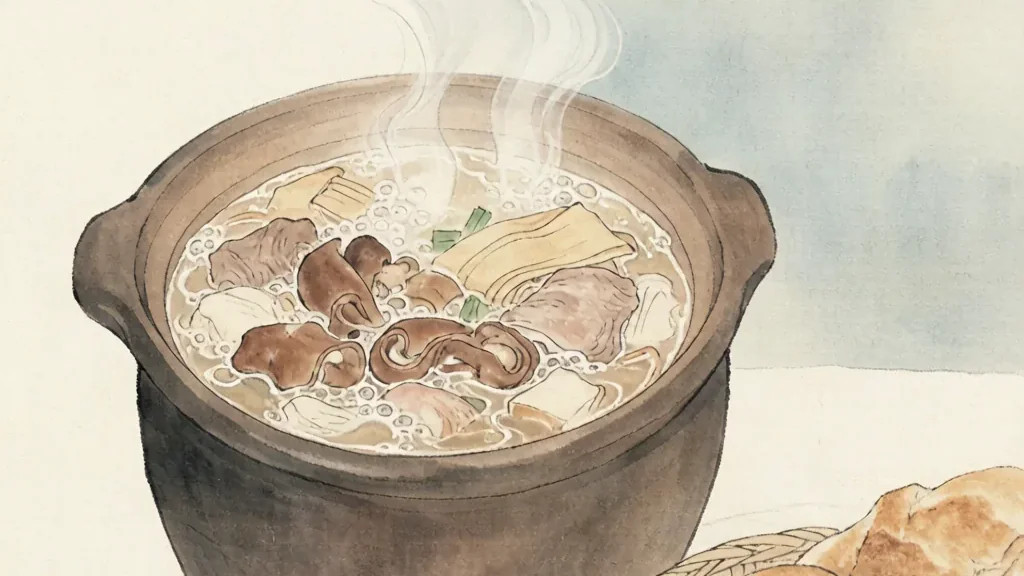
Luzhu (卤煮, formally 卤煮火烧, lǔzhǔ huǒshāo) is a defiantly working-class Beijing specialty: a hearty stew of pork offal—intestines, lungs, liver, and sometimes stomach—simmered in a rich, dark broth seasoned with the same spices used for braised food, then served with rectangles of unleavened wheat bread (huoshao) that soak up the liquor. Unapologetically strong in smell and flavor, it is the rough cousin of the city's more famous duck and the truest expression of old Beijing street gastronomy. Loved by locals as a cheap, warming, belly-filling meal, luzhu is both a culinary challenge to outsiders and a badge of Beijing working-class identity.
Origins in the Imperial Kitchens' Leftovers
The story goes that luzhu grew out of 苏造肉 (suchao rou), a refined braised pork dish once served to Qing emperors from the "Su-style" kitchen. When commoners could not afford the fine pork, clever cooks substituted the cheap, discarded offcuts—intestines and lungs—and the humble huoshao bread, creating an offal stew that imitated the aristocratic braise in spirit if not in ingredient. By the late Qing, it was a Beijing alley staple.
The dish's plebeian birth is worn as a point of pride. Where French cuisine elevated the trotter and the British the kidney, Beijing did the same with luzhu, turning scraps into a meal a laborer could afford and a connoisseur could savor. Its history is a lesson in making abundance from rejection.
The Offal and the Broth
The heart of luzhu is cleaned pork intestine and lung, slowly boiled in a master broth built from soy, rock sugar, and a spice pack of star anise, cassia, clove, and fennel—the same "lu" (卤) braising liquor used for many northern snacks. The offal must be scrubbed meticulously; the difference between glory and disgrace lies entirely in cleaning. Liver is added late so it stays tender, not grainy.
The broth is the soul. Replenished and reused, it deepens with each batch, a living stock that defines a shop's reputation. A great luzhu broth is dark, fragrant, and savory without off-putting funk—proof that offal, properly treated, needs no apology.
The Huoshao Bread
Equally essential are the huoshao (火烧), small flat rounds of unleavened wheat dough, first baked or pan-seared, then cut into strips and plunged into the stew to soften. They are not mere accompaniment but an ingredient, absorbing the broth and providing chewy body that balances the soft offal. Without the bread, locals say, it is not luzhu at all.
The bread's role echoes the dish's thrifty logic: a filler that makes a little meat feed a man. The contrast of springy bread and silky intestine is the textural signature diners chase, and shops guard their dough recipe as carefully as their broth.
How It Is Served
A bowl is assembled to order: the cook lifts out intestines, lung, liver, and huoshao, chops them with a heavy cleaver, piles them in the bowl, and ladles over hot broth. Then comes the finish—a spoon of mashed garlic, chili oil, fermented tofu paste, and often a scatter of cilantro and a dab of garlic vinegar. The eater mixes and digs in, usually standing or on a stool at a corner shop.
Portions are generous and prices low, suited to a working lunch. The ritual of customizing the sauce at the counter is part of the experience, and regulars have their preferred "degree" of garlic and chili known by the vendor.
Where to Eat It in Beijing
Certain old shops have become institutions. The most famous, 小肠陈 (Xiǎocháng Chén), traces its luzhu to a Qing-dynasty founder and still draws queues. Neighborhood hole-in-the-walls across the old city each claim a loyal following, and the dish appears at temple fairs and night markets. Authenticity is judged by broth depth and offal cleanliness above all.
For visitors, the smell is the first hurdle; regulars treat the aroma as a promise. The geography of luzhu—always in the older, narrower hutong-adjacent streets—ties it to a vanishing Beijing of courtyard houses and alley life.
Cultural Place and Reputation
Luzhu sits at the center of Beijing working-class food identity alongside chaogan (fried liver) and douzhi (fermented mung-bean drink). Together they form a trio of "challenge" foods that locals use to test the mettle of newcomers and to affirm belonging. To like luzhu is, performatively, to be a real Beijinger.
This gatekeeping role is double-edged: it can alienate outsiders while binding insiders. Yet the dish's honesty—no pretense, just offal and bread—is exactly why it endures as a symbol of the city's unvarnished character.
Modern Status
Today luzhu survives both as nostalgia and as everyday food. Younger Beijingers and even tourists seek it out as an "authentic" experience, and packaged broths and frozen versions exist, but the genuine article demands a fresh pot and a skilled chop. Health concerns about offal have not dimmed its appeal among devotees.
As old Beijing changes, luzhu functions as edible memory—a direct link to the alley kitchens of a century ago. Its stubborn pungency is a kind of resistance, a flavor that refuses to be smoothed into something palatable to everyone, and that refusal is its meaning.
Ordering and Eating Luzhu
At a typical shop you tell the vendor how much offal and bread you want, and they chop it to order, ladle broth, and hand you the bowl with toppings. Regulars specify "extra intestine" or "more bread," and the degree of garlic and chili they like. It is eaten standing or on a stool, quickly, as a working meal rather than a long sit-down.
First-timers should watch how locals eat: mix the sauces in, eat the bread with the broth, and don't be shy about the smell, which is the promise of flavor. A bottle of cold soda or beer helps cut the richness. However you approach it, luzhu rewards the open-minded with a deep, meaty satisfaction rare among street foods.
❓ Frequently Asked Questions
What is luzhu?
A Beijing stew of pork offal (intestine, lung, liver) and unleavened bread in a spiced braising broth.
What does it taste like?
Rich, savory, and deeply aromatic from the spiced broth, with chewy bread and soft offal; the smell is strong but the flavor mellow.
Is it safe to eat offal?
Yes, when properly cleaned and thoroughly cooked, as traditional shops do; cleanliness is the key to a good bowl.
Why is it a Beijing food?
It grew from the city's working-class alleys as a cheap, filling meal and became a local identity marker.
What is the bread for?
The huoshao soaks up the broth and adds chewy texture; it is an ingredient, not just a side.
How is it seasoned at the end?
With mashed garlic, chili oil, fermented tofu paste, cilantro, and sometimes garlic vinegar.