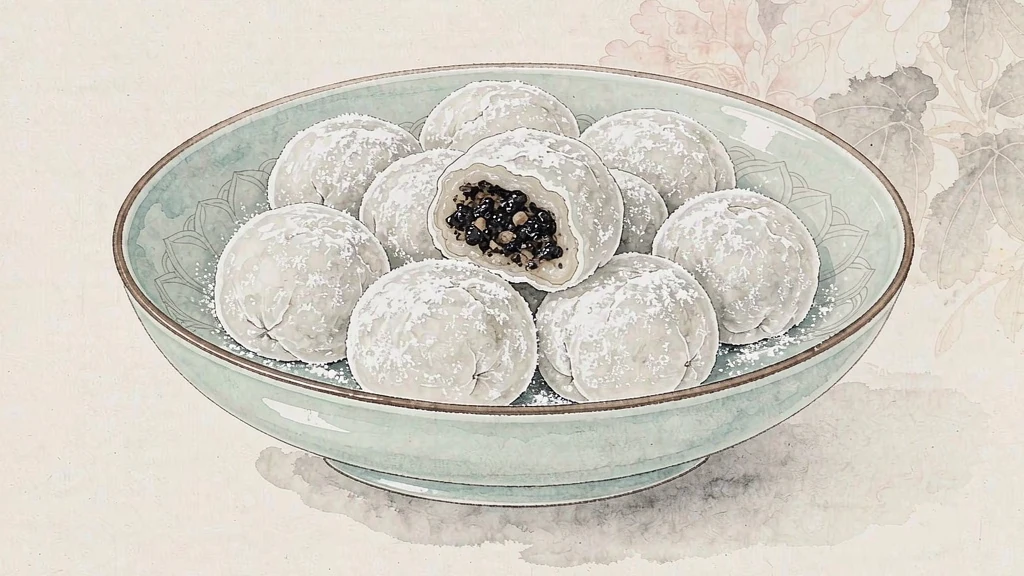
Aiwowo (艾窝窝, àiwōwo) is a classic Beijing sweet snack: a round, snowy ball of steamed glutinous rice enclosing a sweet filling of crushed walnuts, sesame, sugar, and sometimes dried fruit or bean paste, dusted with a fine rice flour so it looks like a small frosted moon. Eaten cold, its chewy, mildly sweet exterior gives way to a fragrant, crunchy center. Documented as far back as the Ming dynasty and beloved in the Qing court, aiwowo is a gentle, refined counterpoint to Beijing's bolder challenge foods, a festive treat sold in the spring and at temple fairs that still charms with its neat, powdery appearance.
Ming and Qing Court Origins
Aiwowo's documented history reaches to the Ming dynasty, when a similar glutinous-rice sweet appeared, and it was popular enough in the Qing imperial household to be recorded in the 御膳房 (imperial kitchen) lore. Legend holds that it was favored by palace women in the cold lunar New Year period because, unlike many snacks, it could be eaten without heating. The name's exact origin is murky, with folk tales linking "aiwo" to a phonetic corruption of a Mongol or palace term.
Whatever the etymology, the snack's court pedigree separates it from Beijing's rougher street foods. It traveled from palace to people, becoming a springtime market treat while keeping an air of delicacy. Its longevity—six centuries plus—marks it as one of the capital's enduring sweets.
Glutinous Rice and the Frosted Look
The outer shell is made from nuòmǐ (glutinous rice, also called "sticky rice"), steamed, pounded or rolled into a soft dough, and formed around the filling. Before shaping, the rice is dusted or rolled in cooked dry rice flour (sometimes the same glutinous rice, toasted) so the surface stays matte white and does not stick—hence the "frosted" appearance that gives aiwowo its pretty, snowball look.
The flour coating is both practical and aesthetic. It lets the balls be stacked and handled without clumping and lends the iconic pale finish. A well-made aiwowo is uniform, unblemished, and faintly powdery, like a small moon on the plate—part of its appeal as a gift or festival sweet.
The Sweet Filling
Traditionally the center is a dry, crumbly mix of crushed walnuts, toasted sesame, and sugar, sometimes with melon seed, dried osmanthus, or candied fruit. The contrast—chewy rice outside, crunchy sweet inside—is the pleasure. Some modern shops use red bean paste or date paste for a smoother center, but the nutty version is the classic.
The filling is intentionally not too sweet, letting the toasted nuts and sesame lead. Because the rice shell is bland, the filling carries all the flavor, and good aiwowo is judged by the fragrance and crunch of its heart. The balance of textures is the whole point.
Seasonality and Temple Fairs
Aiwowo is classically a spring snack, associated with the lunar New Year and the 土地庙 (Tudimiao) and other temple fairs where Beijingers browsed sweets and toys. Vendors stacked the white balls in pyramids, a visual draw. Though now available year-round in snack shops, its traditional season links it to renewal and festival leisure.
The fair context matters: aiwowo was a treat bought with pocket money, eaten while strolling, part of the social texture of old Beijing holidays. That leisurely, playful association survives even as the snack moves into fixed shops and gift boxes.
Place Among Beijing Sweets
Aiwowo belongs to a family of Beijing glutinous-rice sweets that includes lvdagun (glutinous rice rolls with red bean and soybean flour) and wandouhuang (sweet pea cake). Where lvdagun is rustic and earthy, aiwowo is neat and refined—the "ladylike" member of the group. Together they represent the capital's softer, sweeter side against its savory offal snacks.
This contrast defines Beijing snack culture: bold and gentle coexisting. A visitor who conquers douzhi by morning might enjoy aiwowo by afternoon, experiencing both poles of the city's palate in a single day.
Modern Form
Today aiwowo is sold in Beijing's traditional snack shops (such as those in 护国寺 and 锦芳), at temple fairs, and packaged for tourists. Fillings have diversified to include chocolate or fruit, though purists prefer the walnut-sesame original. It keeps well at room temperature, which aided its historical portability and now its gift status.
As a symbol, aiwowo carries the charm of old Beijing—modest, pretty, and quietly sweet. It asks nothing of the eater's courage, only a liking for soft rice and toasted nuts, and in that gentleness lies its lasting appeal across six hundred years.
Making Aiwowo at Home
The home cook steams glutinous rice, then pounds or kneads it to a smooth, sticky dough, taking a portion, flattening it in the palm, and wrapping around a spoon of the nut-sugar filling before closing into a ball. Rolling the finished ball in toasted rice flour gives the frosted coat and prevents sticking. The process is forgiving and fun, a good festival activity with children.
Fillings can be mixed to taste: add crushed peanut, dried osmanthus, or candied fruit for variety, keeping the sugar modest so the nuts lead. Because the balls need no baking, they suit a home kitchen without an oven, and they keep at room temperature, making them easy to prepare ahead for guests or a fair.
Aiwowo in Beijing Snack Culture
Aiwowo sits among the capital's treasures of glutinous sweets alongside lvdagun and wandouhuang, a gentle trio balancing the city's fierce savory snacks. Sold in dedicated snack shops and at fairs, it appeals across ages as a light, pretty treat. Its courtly history lends it a refined image that the rougher street foods lack.
Tourists often buy a box as an edible souvenir of old Beijing, and the snack's neat appearance photographs well, aiding its revival on social media. Though humble in ingredients, aiwowo carries six centuries of continuity, a small white ball that links today's eaters to Ming and Qing tables with every bite.
❓ Frequently Asked Questions
What is aiwowo?
A Beijing sweet of steamed glutinous rice formed into a ball around a nutty sugar filling, dusted white.
How old is it?
It is documented from the Ming dynasty and was popular in the Qing imperial court.
What is inside?
Traditionally crushed walnut, sesame, and sugar; some versions use red bean or date paste.
Is it eaten hot or cold?
Cold; its chewy rice shell and crunchy filling are enjoyed at room temperature.
Why is it white and powdery?
It is rolled in dry rice flour so it does not stick and gains a frosted, snowball look.
When is it eaten?
Classically in spring and at New Year temple fairs, though now sold year-round.