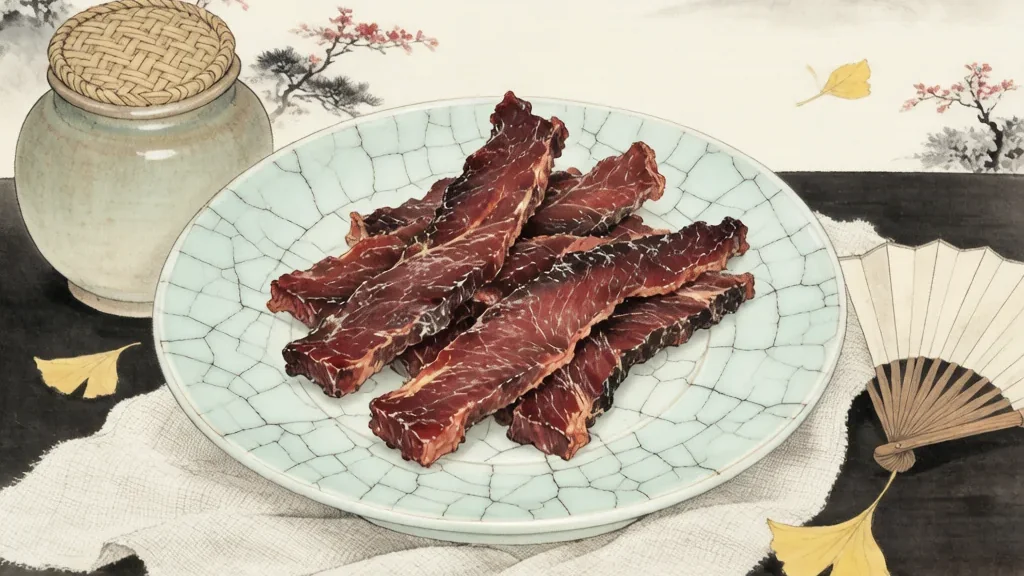
Nurou gan (牛肉干), "dried beef" or beef jerky, is a chewy, savory snack found across China in forms ranging from the sweet, tender sheets of southern-style bak kwa to the hard, spiced strips of the northwest. Made by salting, spicing, and slowly drying or roasting beef until most of its moisture is gone, it keeps for a long time and travels well, which is why it has long been a provision for travelers and a staple of festival gift boxes. Beyond convenience, it is a craft: the best versions balance chew, aroma, and a clean beefy flavor honed by region and recipe.
The Logic of Dried Meat
Drying meat is one of humanity's oldest preservation methods, and in China it meets a climate where much of the year is warm. Removing moisture with salt and air stops spoilage and concentrates taste, turning a perishable cut into a durable food.
For beef specifically, drying also transforms a sometimes-tough meat into something pleasurable: the long, slow removal of water yields a dense, fibrous chew that many find satisfying. The snack is as much about texture as flavor.
Southern Bak Kwa Style
In Guangdong, Fujian, and among overseas Chinese, nurou gan often means bak kwa (肉干)—thin, sweet, lightly charred sheets of minced or pounded beef (or pork) grilled over heat. The result is tender and caramelized, more like a sweet barbecue than a hard jerky.
Bak kwa is strongly tied to Lunar New Year, when families buy it in red gift boxes as a treat and a token of prosperity. Its sweetness and festive packaging make it a holiday icon more than an everyday snack.
Northwest and Nomadic Traditions
In Xinjiang, Inner Mongolia, and Tibet, dried beef reflects pastoral culture. Thin strips of lean beef are salted and air-dried in the cold, dry climate, sometimes smoked or spiced with cumin and chili. The product is hard, protein-dense, and built for the road.
These versions are closer to what the world calls jerky: chewy, intensely beefy, and barely sweet. They reveal a different logic—nourishment and portability for herders and travelers rather than festive gifting.
Seasoning and Spice
Flavor profiles vary widely. Southern sheets lean sweet with a hint of rose wine or five-spice; northwestern strips lean savory and aromatic with cumin, chili, and pepper. Some commercial jerky adds soy, sesame, or maltose for gloss and depth.
The spice choice often signals origin: cumin points to the northwest and the Silk Road table, while five-spice and sugar point south. A knowledgeable eater can often place a dried beef by its scent alone.
Making It
At home or in workshops, lean beef is sliced across the grain, marinated in salt, sugar, soy, and spices, then dried—traditionally by air, or today by low oven, dehydrator, or gentle roast. The meat is turned until it reaches the desired chew.
Bak kwa differs in being formed into flat sheets and grilled quickly at high heat, so it stays moist and sweet rather than hard. The two techniques—slow dry versus quick grill—explain the range within one name.
Role as a Snack and Gift
Dried beef is portable and non-perishable, making it ideal for trips, hiking, and long journeys, and a common item in train-station and highway shops. Its long life also suits it to gift boxes alongside nuts and sweets.
During festivals, beautifully packaged nurou gan is exchanged as a modest luxury. The red boxes and auspicious labels turn a preserved meat into a small bearer of good wishes, especially in southern Chinese culture.
Nutrition and Modern Market
Dried beef is high in protein and low in moisture, so a little goes a long way; it is also salty and, in sweet styles, sugary. Eaten in moderation it is a substantial snack, but the sugar and sodium warrant restraint.
Today the market is vast and branded, with vacuum packs and novel flavors from spicy mala to honey. Yet the craft versions—grilled over charcoal or air-dried on the steppe—retain the cultural cachet that mass product cannot.
Place in Chinese Food Culture
Nurou gan bridges preservation and pleasure, the steppe and the city, the gift box and the backpack. It shows how a practical technique became a beloved food with regional accents and festive meaning.
For Chinese communities abroad, a strip of dried beef can taste of home and of a specific region's climate and spices. Few snacks carry so much geography in so small a bite.
From Steppe to Snack Aisle
The journey of nurou gan from nomad provision to supermarket shelf mirrors China's modern food history. What herders dried on open racks in Xinjiang or Inner Mongolia is now produced in factories at industrial scale, vacuum-sealed, and shipped nationwide, sometimes flavored to match southern sweet tastes or trendy mala heat.
This commercialization changed the snack but not its core appeal: a portable, protein-rich bite that needs no fork or fridge. Travelers on trains still buy it from station vendors, even if the package now bears a brand rather than a family mark, and the convenience that made it survival food keeps it popular.
Yet the craft endures at the margins. Small workshops and steppe producers still air-dry and smoke beef the old way, and their products command premium prices as "authentic." The contrast between mass jerky and hand-dried strips is itself a story of how tradition survives inside modern abundance.
Storing and Gifting Etiquette
Commercial dried beef keeps well in sealed packs and should be resealed after opening to prevent hardening; traditional air-dried strips are best eaten within weeks and kept dry. A slightly chewy texture is normal, but genuine staleness shows as brittle, flavorless fibers.
As a gift, nurou gan is usually presented in festive packaging, and the southern bak kwa box in particular is a polite, auspicious offering at New Year visits. Offering it signals both generosity and good wishes, which is the point of the exchange.
❓ Frequently Asked Questions
What is nurou gan?
It is Chinese dried beef (jerky), ranging from sweet southern bak kwa sheets to hard, spiced northwest strips, all made by drying and spicing beef.
What is bak kwa?
Bak kwa is a southern style of nurou gan: thin, sweet, chargrilled sheets of minced beef (or pork), popular as a New Year gift.
How does northwest style differ?
Northwest dried beef is lean, hard, and savory, often spiced with cumin and chili, reflecting pastoral and traveler foodways rather than festive gifting.
How is it made?
Lean beef is sliced, marinated in salt, sugar, soy, and spices, then air-dried, oven-dried, or roasted; bak kwa is formed into sheets and grilled quickly.
Is it healthy?
It is protein-dense but salty and, in sweet styles, sugary; eaten in moderation it is a substantial snack, but watch sodium and sugar.
Why is it a gift food?
Its long shelf life and festive red packaging make it a common New Year gift, especially in southern Chinese communities.