Historical Events & Anecdotes
47 articles — Pivotal battles, rebellions, reforms, and voyages that forged the Chinese civilization, from the fire ships of Red Cliffs to Zheng He's treasure fleets.
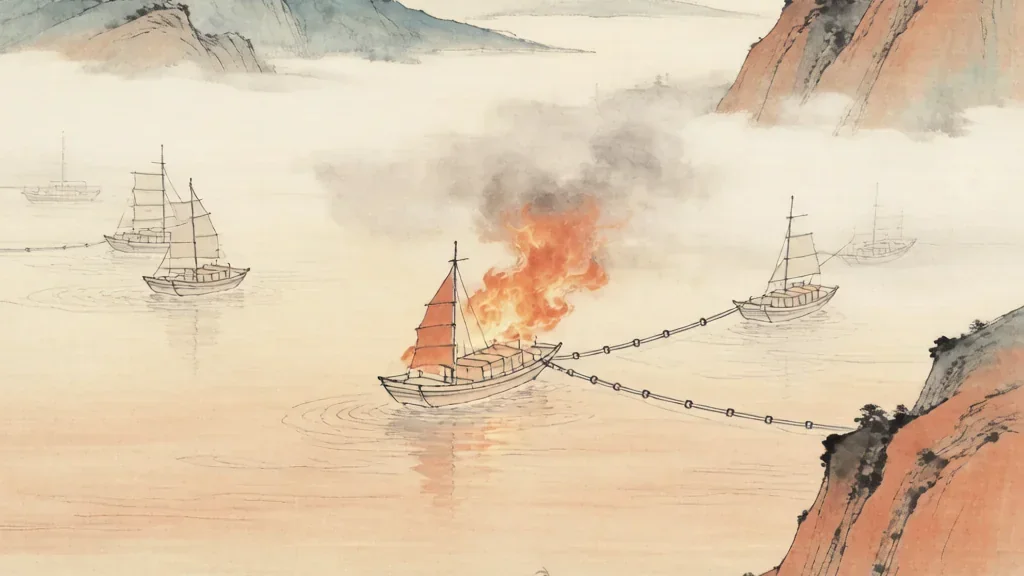
The Battle of Red Cliffs (赤壁之战)
When a single spark can decide the fate of an empire, history remembers the wind that carried it. In the winter of 208 CE, on a mist-shrouded bend of the Yangtze River, a fragile alliance of two southern warlords confronted the largest army China had seen in generations.

The Battle of Fei River (淝水之战)
History's greatest upsets rarely look likely in advance. In the autumn of 383 CE, the ruler Fu Jian marched an army that his own court claimed numbered close to a million men toward the Yangtze, determined to erase the last Chinese-ruled state in the south.
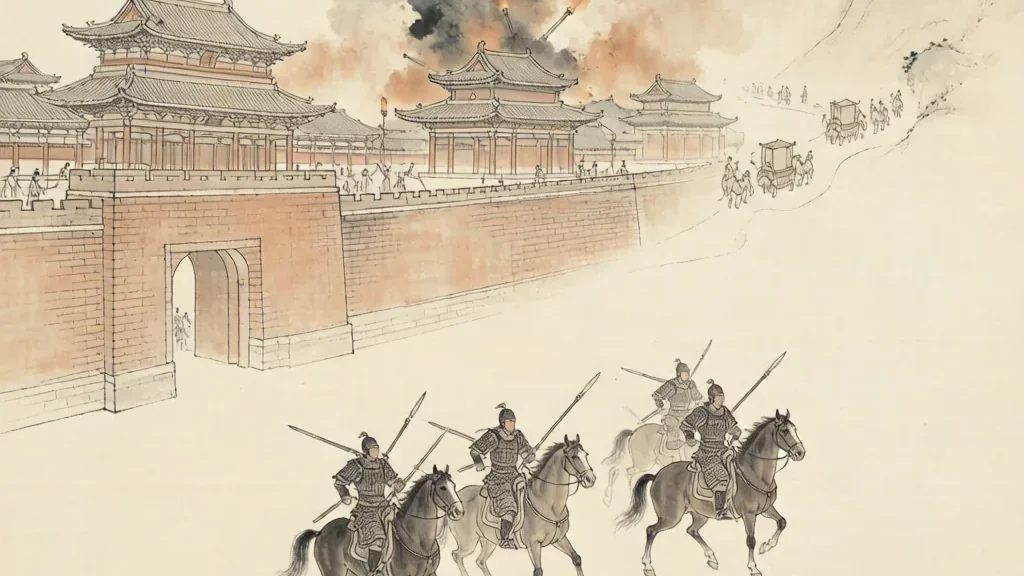
The An-Shi Rebellion (安史之乱)
There is a Chinese saying that a great dynasty dies not with a foreign sword but from a wound inside. The Tang at its height was the most glorious court on earth — Chang'an, a city of a million, where Persian merchants, Buddhist pilgrims, and Tang nobles mingled under the same lanterns.
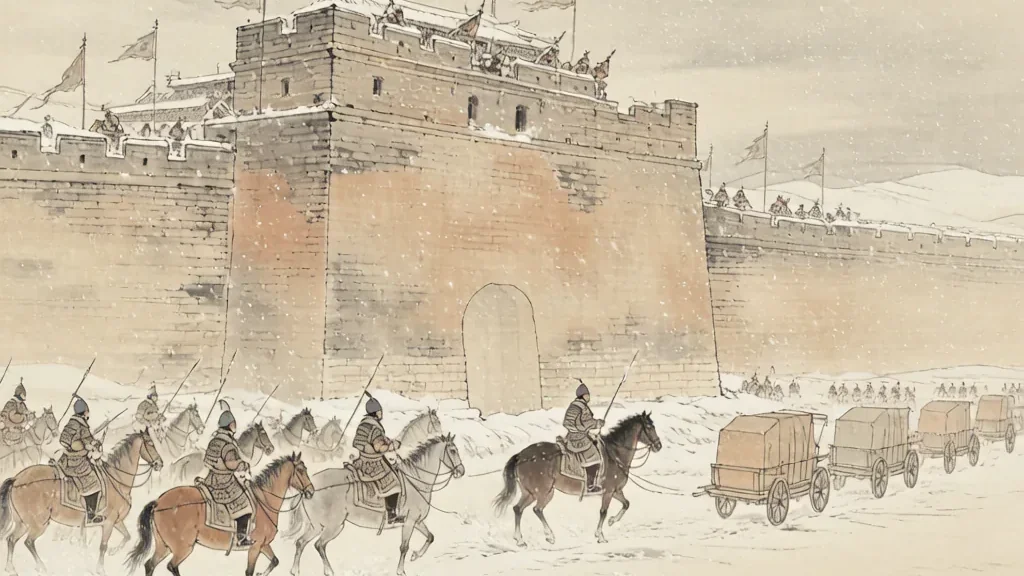
The Jingkang Incident (靖康之变)
In 1127 CE, the Jurchen Jin army stormed the Song capital of Kaifeng and captured the emperor, his father the retired emperor, and nearly the entire imperial court. This catastrophe — known as the Jingkang Incident — destroyed the Northern Song dynasty and sent the surviving court fleeing south of the Yangtze.
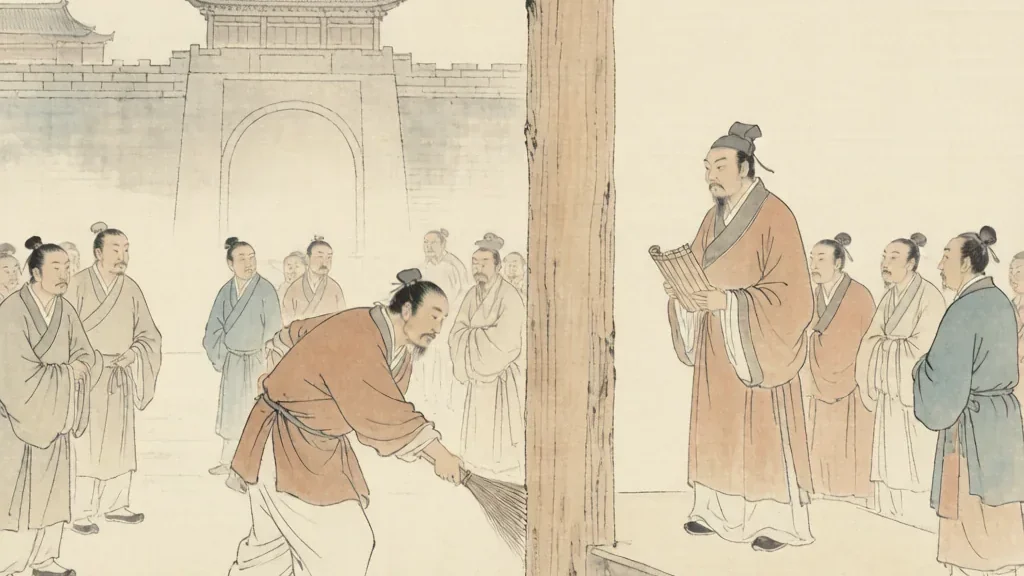
Shang Yang's Reforms (商鞅变法)
Not every revolution is led by a mob; some are led by an accountant with a whip. In the mid-fourth century BCE, the border state of Qin was poorer, rougher, and more despised by the polished eastern courts than any of its rivals in the Warring States.

Wang Anshi's New Policies (王安石变法)
The most dangerous battle in a Chinese court is rarely fought on a field — it is fought between memorials on a desk. In the 1070s, the Northern Song was rich, cultured, and quietly vulnerable: its armies were expensive, its tax base was slipping into the hands of great landowners, and its frontiers were restless.

The Xuanwu Gate Incident (玄武门之变)
Some of history's most enlightened reigns begin in blood. On a summer morning in 626, inside the walls of the Tang capital Chang'an, the emperor's second son led a band of armored men to the northern gate of the palace and murdered his own brothers.

The Burning of Books and Burying of Scholars (焚书坑儒)
Of all the images of imperial tyranny in Chinese memory, few burn brighter than this: in 213 BCE, at the command of the First Emperor, carts of ancient books were dragged into the courtyards and set alight; a year later, hundreds of scholars were herded into a pit and buried alive. The Burning of Books and Burying of Scholars (焚书坑儒, fén shū kēng rú) is the moment when a unified China first confronted the question of whether a state can legislate what its people are allowed to remember.
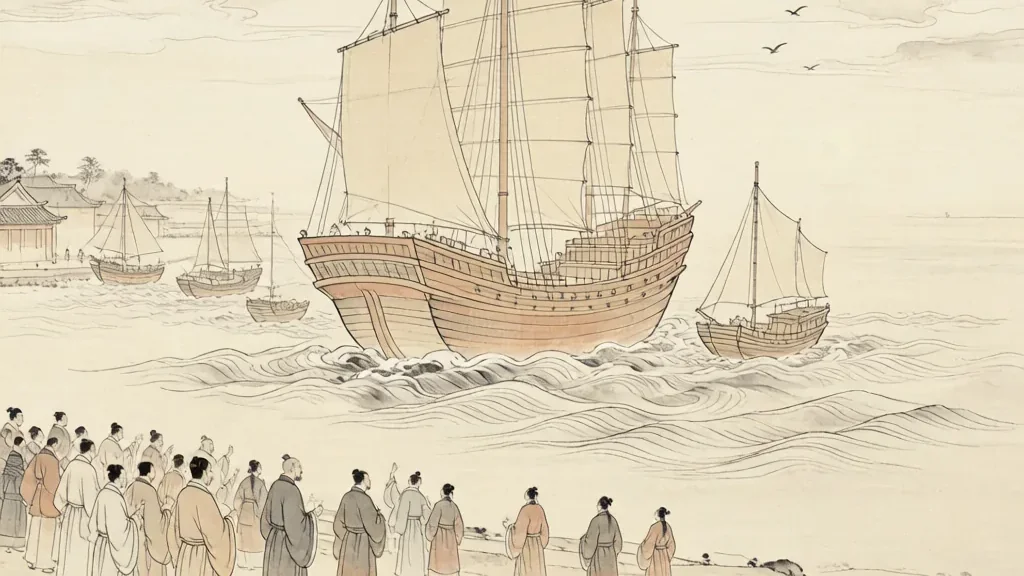
Zheng He's Voyages (郑和下西洋)
Imagine a fleet so vast it darkened the horizon — hundreds of ships, the largest longer than a football field, crewed by nearly thirty thousand sailors, navigating by the stars from China to the coasts of Arabia and Africa. Now imagine that this happened in the early 1400s, nearly a century before Columbus, and that the ships belonged not to Europe but to Ming China.
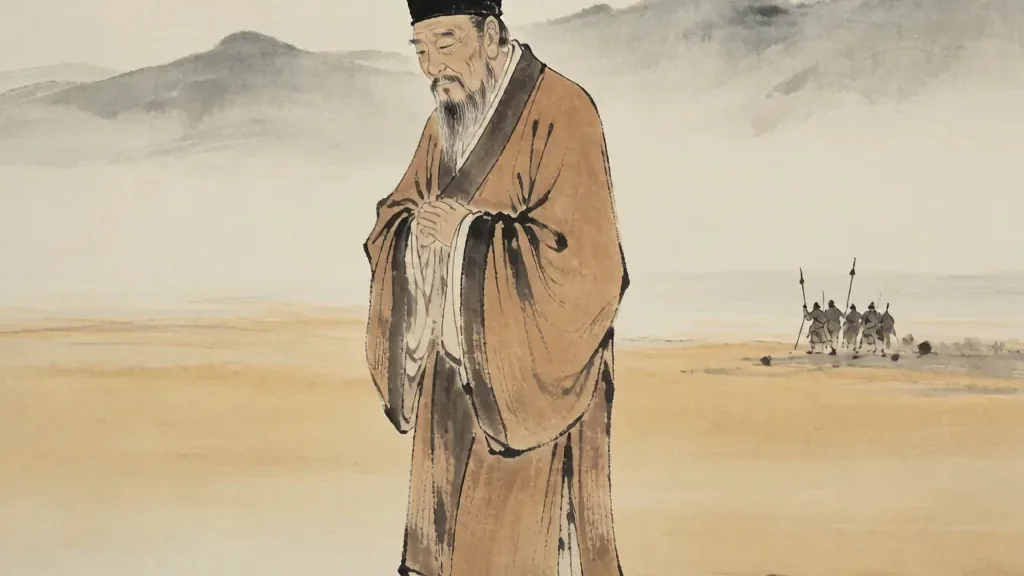
The An Lushan Rebellion: The Tang's Near Death
In 755 CE, the most powerful general in the Tang empire turned against his emperor. An Lushan, a charismatic commander of Sogdian and Turkic descent, led his northern army southward and captured the Tang capital of Chang'an. The rebellion that followed lasted eight years, killed millions, and fatally weakened the Tang dynasty. Though the rebellion was ultimately suppressed, the Tang never fully recovered. The An Lushan Rebellion marked the end of China's golden age.
The Persecution of Buddhism: The Three Disasters
The persecutions of Buddhism — the 'Three Disasters and One Zong' (三武一宗) — were four imperial crackdowns that smashed monasteries, forced monks to laicize, and seized temple wealth.
Cangjie Creates Writing: The Birth of Chinese Characters
According to ancient Chinese legend, when the sage Cangjie invented writing, the heavens rained grain and the ghosts wept in the night. The world had changed forever, and even the spirits knew it. Cangjie, the four-eyed historian of the Yellow Emperor, is credited with creating the first Chinese characters after studying the tracks of birds and animals in the mud. While modern scholarship places the actual development of writing over a much longer period, the story of Cangjie reveals deep truths about how the Chinese have always understood the power of the written word.
The Battle of Red Cliffs: Fire on the Yangzi
In the winter of 208 CE, an armada of warships sailed south along the Yangtze, carrying the most powerful warlord in China toward his final victory. Cao Cao had unified the north and now he was poised to crush the southern kingdoms. But at Red Cliffs, he met an alliance of southern generals who would not bow. The battle was decided by fire, wind, and bad decisions. Cao Cao's fleet burned, and with it burned his dream of unification.
The Civil Service: The Backbone of the Empire
China's civil service was the professional bureaucracy of scholar-officials that actually ran the empire — the durable machinery beneath the rotating dynasties.
The Compass: The Needle That Opened the Oceans
The compass began as a south-pointing spoon (sinan) of lodestone and became the magnetic needle that let Chinese ships sail by night and open the oceans.
Confucius Wanders the Kingdoms: The Teacher in Exile
At the age of fifty-five, the most famous teacher in Chinese history became a refugee. Confucius had spent his life studying the ancient rites and advocating for moral governance, but the rulers of his native Lu state had no interest in his advice. So he left home and spent the next thirteen years wandering from state to state, seeking a ruler who would put his principles into practice. He was mocked by farmers, threatened by warlords, and once mistaken for a bandit. Yet those years produced the conversations recorded in the Analects — the most influential book most people have never read.
The Duke of Zhou Establishes the Rites
When King Wu of Zhou died young, his infant son inherited a fragile new dynasty with enemies on every side. The man who saved the Zhou and gave China its most enduring framework for ritual governance was not the king but the king's uncle: the Duke of Zhou. Confucius would later say that he wished he could dream of the Duke of Zhou, so deep was his reverence. Whether the Duke truly invented China's ritual system single-handedly or merely gave his name to a longer evolution, his legacy as the architect of classical Chinese order is unrivaled.
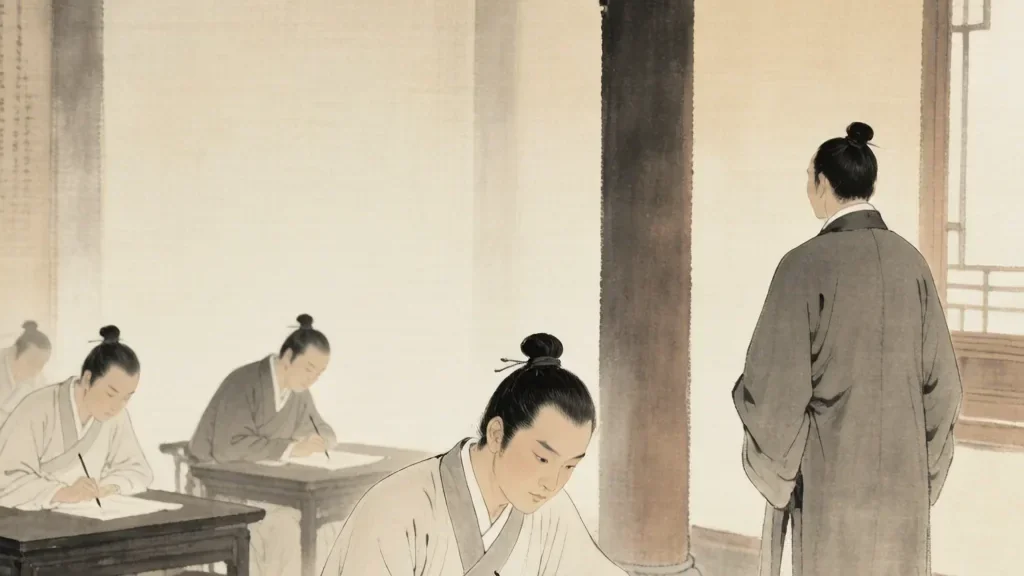
The Imperial Examination: Testing a Civilization
The imperial examination (科举) tested candidates in the classics and writing for a thousand years, making merit — at least in theory — the road to office.
Building the Great Wall: A Wall Across History
The Great Wall of China is the world's longest man-made structure, but it is not a single wall, nor was it built by a single dynasty. It is a palimpsest of walls, watchtowers, and fortifications constructed over more than two thousand years. The idea that it can be seen from the moon is a myth, but the truth is even more impressive: the wall is a monument to the Chinese determination to define and defend a border between the civilized agricultural world and the nomadic steppe.
Gunpowder: The Accidental Invention That Reshaped War
Gunpowder was born in Tang-dynasty alchemy as a sulfur-saltpeter-charcoal mix, then turned from a Daoist curiosity into the engine of later warfare.
King Wu Overthrows the Shang
In the eleventh century BCE, a young king from the western frontier led a rebellion that became the template for every dynastic change in Chinese history. King Wu of Zhou, acting in the name of the Mandate of Heaven, marched against the last ruler of the Shang dynasty, whose cruelty had become legendary. The Battle of Muye ended with the tyrant burning himself alive in his palace. But the story of how the Zhou justified their conquest — through a moral argument about the right to rule — was perhaps even more consequential than the battle itself.
Literary Inquisition: The Words That Killed
The literary inquisition (文字狱) was the policing of writing for hidden sedition — authors punished for a pun or allusion the throne found treasonous.
Ming Pirates: Wokou and the Coastal Crisis
The 'wokou' were the coastal raiders — Japanese, Chinese, and mixed — who plagued the Ming seaboard and forced the dynasty into trade bans and forts.
The Mongol Conquest of the Song
In 1279 CE, a Song loyalist named Lu Xiufu strapped the eight-year-old emperor to his back and leaped into the sea off the coast of Guangdong. With that final act of defiance, the Song dynasty ended and all of China came under Mongol rule for the first time. The Mongol conquest of the Southern Song was the longest and most costly campaign in the Mongol Empire's history. It took Kublai Khan nearly thirty years to subdue the stubborn resistance of the Song, and the war left much of southern China devastated.
Paper Money: The Song Invention That Changed Finance
Paper money first appeared in the Song as 'jiaozi' notes backed by merchants and the state — the world's earliest widely used paper currency.
Printing: The Technology That Democratized Knowledge
Printing in China moved from carved woodblocks to movable type, democratizing books and turning knowledge from a scarce scroll into a printed commodity.
Qin Shi Huang Unifies China
In 221 BCE, after two centuries of brutal warfare, a single ruler achieved what no one had done before: he conquered all of China. Ying Zheng, king of Qin, declared himself Qin Shihuang — the First Emperor — and immediately set about erasing the old world and building a new one. He standardized the script, currency, axle widths, and laws. He burned the books of rival philosophies and buried scholars alive. He connected defensive walls into the Great Wall. And he built himself a tomb guarded by a terracotta army that would not be discovered for over two thousand years.

The Qing Population Boom: Feeding a Billion
The Qing population boom saw China's numbers surge past 400 million by 1850, driven by New World crops, peace, and tax reform.
The Salt Monopoly: The First State-Owned Enterprise
The salt monopoly was China's oldest and richest state enterprise — the crown taxing a necessity everyone must buy to fund the empire.
The Silk Road: The First Global Trade Network
The Silk Road was the web of overland and sea routes linking China with Central Asia, India, and the Mediterranean for two millennia.
Sima Qian Writes the Records of the Grand Historian
In 99 BCE, a Han dynasty historian was convicted of defaming the emperor and given a choice: pay a fine, accept execution, or submit to castration. Sima Qian had no money and could not leave his life's work unfinished, so he chose the most shameful punishment imaginable for a Confucian scholar. He returned to his study and spent the next decade writing the Records of the Grand Historian — a monumental work that set the standard for Chinese historiography for two thousand years.
Song Dynasty Commerce: The Invention of a Market Economy
Song-dynasty commerce spawned the world's first near-modern market economy: paper money, guilds, maritime trade, and a prosperous urban class.
The Chenqiao Mutiny: Song Taizu Establishes the Song
In 960 CE, a general named Zhao Kuangyin was leading his army on a campaign when his troops stopped, marched to his tent, and draped an imperial yellow robe over his shoulders. They had decided he should be emperor. Zhao Kuangyin, who became Emperor Taizu of Song, accepted the mandate and reunified China after half a century of fragmentation. His dynasty would become famous for cultural brilliance, technological innovation, and military weakness.
The Yongjia Migration: The Southward Flight of the Jin
In 311 CE, Xiongnu armies captured Luoyang, the Western Jin capital, and the imperial court fled south across the Yangtze. This was the first great southward migration of the Chinese ruling class, a demographic and cultural shift that redrew the map of Chinese civilization. The north fell under non-Chinese rulers, while the south became the new heartland of Chinese culture.
Digging the Grand Canal: The Emperor's Ambition
When Emperor Yang of the Sui decided to build a canal connecting the Yellow River to the Yangtze, he unleashed the greatest engineering project since the Great Wall. The Grand Canal, stretching over 1,700 kilometers, was dug by millions of conscripted laborers under brutal conditions. It cost more lives than any war of its era. But it created the economic spine of China, linking the rice-growing south to the political capitals of the north for the next fourteen centuries.
The Zhenguan Era: Emperor Taizong's Golden Age
Li Shimin should never have become emperor. He was the second son, trained as a general. But in 626 CE, he ambushed and killed his own brothers at Xuanwu Gate, forced his father to abdicate, and ascended the throne as Emperor Taizong of Tang. It was a bloody beginning to the greatest reign in Chinese history. Under Taizong, the Tang reached the peak of its power, expanding further than ever before into a golden age of prosperity and cosmopolitan confidence.
The Tea Trade: The Drink That Changed the World
The tea trade — overland to Tibet and the steppe, by sea to the world — turned a southern shrub into a strategic commodity and a global habit.

The Tribute System: China in the World Order
The tribute system was China's framework for foreign relations — neighbors 'presenting tribute' in exchange for gifts, trade, and recognition of the Son of Heaven.
The Southwest Associated University: Scholarship in Exile
The Southwest Associated University (西南联大) was the refugee merger of three top universities during the war, a luminous chapter of Chinese scholarship in exile.
Wang Anshi's Reforms: The Controversial Modernization
In 1069 CE, the Song emperor appointed a controversial reformer as his chief minister. Wang Anshi was a brilliant, stubborn, and deeply confident scholar who believed he could solve the Song dynasty's financial and military problems through radical government intervention. His reforms — known as the New Policies — were the most ambitious attempt at state-directed economic change in Chinese history before the twentieth century. They also triggered a political battle that split the Song court for decades.
Shang Yang's Reforms: The Legalist Transformation of Qin
When the young Duke Xiao of Qin came to the throne in 361 BCE, his state was considered the backwater of China — a semi-barbarian territory on the western frontier. Within a century, that same state would conquer all of China and establish the first unified empire. The transformation was engineered by a former Wei official named Wei Yang — also known as Shang Yang — whose Legalist reforms turned Qin into a ruthless, efficient war machine.
The Wu Zhou Revolution: Empress Wu Takes the Throne
In the entire history of imperial China, only one woman ruled as emperor in her own name. Wu Zetian rose from being a low-ranking concubine to become the most powerful person in the Tang empire, eventually seizing the throne itself and founding her own dynasty. Her reign was brilliant and bloody — she expanded the civil service, promoted Buddhism, and crushed her enemies without mercy. For centuries after her death, historians debated whether she was a sage or a monster.
Yu the Great Tames the Yellow River
No river on earth has killed more people than China's Yellow River, and no river has been more stubbornly loved. For more than four thousand years, the Huang He has nourished the North China Plain with fertile silt, then turned around and drowned millions in catastrophic floods. Chinese civilization was born on its banks, and Chinese statecraft was forged in the endless struggle to control it. The history of flood control on the Yellow River is a history of China itself — a story of ingenuity, suffering, bureaucratic ambition, and the uneasy relationship between human engineering and the raw power of nature.
The Yellow Turban Revolt: The Beginning of the End of Han
In 184 CE, a massive peasant rebellion erupted across the Han dynasty, shaking the empire to its foundations. The rebels wore yellow headscarves and followed a Taoist mystic named Zhang Jue, who promised that the Azure Heaven was falling and a Yellow Heaven would rise. The Yellow Turban Revolt did not overthrow the Han — but it fatally weakened a dynasty already in decline, triggering the warlord conflicts that culminated in the Three Kingdoms period.
Zhang Qian Opens the Silk Road
In 138 BCE, a Han dynasty courtier named Zhang Qian left the capital of Chang'an with a mission: find the Yuezhi people in the distant west and persuade them to ally with Han against the Xiongnu. It was a straightforward diplomatic assignment that took him a decade, involved capture by nomads, a journey across unknown Asia, and the eventual return with reports of strange kingdoms and valuable goods. Zhang Qian did not get his alliance, but his journey opened the Silk Road.
Zheng He's Treasure Voyages Across the Oceans
Between 1405 and 1433, the Ming dynasty launched seven massive naval expeditions into the Indian Ocean. The fleets were commanded by Zheng He, a Muslim eunuch admiral, and they were dwarfed by anything Europe could build. The largest ships were over 400 feet long — five times the length of Columbus's Santa Maria. Yet within a generation, the Ming destroyed their own fleet and turned away from the sea. The story of Zheng He is both a monument to Chinese ambition and a mystery of why that ambition was abandoned.
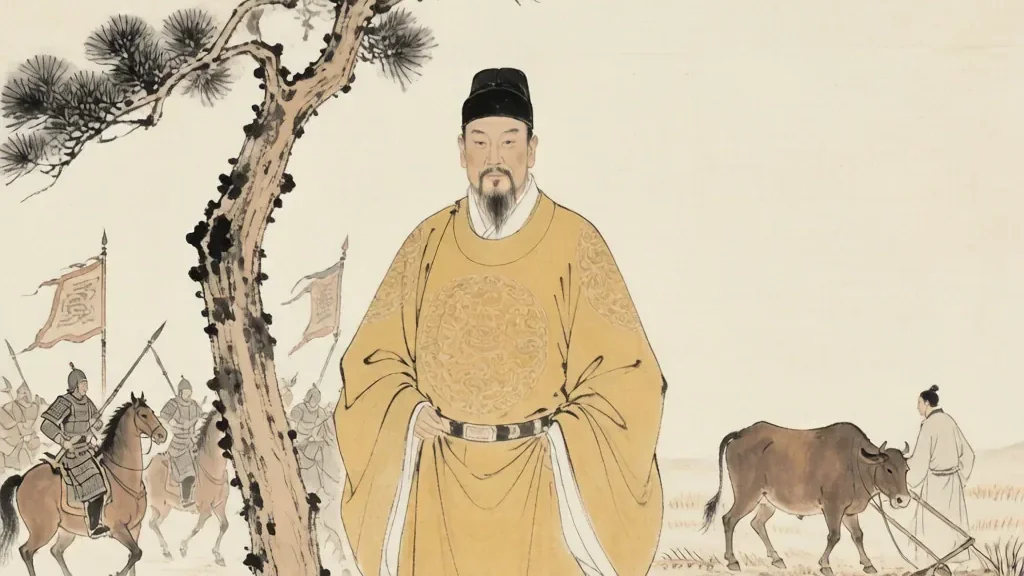
The Hongwu Emperor Founds the Ming Dynasty
In the middle of the fourteenth century, China was racked by plague, famine, and rebellion against Mongol rule. From this chaos emerged the most unlikely of founders: a half-starved orphan who had been a beggar, a Buddhist monk, and then a bandit. Zhu Yuanzhang rose from the lowest depths of Chinese society to drive out the Mongols, reunify China, and found the Ming dynasty. His reign as the Hongwu Emperor was brilliant, brutal, and profoundly transformative.