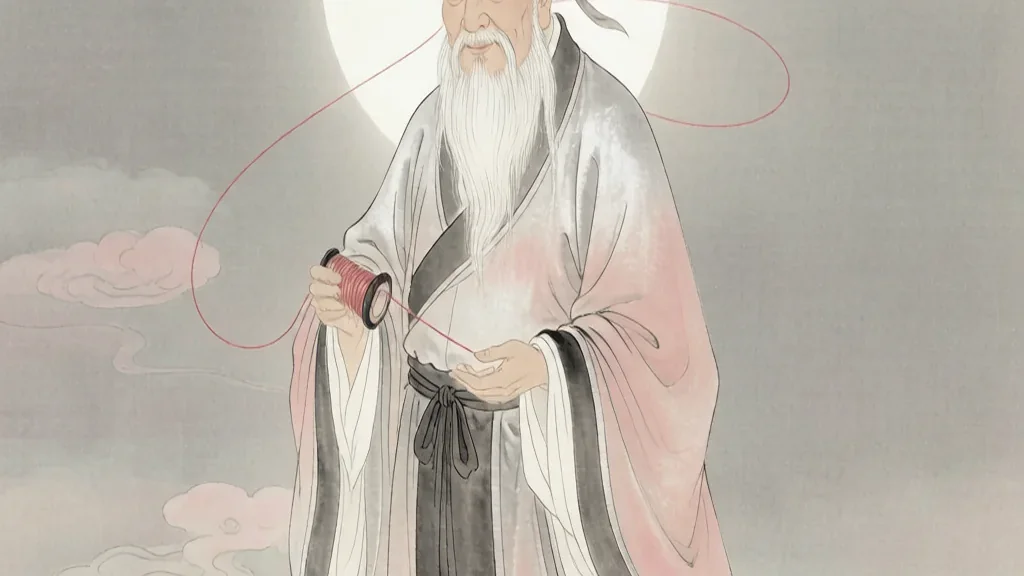
Yuelao is the god of marriage and matchmaking who ties invisible red threads around the ankles of destined couples. He is invoked by those seeking love.
Origins and Historical Development of Old Man of the Moon
The worship of Old Man of the Moon (月老) has ancient roots in Chinese religious tradition that stretch back over two thousand years. The deity's origins can be traced to early Chinese mythology and folk religion, where they played a specific role in the cosmic order and the lives of ordinary people.
Over the centuries, the cult of Old Man of the Moon evolved from local or regional worship into a broader tradition, absorbing elements from Daoism, Buddhism, and Confucian folk practice. Different dynasties emphasized different aspects of the deity's character, and the iconography changed to reflect evolving artistic styles and theological understandings.
The integration of Old Man of the Moon into the Daoist pantheon brought systematization to the deity's mythology. Daoist priests composed scriptures, established ritual protocols, and built temples dedicated to Old Man of the Moon. The deity's feast day was incorporated into the liturgical calendar, and specific offerings and prayers were prescribed.
Mythology, Iconography, and Symbolic Attributes
Traditional depictions of Old Man of the Moon show distinctive iconographic features that identify the deity to worshippers. These visual elements carry specific symbolic meanings rooted in Chinese cosmology, color symbolism, and religious tradition. The deity's appearance in art has remained remarkably consistent over centuries.
Temples dedicated to Old Man of the Moon typically feature specific artistic representations that follow traditional guidelines established by ritual texts. The deity's image appears in paintings, sculptures, and ritual objects, often accompanied by attendant figures, symbolic animals, or auspicious objects that amplify the deity's power and domain.
The myths surrounding Old Man of the Moon have been recorded in numerous literary sources, including Daoist scriptures, local gazetteers, and collections of strange tales (志怪, zhì guài). These stories explain the deity's origins, describe miraculous interventions, and provide moral lessons for devotees.
Worship Practices and Major Festivals
Devotees of Old Man of the Moon observe specific rituals and festivals throughout the year. The most important celebrations draw large crowds to temples and shrines dedicated to the deity, where processions, theatrical performances, and communal feasts take place. These festivals are among the most vibrant expressions of Chinese folk religion.
Offerings to Old Man of the Moon traditionally include incense, candles, food items, and symbolic objects associated with the deity's domain. Worshipers burn incense sticks as they make their requests, often accompanied by the casting of divination blocks (筊杯, jiǎo bēi) to receive the deity's response. The rituals follow established procedures passed down through generations of temple priests.
Individual worship at Old Man of the Moon's shrines follows a standard pattern used in Chinese folk religion: approach the altar with incense, state one's name and residence, make the request or offering, bow three times, and await the deity's response through divination. Many devotees make regular visits on the 1st and 15th of each lunar month.
Influence on Chinese Culture and Society
The cult of Old Man of the Moon has profoundly influenced Chinese literature, art, music, and folk customs for centuries. Stories about the deity appear in classical texts, vernacular novels, and oral traditions that continue to be transmitted today. The deity's image adorns everything from temple architecture to household altars.
Beyond religious contexts, Old Man of the Moon has become part of broader Chinese cultural identity. The deity appears in traditional opera performances, festival decorations, folk paintings (年画, nián huà), and everyday expressions. Even Chinese who do not actively worship may invoke Old Man of the Moon's name in times of trouble or during holidays.
The influence of Old Man of the Moon extends to Chinese diaspora communities worldwide. Wherever Chinese people have settled, they have established temples and shrines to familiar deities, maintaining religious continuity across oceans and generations. These overseas temples often become cultural centers that preserve traditions lost or transformed in the homeland.
Regional Variations and Local Manifestations
Different regions of China have developed distinctive local traditions regarding Old Man of the Moon. In some areas, the deity has absorbed characteristics of local folk spirits or has merged with other deities. These regional variations enrich the overall tradition while sometimes creating apparent contradictions in mythology.
Temples dedicated to Old Man of the Moon across China display different architectural styles reflecting local building traditions. Northern temples tend to be more massive and plain, while southern temples display elaborate carvings and colorful decorations. The deity's image may also vary regionally, with different facial features, clothing styles, and iconographic attributes.
Local festivals honoring Old Man of the Moon incorporate regional music, dance, and food traditions. Temple fairs (庙会, miào huì) held on the deity's feast day feature local opera troupes, acrobats, and food vendors, creating a festive atmosphere that combines religious devotion with community celebration.
Modern Relevance and Contemporary Worship
In contemporary China, worship of Old Man of the Moon continues alongside modern life. Many people visit temples during festivals or when facing important life decisions, maintaining a pragmatic approach to religious practice that has characterized Chinese folk religion for millennia. The deity remains a source of comfort, guidance, and community identity.
The Chinese government's policy of religious freedom has allowed temple worship to revive significantly since the 1980s. Many temples dedicated to Old Man of the Moon have been rebuilt or renovated, and annual festivals have been restored. Younger generations, while often less regular in worship, still participate in major festival events.
Technology has created new forms of devotion to Old Man of the Moon. Online temple platforms allow virtual offerings, smartphone apps provide digital divination, and social media communities share religious experiences. These modern adaptations demonstrate the enduring flexibility of Chinese folk religious traditions in adapting to changing times.
The Tale of Wei Gu and the Old Man
The fullest account of the matchmaker god comes from a Tang dynasty story about a man named Wei Gu who, while waiting for a matchmaker one night, met an old man reading a book by moonlight. The book, the elder said, listed every marriage in the world, and from his bag he drew red threads that he used to bind the ankles of couples fated to wed. When Wei Gu asked about his own future wife, the old man pointed to a humble girl being carried past in a market, a match Wei Gu scorned. Years later he married a woman marked by a scar on her brow, and learned she was that very child. The tale explains both the god's name and his method, and it gently warns that love arranged by fate may arrive from a quarter we first dismiss. It remains the standard origin story of the matchmaker god.
The Red Thread and Modern Matchmaking
The red thread of the Old Man Under the Moon has outlived the arranged marriages of imperial China to become a flexible symbol of destined love. Today couples in Chinese communities tie red cords at his temples, wear matching red bracelets, and use the phrase red thread to mean a bond that feels inevitable. Dating apps and wedding planners evoke him playfully, and the festival of the Weaver Girl and the Cowherd draws crowds to his shrines. The idea persists that somewhere a thread already connects two people, so meeting is discovery rather than accident. This softens the anxiety of modern romance with a comforting old belief: that love is not only choice but recognition, and that a patient elder under the moon has, in his quiet way, already knotted the ends together.
❓ Frequently Asked Questions
📝 Chinese Vocabulary
月老 — : Old Man of the Moon; the Old Man of the Moon deity
神 — : God; deity; spirit
庙 — : Temple; shrine
祭祀 — : Ritual offering; worship ceremony
香火 — : Incense and fire; devotional offerings and patronage
神明 — : Deity; divine being; enlightened spirit
红线 — : The red thread, tied by the Old Man Under the Moon around the ankles of destined lovers to bind them for life.
姻缘 — : Marriage fate or predestined affinity, the bond the Old Man Under the Moon arranges between two people.
🎉 Fun Facts
- Temples dedicated to Old Man of the Moon can be found throughout China and in Chinese communities worldwide, serving as centers of religious and cultural life.
- The mythology of Old Man of the Moon has inspired countless works of Chinese literature, opera, film, and visual art across many centuries of cultural production.
- Annual festivals honoring Old Man of the Moon attract thousands of devotees who participate in traditional ceremonies, processions, and community celebrations.
- Some of the oldest surviving Chinese woodblock prints depict Old Man of the Moon in the distinctive iconographic style established during the Ming dynasty.
- The red thread is said to be tied around the ankles, or in some versions the little fingers, of two people fated to marry, and no distance can break it.
- The name Old Man Under the Moon comes from a Tang dynasty tale in which the god is caught by moonlight reading a book of marriages.