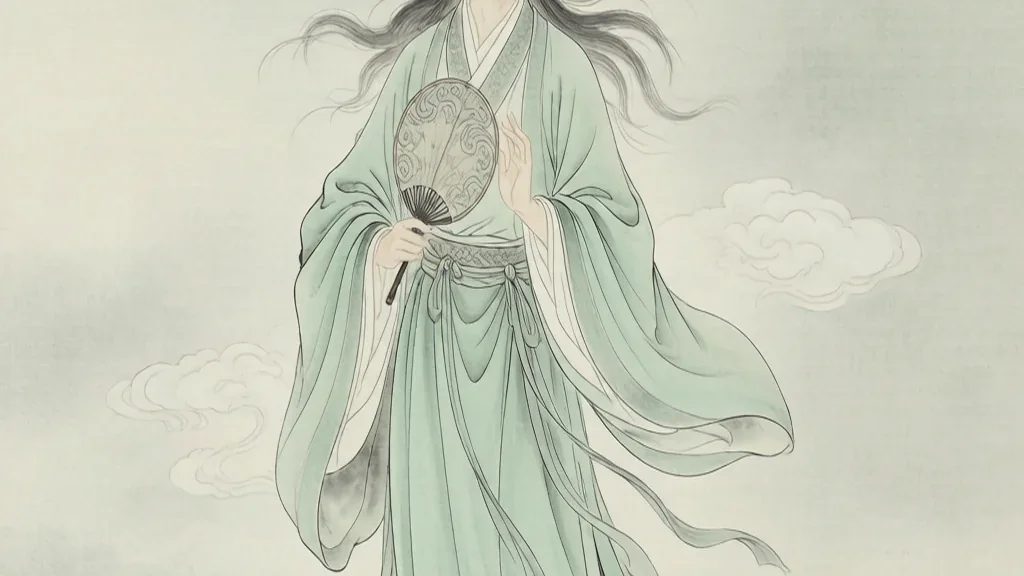
Sang Lin (桑林), the "Mulberry Grove," is a place-name charged with mythic meaning in Chinese tradition, best known as the site where the sage-king Tang of the Shang dynasty prayed for rain during a devastating drought. Though not a god with a fixed face like the Thunder God, Sang Lin became a sacred locus where ruler and heaven met, and it lives on in literature as a symbol of selfless, virtuous leadership and the deep bond between the mulberry tree, silk, and the rhythms of weather.
The Legend of Tang Praying for Rain
The central story appears in early texts such as the "Lüshi Chunqiu" and later historiographies. When a severe drought struck the young Shang kingdom, King Tang went to the mulberry grove and, finding no relief from rites, offered himself as a sacrifice to heaven, praying that the people be spared and the calamity fall on him alone.
Moved by his sincerity, the heavens sent rain. The tale became a founding exemplar of the "virtuous ruler" (德君) whose personal moral power could move nature — a political theology in which the king's character, not merely his rituals, governed the weather.
Sang Lin as a Sacred Landscape
The mulberry grove was no ordinary woodland. Mulberry trees fed the silkworms that underpinned Chinese economy and dress, so a grove was both practical and symbolic — a source of life's cloth and, by extension, of renewal. To pray there tied the plea for rain to the source of sustenance.
In a culture that sacralized specific mountains, rivers, and woods, Sang Lin joined the map of numinous places. Later writers evoked it to recall the ideal of a ruler who would humble himself before the people's need.
Connection to Silk and the Mulberry
The mulberry (桑) is one of the oldest cultivated plants in China, central to sericulture. Sang Lin therefore also points to the world of women's labor — rearing silkworms, gathering leaves, spinning thread — that sustained the ancient economy and ritual dress.
This association gives the rain-prayer a gendered and domestic layer: the grove is where the cloth of civilization begins, and the king's prayer there implicitly guards the whole fabric of social life, from worm to wardrobe.
Sang Lin in Early Texts
Beyond the Tang legend, "Sang Lin" appears in the "Classic of Poetry" and philosophical writings as a place of gathering, music, and sometimes reproach. Confucian and Mohist authors used the Tang story to argue that a leader's self-sacrifice, not lavish sacrifice, wins heaven's favor.
The durability of the reference shows how a single grove could become a portable moral symbol, invoked centuries later to remind rulers of their duty. Place-names in China often carried such argumentative weight.
The Wind and Weather Dimension
In some retellings, Sang Lin is tied to wind and storm lore — the grove where Tang's prayer stilled a raging wind or summoned the rains. This gives the "feng" (wind) in the deity's name its sense: Sang Lin as a site where the weather was famously turned by virtue.
Thus Sang Lin Feng can be read as the "Wind of the Mulberry Grove," a localized weather spirit or remembered event rather than a bureaucratic god. It sits at the folk edge between place, deed, and personified force.
Political Theology of the Drought
The Tang drought story fed the doctrine of the Mandate of Heaven. A disaster was read as a sign that the ruler had lost virtue; the proper response was self-examination and sacrifice. Tang's willingness to burn himself alive modeled the corrective the theory demanded.
This made Sang Lin a template for later imperial rain-praying. Magistrates facing drought were expected to emulate Tang: fast, confess faults, and plead for the people. The grove became a behavioral standard more than a tourist spot.
Literary Afterlife
Poets and historians kept Sang Lin alive as shorthand for righteous, rain-bringing leadership. To "pray in the mulberry grove" meant to govern with empathy and courage. The image also recurs in paintings of worthy rulers and in allusions within classical prose.
Even today the phrase carries quiet prestige in Chinese literary reference, a compact way to praise a leader who puts the people before himself — the grove's shade still cooling the memory of a good king.
Comparison with Other Weather Deities
Unlike Yu Shi or Lei Gong, Sang Lin is not a personified weather god but a sacred event-place. It complements them: where the gods are addressed in prayer, Sang Lin is the stage on which the greatest prayer was answered, the proof that virtue, not only ritual, moves the sky.
This distinction matters. Chinese weather religion contained both impersonal deities to petition and moral narratives to inspire. Sang Lin belongs to the second, reminding rulers that the heavens respond to character.
The grove's lesson also reached women's quarters, where silkworm-keepers prayed for the mild weather that let caterpillars thrive. Sang Lin thus bridged the field and the farmhouse, a single place-name holding both cloth and rain.
In this way the Mulberry Grove became a symbol of integrated care: a ruler's virtue, a people's need, and a tree's gift all meeting in one remembered act of selfless prayer.
❓ Frequently Asked Questions
What is Sang Lin?
Sang Lin, the "Mulberry Grove," is a sacred place in Chinese legend where King Tang of the Shang dynasty prayed for rain during a great drought. It is a site and a symbol more than a fixed deity.
What happened at Sang Lin?
King Tang, finding rites ineffective, offered his own life to heaven so the people might be spared. His sincerity is said to have moved the skies to send rain, becoming a model of virtuous rule.
Why a mulberry grove?
Mulberry trees fed silkworms central to the economy and ritual dress, so the grove symbolized the source of life's sustenance. Praying there tied rain to the fabric of civilization.
Is Sang Lin a weather god?
Not exactly. It is a sacred event-place and moral symbol rather than a personified deity like Yu Shi or Lei Gong, though some tellings link it to wind and storm lore.
How did the story shape politics?
It fed the Mandate of Heaven doctrine: disaster signals a ruler's lost virtue, answered by self-examination. Later magistrates emulated Tang's rain-praying conduct.
Does Sang Lin appear in literature?
Yes. It recurs in the Classic of Poetry, philosophical texts, and later poetry as shorthand for empathetic, courageous leadership that puts the people first.