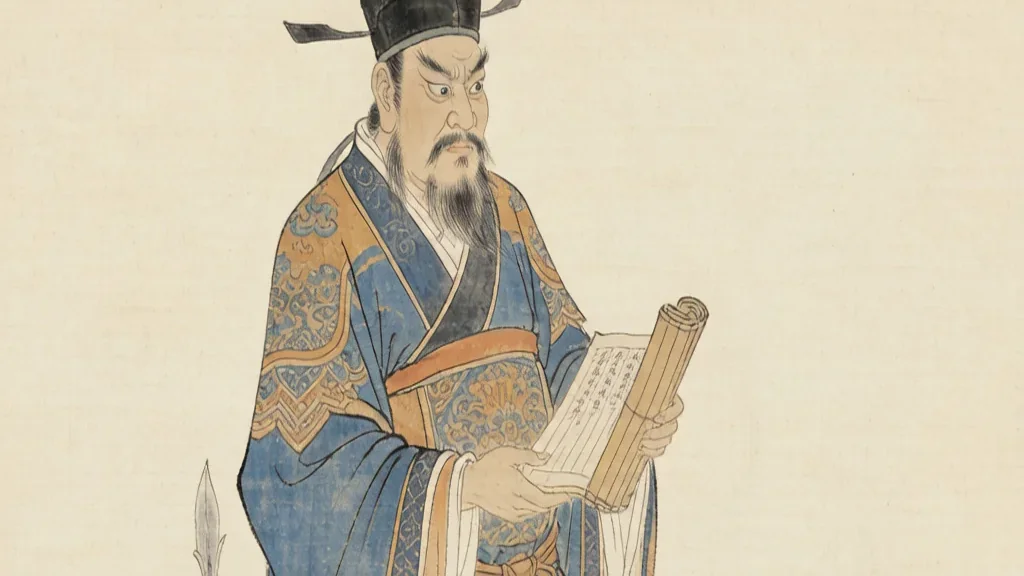
Yanwang, fully Yanluo Wang, is the Chinese ruler of the underworld, the King of Hell who judges the souls of the dead and determines their fate in the vast bureaucracy of the afterlife. Adapted from the Indian Buddhist deity Yama and absorbed into Chinese popular religion, he presides over Diyu, the subterranean realm of judgment, assisted by a host of subordinates including the judges, the ox headed and horse faced guards, and the keepers of the registers of life and death. Far from a simple devil, Yanwang is a stern but lawful magistrate who weighs a soul's deeds, dispenses punishment or merit, and sends the spirit onward to rebirth, the awe inspiring guardian of the moral order that persists beyond the grave. To meet Yanwang is not to meet a torturer but a court, the final accounting that every life must face.
Origins from Yama
The figure of Yanwang descends from Yama, the ancient Indian god of the dead who appears in the Vedas as the first mortal to cross beyond death and thereafter the ruler of those who follow. With the spread of Buddhism along the trade routes, Yama entered the Chinese imagination and was gradually sinified into Yanluo Wang, a king whose name preserves the echo of the Sanskrit original.
The adaptation was thorough. The Indian Yama, a somewhat ambiguous lord of the departed, was recast in Chinese terms as a bureaucratic magistrate, complete with a court, clerks, and a docket of cases, because the Chinese mind conceived the cosmos as an administration and the afterlife as its lowest yamen. The foreign god was given a Chinese office.
This fusion shows the remarkable absorptive power of Chinese popular religion, which could take a Buddhist import and seat it comfortably among native spirits and local cults. Yanwang became neither purely Buddhist nor purely native but a shared figure of the afterlife honoured across sectarian lines.
Yanwang and the Ten Kings
In developed Chinese eschatology Yanwang is not alone but first among the Ten Kings of the underworld, a college of judges who preside over successive courts through which the dead pass in the forty nine days after death. Each king tries the soul for the sins proper to his stage, and the soul moves downward through the sequence toward its final disposition.
The Ten Kings schema gave the afterlife a procedural clarity that matched the legalism of Chinese culture. Death was not a single judgment but a process, a series of hearings at which the record of a life was reviewed piece by piece, allowing for both punishment and correction along the way.
Yanwang usually occupies the central or first position in this panel, the king most often invoked by name when ordinary people spoke of the ruler of the dead. The other nine kings share his nature as stern but lawful magistrates, and together they form the judiciary of the unseen world.
The Court of the Underworld
The court Yanwang holds is imagined on the model of a earthly tribunal, with the king seated on a high bench, attendants flanking him, and the soul brought forward in chains to answer for its conduct. The atmosphere is one of solemn official business, the weighing of evidence and the reading of registers, rather than of chaotic torment.
This bureaucratic framing is the genius of the Chinese hell. By making the underworld a court, the tradition assured the believer that judgment was ordered and therefore contestable in spirit, that the dead were not at the mercy of whim but subject to a law that even the king must apply. The terror lay in the record, not the ruler.
The imagery of the court also reinforced social norms. To stand before Yanwang was to stand before the same ideals of filial piety, honesty, and restraint that governed the living world, so that the afterlife became the ultimate enforcer of earthly morality, a magistrate who never retired.
The Judges and Their Registers
Yanwang is served by a staff of judges, the most famous being the one who keeps the registers of life and death, the books that record the span allotted to every person and the tally of their good and evil acts. These clerks are the engine of the judgment, for the king decides only after the record is read aloud.
The registers embody the Chinese conviction that nothing is forgotten, that every deed is entered in a ledger that survives the body. To live was, in this view, to be continually audited, and the audit simply continued after death with greater precision. The judges are the accountants of the soul.
Subordinates such as the ox headed and horse faced guards enforce the court's orders, seizing the wicked and dragging them to their appointed torments. These fearsome attendants gave the popular imagination its most vivid pictures of the underworld's muscle, the policemen of the realm of the dead.
Punishment and the Hells
The underworld governed by Yanwang contains a hierarchy of punitive chambers, often described as a set of hells in which specific sins receive specific corrections: the liar has the tongue pulled, the murderer is sawn or boiled, the unfilial are crushed, each penalty fitted to the crime in a logic of poetic justice.
Crucially, these punishments are usually temporary and corrective rather than eternal, for the Chinese hell aims at purification and recompense, not at endless revenge. Once the debt of a sin is paid, the soul may pass on to rebirth, a scheme more hopeful than the eternal damnation of some Western conceptions.
This temporariness reflects the broader Chinese refusal to sever the sinner permanently from the community of beings. Even the worst soul is given a term and a terminus, a future beyond punishment, so that the hells are workshops of reform as much as chambers of pain, presided over by the patient king.
The Mirror and the Scales
Among the instruments of Yanwang's court are the mirror that reflects a soul's whole life and the scales that weigh its virtues against its faults. The mirror shows the truth the deceased might conceal, replaying every hidden act before the bench, so that self deception is impossible in the presence of the king.
The scales translate the moral life into a visible balance, the good deeds on one side and the evil on the other, and the tilt of the beam decides the sentence. This imagery gave the abstract idea of karma a concrete, almost commercial clarity that ordinary people could picture and fear.
Together the mirror and the scales express the core message of Yanwang's realm: that life is witnessed and weighed, that nothing is lost, and that the self a person presented to the world is finally measured against the self it actually was. The king is merely the one who reads the result.
Meng Po and the River of Forgetfulness
At the close of the underworld journey, after judgment and any punishment, the soul meets Meng Po, the lady who offers the broth of forgetfulness at the bridge before rebirth, so that the memories of the former life and the horrors of judgment are washed away. Yanwang's court thus feeds into the cycle of reincarnation rather than ending it.
The cooperation of Yanwang and Meng Po completes the logic of the afterlife. The king extracts accountability, and the lady grants release, so that the spirit may begin again unburdened by the weight of what it knew. Judgment and mercy are paired across the threshold of rebirth.
This pairing also softened the terror of the hells. Because forgetfulness follows, the suffering of the underworld is not carried forward as trauma but dissolved, allowing the soul a genuine fresh start. Yanwang's severity is balanced by Meng Po's kindness at the river's edge.
Yanwang in Popular Religion
Yanwang was honoured in temple worship, festival drama, and the vast visual culture of the underworld, from painted scrolls of the hells to the morality tracts that described his courts in lurid detail. The seventh lunar month, the ghost festival, was the season when the dead and their king were especially remembered.
Funerary practice routinely invoked Yanwang, with scriptures and offerings intended to smooth the soul's passage through his courts and to plead for leniency. Families performed merit on behalf of the deceased precisely because the king's judgment could be tempered by the virtue transferred from the living.
The figure also served a civic function, for the fear of Yanwang underwrote a rough social discipline. To believe that every cruelty would be weighed by the king was to possess an internal policeman, and the state had little reason to object to a deity who enforced the same morals it preached.
Symbolism of Moral Judgment
At its deepest, Yanwang symbolises the persistence of justice beyond the grave, the conviction that the moral account is not closed by death but settled thereafter with perfect information. He is the guarantee that nothing truly escapes, that the hidden deed finds its hearing at last.
Yet he is also a comfort. The lawfulness of his court means that the innocent need not fear and that the punishment of the wicked is measured, not sadistic. Yanwang embodies a cosmos that is moral through and through, in which even the king is bound by the ledger he administers.
In the end Yanwang remains the Chinese underworld's great magistrate, the ruler who turns the chaos of death into the order of judgment, and who assures every soul that its life was read, weighed, and answered. To remember him is to remember that the record keeps itself, and that the king is only its voice.
❓ Frequently Asked Questions
Who is Yanwang?
Yanwang, or Yanluo Wang, is the Chinese King of Hell adapted from the Buddhist Yama, who judges the dead in the underworld court of Diyu.
Is Yanwang a devil?
No, he is a stern but lawful magistrate who weighs a soul's deeds and applies the moral ledger, more a judge than a torturer.
What are the Ten Kings?
They are a panel of ten underworld judges before whom the dead pass through successive courts in the forty nine days after death.
Are the hells eternal?
Generally no; punishments are temporary and corrective, fitted to the sin, after which the soul proceeds to rebirth.
Who helps Yanwang?
He is assisted by judges, ox headed and horse faced guards, and the keepers of the registers of life and death.
What happens after judgment?
After punishment the soul meets Meng Po at the bridge, drinks forgetfulness, and passes into rebirth, completing the cycle.