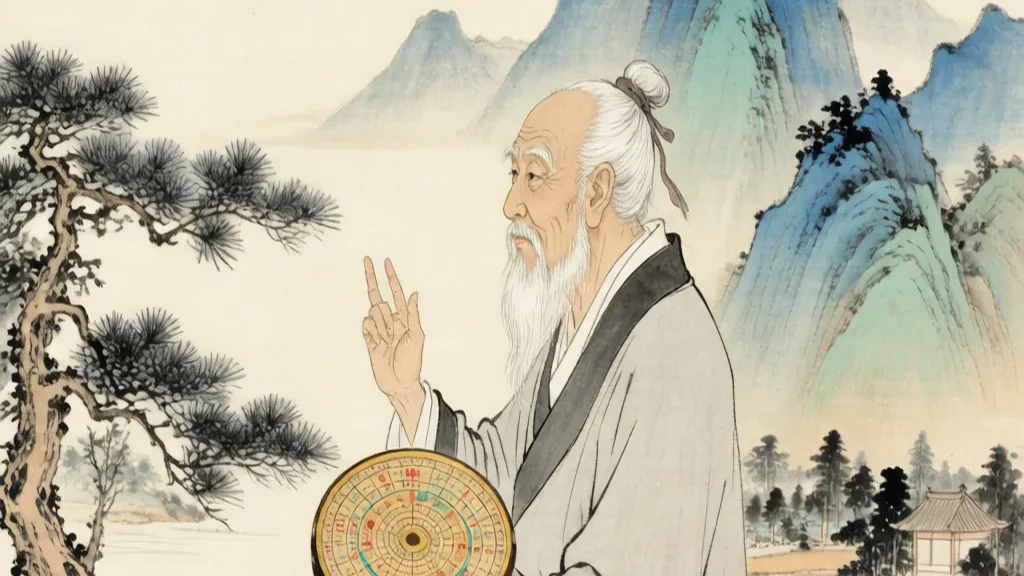
Feng shui (风水, Fēngshuǐ) is the art of placing buildings and graves in harmony with wind, water, and terrain—a practical cosmology of place that has shaped Chinese life for more than two thousand years. Its name literally means "wind and water," pointing to the belief that the land carries an invisible current of vitality called qi, and that the siting of a home, a tomb, or a city can channel that current for health, prosperity, and peace. Part observation of nature, part symbolic science, feng shui remains one of the most influential traditional systems of environmental design in the world.
Origins of Fengshui
Fengshui grew from ancient Chinese observations of how landforms, water courses, and orientation affected the fortunes of settlements and graves. Early people noticed that sheltered slopes, fresh water, and southern exposure made life easier, and they encoded this knowledge in ritual. The earliest fengshui compasses date to the Han dynasty, and the classic Zang Shu (Book of Burial), attributed to Guo Pu of the fourth century, set out core principles still taught today: that vital qi rides the wind and is gathered at the boundary of water. From these roots fengshui developed into a sophisticated discipline blending geography, astronomy, and ethics.
The Form School
The Form School (xingshi pai) is the older branch, relying on direct observation of the landscape. An ideal site is embraced by the "Four Celestial Animals": the Azure Dragon coils to the east, the White Tiger crouches to the west, the Vermilion Bird spreads before the south, and the Black Tortoise shelters behind the north. Water should flow gently in front to gather qi, while mountains behind provide protection from harsh winds. Practitioners walk the land, read its contours, and judge whether a place feels balanced—an approach that, stripped of symbolism, is essentially sensitive siting.
The Compass School
The Compass School (liqi pai) adds calculation to observation. Its instrument is the luopan, a fengshui compass built from concentric rings of astronomical, calendrical, and divinatory data. Using it, a master determines a site's precise orientation, then matches that orientation to the occupant's birth data, the lunar calendar, and the cycles of the five elements. The goal is to find the most auspicious alignment for a given person and purpose. Where the Form School reads the body of the earth, the Compass School reads the earth's position within the cosmos.
The Flow of Qi
At the heart of fengshui is qi, the same vital energy found in medicine and alchemy. In the landscape, qi is said to move with water and settle where the terrain is calm. A straight road, a sharp corner, or a rushing stream can "cut" the qi and create sha, or harsh energy; a curved path, a screen wall, or a gentle hill can slow and gather it. This logic explains many familiar features of Chinese architecture, from the spirit screen (yingbi) inside a gateway that blocks a direct line of sight, to the preference for rounded, protective forms over aggressive, pointed ones.
Fengshui and Architecture
Fengshui principles profoundly shaped Chinese building. The Forbidden City was laid out on a strict north-south axis with the emperor's throne aligned to cosmic center, surrounded by water and symbolic mountains. Traditional courtyard houses (siheyuan) follow rules for gate placement, room hierarchy, and garden design that balance yin and yang. Villages such as Hongcun in Anhui were planned around water systems understood through fengshui. Even the siting of tombs—most famously the Ming and Qing imperial burial complexes—was chosen to secure the dynasty's fortune by harmonizing with the land's dragon veins.
Fengshui and the Five Elements
Fengshui works hand in hand with the five elements—wood, fire, earth, metal, and water—and their cycles of generation and control. A room's color, shape, and material can be interpreted as expressions of an element, and the aim is to keep the elements in supportive relationship rather than conflict. This is why certain directions are favored for certain activities, and why a fengshui consultation may recommend relocating furniture, adding a water feature, or introducing plants. The system is less about magic than about composing a space whose symbolic and sensory qualities feel orderly and alive.
Fengshui in the Modern World
In recent decades fengshui has become a global phenomenon, adapted into Western interior design, real estate, and business consulting. Skyscrapers in Hong Kong and Singapore are oriented and shaped with fengshui in mind; the HSBC building in Hong Kong famously incorporated extensive consultations, from the angled escalator "mouth" that "swallows" wealth to the open ground floor that lets qi flow through. While skeptics dismiss it as superstition, others value it as an ancient form of environmental psychology that encourages light, order, and harmony in daily surroundings.
Criticism and Continuity
Fengshui has always walked a line between practical wisdom and symbolic excess. Its genuine insights—shelter from wind, access to water and light, protection from flooding—are sound siting sense; its more elaborate claims about luck and destiny belong to belief. In contemporary China the practice is both popular and contested: masters still advise on homes, offices, and graves, while urban planners weigh tradition against modernization. Yet the underlying intuition endures—that where and how we dwell shapes how we live—and fengshui remains a living bridge between Chinese cosmology and the everyday search for a good place to be.
Vocabulary
Fun Facts
Frequently Asked Questions
Q: What does fengshui seek to balance?
A: The flow of qi shaped by landscape, building orientation, and the five elements, aiming for harmony between people and place.
Q: Is fengshui science or belief?
A: It mixes genuine siting sense—shelter, water, light—with symbolic cosmology and fortune-telling.
Q: How is fengshui used?
A: For houses, tombs, and city plans, from village layouts to imperial palaces and modern skyscrapers.
Q: What are the two main schools?
A: The Form School reads the landscape directly; the Compass School calculates orientation with the luopan.
Q: What is a "dragon vein"?
A: The imagined auspicious energy line running along a mountain range, used to site important buildings and graves.
Q: Can fengshui apply outside China?
A: Yes; it has been adapted worldwide into design and real estate, valued as environmental psychology as much as ritual.