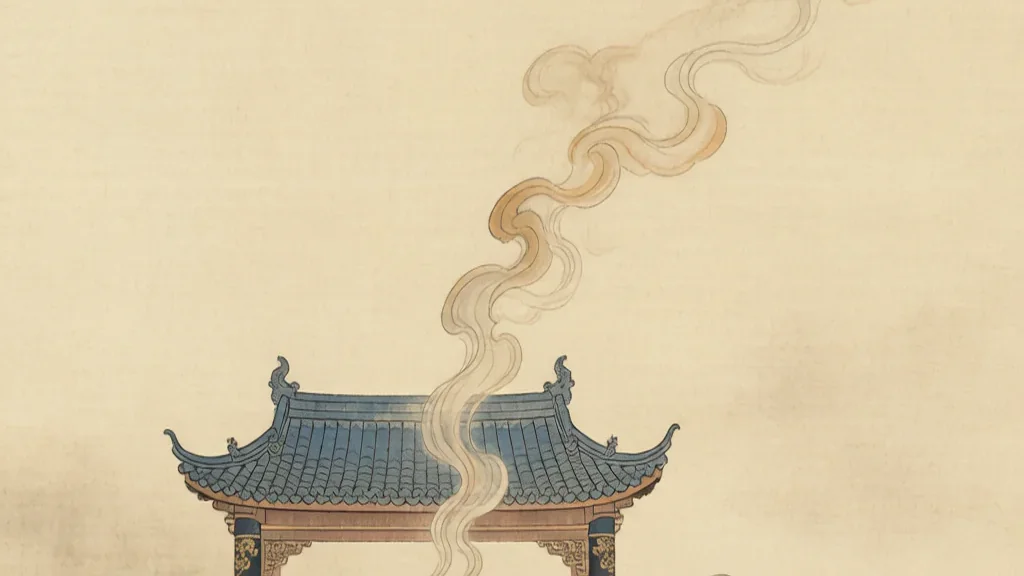
Incense worship — shaoxiang (烧香), "burning incense" — is the offering of scented smoke to the gods, the ancestors, and the Buddha. In China the rising curl of smoke is spoken of as "the speech of the heart" ascending to heaven: a wordless prayer carried on warmth and fragrance. For two thousand years Chinese families have lit sticks before the home altar, pilgrims have burned them in temple courtyards, and descendants have placed them at graves. More than an act of religion, incense is a gesture of respect, remembrance, and the quiet hope that the invisible world is listening.
The History of Incense in China
Incense entered China first for practical ends — perfuming rooms, masking odors, and marking time — and its sacred use grew later. Aromatics reached the Han court through trade with Central Asia and the Western Regions, and Buddhist and Daoist monasteries of the Tang dynasty made fragrance central to their rites. By the Song period, incense had become a refined art of the scholar's studio as well as a devotional act, and the Ming and Qing saw elaborate censers cast for palaces and temples. Over two millennia, "burning incense" passed from luxury to necessity of worship.
Types of Incense
Chinese incense takes many forms. Stick incense (zhuxiang) is made from powdered sandalwood or agarwood bound with a combustible paste and a slender bamboo spine. Coil incense (panxiang) burns slowly for hours, ideal for courtyards and long rites. Powder incense (moxiang) is sprinkled on hot charcoal in a censer so the scent rises without smoke. Pill and paste incenses are shaped for specific ceremonies. The finest material is agarwood (chenxiang), formed when an Aquilaria tree is wounded and infected, and valued more highly than gold by connoisseurs.
The Ritual of Offering
The common offering follows a set form. The worshipper lights three sticks, letting the flame extinguish so only embers glow, then waves away the smoke. Holding the bundle with both hands at the forehead, he or she bows, silently naming the request or giving thanks, and places the sticks upright in the censer's sand. The number three is charged with meaning: Heaven, Earth, and Humanity; or the Three Jewels of Buddhism; or past, present, and future. The straight, parallel sticks standing in a row are themselves a small image of right order.
Incense in Buddhist Practice
In Buddhism, incense is one of the "offerings of the senses" — scent given to the Buddha along with flowers, light, and food. It signals the clarity of the awakened mind and the spread of the Dharma, and whole sutras are devoted to its merit. Monasteries begin the day with the ringing of a bell and the lighting of incense before the main hall; pilgrims buy bundles at temple gates; and the "incense seal" (xiang yin) — powdered incense pressed into a timed pattern — once measured the length of a monk's meditation. The scent is both gift and discipline.
Incense in Daoist Ritual
For Daoist priests, incense does several jobs at once. It purifies the ritual space, summons benevolent deities, repels malicious ones, and carries the practitioner's petition to the celestial bureaus. A complex rite opens by "reporting to the altar" with incense, and the rising smoke is read like a signal. Daoist kit includes not only censers but "incense tablets" recording the names of those who sponsored the burning, so that the living and the dead alike are named in the fragrant ascent. Here incense is communication infrastructure between earth and heaven.
Ancestor Worship and the Grave
At the tomb, incense is the core of remembrance. During Qingming and the autumn equinox, families clear the grave, lay food, and burn three sticks so the departed may "eat" the smoke and know they are not forgotten. The act binds the generations: the living speak, the dead receive, and the smoke is the only bridge. In the home, a small altar with a censer keeps this line open daily, so that ancestors remain members of the household rather than distant memory.
Incense as Timekeeping
Before clocks were common, the Chinese measured hours by incense. A calibrated stick or coil burned at a known rate, and "incense time" (xiang shi) became a unit of duration. Some censers held a marked thread that dropped a weight onto a plate when the incense burned through, sounding the hour. Scholars lit a stick to pace a poem; monks lit one to bound a sitting. The slow, even consumption of scent was a gentle way to feel time pass, and "the time of one incense" entered ordinary speech.
The Incense Trade and Agarwood
The thirst for fine incense drove a great commerce. Agarwood and sandalwood moved along the Maritime Silk Road from Southeast Asia and India to Chinese ports, and from there inland to workshops and temples. Agarwood's price reflects its rarity: only wounded, infected trees yield it, and the finest "sinking" grade is so resinous it sinks in water. Beyond worship, it perfumes clothing, flavors medicine, and signals status. The incense trade thus linked Chinese devotion to the ecology and economies of the southern seas.
Incense Today
Incense worship is thriving in contemporary China and across the Chinese diaspora. Temple courtyards fill on the first and fifteenth of the lunar month, and the scent of sandalwood marks weddings, funerals, and the opening of businesses. Concerns about smoke in crowded cities have prompted electric "incense" and outdoor burners, but the gesture persists. To light a stick is to join a chain of offering unbroken for two thousand years — a small, fragrant act of belonging.
❓ Frequently Asked Questions
Why is incense offered?
Its smoke is seen as the speech of the heart rising to heaven; it also purifies the ritual space and honors the spirits.
How is incense offered?
Three sticks are lit, the flame waved out, the bundle held to the brow with both hands, and placed upright in a censer.
What do the three sticks mean?
They represent Heaven, Earth, and Humanity, or the Three Jewels of Buddhism, or past, present, and future.
What is the most precious incense?
Agarwood (chenxiang), formed when a tree is wounded and infected, prized above gold by connoisseurs.
Is incense used outside religion?
Yes. It once measured time, scented homes, and signaled status, and still marks weddings and business openings.
How did incense reach China?
Aromatics came via Central Asian and Maritime Silk Road trade, then were woven into Buddhist, Daoist, and folk rites.