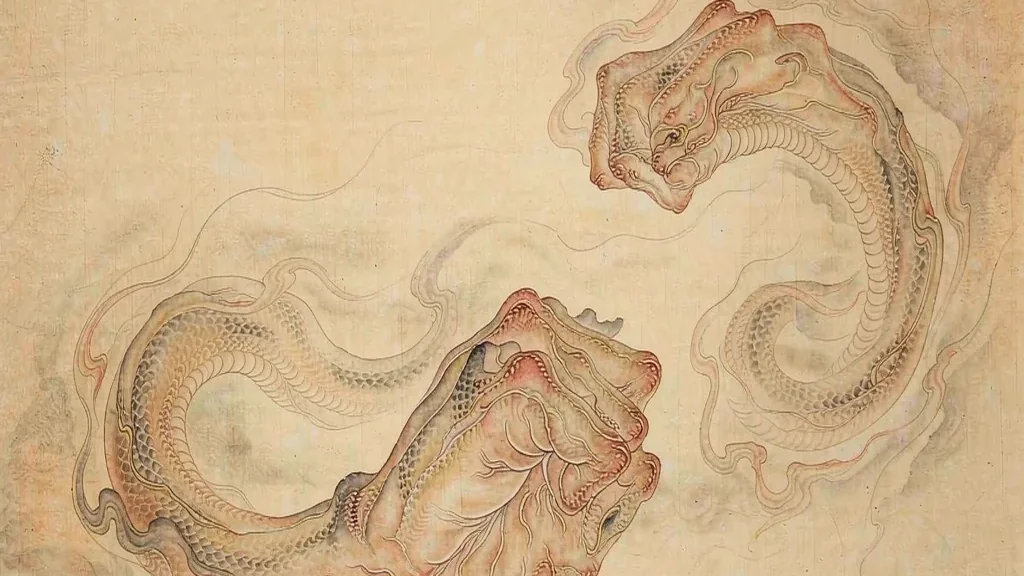
She Quan (蛇拳, "snake fist"), often called snake style, is one of the animal-forms of Chinese martial arts in which the practitioner imitates the coiled tension, supple evasion, and sudden striking of a serpent. Rather than meeting force with force, snake stylists use sliding footwork, low stances, and whip-like hand techniques—finger thrusts, palm cuts, and undulating arm waves—to penetrate guards and target vulnerable points. Though frequently taught alongside the other "animal" boxes such as dragon, tiger, leopard, and crane, snake style carries a distinct internal flavor, emphasizing breath, tendon relaxation, and precision over brute power. This article examines its principles, techniques, history, and place among the animal styles.
Place Among the Animal Styles
Chinese boxing has long borrowed movements from creatures, and the "five animals" (dragon, tiger, leopard, crane, snake) appear in many southern and internal systems. Each animal teaches a quality: the tiger strength, the crane balance, the dragon spirit, the leopard speed, and the snake fluidity and striking accuracy. Snake style is the most "internal" of the group, favoring softness that suddenly turns hard.
In some lineages snake is one of the "southern seven stars" or appears within broader routines such as the Five-Animal Qi Gong (wu qin xi). Its movements are thus both a fighting method and a health exercise, training the spine, waist, and breathing as much as the hands.
Core Movement Principles
The defining image is the snake's body: relaxed yet coiled, able to launch a strike from stillness. Practitioners keep the spine mobile and the waist turning, transmitting power from the ground through a wavy, continuous motion. Hands ride close to the centerline, ready to deflect and then thrust, embodying the idea of "soft outside, firm inside."
Breathing is central. Inhaling gathers, exhaling releases; the strike is timed with a short, sharp breath that adds snap to an otherwise loose limb. This breath-power link is why snake style is often described as a bridge between external animal boxing and internal arts like taiji and xingyi.
Signature Techniques
The most recognizable snake technique is the single-finger or two-finger thrust aimed at soft targets such as the eyes, throat, or pressure points. Because a finger strike has little margin for error, it demands accuracy and is trained slowly and precisely. Palm-edge cuts and "snake tongue" flicks complement the thrusts.
Arm waving—undulating the forearm like a serpent—serves both to confuse an opponent's timing and to build the tendon elasticity that powers the thrust. Low, sliding steps keep the body evasive, letting the snake stylist slip off-line before countering rather than blocking head-on.
Stances and Footwork
Snake style uses narrow, low, and often bowed postures, including a characteristic crouch with the body angled, minimizing the target. Footwork is short and slippery, emphasizing weight shifts and small adjustments over large lunges. The goal is to stay centered while the upper body weaves, much like a serpent moving along the ground.
Because the stances are unusual, they build ankle and hip strength differently from the wide horse stance of styles like Hung Gar. Students often find snake footwork awkward at first but value its economy once the evasion habit forms.
Health and Internal Dimensions
Beyond fighting, snake practice is prized for flexibility of the spine and joints and for calming the nervous system through slow, breath-led motion. The finger-thrust drills also strengthen the tendons of the hands and forearms. In qigong contexts the snake is linked to the "liver" in traditional Chinese medicine theory, though such associations are interpretive rather than clinical.
Many teachers use snake movements in warm-ups and wellness classes precisely because they are low-impact and emphasize relaxation. The style thus serves both the fighter seeking precision and the older student seeking gentle, joint-friendly exercise.
Historical and Folk Background
Animal mimicry in Chinese martial arts is ancient, but codified "snake fist" routines appear in southern family styles and in the storytelling of itinerant masters. Folk opera and novel traditions popularized the "snake hero" who defeats stronger foes through guile and agility, reinforcing the style's clever, indirect identity.
As with many animal styles, exact lineages are hard to verify, and different regions teach different snake sets. What unites them is the principle of supple, accurate striking rather than a single fixed form, so snake style is best understood as a method expressed through many local routines.
Snake in Modern Practice
Today snake style survives within southern kung fu schools, internal-art warm-ups, and demonstration performances where its sinuous look draws audiences. Competitive wushu does not have a separate snake category, but snake-like hand shapes appear in some nanquan and traditional sets judged for expression.
Internationally, snake fist enjoys a niche following among students attracted to its internal quality and low equipment needs—no weapons, just precise body mechanics. Workshops often pair it with the other animal forms so learners feel the contrast between soft snake and hard tiger.
Training Tips for Beginners
Start with spinal mobility and relaxed waving drills before attempting finger thrusts, and never strike hard objects with the fingers until tendons are conditioned. Focus on timing the breath with the strike, since the snap comes from relaxation followed by instant tension, not from muscular force alone.
Train slowly. Snake style rewards patience and precision far more than speed or strength, and rushing produces stiff, telegraphic movement that defeats the style's purpose. A teacher who can show the "coiled then released" feeling is invaluable.
❓ Frequently Asked Questions
What is snake style in kung fu?
An animal-form method imitating a serpent's coiled tension and sudden strike, using soft, evasive movement and precise finger or palm attacks rather than brute force.
Is snake style internal or external?
It leans internal, emphasizing breath, relaxation, and tendon elasticity, though it is usually taught within broader external animal-boxing systems.
Why finger strikes instead of fists?
The finger thrust targets vulnerable points with precision and embodies the snake's penetrating quality; it requires accuracy and is trained carefully.
Is it practical for self-defense?
Its evasion and centerline striking can be useful, but real effectiveness depends on overall training; the style is also valued for health and mobility.
How does it differ from tiger style?
Tiger uses overt strength and gripping; snake uses supple evasion and pinpoint strikes, representing opposite training qualities.
Can beginners learn it safely?
Yes, if they start with relaxed waving and mobility work and avoid hard finger striking until tendons adapt; slow, precise practice is key.