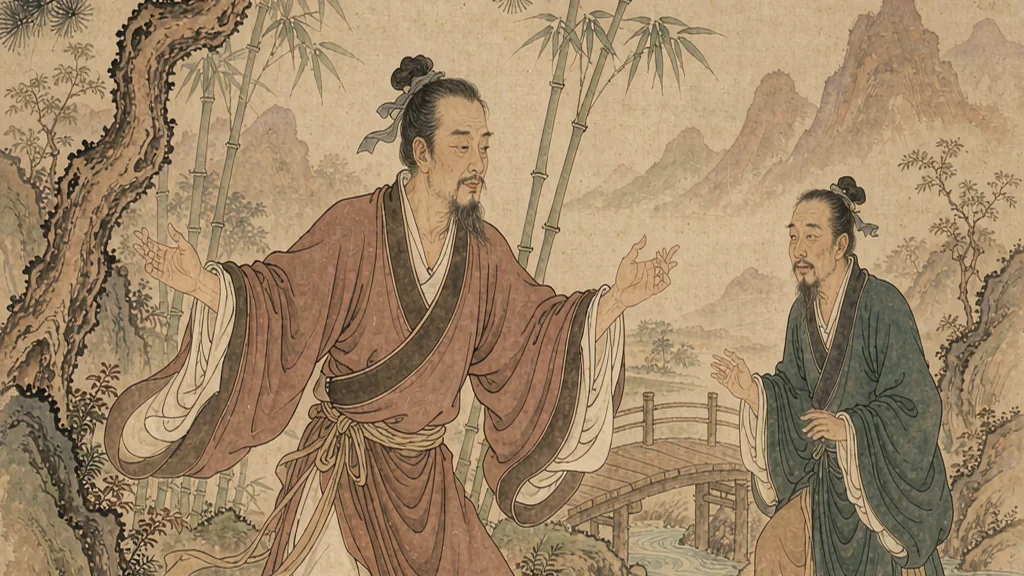
Drunken boxing, known as Zuiquan or "Drunken Eight Immortals" style, is among the most visually striking of Chinese martial arts, performed as if the fighter were tipsy — stumbling, swaying, and falling only to strike from the ground. Behind the theatrical wobble lies a sophisticated method of off-balancing the opponent's expectations: by appearing clumsy and vulnerable, the stylist hides sudden, precise attacks launched from unlikely angles. Linked in legend to the Eight Immortals of Daoist folklore, drunken boxing rewards unusual mobility, loose joints, and a playful spirit. This article looks at its origins, deceptive posture, ground techniques, training, and cultural fame.
Legend and the Eight Immortals
Drunken boxing is closely tied to the Eight Immortals of Daoist myth, especially the figure Li Tieguai and the laughing Immortal Cao Guojiu, whose carefree, wine-loving images inspired the style's playful persona.
The "Drunken Eight Immortals" name refers to a set of routines, each evoking a different immortal's supposed drunken bearing and signature movements. These are theatrical in flavor yet rooted in real technique.
As with many styles, the legends are symbolic; the art itself is a serious method of movement disguised as merriment rather than a literal drinking practice.
The Deceptive Drunken Posture
The core trick of Zuiquan is misdirection. The body lurches, the head rolls, and the limbs flop as if the fighter cannot stand — but each apparent stumble is a loaded position ready to burst into action.
By seeming off-balance and unguarded, the stylist invites the opponent to attack the "open" targets, then converts the apparent weakness into a counter from an angle the attacker did not expect.
This demands exceptional body control: only someone with strong balance can safely pretend to lose it, so the style is harder than its loose look suggests.
Stumbling Steps and Sways
Footwork is irregular and unpredictable — short staggers, sudden drops, and spins that break the usual rhythm of combat. The unpredictable path makes the fighter hard to pin down or time.
The upper body sways and the shoulders tilt, hiding which side will attack. A "fall" may be a feint that lowers the head below a strike while the legs sweep or the hand jabs upward.
All this irregular motion trains unusual coordination, as the practitioner must stay relaxed enough to flow yet ready to snap into a strike at any instant.
Ground and Falling Techniques
Unlike many stand-up styles, drunken boxing makes frequent use of the low and ground range. The stylist drops, rolls, and kicks from a near-sitting or supine position, then springs back up.
Techniques include sweeping with the legs while seemingly collapsed, striking upward with the hands from the floor, and using the momentum of a "fall" to generate power rather than losing it.
This ground work requires safe practice: students drill the rolls and recoveries slowly on mats before adding the strikes, since real falling can injure without control.
Strikes, Slaps, and Unlikely Angles
Drunken boxing uses open-hand slaps, palms, elbows, head butts, and low kicks, often delivered from off-axis positions that are difficult to block. The "drunken" posture opens strange lines of attack.
Because the body is already loose and turning, strikes can come from a spin or a stumble, arriving when the opponent expects weakness. The style delights in the unexpected.
Control of distance is key: the stylist must stay just inside the range where the feigned clumsiness reads as real, then explode into the actual technique.
Training Methods and Forms
Students learn set "drunken" routines that chain sways, drops, and strikes into a flowing, theatrical sequence. These forms build the unusual mobility and the comic-but-deadly timing.
Conditioning emphasizes flexible joints, a strong core for the recoveries, and the relaxed breathing that lets the body flow. Tension would destroy the illusion and the technique alike.
Paired practice teaches when the feints would actually work, helping the student feel the opponent's reactions rather than merely performing a dance.
Connection to Daoist Playfulness
The style fits a Daoist theme of reversing appearances: the weak seems strong, the clumsy is clever, the drunk is awake. This ironic reversal is a recurring idea in Chinese thought and humor.
The laughter and looseness also echo the "carefree immortal" ideal, suggesting that freedom of movement comes from not taking oneself too seriously — a lightness the art cultivates.
For performers, this playful spirit is part of the appeal: drunken boxing entertains even as it demonstrates genuine martial skill.
Drunken Boxing in Film and Popular Culture
The style became world-famous through kung fu cinema, where actors used its acrobatics and comedy to thrilling effect, making "drunken master" a household phrase far beyond China.
That fame helped spread interest in the art, but teachers caution that film exaggerates the flair; the real method is about timing and balance, not mere clowning.
Today demonstrators still perform drunken sets for their spectacle, while traditional schools preserve the combat logic underneath the show.
Learning Drunken Boxing Safely
Beginners should build basic balance and falling skill first, learning to roll and recover without injury before attempting the low and spinning moves that define the style.
Training on mats with a teacher prevents the strains that careless "falling" can cause, and partners should agree on light, controlled contact during drills.
The reward is a uniquely freeing art: one that teaches relaxation, surprise, and the lesson that apparent weakness, used well, can become a decisive strength.
The Eight Immortals Routines in Detail
The classic "Drunken Eight Immortals" set assigns a distinct persona and movement flavor to each immortal—one lurching with a gourd, one weaving with a fan, another dropping with a laugh. Learning the set means inhabiting each character's drunken bearing in turn, which is harder than it looks.
These role-based routines are more than theater; each immortal's posture highlights a tactical idea, such as low sweeping, sudden rising, or off-angle striking, so the comedy encodes real options. Advanced students may mix the immortals freely, stringing together a personalized, unpredictable sequence.
Because the characters are familiar from folklore, the forms also teach culture: a performer who knows the legends moves with more conviction, and audiences read the references, linking martial skill to a shared story world. The style thus carries both technique and a piece of popular myth.
Drunken Boxing as Living Performance Art
On stage, drunken boxing sits between combat and dance, prized for expressiveness as much as for technique. Troupes use it in festivals and variety shows where its humor and acrobatics land with general audiences who may never study a martial art themselves.
This performance life keeps the style visible even where full combat training is rare, and it attracts students who might not otherwise try a martial art. The risk is caricature, so good teachers separate the show from the fighting logic and make sure the underlying method is never lost.
Seen whole, drunken boxing offers a rare blend: a genuinely functional method wrapped in play, reminding viewers that Chinese martial culture has always made room for wit alongside seriousness. That balance of humor and skill is exactly what has kept it beloved for generations.
❓ Frequently Asked Questions
What is drunken boxing?
Zuiquan is a style performed as if intoxicated, using feigned clumsiness to hide sudden, precise attacks from odd angles.
Do practitioners really drink?
No; the drunkenness is an act of misdirection. The style is a serious method, not an actual drinking practice.
Why does it use falling?
Low and ground positions open unexpected attack lines and let the stylist strike or sweep from seemingly defeated postures.
Is it hard to learn?
It is deceptively difficult, requiring strong balance and joint control to safely pretend to lose balance.
What is the Eight Immortals link?
Routines evoke the carefree Daoist immortals, giving the style its playful, theatrical persona.
How is it trained safely?
On mats, with a teacher, building rolls and recovery first and using light partner contact to avoid injury.