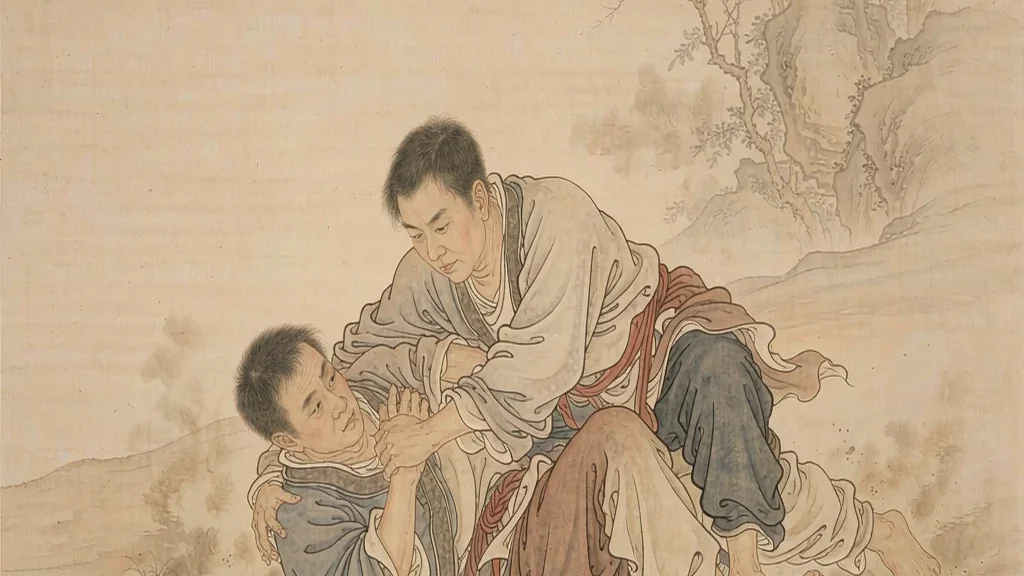
Gou Quan, or Dog Style, is one of the more unusual imitative boxing arts of Chinese martial arts, mimicking the postures, evasion, and biting tactics of a dog. Like Monkey Style, it fights from low, crouched positions and uses unpredictability and close-range tricks to survive against larger opponents. Though rare and sometimes performed for its novelty, Dog Style carries genuine close-combat logic: dropping below the opponent's vision, attacking the lower body, and using the head, shoulders, and hands like a beast. It is a vivid example of how Chinese martial arts drew technique from the entire natural world, not just the noble animals.
The Imitative Boxing Tradition
Dog Style belongs to "ximiao quan," the imitative boxing family that studies animals for technique and strategy. While the five animals are the famous examples, folk tradition includes many lesser creature styles—snake, mantis, eagle, and dog among them.
These "lesser animal" styles often arose from village observation and pragmatic need rather than courtly symbolism. The dog, a constant companion of rural life, was a natural subject for fighters seeking low, survival-oriented methods.
In this context Dog Style is less about honor and more about practical survival—how to fight when you are down, smaller, or at a disadvantage, which gives it a scrappy, realistic flavor.
Why the Dog?
The dog in Chinese village life is both defender and scrapper—low to the ground, quick to bite, and hard to pin. Its fighting behavior—lunging low, shaking with the head, rolling—offers a model for close-range defense.
Culturally the dog is also one of the twelve zodiac animals, associated with loyalty and vigilance. Some dog-style lore frames the art as guarding territory, echoing the watchdog's role rather than the beast's ferocity alone.
Choosing the dog thus signals a philosophy of resilience: even a low, unglamorous creature has effective ways to protect itself, a lesson encouraging students who feel physically outmatched.
Postures and Low Fighting
Dog Style is characterized by extremely low, often seated or crouched postures—the "dog crouch"—where the fighter stays below the opponent's center. From here the head is safe and the hands are free to strike low.
The stylist may drop to one knee or even sit, using the grounded position to sweep and to generate upward striking power from the legs. What looks like helplessness is actually a stable, rooted low base.
Because the body is low, the dog fighter attacks the opponent's legs, knees, and groin—targets often neglected by upright styles—and uses head butts and shoulder charges from below the guard.
Head, Shoulder, and Biting
True to the animal, Dog Style uses the head as a weapon: butting the groin, stomach, or thigh from a low charge. The shoulder likewise becomes a ram when the fighter springs upward from the crouch.
The "bite" is mimicked with the hands—snapping claw-like grasps to sensitive areas, or a clenched biting motion to the flesh of an arm or leg to break an opponent's grip or distract painfully.
These close, unpleasant techniques reflect the style's survival ethos. They are not sportive but pragmatic, meant to create the instant of advantage needed to escape or reverse a bad position.
Footwork and Evasion
Footwork is low and shuffling, keeping the center of gravity near the ground so the fighter can drop or spring without transition. The dog "circles" its opponent, staying just outside reach until it darts in.
Evasion comes from the low profile: high attacks pass over the head, and the dog can roll or sprawl under a grab. This makes the style effective against taller, longer-limbed opponents who expect to strike downward.
The sudden upward burst—from floor to head-height strike—is a signature surprise, exploiting the opponent's assumption that a low fighter cannot attack high quickly.
Training and Conditioning
Conditioning emphasizes neck and shoulder strength for head-butting, and leg power for springing from low postures. Practitioners also build tolerance for close, floor-level contact through partnered drills.
Flexibility in the hips and lower back supports the deep crouches and rolls. As with Monkey Style, safe falling is taught so the low positions do not lead to injury during training.
Mentally, the style trains fearlessness about being low and close—comfort in the "ugly" range of fighting that many stylists avoid. This comfort is itself a tactical advantage in real confrontation.
Relationship to Other Low Styles
Dog Style shares ground with Ditanquan (ground boxing) and Monkey Style in its use of low and floor positions, though its beast-imitation framing sets it apart. Some southern curricula include a dog module alongside other animal forms.
It also parallels the "ground game" found in wrestling traditions, suggesting a cross-style commonsense: when the fight goes low, a method for operating there is valuable regardless of animal metaphor.
Teachers often present Dog Style not as a complete system but as a supplemental skill—what to do if taken down or forced low—making it a pragmatic addition to a broader martial education.
Legacy and Performance
Dog Style survives mostly in folk performance and as a curiosity within imitative boxing demonstrations. Its comedic appearance belies a serious close-combat core that practitioners respect.
In festival and opera contexts, the dog's antics entertain, yet behind the play is the same principle as the other animals: observe nature, extract a working method, and embody it through disciplined repetition.
For modern students, Dog Style is a reminder that effective martial arts need not be elegant. Sometimes the low, stubborn, biting creature—refusing to stay down—is exactly the model a fighter needs.
❓ Frequently Asked Questions
What is Dog Style kung fu?
It is an imitative Chinese boxing art mimicking a dog's low crouches, head-butts, and biting grasps, used for close-range survival fighting from below an opponent.
Is Dog Style a serious martial art?
Though it looks comedic, it has real close-combat logic for fighting low and close, often taught as a supplement for when a fighter is down or at a disadvantage.
What weapons does the body use?
The head butts, the shoulder rams, and the hands mimic biting grabs to sensitive areas, all delivered from a grounded low position.
How does it relate to other animal styles?
It belongs to the imitative boxing family alongside Monkey and the five animals, sharing low-fighting ideas with Ditanquan and Monkey Style.
Why would someone learn it?
It builds comfort and skill in the close, floor-level range that many stylists avoid, useful for self-defense when one is taken down or smaller.
Where is Dog Style practiced?
It survives mainly in folk performance and as a curiosity module within southern imitative-boxing curricula rather than as a widespread standalone system.