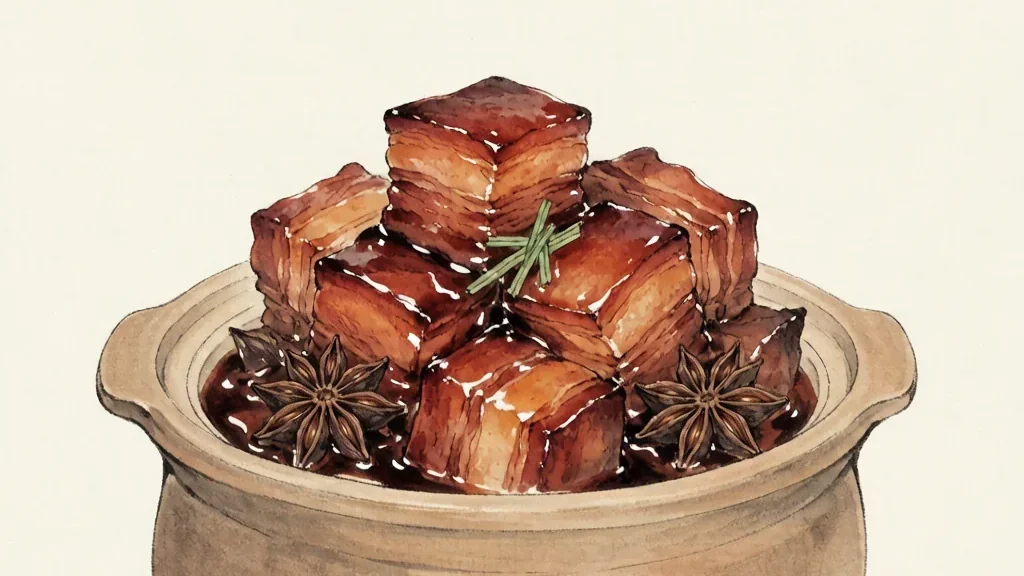
Red-braised pork (红烧肉, hóngshāo ròu) is a cornerstone of Chinese home and banquet cooking: cubes of pork belly slow-cooked in a dark, glossy sauce of soy sauce, rice wine, rock sugar, ginger, and aromatics until the fat turns translucent and the meat melts at the touch of a chopstick. The name refers to the "red" (hóng) color the pork takes on as it braises (shāo) in soy and caramelized sugar. Loved across the country, the dish carries strong regional identities, from the sweet, soy-dark Shanghai style to the wine-forward version attributed to the Song-dynasty poet Su Dongpo. More than a recipe, it is a symbol of prosperity, comfort, and the Chinese art of transforming a humble cut through patience and heat.
What "Red-Braising" Means
Red-braising (红烧, hóngshāo) is a fundamental Chinese cooking method in which ingredients are first seared or blanched, then simmered slowly in a seasoned liquid dominated by soy sauce and sugar until they take on a deep reddish-brown lacquer. Unlike stir-frying, it values time over heat, coaxing collagen into gelatin and unifying meat and sauce. The technique applies to fish, chicken, and vegetables as well as pork, but pork belly is its most celebrated canvas.
The "red" of the name is partly literal and partly auspicious: red is the color of luck and festivity in China, and a gleaming red braise reads as celebratory on the table. A cook judges doneness by gloss and tenderness rather than a clock, watching the sauce reduce to a shine that clings to each cube.
Pork Belly and the Art of Fat
The cut is typically streaky pork belly (五花肉, wǔhuāròu), with alternating layers of lean and fat that, properly braised, become silky rather than greasy. The first step often blanches the cubes to rid them of impurities and tighten the texture. Then they are pan-seared to render some fat and build a golden edge before the braising liquid goes in.
Fat is not a flaw here but the point. Slow heat converts connective tissue into gelatin that gives the sauce body and the mouth a luxurious coat. Eaten with plain steamed rice, the richness is balanced by the neutral grain, which is why red-braised pork is almost always served as part of a rice meal rather than alone.
The Soy, Sugar, and Wine Trinity
Three seasonings define the dish. Light and dark soy sauce supply salt and color; rock sugar (冰片糖 or 冰糖) provides the caramel sweetness and the signature shine; and a good rice wine such as Shaoxing (黄酒) lifts and rounds the flavors while tenderizing the meat. Ginger, scallion, and sometimes star anise or cassia bark add aromatic depth without overwhelming.
The sugar is melted to a faint amber before the meat is added, a small caramel that tints the whole pot. Too much soy makes the dish bitter and black; too little leaves it pale and flat. The proportions are guarded family secrets, varying from kitchen to kitchen across the Yangtze delta and beyond.
The Dongpo Connection
No figure is more closely tied to red-braised pork than Su Shi (苏轼), the Song-dynasty poet and gourmet better known as Su Dongpo. A famous "Dongpo pork" (东坡肉, dōngpōròu) recipe—pork square braised in wine and soy—is attributed to him, said to have been perfected during his exile in Hangzhou. Whether or not the story is literal, it embedded the dish in literary culture and gave cooks a poet-patron to invoke.
Dongpo pork differs slightly from everyday red-braised pork in its use of larger squares and heavier wine, but the family resemblance is clear. The legend illustrates how Chinese food lore blends taste with personality, turning a cooking method into a biography of a beloved writer.
Regional Styles
Shanghai and Jiangsu versions lean sweet and dark, with sugar prominent and the sauce thick. Hunan's version may add chili for a hot edge, while the northeast (Dongbei) often includes soy-braised eggs or potatoes in the same pot. Fujian might fold in red yeast rice (红曲) for a brighter crimson and a faint fermented sweetness distinct from soy alone.
Despite the variation, the goal is constant: meat so tender it needs no knife, and a sauce worth scraping up with rice. The regional differences are less contradictions than dialects of one braising language spoken across the country.
Festive and Family Meaning
Because pork belly was historically a luxury, red-braised pork appears at New Year, weddings, and family reunions as a token of abundance. A glossy bowl signals that the host could afford the best cut and the long fire to cook it. It is also quintessential "mother's cooking," the dish many Chinese adults name when asked what they crave from home.
Its place at the reunion table links it to continuity and care. A younger generation may lighten the fat, but the emotional weight of the dish survives the diet, and recipes pass from grandparent to parent to child along with the stories attached to them.
Modern Interpretations
Contemporary chefs play with the form: deconstructed cubes, sous-vide tenderness, or leaner cuts for health-conscious diners. Restaurant versions may add dried fruit, tea, or aromatic spices to distinguish a signature plate. Yet the home pot remains stubbornly traditional, resistant to trends because its appeal is exactly its nostalgia.
Frozen and ready-meal versions now exist, but connoisseurs insist the dish must be made fresh and eaten hot, when the fat is at its most yielding. Red-braised pork endures because it rewards the one ingredient no factory can supply: time at the stove.
Serving and Accompaniments
Red-braised pork is almost never eaten alone; it is set among a spread of dishes with steamed rice at the center. A typical home meal pairs it with one or two quickly stir-fried greens—bok choy or garland chrysanthemum—to cut the richness, plus a clear soup. The sauce is deliberately made a little abundant so there is enough to spoon over rice, which is the part children fight over.
In restaurants the dish may arrive in a small clay pot still simmering, garnished with blanched greens or a wedge of steamed bun to mop the sauce. However presented, the etiquette is the same: take a little meat, a lot of rice, and let the glossy sauce unite them. The accompaniments exist to refresh the palate between bites of fat, not to compete with the pork.
❓ Frequently Asked Questions
What cut of pork is used?
Streaky pork belly with alternating fat and lean layers, which becomes silky after long braising.
Is red-braised pork sweet?
Often, especially in Shanghai and Jiangsu, where rock sugar gives a sweet, glossy finish; other regions are less sweet.
Who was Dongpo?
Su Dongpo was a Song-dynasty poet-gourmet to whom a wine-rich pork-braise variant is attributed.
How long does it take?
Typically an hour or more of gentle simmering so collagen turns to gelatin and the meat turns tender.
What is served with it?
Plain steamed rice, which balances the richness and soaks up the savory sauce.
Can it be made ahead?
Yes; like many braises it often tastes better reheated the next day as flavors deepen.