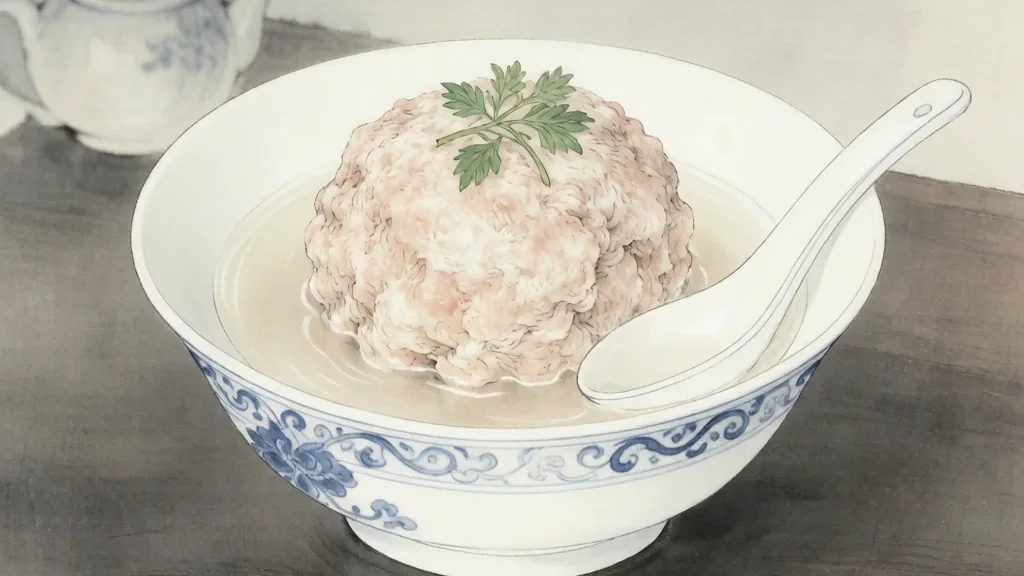
Shizi tou (狮子头), known in English as "lion's head meatballs," is a signature dish of Huaiyang cuisine, the refined regional tradition centered on Yangzhou and the lower Yangtze. Despite the fierce name, the dish is gentle: a large, loosely bound pork meatball—sometimes the size of a fist—either braised in a clear broth with cabbage or steamed until silken, sometimes enriched with crab roe (蟹粉狮子头). The "lion's head" refers to the craggy, mane-like surface of the meatball, while the accompanying greens or cabbage stand in for the lion's body. Revered for its tender texture and balanced flavor, it is both everyday comfort and banquet centerpiece.
Huaiyang Roots
Huaiyang cuisine is one of China's recognized great regional traditions, prized for knife skill, fresh ingredients, and subtle seasoning rather than heavy spice. Yangzhou, a wealthy canal city, was its historic heart, and shizi tou is often cited as a dish that shows the school's ideals: size and richness tamed by delicacy.
The dish's exact origin is told in several local legends, often linking it to Yangzhou's pleasure gardens or to imperial visits, but its enduring home is the home kitchen and the restaurant banquet alike. What unites versions is the commitment to a meatball that is tender, never rubbery.
Why "Lion's Head"
The name is visual and a little playful. A properly made shizi tou is large and irregular, its surface bumpy where bits of pork and fat stand proud, resembling a stylized lion's head as carved on gates and temples. The classic presentation pairs it with leafy greens or a wedge of cabbage, the "lion's body" lying beside the head.
This metaphorical plating is typical of Chinese banquet food, where a dish's name and appearance carry auspicious or literary meaning. The lion, a guardian figure in Chinese art, adds a note of protection and dignity to the table.
The Art of the Bind
The texture depends on how the meat is handled. Traditional recipes call for hand-chopping pork—a mix of fat and lean, sometimes with a little water chestnut or bamboo for crunch—rather than fine grinding, so the meatball keeps a loose, almost fluffy structure. Seasoning is minimal: salt, ginger, rice wine, and perhaps a little egg or starch to bind.
Crucially, the mixture is shaped gently and not compressed, so the cooked ball stays light. Overworking the meat is the common mistake that turns a lion's head into a dense dumpling. The aim is a meatball that yields at the touch of a spoon.
Braised vs. Steamed
Two main preparations dominate. The "red" (braised) version simmers the meatballs in a soy-colored broth with cabbage or greens, producing a savory, glossy result. The "clear" (steamed) version, especially the crab-roe kind, is steamed so the meat stays pale and supremely tender, often served in its own fragrant juices.
Each method suits a different occasion. Braised lion's head is hearty and homey; steamed crab-roe lion's head is the banquet showpiece, prized in spring when crabs are fat. Both rely on slow, gentle heat to render the fat and relax the protein.
Crab Roe and Seasonal Luxury
Xiefen shizi tou (蟹粉狮子头) folds cooked crab meat and roe into the pork, lifting the dish from rustic to luxurious. The crab adds a briny sweetness that cuts the pork's richness, and the pale meatball flecked with orange is visually striking.
Because it depends on fresh crab, this version is seasonal and more expensive, which is exactly why it signals occasion and status. In Yangzhou restaurants it is a measure of a kitchen's seriousness, since the balance of pork and crab must be judged by feel.
Symbolism and Hospitality
Like many large, shared dishes, lion's head reads as generous and welcoming. Its roundness suggests reunion, and its place at festival or family meals reinforces the idea of a table piled with abundance. The "lion" framing adds a protective, festive note.
In the lower Yangtze, the dish appears at birthdays and holidays as a wish for wholeness and good fortune. A single large meatball per person, or one giant ball shared, both convey the same generosity of spirit.
Technique and Modern Kitchens
Making shizi tou well is a test of patience: chopping by hand, shaping loosely, and cooking slowly. Modern cooks sometimes use a food processor for part of the work, but purists argue the texture suffers. The broth or steaming liquid is kept clear and lightly seasoned so the pork speaks.
Restaurant versions may be enormous—advertised by the number per jin—while home versions are more modest. Either way, the dish rewards restraint: it is rich, but its elegance comes from not overdoing anything.
Legacy Beyond Yangzhou
Shizi tou traveled with Huaiyang cooks across China and into diaspora restaurants, where it is often listed simply as "lion's head pork balls." It has become a touchstone for people explaining Huaiyang cuisine to outsiders, precisely because it is at once humble and refined.
Cookbooks and culinary schools treat it as a required technique, and competitions sometimes judge a chef on the tenderness and shape of the meatball alone. Few dishes so clearly demonstrate that Chinese cuisine values texture as much as taste.
Ordering It at a Restaurant
When ordering shizi tou in a Yangzhou or Shanghai restaurant, diners often choose between "red" braised and "clear" steamed, and may pay more for the crab-roe version. A good kitchen will specify how many meatballs make a portion, since size is part of the experience.
For the curious eater, the dish is a gentle introduction to Huaiyang ideals: notice the loose, hand-chopped texture and the clean broth or sauce. Compared with heavily sauced meats, the lion's head asks you to appreciate tenderness and restraint, which is precisely the point of the style.
❓ Frequently Asked Questions
What is shizi tou?
It is a large, tender pork meatball from Huaiyang cuisine, named for its craggy surface, often braised or steamed and sometimes made with crab roe.
Why is it called lion's head?
The bumpy, oversized meatball resembles a stylized lion's head, and the accompanying greens represent the lion's body in the plating.
Braised or steamed—which is best?
Both are traditional; braised is heartier and homey, while steamed (especially with crab roe) is the delicate banquet version. Preference is personal.
What makes it tender?
Hand-chopped pork, a loose bind, and gentle slow cooking—never overworking or compressing the meat.
Is it very fatty?
It uses a fat-and-lean mix for richness, but the fat renders during cooking, and the clear-steamed version in particular is light.
Where is it from?
It is from the Yangzhou area and the Huaiyang culinary region of the lower Yangtze River.