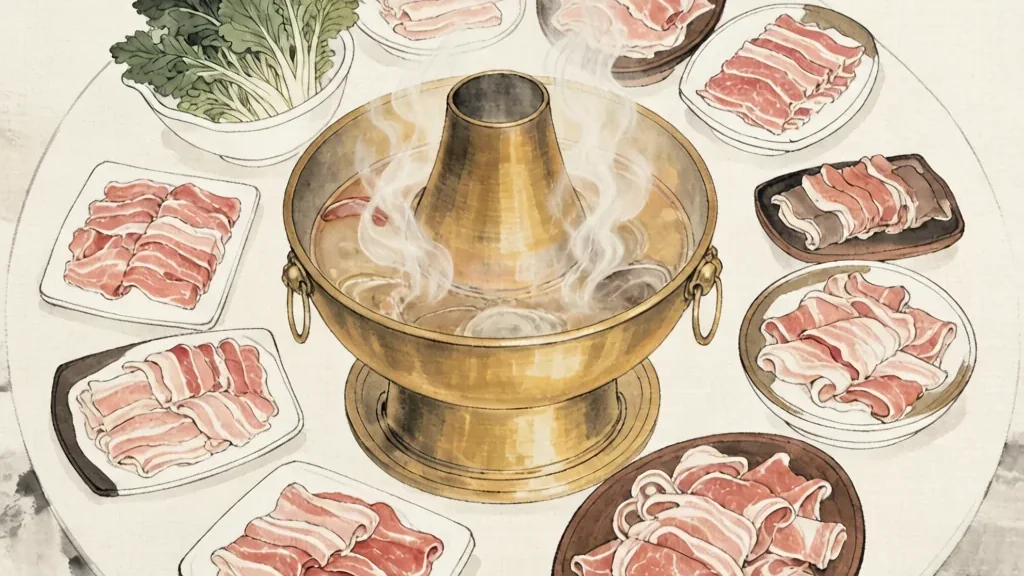
Hotpot (火锅, huǒguō), literally "fire pot," is a communal Chinese cooking method in which a simmering broth at the center of the table serves as both stove and soup. Diners dip thin slices of meat, leafy greens, noodles, tofu, and an endless array of ingredients into the bubbling liquid, cooking them bite by bite and eating them with dipping sauces. More than a meal, hotpot is a social ritual of shared heat and lingering conversation, beloved from frigid northern winters to humid Sichuan summers. Its forms range from the clear, elegant mutton broth of old Beijing to the ferocious "numbing-spicy" (málà) cauldrons of Chongqing, making it one of the most adaptable and unifying traditions in Chinese food.
From Ancient Cauldrons to the Table
The idea of cooking in a communal vessel is ancient. Early Chinese used bronze dǐng and a divided "ranlu" warmer to heat food at table, and a Han-dynasty ceramic vessel with a central chimney resembles the modern hotpot stove. By the Tang and Song periods, literati wrote of boiling meat in a small brazier during winter gatherings, and the Mongol-era spread of mutton eating fed the northern style.
The name huǒguō ("fire pot") became common in late imperial times, and the dish cemented its place in Qing-dynasty court and commoner kitchens alike. What was once a pragmatic way to warm a room and feed a crowd became a beloved leisure activity where the meal's length is a feature, not a bug.
The Beijing Mutton Style
The classic northern form is qīngtāng huǒguō, a clear broth of simply simmered water, scallion, and ginger, focused on the quality of thinly sliced lamb. Diners cook the meat for mere seconds and dip it in a sauce of sesame paste (zhīma jiàng), fermented tofu, and chive flower. The experience is about the meat's freshness and the ritual of the dip, not chili heat.
This style reflects northern taste and the historic importance of lamb in the steppe-influenced cuisine of Beijing and Hebei. The copper pot with a central chimney, heated by charcoal, is an icon of the winter Beijing table and a nostalgic image for many northerners abroad.
Sichuan and Chongqing Mala
The most famous southern style is the málà (numbing-spicy) hotpot of Chongqing and Chengdu, built on beef tallow, doubanjiang, and a heavy dose of dried chili and Sichuan peppercorn. Originally a working-class meal using cheap offal and beef trimmings, it became so popular that entire restaurants now specialize in it. The red oil is reused and refreshed rather than discarded, building layered flavor.
Chongqing hotpot is traditionally cooked in a divided yúnyāng ("mandarin duck") pot when mixed parties prefer both red and clear broth. The numbing tingle and oil-rich heat define the experience, and the style has spread globally as the face of Chinese hotpot abroad.
The Communal Ritual
Hotpot's genius is social. Everyone reaches into the same pot, cooks at their own pace, and lingers for hours. The broth grows richer as ingredients contribute their essence, so the final bowl of "soup" is prized. Conversation pauses only for the next dipping, and the shared pot dissolves hierarchy—host and guest cook side by side.
This communal quality explains hotpot's role in celebrations, business dinners, and reconciliations alike. To "go eat hotpot" is to signal relaxation and equality. The long format suits Chinese values of togetherness, where the point is the company as much as the food.
Dipping Sauces and Ingredients
The sauce bar is half the fun. Northerners favor sesame paste with fermented tofu and chive flower; southerners mix soy, oyster sauce, garlic, cilantro, and chili oil. Ingredients span the edible world: lamb, beef, pork, fish balls, shrimp paste, tofu skins, lotus root, enoki and wood-ear mushrooms, leafy greens, tripe (must be flash-cooked), and various noodles.
regional habit governs what goes in first and last. Delicate items cook quickly; bones and offal may simmer long. The variety is the point—a hotpot meal is a personal tasting menu built by the diner's own hand, bite by bite.
Yunnan, Hainan, and Other Styles
Beyond the two giants, regional hotpots flourish. Yunnan's wild-mushroom hotpot (during the brief summer season) is prized for umami; Hainan's clear coconut-and-chicken broth is light and fragrant; Guizhou offers a sour (suān) broth from fermented tomatoes; Chaoshou-style pots highlight seafood. Each reflects local produce and climate.
Even within one city the choice of broth is a statement of mood and loyalty. The diversity proves that "hotpot" names a method, not a single taste, and that Chinese regional cuisine can converge on one pot while diverging in everything inside it.
Hotpot Goes Global
Chinese migration carried hotpot worldwide, and chains from Chongqing and Taiwan have turned it into a modern franchise phenomenon, complete with conveyor belts and standardized sauces. In the West, "hot pot" restaurants appeal precisely because they are interactive and group-friendly, fitting contemporary dining trends toward experience.
The dish's future looks secure: it scales from street corner to luxury banquet, needs no chef at the table, and rewards lingering. Whether red-oil or clear, hotpot remains China's most democratic meal—everyone cooked it themselves, and everyone shared the same fire.
Etiquette and Practical Tips
First-timers benefit from a few customs: cook raw meat and seafood thoroughly, use the communal chopsticks or ladle rather than your own, and add delicate items last so the broth stays clean early on. Don't overload the pot at once; cook in small batches so the temperature recovers. When the meal ends, many sip the now-rich broth as a final course.
Spice tolerance is personal, so the divided pot is a mercy for mixed groups. Restaurants often provide aprons, since the bubbling broth spatters, and a cold drink helps between numbingly spicy bites. Above all, hotpot rewards patience: the longer you linger, the better the broth and the warmer the company.
❓ Frequently Asked Questions
What is hotpot?
A communal meal where diners cook ingredients in a shared simmering broth at the center of the table.
What is the difference between Beijing and Sichuan styles?
Beijing uses a clear mutton broth with sesame sauce; Sichuan uses a numbingly spicy chili-and-peppercorn oil broth.
How do you eat it?
Dip thin slices and vegetables into the broth to cook, then into a personal dipping sauce, bite by bite.
Is hotpot very spicy?
Only the Sichuan style; many pots offer a divided broth so diners can choose mild or spicy.
What goes in the pot?
Almost anything: meat, seafood, tofu, mushrooms, noodles, and greens, cooked by individual preference.
Why is it so social?
The long, shared cooking format encourages conversation and equality among diners over hours.