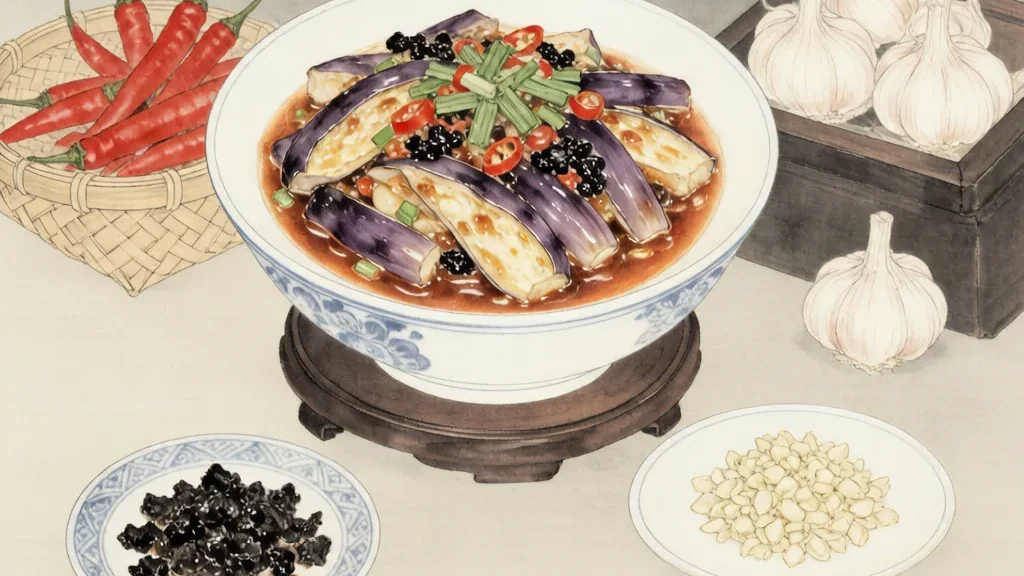
Yuxiang-qiezi (鱼香茄子, yúxiāng qiézi) is the Sichuan dish of eggplant cooked in "fish-fragrant" sauce—a glossy, sweet-sour, garlicky, chili-laced dressing that contains no fish at all. The name refers to a seasoning vocabulary (yuxiang, 鱼香) traditionally used to braise fish in home kitchens, later borrowed to flavor vegetables, pork, and poultry. Among the yuxiang family, the eggplant version is one of the most beloved because the vegetable's spongy flesh drinks up the sauce, turning silky and intensely aromatic. It is a cornerstone of everyday Sichuan home cooking and a reliable favorite on restaurant menus far beyond the province.
What "Yuxiang" Actually Means
The term yuxiang (鱼香, "fish-fragrant") names a flavor profile, not an ingredient. It describes the balanced sweet, sour, salty, and spicy seasoning that Sichuan cooks once used to braise freshwater fish, built on pickled chili, garlic, ginger, and scallion with sugar and vinegar.
Over time the same seasoning was applied to eggplant, shredded pork, and other foods, so that "fish-fragrant" came to mean a particular taste rather than anything aquatic. The result is a dish that smells of the sea-adjacent kitchen but tastes purely of the garden and the wok.
Understanding this is the key to the dish: a diner expecting seafood will be surprised, while one who knows Sichuan cuisine expects the bright, pungent, sweet-sour hit that defines the style.
Origins of the Flavor Family
The yuxiang seasoning is generally traced to the home cooking of Sichuan's rural households, where pickled chilies and aromatics were staples and fish was a cherished occasional treat. The combination was simply the way families made that treat taste good.
From the countryside the flavor migrated into urban restaurant cuisine during the early twentieth century, becoming codified as one of Sichuan's classic "compound flavors" alongside mala (numbing-hot) and guaiwei (strange flavor). Cookbooks of the Republican era list yuxiang dishes among essential banquet and home repertoires.
Eggplant proved an ideal canvas: cheap, abundant, and eager to absorb the sauce. Yuxiang-qiezi thus emerged as a homey dish that also earned a place on formal tables.
The Role of Eggplant
Chinese eggplant, typically the long, slender violet variety rather than the round Mediterranean type, is the standard choice. Its fewer seeds and tender skin suit the quick cooking and saucy finish.
Eggplant is notorious for soaking up oil, which is why many home recipes deep-fry or pan-fry the slices first to set a barrier and develop a silky bite. Lighter modern versions steam or microwave the eggplant, then dress it, cutting the grease while keeping the tender texture.
Either way, the goal is the same: chunks or batons that are soft enough to melt on the tongue yet hold their shape under the glossy sauce.
The Sauce Ingredients
The yuxiang sauce rests on a short list of aromatics: pickled red chili (often ya-cai or douban-style fermented chili), minced garlic, ginger, and scallion. To these go sugar and vinegar for the signature sweet-sour lift, plus soy sauce for salt and color, and a little cornstarch to glaze.
The balance is delicate. Too much vinegar and it is sharp; too much sugar and it is cloying; too little chili and the aroma flattens. A good cook adjusts by eye and tongue, aiming for "sweet first, then sour, with chili and garlic singing behind."
Some recipes add a spoonful of fermented broad-bean paste for depth, though purists keep the sauce lighter so the eggplant's own sweetness shows through.
Cooking Technique
Classic preparation fries the eggplant until just tender, removes it, then briefly stir-fries the aromatics in a little oil to release their fragrance. The mixed sauce goes in, thickens, and the eggplant is returned to coat evenly.
The whole sauce step is fast and hot—seconds, not minutes—so the garlic and ginger stay bright rather than browned. The dish is finished glossy and glistening, never swimming in liquid.
Home cooks often simplify by braising: partially cook the eggplant, add the seasoned sauce, and let it reduce. The result is gentler but still recognizably yuxiang.
Place in Sichuan Cuisine
Yuxiang-qiezi belongs to the "family flavor" (家常味) side of Sichuan cooking—dishes that are spicy and aromatic but not necessarily numbing-hot. It sits comfortably beside mapo tofu and twice-cooked pork as everyday staples.
Because the heat is moderate and the taste familiar, it is often the dish that introduces newcomers to Sichuan food before they graduate to the ferocious mala of tongue-numbing broths. Restaurants abroad lean on it for exactly this approachability.
It also demonstrates a central Sichuan idea: that vegetables can be as crave-worthy as meat when treated with the right aromatics and heat.
Regional and Home Variations
In Sichuan the eggplant is usually cut in batons and sauced dark and glossy. In parts of the south, cooks may add a little fermented black bean or use rice vinegar for a softer sour note.
Some families stuff the yuxiang sauce over whole small eggplants, while others mash the cooked flesh into a rougher "fish-fragrant" spread. The constant is the sweet-sour-garlic-chili triangle of flavor.
Vegetarian cooks drop any meat-based stock, and the dish remains fully plant-based, which has helped its global spread among meat-free eaters.
Serving and Pairing
Yuxiang-qiezi is served hot as one of several shared dishes over steamed rice. Its saucy nature makes it a natural rice companion, and a little goes a long way alongside plainer vegetables or clear soups.
It pairs well with mild dishes that let its aroma stand out, and with a cold beer or tea to cut the richness. Leftovers, rare as they are, reheat acceptably because the eggplant only grows softer.
In banquet settings it appears as a "vegetable" counterpoint to heavier meats, proving that the humble eggplant can hold a place at any table.
Nutrition and Modern Tweaks
Eggplant is low in calories and a source of fiber; the main nutritional caveat is the oil it absorbs in frying. Steaming or air-frying the vegetable first sharply reduces the fat while preserving the dish's character.
Modern health-minded recipes keep the sugar modest and lean on garlic and ginger for punch, producing a version that fits contemporary low-oil diets without losing the yuxiang identity.
Whether traditional or lightened, the dish remains a satisfying way to eat more vegetables with genuine pleasure rather than obligation.
❓ Frequently Asked Questions
Does yuxiang-qiezi contain fish?
No. "Fish-fragrant" refers to a seasoning style once used for fish; the eggplant dish is vegetarian unless stock is added.
What gives the sauce its flavor?
Pickled chili, garlic, ginger, and scallion balanced with sugar and vinegar, then glazed with a little starch.
Is it very spicy?
Moderately. It is aromatic and chili-forward but usually milder than numbing-hot mala dishes, making it approachable.
Can I make it less oily?
Yes. Steam or microwave the eggplant first, then dress it with the quick-fried sauce to cut the absorbed oil dramatically.
What eggplant should I use?
The long, slender Asian violet eggplant is traditional; round Mediterranean types work but are seedier and firmer.
What do you eat it with?
It is a shared hot dish over steamed rice, paired with milder vegetables or a clear soup to balance the aroma.