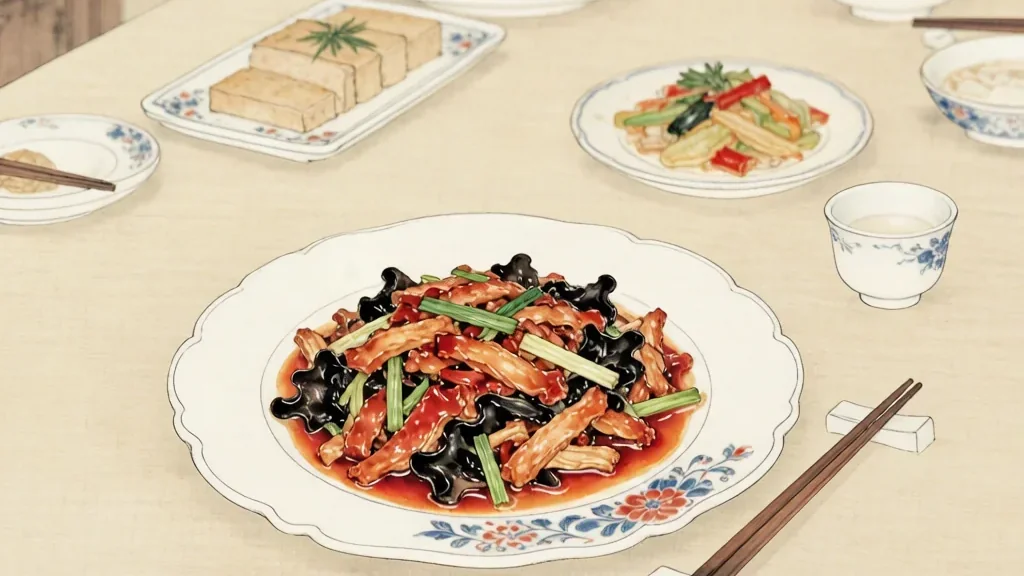
Yuxiang rousi, "fish-fragrant pork strips," is one of the best-known dishes of Sichuan cuisine and the namesake of the famous yuxiang ("fish-fragrant") flavor family — a paradox, because the dish contains no fish at all. The name refers to the seasoning method used to cook fish in traditional Sichuan home cooking: a bright, piquant blend of pickled chili (pixian douban), fermented black vinegar, sugar, ginger, garlic, and scallion that tastes neither of fish nor of the sea, but carries the aromatic profile once used for aquatic fare. Tender strips of pork are stir-fried with wood-ear fungus, bamboo shoots, and sometimes carrot, then bound in the glossy, sweet-sour-spicy sauce. The dish is a master class in Sichuan's layered use of flavor and a staple of both home kitchens and restaurants far beyond the province.
The Fish-Fragrant Puzzle
The phrase yu xiang means "fish fragrance" or "fish aroma," yet yuxiang rousi has no seafood. Culinary scholars explain that the seasoning — pickled chili, garlic, ginger, scallion, vinegar, and sugar — was originally the traditional way Sichuan households flavored freshwater fish. When applied to pork or other ingredients, the resulting taste was still called "fish-fragrant" after the method, not the contents.
This is a quintessentially Chinese naming logic: a flavor is treated as a transferable technique. So "fish-fragrant" denotes a specific taste profile — savory, sweet, sour, and gently spicy — rather than an ingredient. The dish thus teaches a key idea in Chinese cooking: sauces are systems, not appendages.
Sichuan Roots
Yuxiang rousi belongs to the repertoire of Sichuan (Sichuan) province, whose cuisine is celebrated for the "seven tastes and eight flavors" and for balancing numbness (ma) from Sichuan pepper with heat (la) from chili. The fish-fragrant profile is one of the recognized classic flavor families alongside mala, sweet-sour, and red-cooked.
The dish rose to national prominence in the twentieth century as Sichuan food spread through China's cities, and it was among the dishes codified in restaurant and cookbook canons. Its approachable sweet-savory-spicy balance made it a gateway to Sichuan cuisine for diners wary of extreme heat.
Core Ingredients
The pork is typically lean shoulder or loin cut into fine matchsticks (rousi means "shredded meat"), which cook quickly and take the sauce evenly. The standard vegetable partners are wood-ear fungus (mu'er) for crunch, julienned bamboo shoot for snap, and sometimes carrot for color and sweetness. A few scallions finish the dish.
The seasoning paste is the soul: pixian douban (broad bean chili paste) provides fermented depth and red color; black vinegar gives sourness; sugar rounds it; ginger, garlic, and scallion supply aroma. A light cornstarch slurry binds everything into a glossy coat that clings to each strip.
The Yuxiang Sauce
What sets yuxiang apart is proportion and order. The cook fries the douban and pickled chili to release fragrance, adds the aromatics, then the pork, then a pre-mixed bowl of vinegar, sugar, soy, and starch. The heat dissolves the sugar and activates the vinegar's tang while the starch sets the shine.
A well-made sauce is simultaneously salty, sweet, sour, and mildly hot, with no single note dominating — the Sichuan ideal of "one dish with many flavors." The balance is delicate: too much vinegar and it turns sharp; too much sugar and it reads cloying. Skill lies in the near-equal handshake of sweet and sour.
Cooking Technique
Yuxiang rousi is a fast stir-fry demanding a hot wok and quick hands. The pork is often velveted first — marinated briefly in soy, starch, and a little oil — so the strips stay tender. The wok must be searing so the aromatics perfume rather than stew, and the sauce goes in only at the end to avoid over-reducing.
Because everything is cut thin and uniform, the dish cooks in a minute or two. The goal is a glossy, cohesive result where the sauce coats rather than pools. Home cooks are advised to prep all components before lighting the fire, since there is no time to chop mid-cook.
Variations Across the Family
The yuxiang method extends well beyond pork. Yuxiang qiezi (fish-fragrant eggplant) is perhaps even more famous, with the sauce soaking into silky fried eggplant. Yuxiang niurou (beef) and yuxiang tousi (shredded potatoes) appear too. All share the same sauce logic applied to a new star ingredient.
This expansiveness shows why the flavor family matters more than any single recipe. A cook who masters the yuxiang ratio can apply it to almost any vegetable or protein, which is part of why the profile is taught early in Sichuan cooking instruction.
Place in Home and Restaurant Cooking
In Sichuan households, yuxiang rousi is a regular home meal — relatively quick, uses pantry ferments, and pleases children with its sweet edge. In restaurants it is a menu staple ordered alongside mapo tofu or gongbao chicken as part of a balanced table.
Its moderate heat (the fish-fragrant profile is flavorful rather than numbing-hot) makes it a safe choice for mixed groups, which explains its ubiquity on banquet and cafeteria lines alike. It is comfort food and ambassador at once.
Nutrition and Serving
Served with plain steamed rice, yuxiang rousi is a protein-and-vegetable dish whose sauce supplies most of the flavor and some of the calories from sugar and oil. The wood-ear and bamboo add fiber and texture with little fat, and the vinegar gives a light, appetizing finish that aids the rice.
It is best eaten fresh and hot, as the sauce tightens as it cools. A typical home portion centers the pork and vegetables over a bowl of rice, with the glossy sauce mingling into the grains — the way most Chinese stir-fries are meant to be enjoyed.
❓ Frequently Asked Questions
Does yuxiang rousi contain fish?
No. The "fish-fragrant" name refers to a seasoning method once used for fish, not to any seafood in the dish.
What does yuxiang taste like?
It is a balanced sweet-sour-salty-spicy profile built on pickled chili, vinegar, sugar, ginger, and garlic.
What is in yuxiang rousi?
Shredded pork stir-fried with wood-ear fungus, bamboo shoot, and scallion in the fish-fragrant sauce.
Is it very spicy?
It has mild chili heat but is flavored more than fiery, making it approachable for most diners.
Where does it come from?
It is a classic dish of Sichuan province, part of the recognized yuxiang flavor family.
What other dishes use the yuxiang sauce?
Fish-fragrant eggplant (yuxiang qiezi) is the most famous cousin, along with beef and potato versions.