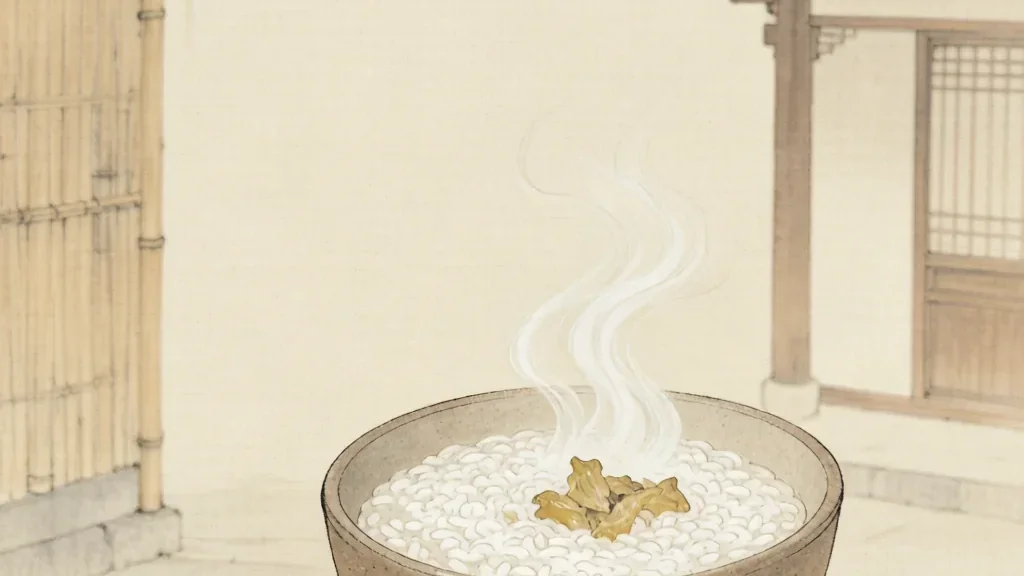
Congee (粥, zhōu), often called rice porridge or jook, is one of the oldest and most universal foods in China: rice simmered in many times its weight of water until the grains soften and burst into a thick, soothing gruel. Eaten for breakfast, as comfort food for the sick, and as a light supper, congee is nourishment stripped to its gentlest form. Its plainness is its strength—a neutral canvas that welcomes savory toppings, sweet additions, or medicinal herbs depending on region, season, and the diner's needs. From the watery "rice water" of a southern morning to the dense, gate-shaped congee of the north, the dish adapts to nearly every Chinese table and every stage of life.
Ancient Staple of the Grain Culture
Congee's roots reach back thousands of years into China's Neolithic rice-growing south. Early agricultural societies, storing surplus grain, learned that prolonged boiling stretched a small amount of rice into a filling meal for many mouths—an economy that mattered in lean times. References to zhōu appear in classical texts, and it was long associated with frugality, fasting, and Buddhist monastic meals, where a single bowl sufficed.
Because rice was both staple and currency, congee also carried moral weight. Confucian and Daoist writers praised plain gruel as a corrective to gluttony and a path to simplicity. The legendary sage-kings were said to have lived on coarse congee, binding the dish to ideals of restraint and endurance that echo in later literati praise.
How Congee Is Made
The basic method is deceptively simple: rinse rice, add a high ratio of water (often eight to twelve parts water to one of rice), and simmer, stirring occasionally, until the grains swell and the liquid turns creamy. A pinch of salt or a drop of oil can keep grains separate or encourage them to break down. Some cooks soak or even freeze the rice first so it bursts faster and yields the desired silkiness.
Texture divides north and south. Southern congee (often called jūk in Cantonese, 糜 or 粥) tends to be loose and watery, almost a drink; northern congee (xīfàn elsewhere) can be thicker and more porridge-like. The line between "congee" and plain rice soup is thin, and households argue good-naturedly over the right consistency.
Plain and Sweet Versions
Plain white congee is the default, eaten with pickles, salted eggs, or fried dough sticks (youtiao) torn in. Sweet versions appear too: congee cooked with red dates, lotus seeds, or rock sugar as a dessert or tonic, especially for confinement care and the elderly. In some places a sweet "laba congee" marks the Laba festival with mixed grains and dried fruit.
The sweet-savory divide follows occasion. A savory bowl anchors a working breakfast; a sweet one soothes an invalid or celebrates a festival. Both rely on the same blank grain base, proving how one technique serves opposite moods.
Savory Toppings and Regional Styles
Toppings turn plain gruel into a meal. Common additions include shredded chicken, sliced fish, pork floss (rousong), preserved egg with pork (pidan shourou zhou), beef, century egg, ginger, scallion, and fried shallots. Cantonese "boat congee" (junk-boat congee) piles on seafood for a market-breakfast luxury, while Fujian and Teochew styles favor sweet potato or peanut mixtures.
Regional identity shows in the mix. A Shanghai breakfast congee might come with pickled mustard greens; a Guangzhou version with fish slices and pepper. The bowl is local even when the grain is universal, and travelers read a city partly through its congee counter.
Congee as Medicine and Care
In Chinese dietary therapy, congee is the food of recovery. Easy to digest, warm, and hydrating, it is given to the feverish, the elderly, and new mothers. Herbal congees fold in ingredients believed to tonify: goji berry, red dates, barley, or ginseng, depending on the season and constitution. The Song-dynasty physician Su Shi and others wrote of congee's healthful calm.
This caring role explains why congee sits at life's thresholds—birth, illness, old age. A bowl offered to a sick child is less a recipe than a gesture, the edible form of "take it slow and get well." Its mildness is precisely the medicine.
Festival Congee: Laba
The best-known festival congee is làbā zhōu, eaten on the eighth day of the twelfth lunar month to mark the approach of the New Year and, in Buddhist lore, the Buddha's enlightenment. It mixes rice with red beans, millet, glutinous rice, dried lotus seeds, peanuts, and assorted dried fruits into a sweet, multicolored porridge shared with family and neighbors.
Though distinct in ingredients from everyday congee, Laba congee shares the same logic of stretching grain and marking time by the pot. It is the dish's one annual moment in the spotlight, after which it returns to the quiet of the daily breakfast table.
Congee in the Modern Kitchen
Electric congee pots and rice cookers with a "congee" setting have made the slow simmer effortless, and instant and frozen versions fill convenience stores. Yet the dish's appeal is unchanged: cheap, warming, and infinitely adaptable. Health-conscious eaters value its low fat and high hydration; busy cooks value that it can simmer unattended.
Globally, congee has followed the Chinese diaspora into Chinatown breakfast shops and hospital trays alike. Whether called jook, okayu's cousin, or simply rice porridge, it remains what it has been for millennia—the food you return to when nothing else will do.
Congee in the Chinese Diaspora
Wherever Chinese communities settled, congee traveled with them, adapting to local grain and taste. In Southeast Asia, rice porridge might include fish sauce or pepper; in Japan a similar okayu is a sickbed staple; in Korea a grain porridge (juk) shares the method. The dish's simplicity made it portable, and its comfort made it unforgettable, so that third-generation immigrants still crave the plain bowl of grandparents.
Modern health food has rediscovered congee too, praising its low fat and easy digestion, and fitness cafés sell "congee bowls" topped with avocado or egg. The trend amuses traditionalists, but it confirms the dish's flexibility: a Neolithic staple that fits a twenty-first-century menu with almost no change to its core.
❓ Frequently Asked Questions
What is congee?
Rice simmered in a large amount of water until the grains break down into a thick, soothing gruel.
Is congee the same as rice soup?
It is a thicker, grain-broken version of rice soup; the terms blur, with southern styles looser than northern ones.
Why eat congee when sick?
It is easy to digest, warm, and hydrating, making it ideal during illness or recovery.
What do you eat with it?
Pickles, youtiao, salted eggs, pork floss, or savory toppings like preserved egg and pork.
What is Laba congee?
A sweet festival porridge of mixed grains, beans, and dried fruit eaten on the eighth day of the twelfth month.
Is congee healthy?
It is low in fat and hydrating; plain versions are light, though sweet or topped versions add calories.