Ancient Capitals
48 articles — Eight storied cities that ruled China, from the oracle-bone capital of Anyang to the imperial seat of Beijing.
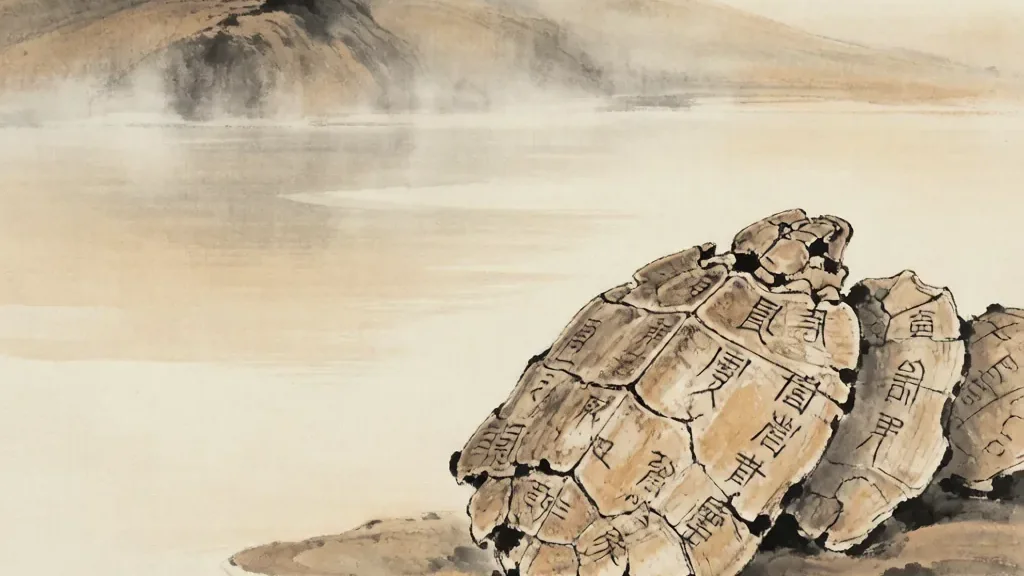
Anyang: The Cradle of Oracle Bones (安阳)
Long before Chang'an or Beijing, a capital rose on the banks of the Huan River in the heart of the Yellow River plain, and there the Chinese written language was born. Anyang (安阳, ān yáng) was the site of Yin (殷, Yīn), the late capital of the Shang dynasty (商, Shāng), and from its soil came the oracle bones — the earliest substantial Chinese writing we possess.
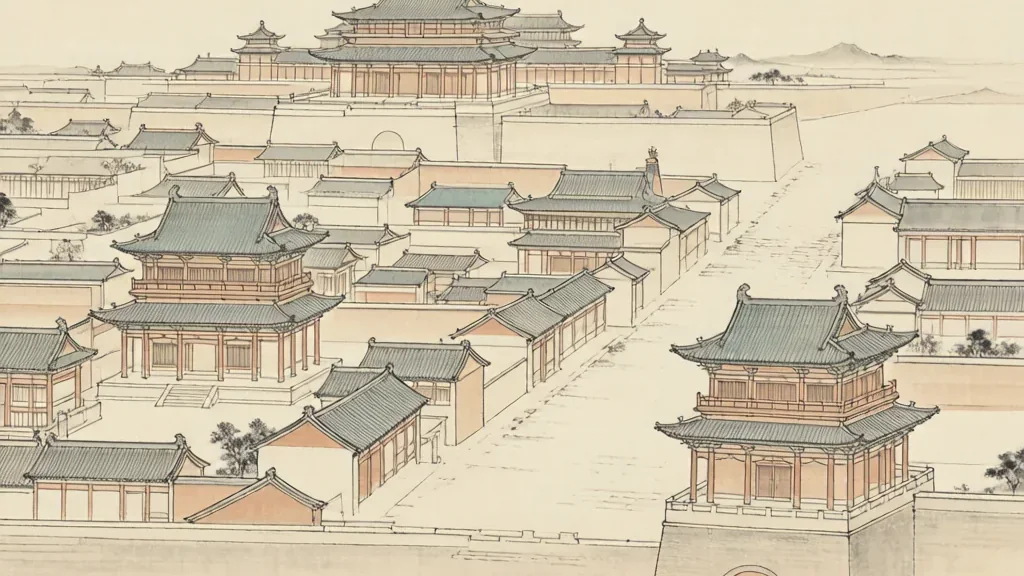
Chang'an: The Eternal Capital (长安)
At the eastern end of the Silk Road, on the fertile Guanzhong plain where the Wei River meets the Loess Plateau, rose a city whose name became synonymous with imperial China itself. Chang'an (长安, cháng ān) means "Long Peace," and for more than a millennium it was the stage on which the great dynasties of the middle kingdom played out their grandest ambitions.
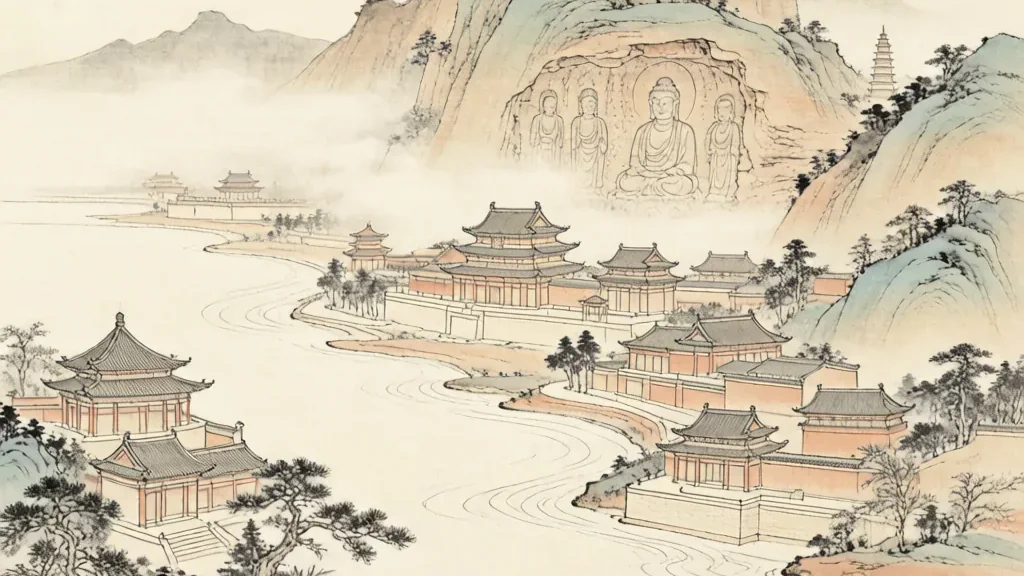
Luoyang: The City of Nine Dynasties (洛阳)
Where the Luo River (洛水, Luò Shuǐ) threads between the mountains of Henan, a city rose that would host more royal courts than almost any other place in China. Luoyang (洛阳, luò yáng) means "north of the Luo," and for over two thousand years it stood as the eastern anchor of Chinese civilization — the polished counterpart to Chang'an in the west, the cradle of Chinese Buddhism, and a treasury of stone-carved devotion.
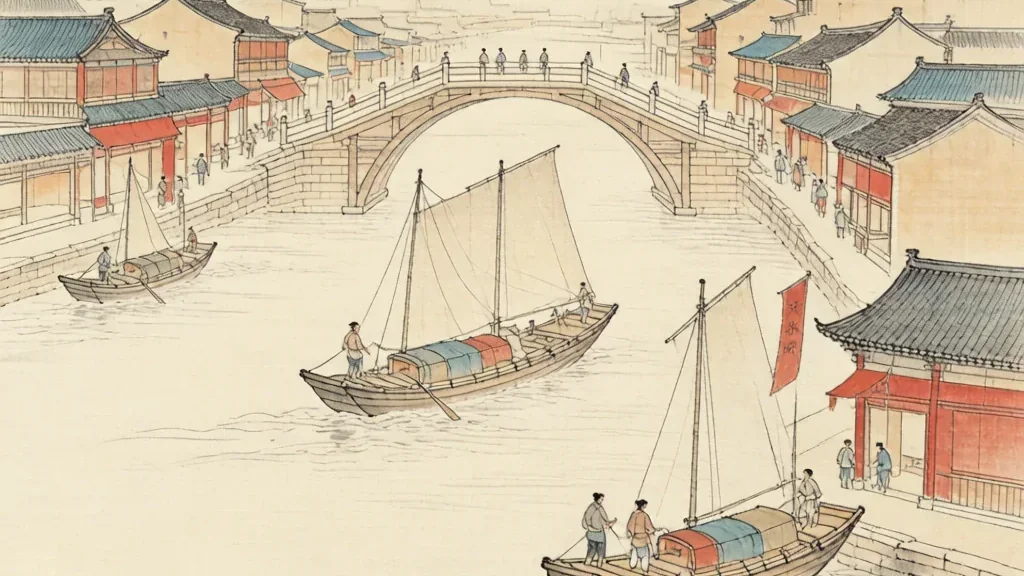
Kaifeng: The Northern Song Capital (开封)
Of all China's ancient capitals, none captures the energy of everyday urban life like Kaifeng (开封, kāi fēng). Under the Northern Song (北宋, Běi Sòng, 960–1127 CE) it was known as Bianjing (汴京, biàn jīng), and it was the first great city in world history where commerce, not ceremony, set the rhythm of the streets.
Hangzhou: Paradise on Earth (杭州)
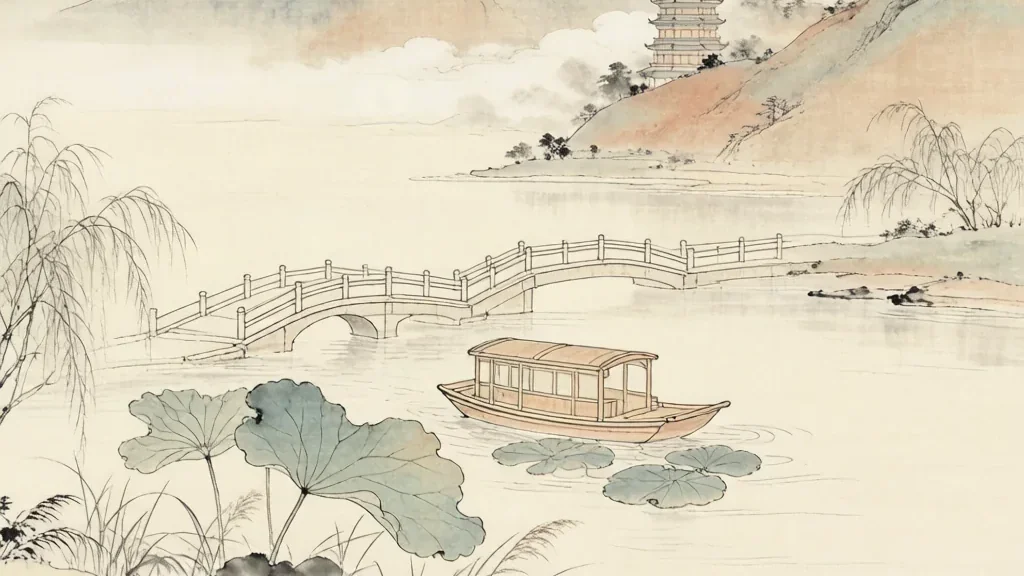
Among the great capitals of China, one is remembered not for walls or power but for beauty. Hangzhou (杭州, háng zhōu) sits at the head of a misty bay on the southeast coast, cradled by hills and a placid lake, and for centuries it has been called — in a phrase every Chinese schoolchild knows — "Paradise on Earth.

Nanjing: The Southern Capital (南京)
Perched on the southern bank of the lower Yangtze River, where the great waterway broadens into its final journey toward the sea, stands Nanjing (南京, nán jīng) — the "Southern Capital. " For more than two millennia, this city has been the political, cultural, and literary heart of southern China.

Beijing: The Imperial Capital (北京)
The youngest of China's great capitals is also the one modern visitors know best. Beijing (北京, běi jīng) means "Northern Capital," and for most of the last eight centuries it has been the seat of the realm — first for the Mongol Yuan, then for the Ming and Qing, and again in the modern republic.
Chengdu: The Brocade City of Shu (成都)
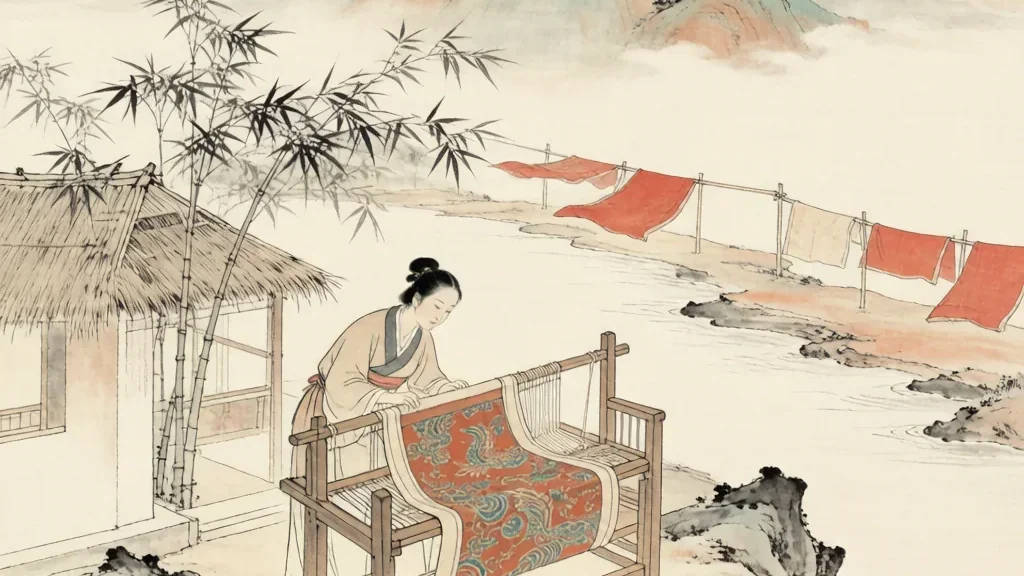
Tucked in the fertile Sichuan basin, ringed by mountains that long separated it from the central plains, lies a capital whose name is synonymous with ease and abundance. Chengdu (成都, chéng dū) — the "Brocade City" of Shu (蜀, Shǔ) — was the seat of an ancient southwestern civilization, the stage of the romantic Shu-Han kingdom of the Three Kingdoms, and a workshop of silk whose fame reached the Silk Road.
Changsha: The Ancient City of the Chu Kingdom
Changsha, the capital of Hunan Province, is one of the most historically layered cities in China, with a continuous history spanning over 3,000 years. It served as the capital of the Changsha kingdom during the Han dynasty and later became a center of Neo-Confucian scholarship during the Song dynasty.
Chengdu: The Land of Abundance Through the Ages
Chengdu, the capital of Sichuan Province, is one of the few major Chinese cities that has never changed its name in over two thousand years of recorded history. Situated on the fertile Chengdu Plain — the 'Land of Abundance' nourished by the Dujiangyan irrigation system — the city has been a center of culture, commerce, and cuisine since the Warring States period. Its history as a capital of regional kingdoms, particularly the Shu Han during the Three Kingdoms period, has given it a distinctive identity separate from the northern dynasties. Chengdu is a city of slow living, spicy food, and deep cultural pride.
Dali: The Buddhist Kingdom of the Southwest
High in the mountains of Yunnan Province, beside the shimmering waters of Erhai Lake, stands the ancient city of Dali. From the eighth to the thirteenth centuries, Dali was the capital of the Dali Kingdom, a Buddhist state that dominated southwestern China while the great dynasties of the north rose and fell. The Dali Kingdom was one of the most devoutly Buddhist societies in Chinese history, a place where pagodas pierced the clouds, kings retired to monasteries, and the traditions of India, Tibet, and China merged into a unique civilization.
Datong: The Northern Capital of the Wei Dynasty
Datong, situated at the northern edge of the Shanxi plateau near the Great Wall, was the capital of the Northern Wei dynasty (386–534 CE) during its transformation from a nomadic confederation into a Chinese-style imperial state. The city's history is dominated by one of the most ambitious religious art projects ever undertaken: the Yungang Grottoes, a series of fifty-three major caves containing over 51,000 Buddhist stone statues. The creation of these caves under imperial patronage represents the fusion of Gandharan, Central Asian, and Chinese artistic traditions that defined early Buddhist art in China.
Harbin: The Ice City of the Far Northeast
Harbin, the capital of Heilongjiang Province in China's far northeast, is one of the youngest major cities in China, yet its history is one of the most dramatic — a tale of imperial ambition, railroad imperialism, revolutionary fervor, and extraordinary cultural fusion. The Erdao district, the historic heart of the city, preserves the architecture of Harbin's golden age at the turn of the twentieth century, when the Chinese Eastern Railway made it a Russian-dominated boomtown. Harbin's history as a 'capital' is unconventional — it was the capital of the Russian Far East's commercial empire, the wartime capital of the Japanese puppet state of Manchukuo, and the birthplace of Chinese ice culture.
Foshan: The Martial Arts Capital of the South
Foshan, in the Pearl River Delta of Guangdong Province, has been a center of Chinese martial arts, ceramics, and commerce for over a thousand years. While it was never a national capital, Foshan served as the cultural capital of the Lingnan region and, more specifically, as the hometown of some of the most famous figures in Chinese martial arts history. The city's name — 'Buddha Mountain' — refers to a statue of three Buddhas discovered during the Tang dynasty, and its connections to kung fu, Cantonese opera, and traditional crafts make it one of the richest repositories of Lingnan culture.
Quanzhou: The Maritime Silk Road's Gateway
Quanzhou, a coastal city in Fujian Province, was one of the greatest maritime ports in world history. During the Song and Yuan dynasties, it rivaled Alexandria and Venice as a center of global trade, connecting China to India, Persia, Arabia, and East Africa. Marco Polo called it 'one of the two greatest havens in the world for commerce.' Quanzhou's history as a capital is unconventional — it was never the seat of a major Chinese dynasty — but it served as the maritime capital of the world, a city where Chinese junks sailed alongside Arab dhows, Hindu temples stood near mosques, and merchants of a dozen faiths traded in goods from across the known world.
Guangzhou: The Eternal Port of the South
Guangzhou — historically known as Canton — has been China's foremost gateway to the outside world for over two millennia. As the capital of Guangdong Province and the historic center of the Lingnan region, Guangzhou served as the southern capital of the Nanyue kingdom in the second century BCE and later became the primary port of the Maritime Silk Road. Its role as the sole legal port for foreign trade during much of the Qing dynasty made it the crucible of China's encounter with the modern West, a city where merchants from Europe, America, and Asia met, negotiated, and clashed with Chinese officials.
Guilin: The Landscape City of Karst Peaks
Guilin, in the Guangxi Zhuang Autonomous Region, is famous throughout China and the world for its extraordinary karst landscape — thousands of limestone peaks rising abruptly from the floodplain like giant green teeth. This is the landscape that has graced Chinese paintings for centuries, the scenery that poets have called 'the finest under heaven.' While Guilin was never a national capital, it served as the political and cultural center of Guangxi for centuries, and its landscape has made it the symbol of Chinese natural beauty.
Handan: The Capital of Zhao in the Warring States
Handan, a city in southern Hebei Province, was the capital of the Zhao state during the Warring States period (403–221 BCE), one of the seven major powers that fought for supremacy before the unification of China by Qin. Handan was renowned as a center of commerce, culture, and military strategy, a city where merchants grew wealthy on trade, where scholars debated philosophy, and where the king's palace complex overshadowed all rivals. The city's name lives on in Chinese idioms, and its history is intertwined with the most dramatic events of the Warring States period.
Shexian: The Ancestral Home of Hui Culture
Huangshan — the Yellow Mountains — is not a capital in the political sense, but it is the spiritual capital of Chinese landscape culture. The mountain range in southern Anhui Province, with its granite peaks, twisted pines, and seas of cloud, has been the most celebrated subject in Chinese painting and poetry for over a millennium. The nearby town of Shexian (She County) served as the cultural and administrative center of the Huizhou region, a merchant dynasty that dominated Chinese commerce during the Ming and Qing dynasties.
Jianye: The Founding Capital of the Wu Kingdom
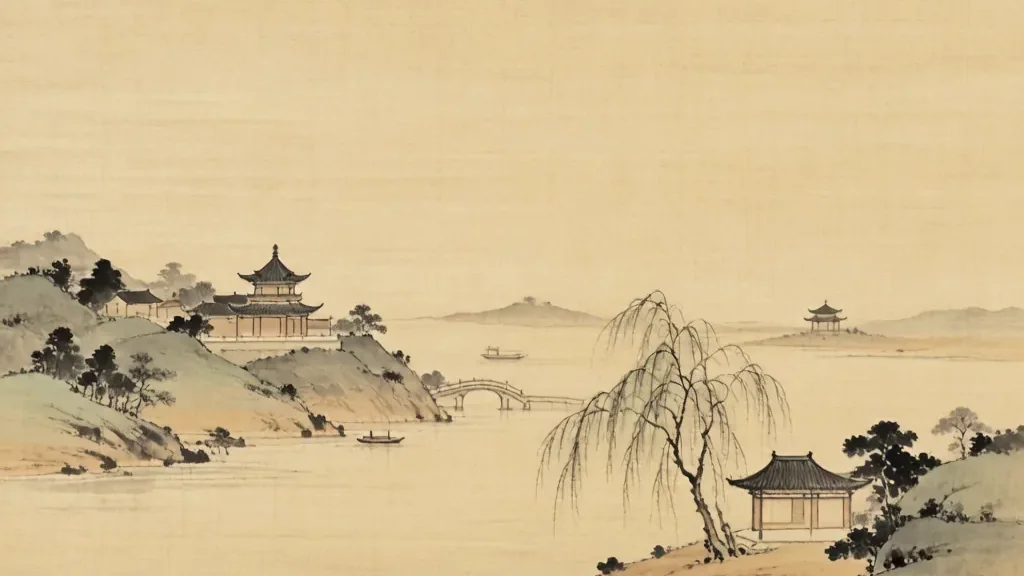
Jianye — modern Nanjing under its Three Kingdoms name — was the capital of the Wu kingdom, one of the three powers that divided China after the fall of the Han dynasty. Founded by Sun Quan in 229 CE, Jianye was the first capital of a southern Chinese dynasty and established the pattern of ruling from the Yangtze River valley that would persist for centuries. The city's location gave the Wu kingdom a natural defensive barrier against the northern kingdom of Wei, while the river provided transportation and trade routes that enriched the kingdom.
Jinan: The City of Springs in Imperial Times
Jinan, the capital of Shandong Province, has been called the 'City of Springs' for over a thousand years, renowned for the natural artesian springs that bubble up throughout the urban landscape. The city's history as a political center dates back to the Spring and Autumn period, when it was part of the Qi state, and it later served as the capital of the Jinan region during the Ming and Qing dynasties. But Jinan's true claim to fame is as a center of culture and scholarship — it was the home of the Song dynasty poet Li Qingzhao, and the site of Shandong's oldest and most prestigious schools.
Jingdezhen: The Porcelain Capital of the World
Jingdezhen, in northeastern Jiangxi Province, is the porcelain capital of China — a title it has held for over a thousand years. The city has produced the finest ceramics in Chinese history, from the blue-and-white vases of the Yuan dynasty to the famille rose wares of the Qing, from the eggshell-thin 'bodiless' porcelain of the Ming to the monumental sculptures that grace temples and palaces across Asia. For centuries, Jingdezhen was a single-industry town on a scale unprecedented in world history, its entire economy and society organized around the production of the 'white gold' that China exported to every corner of the globe.
Kaifeng: The Song Dynasty's Splendid Heart
Kaifeng, situated on the southern bank of the Yellow River in Henan Province, was one of the largest and most sophisticated cities in the world during the Northern Song dynasty. Unlike the imperial showcase of Chang'an or the intellectual retreat of Luoyang, Kaifeng was a city of commerce, entertainment, and bustling street life — a place where merchants from across Asia rubbed shoulders with scholars, where restaurants stayed open all night, and where a new urban culture of printed books, tea houses, and theatrical performances first emerged. Its destruction by invading Jurchen armies in 1127 marked one of the great turning points of Chinese history.
Kashgar: The Western Crossroads of the Silk Road
Kashgar, the westernmost city of China, has been a crossroads of civilizations for over two thousand years. Situated at the foot of the Pamir Mountains in the Xinjiang Uyghur Autonomous Region, Kashgar was the most important trading center on the western Silk Road — the place where caravans from India, Persia, and Central Asia met before crossing the high passes into China. The city's Sunday Market, one of the largest and most chaotic in Asia, continues a tradition of commerce that dates back to the Han dynasty. Kashgar's history is a tapestry of Turkic, Persian, Mongol, and Chinese influences, woven together by the thread of trade.
Xining: The Gateway to the Tibetan Plateau
Kunlun is not a city in the conventional sense — it is a mountain range, a legendary realm, and a symbol deeply embedded in Chinese mythology. The Kunlun Mountains in western China have been depicted as the dwelling place of gods, the source of the Yellow River, and the home of the Queen Mother of the West, Xiwangmu, one of the most important deities in the Chinese pantheon. While no political capital was ever established among the Kunlun peaks, the mountains have served as the mythological capital of Chinese spiritual geography for over three millennia.
Kunming: The Spring City of the Southern Kingdom
Kunming, the capital of Yunnan Province, has been called the 'Spring City' for its year-round temperate climate, but its history as a political center dates back over 2,000 years. Lying at an altitude of 1,890 meters on the Yunnan-Guizhou Plateau, Kunming has been a meeting point of Chinese, Southeast Asian, and Tibetan cultures for centuries. Its remote location allowed it to develop a distinctive identity, and its role as the terminus of the Burma Road during World War II connected it to global history in dramatic fashion.
Lanzhou: The Fortress on the Yellow River
Lanzhou, the capital of Gansu Province, occupies a strategic position on the upper Yellow River as it emerges from the Tibetan plateau and enters the loess highlands. For centuries, Lanzhou was the military and commercial gateway between China proper and the Silk Road routes to Central Asia. Its location made it a fortress city — the last major Chinese outpost before the deserts of the Hexi Corridor, and the first city travelers from the west encountered when entering the Chinese heartland.
Lijiang: The Naxi Capital at the Foot of the Snow Mountain
Lijiang, nestled at the foot of the Jade Dragon Snow Mountain in northwestern Yunnan, was the capital of the Naxi kingdom, a semi-independent state that maintained its distinct identity through centuries of Chinese imperial rule. The Naxi people, with their unique pictographic writing system — the only surviving hieroglyphic script in the world — and their matrilineal traditions, created one of the most distinctive cultures in China. Lijiang's old town, with its labyrinth of canals, bridges, and traditional houses, is a UNESCO World Heritage Site celebrated for its harmonious integration of architecture and natural environment.
Lin'an: The Southern Song's Last Refuge
Lin'an — modern Hangzhou — was the capital of the Southern Song dynasty from 1138 until the Mongol conquest in 1276. When the Northern Song capital of Kaifeng fell to the Jurchen in 1127, the Song court fled south and eventually established its government at Lin'an, a city renowned for its scenic beauty, its network of canals, and its location at the southern terminus of the Grand Canal. Under the Southern Song, Lin'an became the largest and most prosperous city in the world, a place of refined culture, technological innovation, and commercial wealth that astonished European visitors for centuries afterward.
Luoyang: The Ancient Capital on the Luo River
If Xi'an was the martial heart of ancient China, Luoyang was its intellectual soul. Situated at the confluence of the Luo and Yi Rivers in Henan Province, Luoyang served as a capital for no fewer than thirteen dynasties spanning over fifteen centuries. It was here that the first Buddhist temple in China was established, the greatest historians wrote their chronicles, and poets gathered to compose verses that still define Chinese literary sensibility. The city's location on the fertile plains of the Central Plains made it a natural center of power, and its destruction and rebuilding through centuries of warfare mirrors the cyclical pattern of Chinese dynastic history itself.
Nanjing: The Southern Capital of Ming Splendor
Nanjing — whose name means "Southern Capital" — occupies a unique place in Chinese history as the city that has served as the nation's capital more recently than any other ancient capital. From the Ming dynasty to the Republic of China, Nanjing has been the seat of imperial power, the cradle of the last Chinese dynasty, and the stage for some of the most dramatic events of the twentieth century. Its location on the southern bank of the Yangtze River, surrounded by hills and lakes, gives it a natural defensibility that rulers have valued since the Three Kingdoms period. Its story is one of grandeur, tragedy, and resilience.
The Ox Street: A Thousand Years of Beijing's Muslim Quarter
Niujie — Oxen Street — is not a capital city in the conventional sense, but it is the spiritual and cultural capital of Beijing's Muslim community. Located in the Xicheng District of Beijing, Niujie has been the heart of the city's Hui Muslim population for over a thousand years. At its center stands the Niujie Mosque, the oldest mosque in Beijing, built during the Liao dynasty in 996 CE. The story of Niujie is the story of Islam's long integration into Chinese civilization, a narrative of coexistence, adaptation, and cultural synthesis.
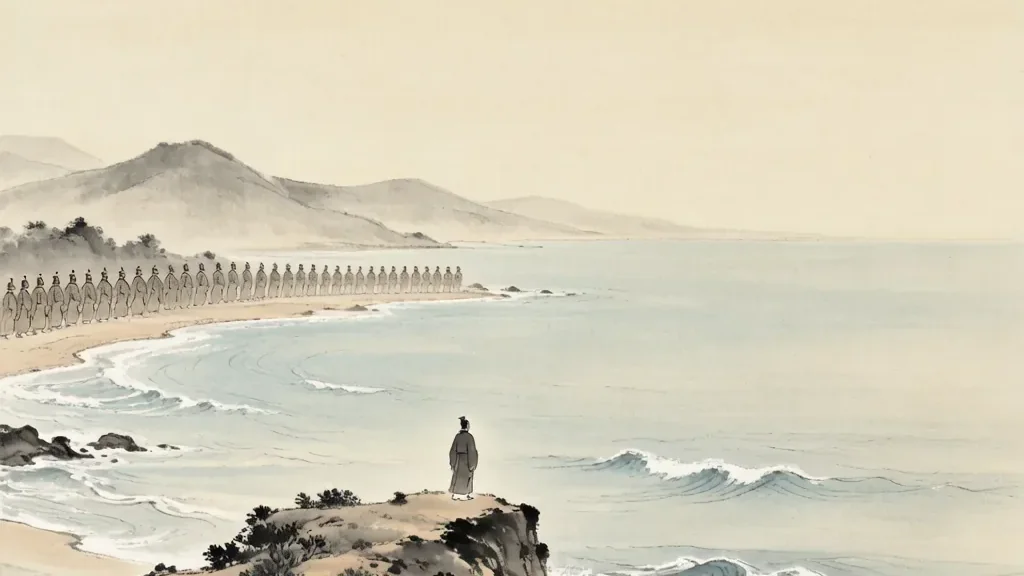
Qinhuangdao: Where the First Emperor Sought Immortality
Qinhuangdao occupies a unique place among Chinese cities — it is the only city named after an emperor. The name means 'Emperor Qin's Island,' and legend holds that Qin Shihuang, the First Emperor, visited this rocky coastal outpost in eastern Hebei Province in 215 BCE to gaze upon the Eastern Sea and seek the elixir of immortality. While Qinhuangdao was never an imperial capital in the traditional sense, it served as a summer capital of sorts during the early twentieth century, when foreign powers established beach resorts and the Chinese elite built seaside villas to escape Beijing's summer heat.
Qufu: The Hometown of Confucius and the Kings of Lu
Qufu, in Shandong Province, is the spiritual capital of Chinese civilization — the hometown of Confucius (551–479 BCE), the philosopher whose teachings shaped the ethical and political foundations of East Asia for over two millennia. Though Qufu was never a political capital of an empire, its influence on Chinese culture is arguably greater than any imperial city. The city's Confucian temples, mansions, and cemeteries form a UNESCO World Heritage Site, and the cult of Confucius that developed here created the ritual framework within which emperors ruled, scholars studied, and families organized their lives.
Xanadu: The Summer Capital of Kublai Khan
Shangdu — known in the West as Xanadu — was the summer capital of Kublai Khan and the Yuan dynasty, a legendary city of palaces and gardens that captured the European imagination through the writings of Marco Polo and later inspired Samuel Taylor Coleridge's most famous poem. Located in the grasslands of Inner Mongolia, Shangdu was where the Mongol emperors retreated each summer to escape Beijing's heat and reconnect with their nomadic heritage. The city's remains, now a UNESCO World Heritage Site, are a haunting reminder of the largest land empire in history.
Pingyao: A Ming Dynasty City Frozen in Time
Pingyao is not a capital in the conventional sense of imperial throne rooms and dynastic palaces, but it is a capital of a different kind — the financial capital of late imperial China. This remarkably well-preserved walled city in Shanxi Province was the headquarters of China's first banks, the legendary Shanxi piaohao (draft banks) that revolutionized Chinese commerce during the Qing dynasty. Walking through Pingyao's Ming-and-Qing-era streets today is like stepping into a living museum of traditional Chinese urban life: temple rooftops curve against the sky, banner flags mark ancient banks, and the city wall stretches unbroken around the entire old town.
Shaoxing: The Water Town of Wine and Scholars
Shaoxing, in eastern Zhejiang Province, is one of the most culturally significant cities in the Jiangnan region — the 'water town' famous for its canals, bridges, and traditional stone houses. For over 2,500 years, Shaoxing has been a center of Chinese scholarship and culture, producing some of the nation's greatest writers, calligraphers, and revolutionaries. The city is also famous for its rice wine — Shaoxing wine, aged for years in clay pots, is the most celebrated cooking wine in Chinese cuisine.
Shenyang: The Manchu Capital Before the Forbidden City
Shenyang, known historically as Mukden, was the Manchu capital that gave birth to the Qing dynasty, China's last imperial dynasty. Before the Manchus conquered Beijing in 1644, they established their political and military base at Shenyang in what is now Liaoning Province. The Shenyang Imperial Palace — smaller than the Forbidden City but built in a distinctive fusion of Chinese and Manchu architectural styles — served as the seat of the Later Jin dynasty and the early Qing emperors. Shenyang's history as a capital is inseparable from the story of the Manchu rise to power.
Dunhuang: The Gateway of the Silk Road
Dunhuang, an oasis city in the Gobi Desert of western Gansu Province, was the most important gateway on the ancient Silk Road. For over a millennium, this remote outpost was where east met west — where Chinese diplomats and merchants encountered Central Asian traders, Indian monks, and Persian artists. Dunhuang's Mogao Caves, also known as the Caves of the Thousand Buddhas, are among the greatest treasure troves of Buddhist art in the world, preserving over 45,000 square meters of murals and more than 2,000 painted sculptures spanning a thousand years of religious and artistic development.
Suzhou: The Garden City of the Yangzi Delta
Suzhou, the 'Venice of the East,' was the unofficial southern cultural capital of imperial China — a city of canals, gardens, and silk that represented the highest refinement of Chinese civilization. Founded in 514 BCE during the Spring and Autumn period, Suzhou served as the capital of the Wu state before being absorbed into larger empires. But it was during the Ming and Qing dynasties that Suzhou achieved its golden age, becoming the economic and cultural heart of the Jiangnan region, where wealthy merchants and retired scholars built private gardens that are now UNESCO World Heritage Sites.
Taiyuan: The Ancient Stronghold of the Jin Kingdom
Taiyuan, the capital of Shanxi Province, is one of the most ancient continuously inhabited cities in China, with a history stretching back over 2,500 years. It was the capital of the Zhao state during the Warring States period and later served as the capital of several regional regimes, including the Northern Han during the Song dynasty. The city's location in the Fen River valley, surrounded by mountains, made it a natural fortress — the 'Dragon City' that northern dynasties defended as the key to controlling the Central Plains.
Turpan: The Oasis City of the Flaming Mountains
Turpan, an oasis city in the Turpan Depression of Xinjiang — at 154 meters below sea level, the second lowest place on earth — is one of the most remarkable sites in the history of Chinese civilization. Located on the northern Silk Road, Turpan was the center of the ancient kingdom of Gaochang and the capital of the Uyghur kingdom of Qocho. The city's unique irrigation system, its Buddhist cave temples, and its ruined cities rising from the desert make it an open-air museum of Central Asian history.
Wuchang: The Birthplace of the 1911 Revolution
Wuhan — a tri-city metropolis formed by the convergence of Wuchang, Hankou, and Hanyang at the junction of the Yangtze and Han Rivers — has long been the political and economic heart of central China. Wuchang, the oldest of the three cities, served as a capital during the tumultuous Three Kingdoms period and later as a key administrative center. But it is the modern era that defines Wuhan's historical significance: it was in Wuchang, on October 10, 1911, that the Wuchang Uprising ignited the Xinhai Revolution that overthrew the Qing dynasty and ended two millennia of imperial rule.
Xi'an: Where Twelve Dynasties Left Their Thrones
Of all the ancient capitals of China, none holds a longer or more illustrious thread of imperial history than Xi'an. For over a millennium, this city at the foot of the Qinling Mountains served as the political heart of successive Chinese dynasties, from the Western Zhou to the Tang. Known in antiquity as Chang'an — meaning "Perpetual Peace" — Xi'an was the eastern terminus of the Silk Road, a cosmopolitan melting pot where Persian merchants, Central Asian monks, and Korean scholars mingled with Chinese courtiers. Its grid-like city plan, massive defensive walls, and enduring legacy of tomb guardians and terra-cotta warriors make it an unrivaled window into China's classical age.
Xianyang: The First Emperor's Lost Capital
Long before Xi'an became the glorious Chang'an of the Tang dynasty, another city dominated the Wei River valley — Xianyang, the capital of the Qin state and later the first capital of a unified imperial China. It was from Xianyang that Qin Shihuang, the First Emperor, launched the campaigns that conquered the six warring states, standardized writing and measurements, and built the Great Wall. Xianyang witnessed the birth of the imperial system that would define China for two millennia, but it also saw the brutal repression of dissent that has made the First Emperor a figure of enduring controversy.
Yangzhou: The Merchant City of Salt and Poetry
Yangzhou, situated at the junction of the Yangtze River and the Grand Canal, was one of the wealthiest cities in imperial China — a place of salt merchants, literary salons, and pleasure boats that became legendary for its luxury and sophistication. During the Tang dynasty, Yangzhou was the largest commercial port in East Asia; during the Qing dynasty, it was the center of the salt monopoly that made merchants richer than princes. The city's culture blended the mercantile energy of a trading port with the refinement of a scholarly retreat.
Ye: The Legendary Capital of the Three Kingdoms
Ye, located in modern Linzhang County of Hebei Province, is one of the most important yet least-known ancient capitals in Chinese history. For over 370 years across multiple dynasties, Ye served as a political and cultural center of northern China. It was here that the great Cao Cao established his power base during the Three Kingdoms period, where the Northern Dynasties built magnificent Buddhist temples, and where urban planning innovations emerged that would later influence the design of Chang'an itself. The city's destruction by Yang Jian, the founder of the Sui dynasty, was so complete that Ye disappeared from the map — a ghost capital waiting to be rediscovered by archaeologists centuries later.
Zhengzhou: The Capital of the Shang Kingdom
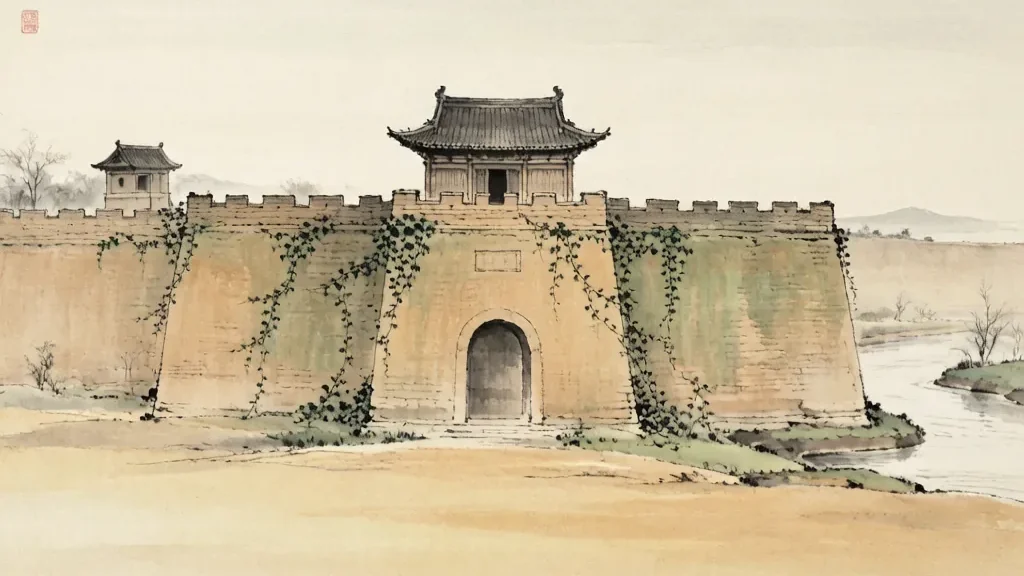
Zhengzhou, the modern capital of Henan Province, is one of the oldest cities in China's historical record, but its greatest claim to fame came in the twentieth century when archaeological excavations revealed that it was the site of an immense Shang dynasty walled city — a capital of the earliest historically confirmed Chinese dynasty. The discovery of the Zhengzhou Shang City, with its massive rammed-earth walls that still stand after 3,600 years, rewrote the timeline of Chinese urban civilization and proved that the Shang dynasty was far more advanced than previously believed.