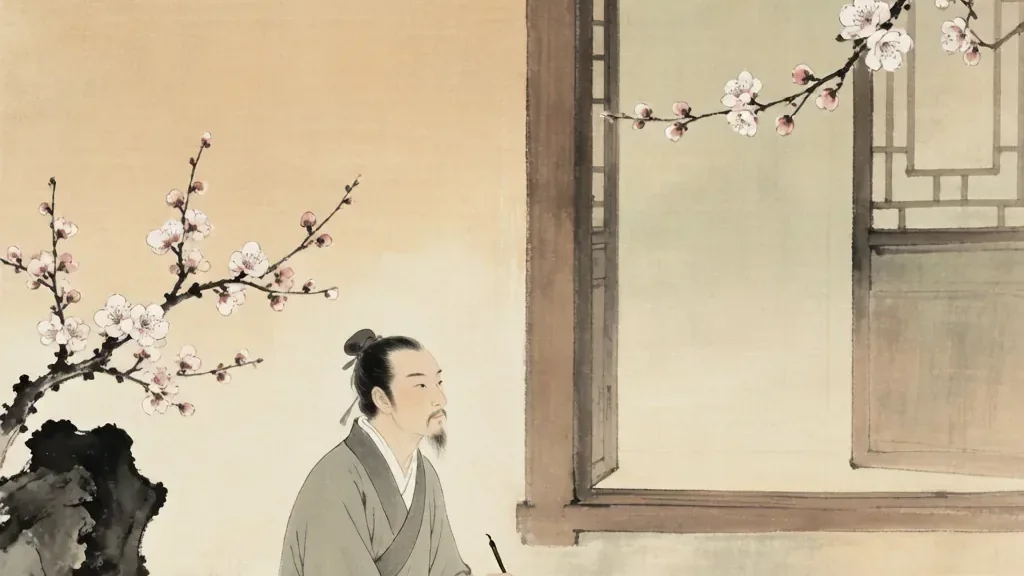
When scholars speak of the "golden age" of Chinese poetry, they invariably point to the Tang Dynasty (618-907 CE). This remarkable period produced nearly 50,000 surviving poems by over 2,200 known poets, collected in the monumental anthology Quan Tang Shi (Complete Tang Poems). More than a literary achievement, Tang poetry represents the very soul of classical Chinese culture — a tradition so deeply woven into the fabric of Chinese identity that schoolchildren still memorize these verses today, more than a millennium after they were written.
The Tang Dynasty itself was a time of unprecedented cultural confidence. The empire stretched from the Korean peninsula to Central Asia, the capital Chang'an (modern Xi'an) was the largest city in the world, and the imperial examination system — which required candidates to demonstrate mastery of poetry — elevated literary talent to the highest corridors of power. Poetry was not merely an art form; it was a social currency, a diplomatic tool, and a path to political influence.
The Three Giants: Li Bai, Du Fu, and Wang Wei
No discussion of Tang poetry can begin without its three towering figures. Each represents a distinct facet of the Chinese poetic sensibility, and together they form a trinity that has defined literary excellence for over a thousand years.
Li Bai (李白, 701-762), known as the "Immortal Poet," was the quintessential romantic genius. Legend holds that he died drunk, trying to embrace the moon's reflection in a river — a story that perfectly captures his larger-than-life persona. Li Bai's poetry overflows with Daoist spontaneity, wine-soaked revelry, and breathtaking cosmic imagination. His most famous poem, Quiet Night Thought (静夜思), is known by heart by virtually every Chinese speaker:
"Before my bed, the bright moonlight — I mistake it for frost on the ground. Raising my head, I gaze at the bright moon; lowering my head, I think of home."
In just twenty characters, Li Bai captures the universal ache of homesickness with devastating simplicity. This economy of language — saying everything by saying almost nothing — is the hallmark of Tang poetry at its finest.
Du Fu (杜甫, 712-770) could not be more different from his friend and contemporary Li Bai. Where Li Bai soared among the clouds, Du Fu walked the earth, chronicling the suffering of ordinary people with unflinching honesty. Known as the "Poet-Sage" or "Poet-Historian," Du Fu lived through the devastating An Lushan Rebellion (755-763), which shattered the Tang golden age and killed millions. His poetry records this cataclysm with the precision of a war correspondent and the heart of a humanist.
In Spring View (春望), written while the capital lay in ruins, Du Fu writes: "The nation shattered, yet mountains and rivers remain; in spring, the city is thick with grass and trees. Moved by the times, flowers bring tears; grieving at parting, birds startle the heart." The poem's power lies in its juxtaposition of nature's indifference with human devastation — a technique that has influenced war poetry across cultures.
Wang Wei (王维, 699-759) completes the trio as the "Poet-Buddha." A devout Chan (Zen) Buddhist, painter, and musician, Wang Wei achieved a synthesis of poetry and painting that Chinese critics call "in the poem there is a painting, in the painting there is a poem" (诗中有画,画中有诗). His verse strips language to its essence, creating moments of profound stillness. In Deer Enclosure (鹿柴), he writes of an empty mountain where no one is seen, yet voices echo — a meditation on presence and absence that resonates deeply with Buddhist philosophy.
The Forms: Regulated Verse and Quatrains
Tang poets worked within strict formal constraints that paradoxically liberated their creativity. The two dominant forms were lüshi (律诗, regulated verse) and jueju (绝句, quatrains).
Regulated verse consists of eight lines of five or seven characters each, with elaborate rules governing tone patterns, parallelism, and thematic structure. The middle two couplets must exhibit grammatical and semantic parallelism — a requirement that forced poets to think in pairs, creating a dialectical movement of ideas. The opening couplet introduces the theme, the middle couplets develop it through parallel images, and the closing couplet provides resolution.
Quatrains are shorter — four lines of five or seven characters — but perhaps more difficult to master. With only twenty or twenty-eight characters, the poet must suggest a complete emotional world. The best quatrains work like a pebble dropped in still water: the poem ends, but the ripples of meaning continue expanding in the reader's mind.
The tonal system of Middle Chinese divided syllables into "level" (平) and "oblique" (仄) tones. Poets arranged these according to complex patterns that created a musical cadence when recited aloud. Modern Mandarin has lost many of these tonal distinctions, but the visual beauty of the characters and the structural elegance of the forms remain undiminished.
Enduring Themes: Nature, Friendship, and the Pain of War
Tang poetry returns obsessively to several core themes. Nature is never mere backdrop but a philosophical lens — mountains, rivers, and seasons embody Daoist and Buddhist truths about impermanence and harmony. A poem about a hermit in the hills is simultaneously a poem about spiritual cultivation.
Friendship occupies a place in Tang poetry that has few parallels in Western literature. Poets wrote constantly of parting, missing, and remembering friends. This reflects the reality of imperial China, where scholar-officials were frequently posted to distant provinces, and a farewell might mean never seeing a friend again. Li Bai's To Wang Lun (赠汪伦) — "The Peach Blossom Pool is a thousand feet deep, yet not as deep as Wang Lun's feelings seeing me off" — transforms a local landmark into a measure of emotional depth.
War and its sorrows permeate the work of Du Fu and the frontier poets. The Tang maintained vast border garrisons, and poems of soldiers longing for home — or wives longing for absent husbands — constitute an entire subgenre. These are not triumphalist war poems but laments for the human cost of empire, often voiced from the perspective of those left behind.
Why Tang Poetry Still Matters
In an age of instant communication and disposable content, why should anyone read poems written twelve centuries ago? The answer lies in what these poems do that modern media cannot. A Tang poem is a concentrated dose of human experience — an emotion, a scene, a philosophical insight — refined through formal discipline into something that bypasses the intellect and speaks directly to the heart. Reading Du Fu on war, we feel the weight of history; reading Li Bai on moonlight, we share a moment of solitude that connects us across a millennium.
Tang poetry also offers a gateway to understanding Chinese culture on its own terms. The poems encode values — reverence for nature, the importance of friendship, the duty to bear witness to suffering — that continue to shape Chinese society. They are not museum pieces but living texts, still quoted in conversation, still calligraphed on scrolls, still taught to children as models of linguistic beauty and moral clarity.
As the Song Dynasty critic Yan Yu wrote, the greatness of Tang poetry lies in its "spiritual resonance" (神韵) — a quality that cannot be analyzed, only experienced. Perhaps the best introduction is simply to read the poems aloud, letting the rhythm of the characters work its ancient magic.
The Music of the Tones
Tang poetry was built to be heard. Middle Chinese divided syllables into level and oblique tones, and regulated verse arranged them in fixed patterns so that a poem rose and fell like a tune. A reader who knew the rules could almost predict the next line's shape, and the contrast between tones created the rhythmic lift that makes Tang verse musical even in the echo of translation. Quatrains, with only four lines, relied on this tonal music to do the emotional work that length could not. Modern Mandarin has flattened many of these distinctions, so contemporary speakers hear the characters but not the original cadence; scholars reconstruct it from rhyme tables. Yet the underlying principle survives: Tang poets treated sound as meaning, and the best poems still feel composed for the ear as much as the eye.
Poems of Parting and Friendship
Few societies made farewell into such a literary art as the Tang. When a friend or official left for a post, companions gathered to drink and compose parting poems, often writing on the spot and exchanging them as keepsakes. These poems turned departure into a shared occasion rather than a private sorrow, and the convention let ordinary leave-takings enter the canon. Li Bai's lines to Wang Lun show how a local ferry could become a measure of feeling, while countless anonymous quatrains sent travelers off at frontier posts. Because posts were distant and returns uncertain, the parting poem carried real weight; it was a way of staying present to someone who would be absent for years. The form's warmth is why Tang friendship poetry still reads as intimate across a millennium.
Women and the Unheard
Although the Tang court and stage were male-dominated, women's voices appear in the poetry when we look for them. Palace ladies wrote of confined seasons and neglected favor; wives left behind sent lyric complaints that entered the folk stream; and courtesans in the entertainment quarters composed and performed verse that shaped the very tunes poets borrowed. The figure of the waiting woman became a standard speaker in both shi and the later ci, giving female longing a stylized but durable presence. We know fewer names than we should, with Xue Tao and Yu Xuanji among the rare surviving exceptions, yet the emotional range attributed to women in Tang verse is vast. Reading against the grain, these poems reveal how much of the golden age was carried by voices the canon half-ignored.
Approaching Tang Poetry Today
For a first-time reader, Tang poetry is best met small and aloud. Begin with a single quatrain, read it twice, and notice what image stays with you, a moon, a gate, a fallen flower, before chasing the paraphrase. Translation loses the tone patterns but keeps the scene, and a good version will let the picture do the work. Do not worry about allusions at first; many poems are plain, and their power lies in restraint. Anthologies that group by poet or theme help, and pairing Li Bai's spontaneity with Du Fu's gravity shows the range in one sitting. Above all, treat the poems as living speech, not museum relics; they were written to be spoken, shared, and felt, and they reward the same habits now as they did twelve hundred years ago.
❓ Frequently Asked Questions
📝 Chinese Vocabulary
- 唐诗 (táng shī) — Tang poetry; the poetry of the Tang Dynasty (618-907 CE)
- 诗仙 (shī xiān) — "Immortal Poet"; honorific title for Li Bai
- 诗圣 (shī shèng) — "Poet-Sage"; honorific title for Du Fu
- 律诗 (lǜ shī) — Regulated verse; the eight-line form with strict tonal and parallelism rules
- 绝句 (jué jù) — Quatrain; the four-line form, literally "cut-off lines"
🎉 Fun Facts
- The imperial examination during the Tang Dynasty included a poetry composition section. A single well-written poem could launch a candidate's entire political career.
- Li Bai was reportedly a skilled swordsman who claimed to have killed several men in duels before devoting himself to poetry. He was also famously tolerant of alcohol — many of his poems were composed while drinking.
- The Complete Tang Poems (全唐诗), compiled in 1705, contains 48,900 poems. Scholars estimate this represents only a fraction of what was actually written, with countless works lost to history.
- Wang Wei served as a court official yet is remembered chiefly for quiet poems of empty temples and misted mountains.
- Tang quatrains were short enough to be sung or inscribed on fans and walls, making poetry part of daily and public life.
- Many Tang poems survive because monks and students copied them onto scrolls and walls, not because of formal publication.