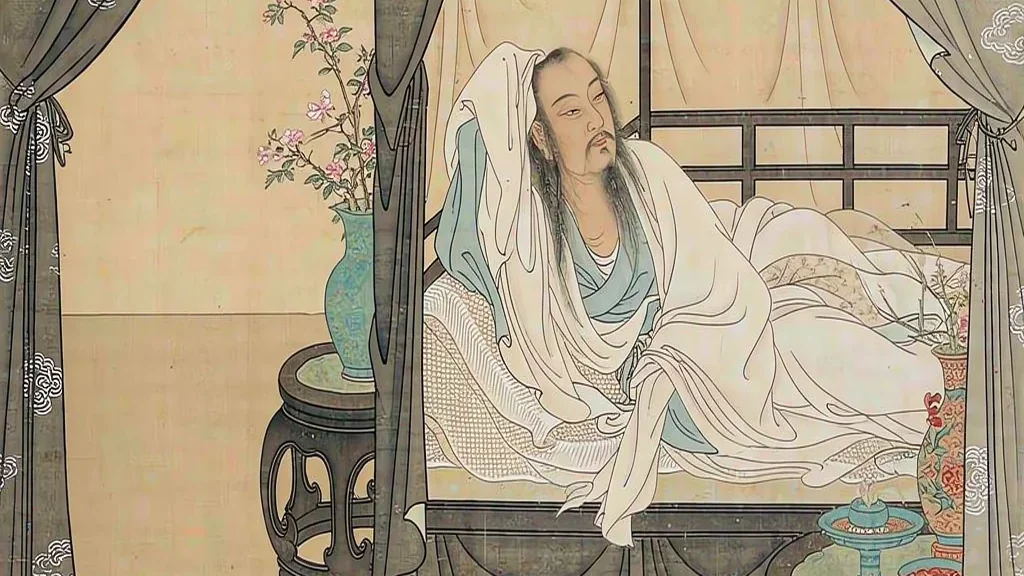
Illness is a great revealer. In the solitude of a sickbed, the distractions of the world fall away, and what remains — the body's fragility, the mind's lucidity, the approach of death — becomes the subject of poetry. Chinese poets have written about illness (病中诗, bingzhong shi) for nearly two millennia, creating a body of verse that is intimate, unflinching, and often surprisingly serene. The poetry of illness is not a niche genre; some of the greatest Chinese poems were written by poets who were sick, exiled, and expecting death.
The Body as Subject
Chinese poetry about illness is remarkable for its physical honesty. Poets describe their symptoms in detail — the cough that will not stop, the fever that comes and goes, the weakness that makes walking impossible. Du Fu, who suffered from malaria, tuberculosis, and partial paralysis in his later years, wrote about his body with a clinical precision that anticipates modern confessional poetry. In 'On Being Sick,' he writes: 'My body has become a guest-house for a hundred illnesses / and arrived at middle age with a thousand cares.'
This physical honesty serves a philosophical purpose. By describing the dissolution of the body, the poet confronts the reality of impermanence. The sick body is a teaching — a reminder that everything passes, that health is a temporary gift, and that the only appropriate response is acceptance. The Buddhist concept of wuchang (无常, impermanence) is given concrete form in the poet's own aching limbs and failing breath.
Du Fu: The Poetry of Suffering
Du Fu (杜甫, 712–770 CE) suffered from chronic illness for much of his adult life. His later years, spent wandering through southern China as a refugee from the civil war, were marked by extreme poverty, the death of his children, and progressive physical decline. His poems from this period are among the most moving in the language. 'On the River' describes his condition: 'My old illness, / my lone boat, / are the only companions I have left / on this long river flowing east.'
Du Fu's illness poems are never self-pitying. He observes his own suffering with the same objective eye that he turned on the suffering of the people in his political poems. 'Written on an Autumn Day' describes how 'the wind blows from the walls of my thatched hut / and the rain seeps through the roof over my sickbed.' The poem is about physical discomfort, but it is also about the connection between personal suffering and the suffering of a world at war. Du Fu's sickbed is a microcosm of the empire's sickness.
Li Qingzhao: Illness and Widowhood
Li Qingzhao (李清照, 1084–1155 CE) wrote some of her most powerful poems after the death of her husband and the loss of her home during the Jin invasion. Her illness poems are inseparable from her poems of grief. In 'Slow, Slow Song' (声声慢), she describes the physical sensation of despair: 'Search, search; seek, seek; / chill, chill; / sad, sad; / pain, pain. / At this moment, it is so hard to bear. / How can it be / this dark wind, this cold rain?'
Li Qingzhao's illness is both physical and emotional; the two cannot be separated. The cold she feels is the cold of winter but also the cold of a widow's empty bed. The slowness of her recovery — the sense that nothing will ever be well again — is captured in the title of the tune: 'Slow, Slow Song.' The poem's cascade of monosyllabic words at the opening enacts the fragmentation of a mind that has lost its center. Li Qingzhao's poetry of illness is, finally, a poetry of survival — a record of what it feels like to keep living after the reasons for living have been taken away.
Song Dynasty Illness Poems
The Song dynasty produced a remarkable number of poems about illness, perhaps because Song poets were more introspective than their Tang predecessors. Su Shi, who was plagued by ill health during his exiles, wrote poems about illness that are surprisingly cheerful. In 'Being Ill and Not Going Out,' he writes: 'I lie under my cotton quilt, listening to the rain / and thinking about politics, and laughing at myself. / The body is an inn, and illness is a traveler / who stops for a while and then moves on.' The Daoist distance in Su Shi's voice — the ability to see illness as a passing guest — is characteristic of his philosophical resilience.
Lu You (陆游, 1125–1210 CE), who lived to be eighty-five despite chronic ill health, wrote hundreds of poems about his various ailments. His 'Record of Illness' poems are almost clinical in their detail, describing the herbs he takes, the diet he follows, and the regimen of qi exercises he practices. But they are also remarkably buoyant. Even at death's door, Lu You's poems are full of plans for the future — poems he intends to write, journeys he hopes to take. His illness poetry is a lesson in the art of living well while dying slowly.
The Spiritual Dimension of Illness Poetry
Illness in Chinese poetry is not only a personal trial; it is also a spiritual opportunity. The sickbed becomes a site of insight. Freed from the demands of office, social obligations, and physical activity, the poet can turn inward and attend to what matters. Many Chan Buddhist poems were written during illness, as the poet used his own suffering as a meditation object. The Chan master Yongjia Xuanjue wrote: 'Illness is not to be hated. In illness, the mind can awaken. The body is a boat crossing the river of suffering, and illness is the wind that fills the sail.'
The poetry of illness reminds us that Chinese poetry is not only an art of celebration but also an art of endurance. The poets who wrote from their sickbeds were not seeking sympathy; they were bearing witness to the human condition in its most reduced and honest form. They teach us that poetry can be made from anything — even from the experience of falling apart. In the Chinese tradition, the sick poet is not a pitiable figure but a heroic one: the one who continues to compose even as the body fails, who makes beauty out of the wreckage of health.
The Humor of the Sickbed
Not all illness poetry is solemn. Bai Juyi wrote a long run of sickness poems that treat his ailments with comic resignation, grumbling about his doctors and his diet while still finding the joke in a body that will not cooperate. This lighter register balances the grave suffering of Du Fu and shows that the sickbed could be a place of wry self-mockery as well as grief.
Medicine and the Poem as Prescription
Sickbed verse is full of pharmacology. Poets name the herbs steeped, the drafts swallowed, the weather that worsened a cough, turning the poem into a kind of medical log. Lu You's Record of Illness entries read almost like a physician's notes, yet they keep an eye on mood and season. The remedy and the rhyme become one discipline of patient attention.
The Sickbed as a Room for Insight
Stripped of duties and motion, the ailing poet often discovered a clarity unavailable in busy life. Chan monks especially used pain as a focus of meditation, letting the ache stand in for the body's bondage and release. Illness verse therefore frequently moves from complaint toward acceptance, presenting the bed not as a prison but as a still point where the mind, unburdened, can finally see straight.
❓ Frequently Asked Questions
📝 Chinese Vocabulary
病中诗 — : Sickbed poetry; poems written during illness
无常 — : Wuchang; impermanence — a key Buddhist concept in illness poetry
杜甫 — : Du Fu; the poet who chronicled his own physical decline with unflinching honesty
陆游 — : Lu You; Song poet who wrote hundreds of poems about his illnesses
药 — : Medicine; the herbs and drafts endlessly described in sickbed verse
卧病 — : Lying ill; the posture that opens countless sickness poems
养生 — : Nourishing life; the regimen of diet and exercise for the ailing
沉疴 — : A long, settled illness; the chronic condition many poets endured
🎉 Fun Facts
- Du Fu died in 770 CE on a boat on the Xiang River in Hunan. He had been ill and impoverished for years, unable to return north after the An Lushan Rebellion.
- Lu You lived to be 85, a remarkably old age for the Song dynasty. He attributed his longevity to a regimen of qigong and herbal medicine.
- Su Shi wrote his famous poem 'The Body is an Inn' while suffering from dysentery during his exile to Hainan Island.
- Bai Juyi, a prolific Tang poet, wrote an entire series of sickness poems from his own bed, treating illness as a comic as well as a somber theme.
- The Record of Illness poems by Lu You sometimes read like a doctor's notebook, listing herbs, doses, and the weather that worsened his cough.
- The concept of nourishing life meant sick poets often paired their verses with advice on diet, breathing exercise, and moderation.