Proverbs & Sayings
46 articles — Wisdom compressed into a few Chinese characters.
Chinese Proverbs and Sayings (谚语): Wisdom in Few Words
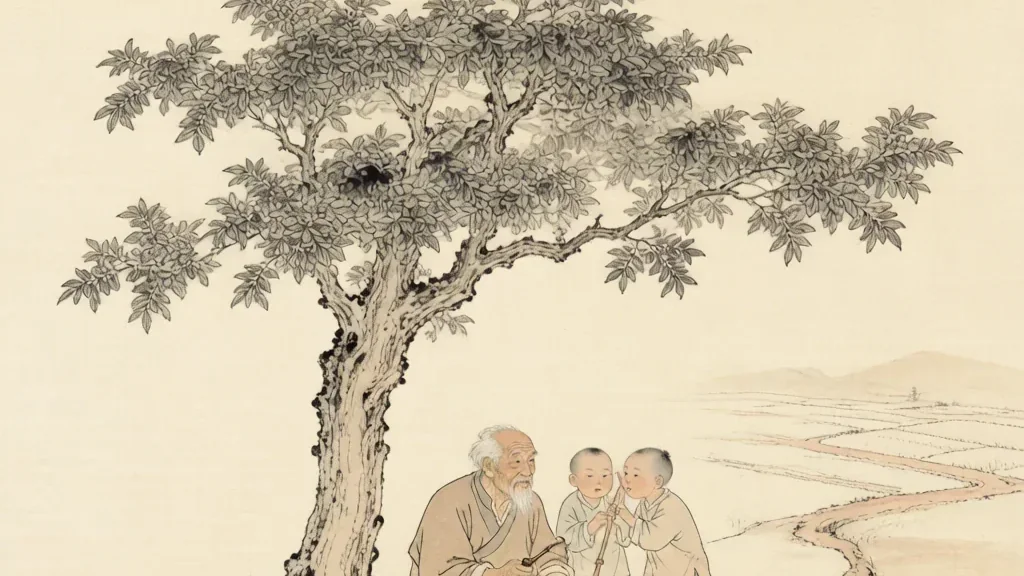
Chinese proverbs — known as 谚语 (yànyǔ) — are the compact, hard-won wisdom of a civilization that has farmed, governed, and quarreled for more than three thousand years. Unlike a proverb in the Western sense, a Chinese yànyǔ is usually spoken rather than written, passed from grandparents to grandchildren along with the seasons of the farm and the rules of the household.

Auspicious Snow Promises a Good Harvest (瑞雪兆丰年)
When the first heavy snow of winter settles over the North China Plain, Chinese farmers and city dwellers alike reach for an old and reassuring line: 瑞雪兆丰年 (ruì xuě zhào fēng nián) — "an auspicious snow promises a good harvest. " Unlike proverbs built on clever wordplay or ancient philosophy, this one grew straight out of the soil.
As You Sow, So Shall You Reap (种瓜得瓜)
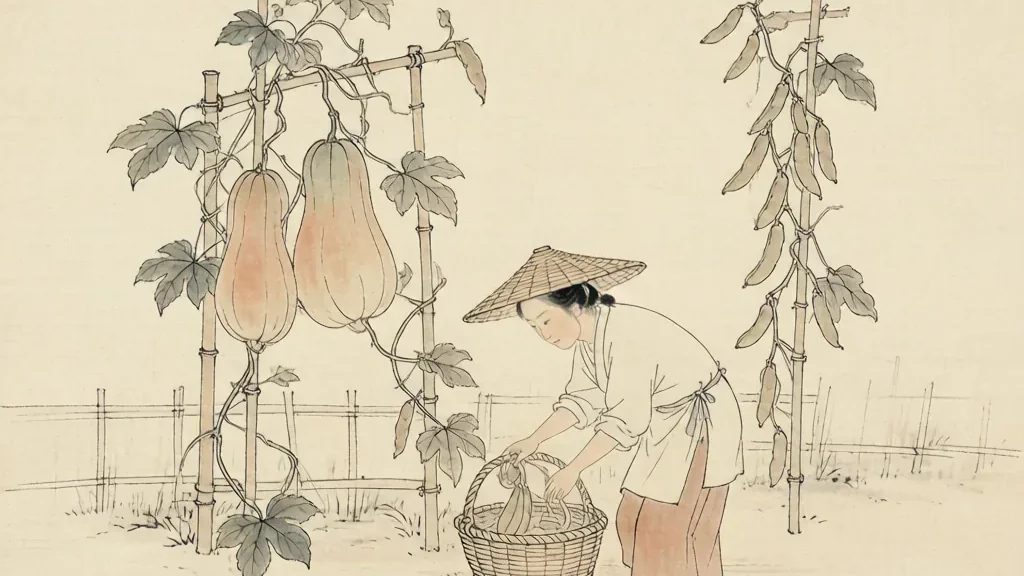
There is a Chinese saying so plain that a child can understand it and so deep that it has carried a Buddhist worldview into everyday speech for over a thousand years: 种瓜得瓜,种豆得豆 (zhòng guā dé guā, zhòng dòu dé dòu) — "plant melons and you get melons; plant beans and you get beans. " In the West we say "you reap what you sow," and the Chinese version uses the same agricultural metaphor with even more concrete parallelism.

An Inch of Time Is an Inch of Gold (一寸光阴一寸金)
Of all the Chinese sayings that urge people to treasure their hours, none is more quoted than 一寸光阴一寸金 (yī cùn guāng yīn yī cùn jīn) — "an inch of time is an inch of gold. " The comparison is striking: it does not say time is like gold, but that a measured unit of time literally equals a measured unit of gold, inch for inch.
Live to Old Age, Learn to Old Age (活到老学到老)
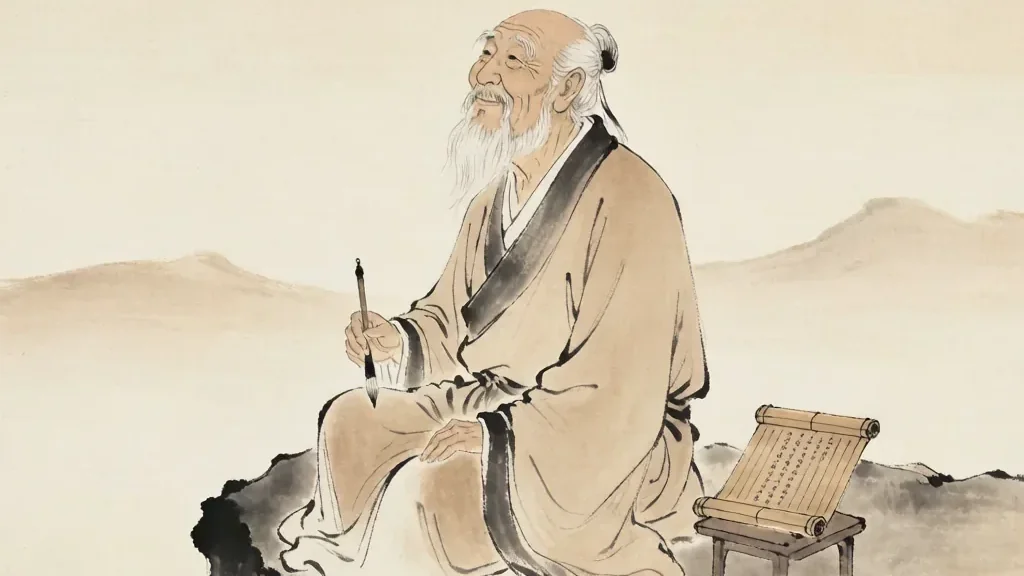
There is a Chinese saying that refuses to let age be an excuse: 活到老,学到老 (huó dào lǎo, xué dào lǎo) — "live until old, learn until old. " It is short, rhythmic, and disarmingly simple, yet it carries one of the most demanding ideas in Chinese thought: that education has no finish line.
Seeing Once Beats Hearing a Hundred Times (百闻不如一见)
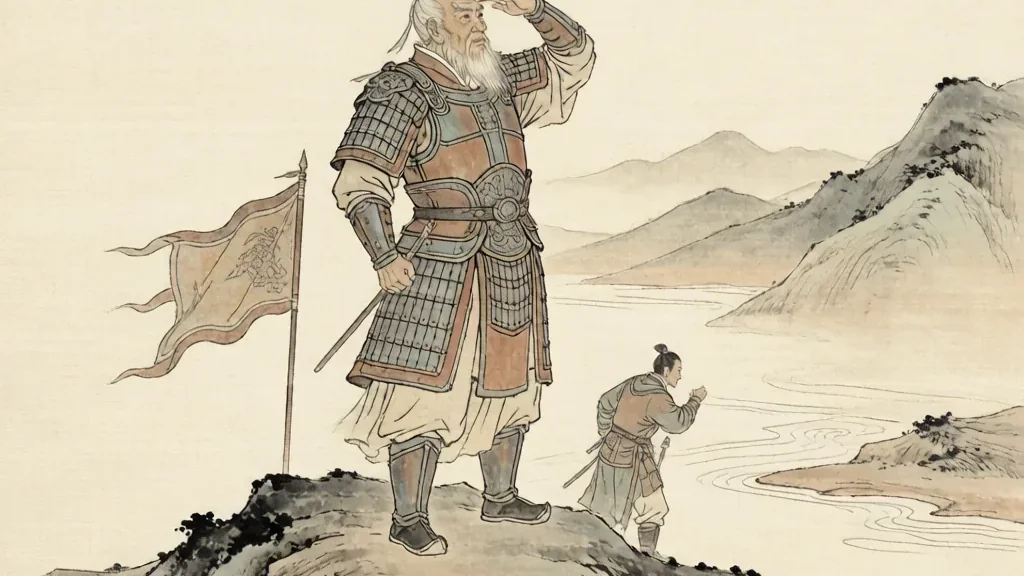
Long before the modern slogan "trust but verify," a Han dynasty general gave Chinese speech its enduring formula for the value of first-hand knowledge: 百闻不如一见 (bǎi wén bù rú yī jiàn) — "hearing a hundred times is not as good as seeing once. " The proverb is a quiet revolt against secondhand certainty.

Good Medicine Tastes Bitter (良药苦口)
Anyone who has drunk a cup of traditional Chinese herbal decoction knows the truth of 良药苦口 (liáng yào kǔ kǒu): "good medicine tastes bitter. " The proverb takes a fact of the sickbed and turns it into a rule for the soul.
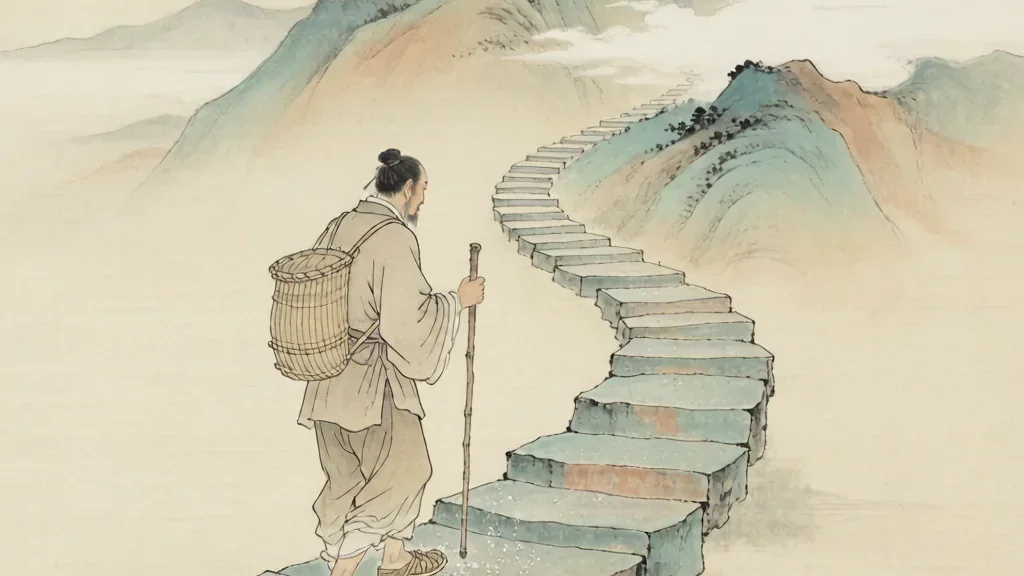
A Journey of a Thousand Miles Begins Beneath the Feet (千里之行始于足下)
Some of the most practical advice in the Chinese tradition was written by its most mystical philosopher. In the 道德经 (Dàodéjīng), the Daoist sage 老子 (Lǎozǐ, Laozi) offered a line that has outlived every dynasty: 千里之行,始于足下 (qiān lǐ zhī xíng, shǐ yú zú xià) — "a journey of a thousand lǐ begins beneath the feet.

Nothing in the World Is Hard (世上无难事)
When a Chinese speaker wants to lift someone's spirits before a hard task, few lines work faster than 世上无难事,只怕有心人 (shì shàng wú nán shì, zhǐ pà yǒu xīn rén) — "in the world there is nothing difficult, only beware the person with a determined heart. " The proverb is pure encouragement.
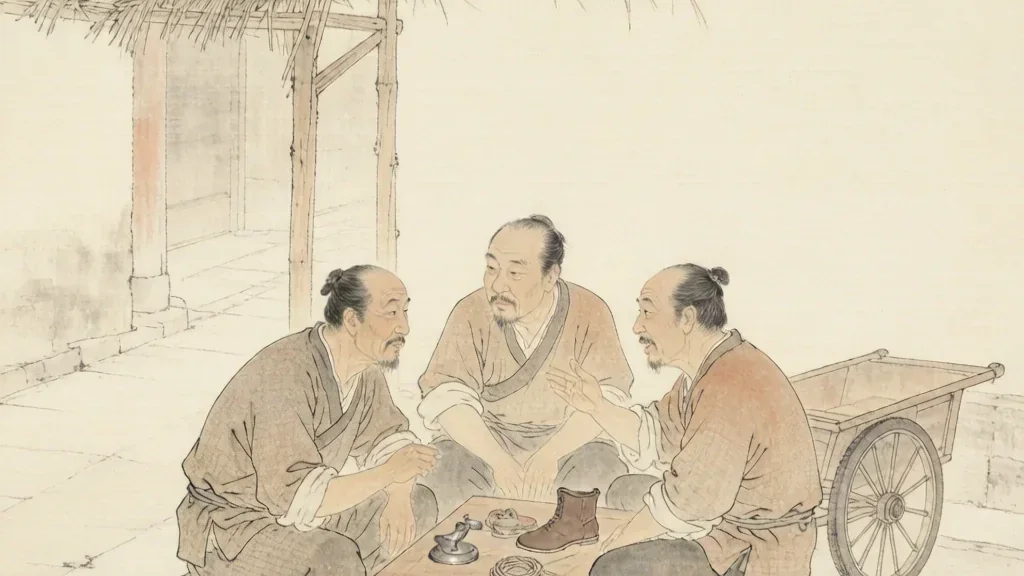
Three Cobblers Outwit Zhuge Liang (三个臭皮匠)
Most Chinese proverbs honor the sage, the general, or the diligent student — but 三个臭皮匠,顶个诸葛亮 (sān gè chòu píjiàng, dǐng gè Zhūgě Liàng) flips the script. "Three stinky cobblers equal one Zhuge Liang," it says, setting the humblest workers in the marketplace against the most celebrated genius in Chinese history.
The Morning Determines the Day: A Chinese Proverb
When Xiang Yu, the Hegemon-King of Western Chu, was surrounded by the Han army at Gaixia, his troops heard songs from their homeland drifting from the enemy camp — a psychological warfare tactic that destroyed their morale and led to one of history's most famous last stands. This battle produced the musical piece 十面埋伏 (shí miàn mái fú), 'Ambush from Ten Sides,' and the related proverb 百面埋伏 (bǎi miàn mái fú).

Surplus Year After Year: The New Year's Wish
The young scholar had read every book on military strategy but had never seen a battle. When he finally led troops, his textbook strategies failed in the chaos of real combat. His elders told him: 不经一事,不长一智 (bù jīng yī shì, bù zhǎng yī zhì) — 'without experiencing an event, you don't gain wisdom.'
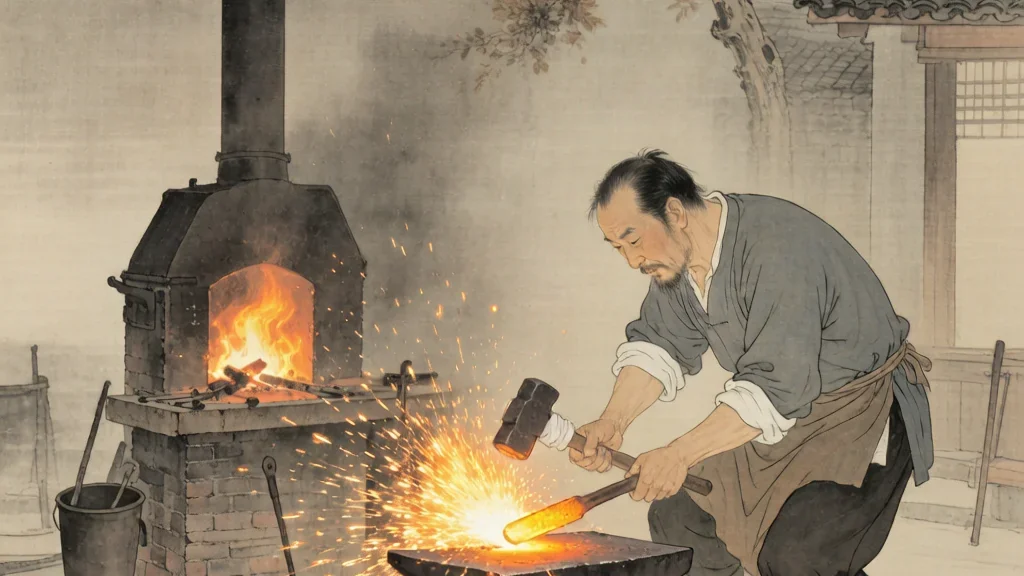
Strike While the Iron is Hot
The farmer who fell into the same hole three times became a laughingstock in his village — but the fourth time he walked around it, and the fifth time he warned others. His experience distilled into the proverb 吃一堑,长一智 (chī yī qiàn, zhǎng yī zhì): 'eat one pit, grow one wisdom.'
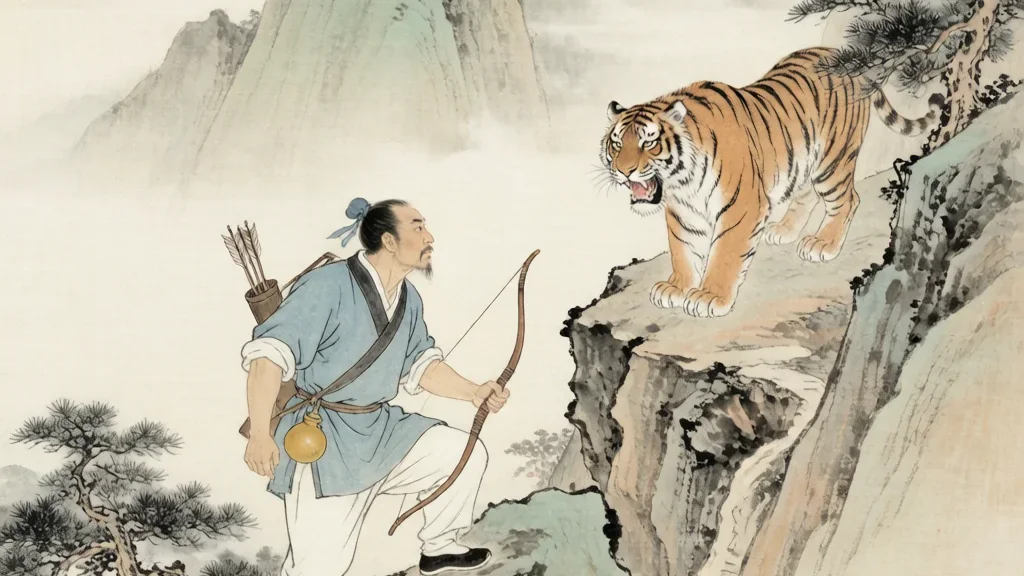
Climb the Mountain to Fight the Tiger
A Chinese blacksmith knew that the moment a red-hot iron blank left the forge was measured in heartbeats — wait too long and the metal cooled into unworkable rigidity. From this intense physical reality emerged 打铁趁热 (dǎ tiě chèn rè), urging decisive action at the opportune moment.

Where There is Will, There is a Way
Chinese history records a prime minister who pretended to be confused and forgetful for three years, only to reveal his master plan at the perfect moment — proving that the most intelligent people often appear foolish to casual observers. This paradox underlies 大智若愚 (dà zhì ruò yú): 'the greatest wisdom seems like foolishness.'
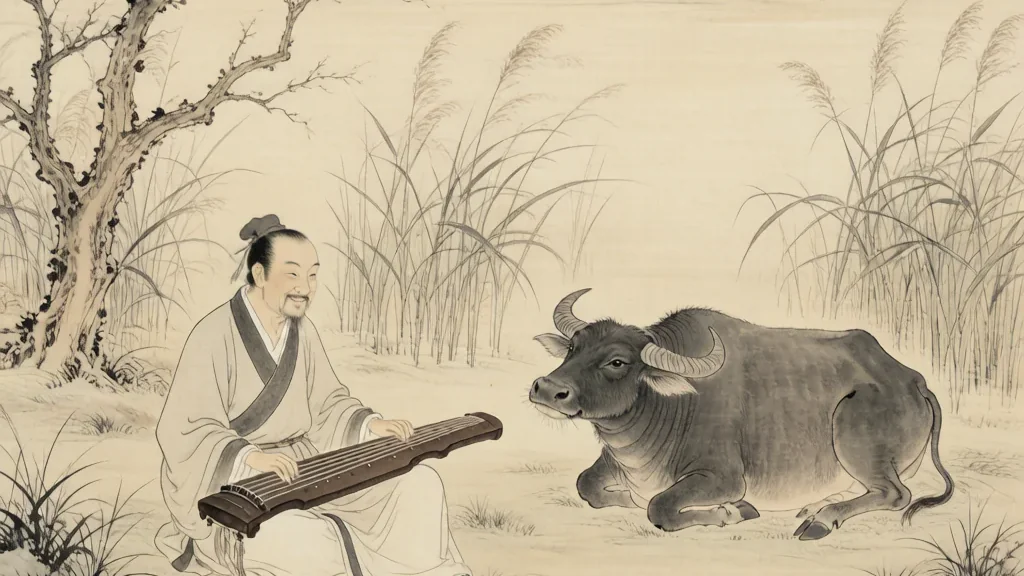
Nothing in the World Is Too Difficult
Picture a master musician performing the guqin before a bovine audience — the cow continues chewing its cud, utterly indifferent. This absurd image is 对牛弹琴 (duì niú tán qín): 'playing the lute to a cow,' describing wasted effort on an unappreciative audience.

When Water Flows, a Channel Forms
Confucius, walking through a village and observing a carpenter spending the morning sharpening his plane instead of cutting wood, remarked to his disciples: 'The workman who wishes to do good work must first sharpen his tools' — a teaching that would become one of the most practical proverbs in the Chinese language.

Marry a Rooster, Follow the Rooster
Every Chinese grandmother knows the bitter taste of ingratitude — the moment when a kindness extended with pure intentions is met with hostility. The proverb 好心没好报 (hǎo xīn méi hǎo bào) captures this universal disappointment: virtue is not always its own reward.
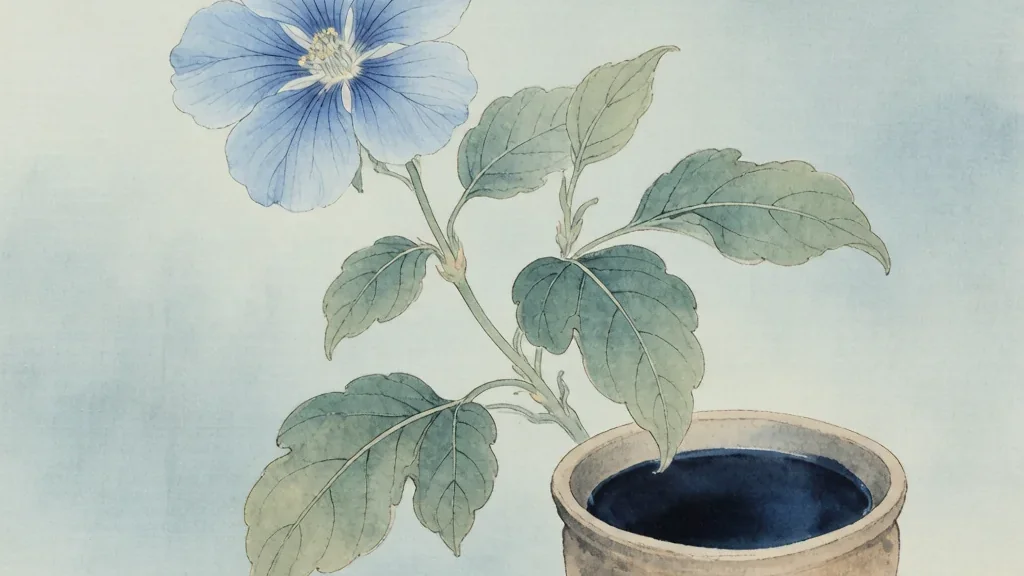
Indigo Comes from the Blue
An aspiring painter once tried to capture the majesty of a tiger but produced something resembling a scruffy village dog. This humiliating mismatch became 画虎类犬 (huà hǔ lèi quǎn): 'drawing a tiger that ends up looking like a dog' — a vivid caution against pretension.

A Good Heart Meets No Reward
Two men in ancient China competed to draw a snake, with a bottle of wine as the prize. The first finished his snake quickly and, seeing his rival still drawing, decided to add legs to his snake to make it more impressive. His rival completed a simple snake and claimed the wine — because everyone knows snakes don't have legs. This produced the proverb 画蛇添足 (huà shé tiān zú): 'drawing legs on a snake.'

Drawing a Tiger Ends Up Looking Like a Dog
Few Chinese proverbs have generated as much controversy as 嫁鸡随鸡 (jià jī suí jī), the ancient saying that a woman who marries a rooster must follow that rooster. For centuries used to enforce female obedience, today it provokes heated debate about tradition, gender, and cultural relativism.
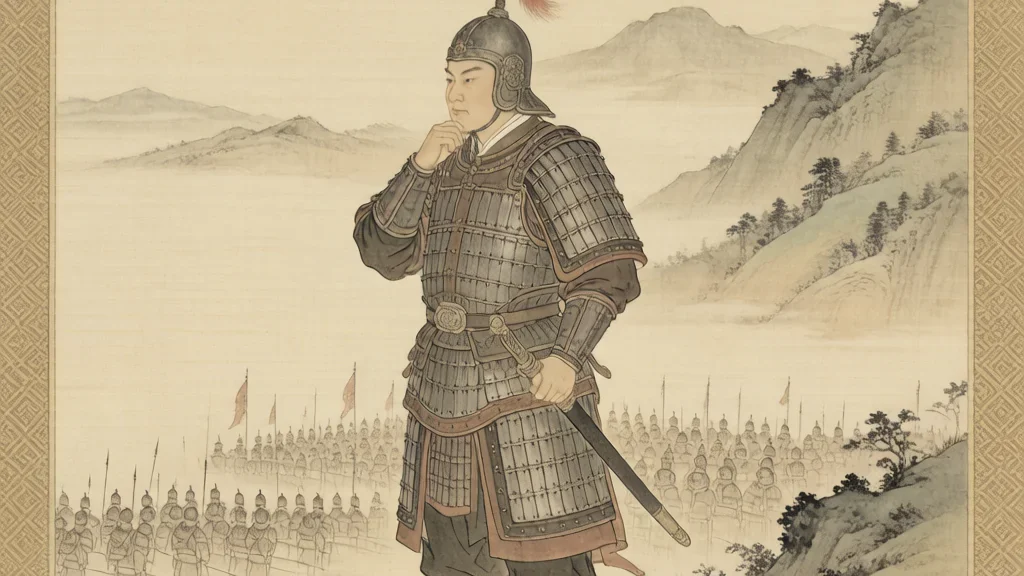
Buy the Box, Return the Pearl
On a foggy dawn in the Spring and Autumn period, a Chinese general ordered his army to sit in complete silence for an hour before battle — until the mist cleared and they could see the enemy's formations. This discipline of stillness before action produced the proverb 静而后动 (jìng ér hòu dòng): 'be still first, then move.'
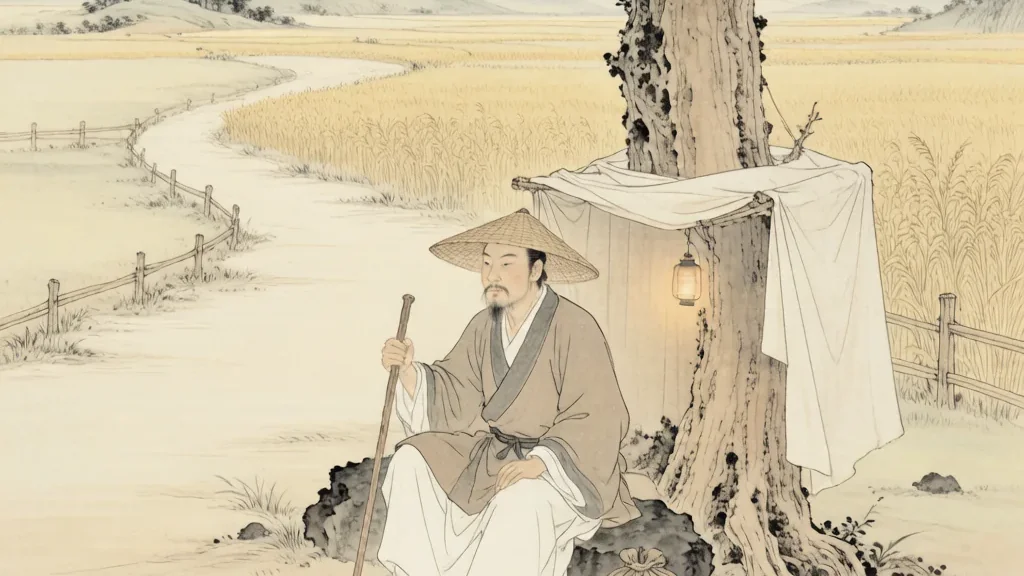
Playing Music to a Cow
The prime minister of the state of Wei was enjoying a magnificent feast when he noticed his king laughing too freely. He stopped the music and warned: 'Even when dwelling in peace, one must think of danger.' This advice was recorded as 居安思危 (jū ān sī wēi), a proverb that has warned Chinese rulers — and everyone else — against the complacency that precedes disaster.

Facing the Abyss and Wishing for Fish
A man crossing a river in a boat dropped his sword into the water. Instead of diving after it immediately, he calmly carved a mark on the boat's side at the spot where the sword fell. 'When the boat stops,' he reasoned, 'I will jump in at this mark and find my sword.' This story from the 'Spring and Autumn Annals of Mr. Lü' produced the proverb 刻舟求剑 (kè zhōu qiú jiàn): 'carving the boat for the sword.'

Guarding the Stump for a Rabbit
A man stands by a pond watching fish swim past, wishing he could have one for dinner — but his hands remain empty. This scene inspired 临渊羡鱼 (lín yuān xiàn yú): 'admiring the fish by the deep pond,' teaching that desire without action is pointless.
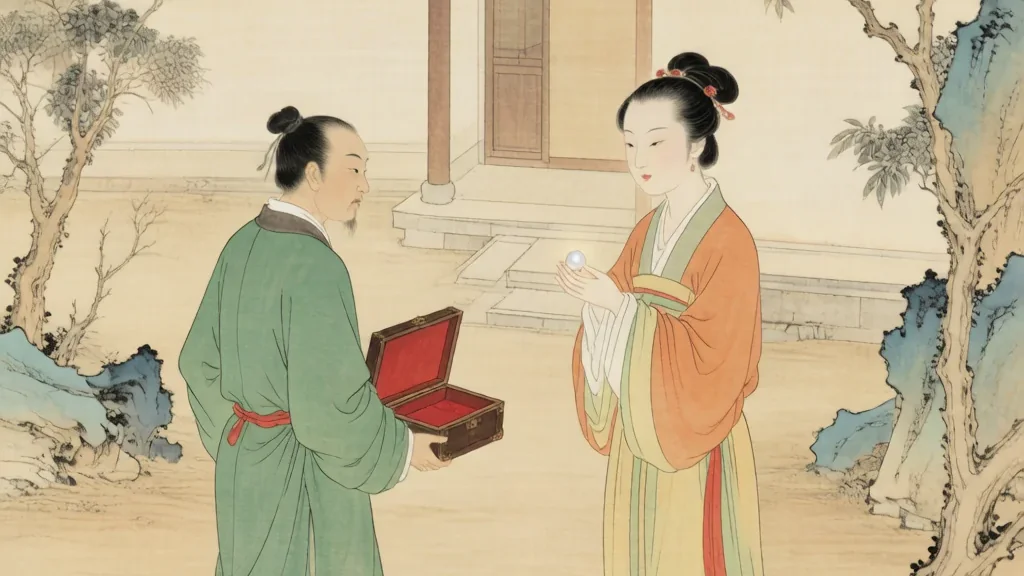
Covering the Ears to Steal a Bell
A Chu merchant carved a display box from rare rosewood, perfumed it with cinnamon, and adorned it with jade. A buyer was so captivated that he purchased the pearls, kept the box, and returned the pearls — giving Chinese the proverb 买椟还珠 (mǎi dú huán zhū) about misplaced priorities.

Notching the Boat to Find the Sword
Every Chinese New Year, families serve a whole fish at the reunion dinner but deliberately leave a portion uneaten — a ritual that transforms dinner into a blessing. This practice springs from 年年有余 (nián nián yǒu yú), where the word 余 (yú, surplus) sounds identical to 鱼 (yú, fish), making the fish on the plate a living symbol of abundance stretching into the future.
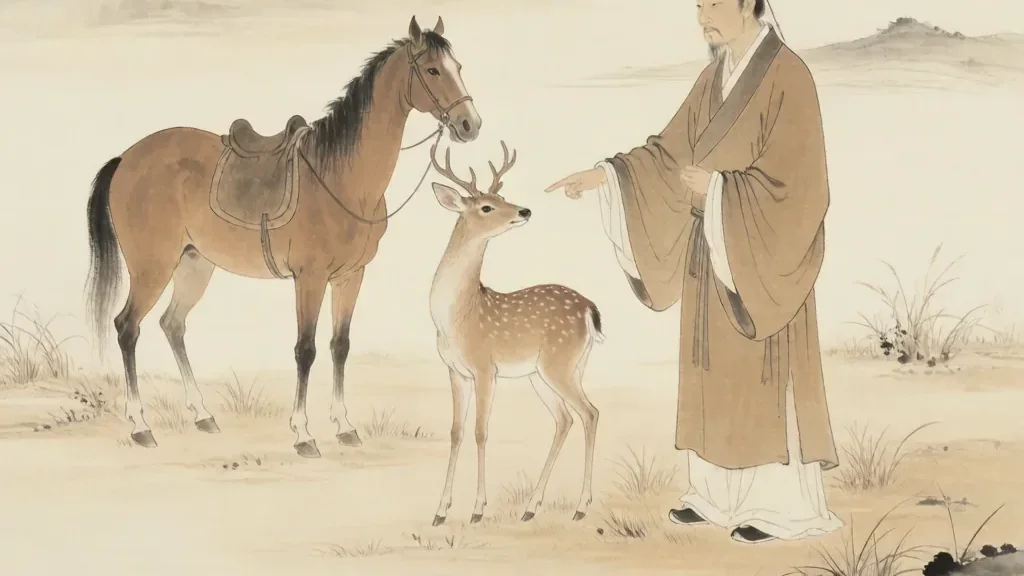
Pointing at a Deer and Calling It a Horse
After the Qin dynasty collapsed with astonishing speed — just fifteen years after unifying China — Han dynasty historians scrambled to understand what had happened. The great historian Sima Qian recorded the lesson: 前事不忘,后事之师 (qián shì bù wàng, hòu shì zhī shī) — 'the past is not forgotten; it is the teacher of the future.'
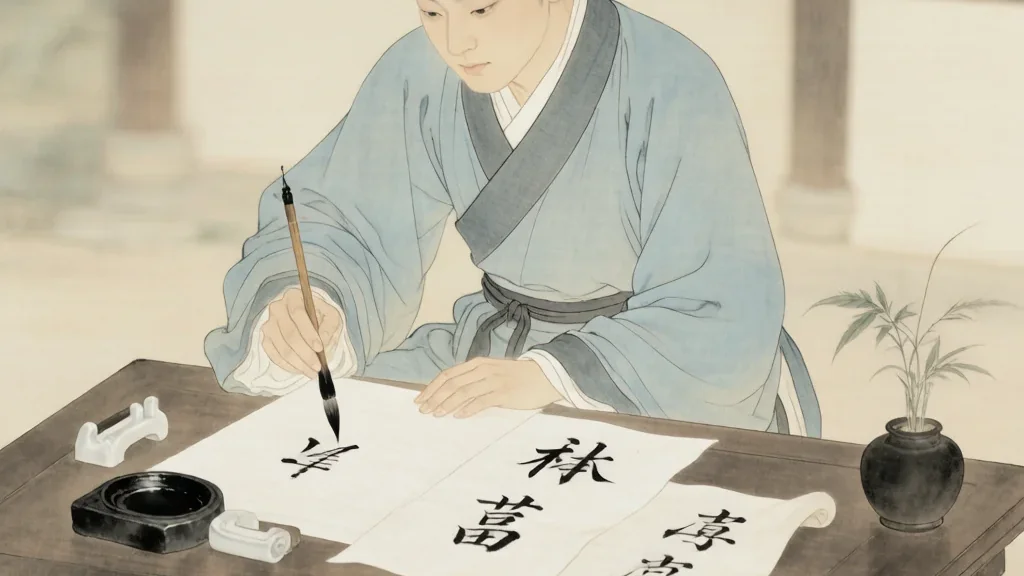
Drawing a Snake and Adding Legs
A slow-witted student in imperial China repeated his lessons hundreds of times while his classmates grasped them instantly. But by the end of the year, the slow student had surpassed the quick ones — because his repetitions had burned the knowledge into memory more deeply. This observation produced the proverb 勤能补拙 (qín néng bǔ zhuō): 'diligence can compensate for dullness.'

The Old Man Lost His Horse: A Blessing in Disguise
When philosopher Xunzi watched indigo dye being extracted from blue plant leaves, he saw something extraordinary: a substance that came from something else yet surpassed it. 'Indigo is extracted from the blue but is bluer than the blue' — thus 青出于蓝 (qīng chū yú lán) became an eternal tribute to students who surpass their teachers.
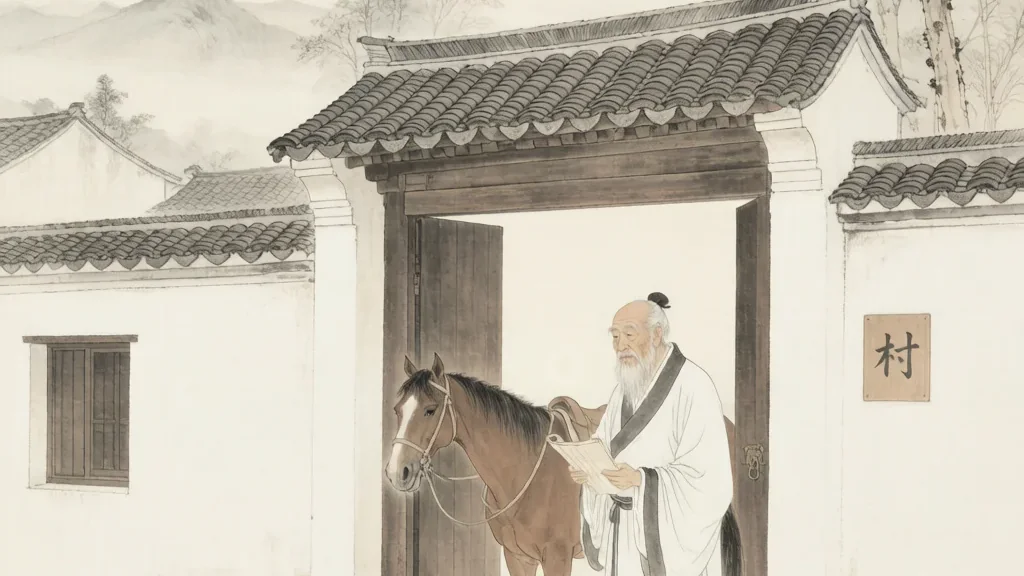
Ambush from All Sides
An old man living at the frontier lost his prized horse to northern raiders. Neighbors consoled him, but he replied calmly: 'Perhaps this is good fortune.' Months later, the horse returned leading a herd of fine northern horses. When the neighbors congratulated him, he said: 'Perhaps this is misfortune.' His son broke his leg riding one of the new horses — but this injury saved his son from being conscripted into a war that killed most of the soldiers. This story is the source of 塞翁失马 (sài wēng shī mǎ).

Seeking Victory Through Stability
A lie repeated often enough becomes truth — this dark insight into human psychology was recognized in ancient China through the proverb 三人成虎 (sān rén chéng hǔ): 'three people make a tiger.' If enough people say there is a tiger in the marketplace, the story goes, everyone will flee — even though no tiger exists.

Using Flesh as Bait
The image of a lone hunter climbing a mist-shrouded mountain to confront a man-eating tiger has captured the Chinese imagination for centuries. The proverb 上山打虎 (shàng shān dǎ hǔ) is not about hunting — it is a declaration of fearless resolve in the face of daunting challenges.
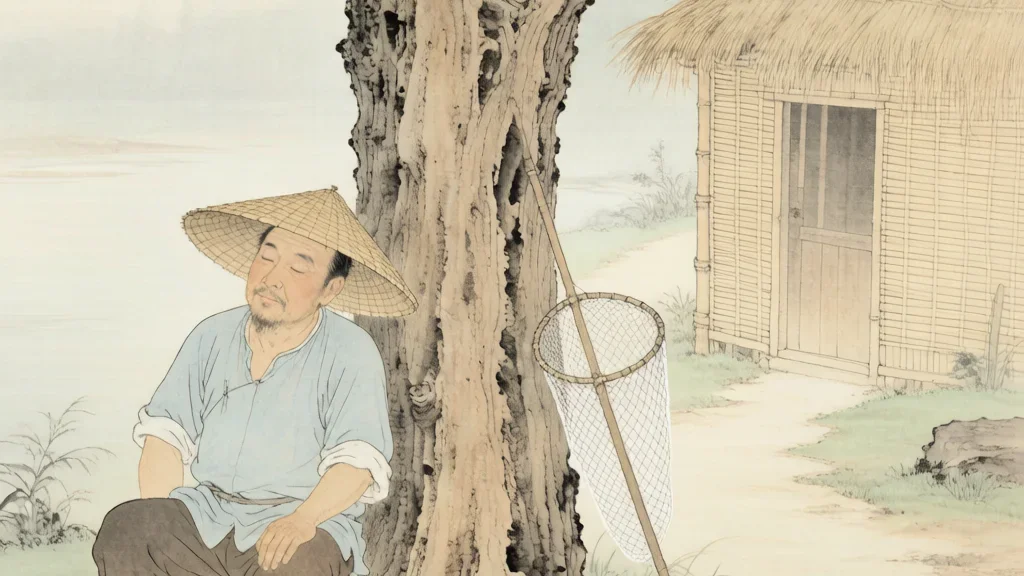
Great Wisdom Seems Like Folly
A farmer spotted a rabbit that, fleeing a hunter, crashed into a tree stump and died. Overjoyed, he abandoned his fields and waited by the stump for more rabbits. None came — and his fields grew barren. This story from the Legalist philosopher Han Fei produced the proverb 守株待兔 (shǒu zhū dài tù): 'guarding the stump for rabbits.'
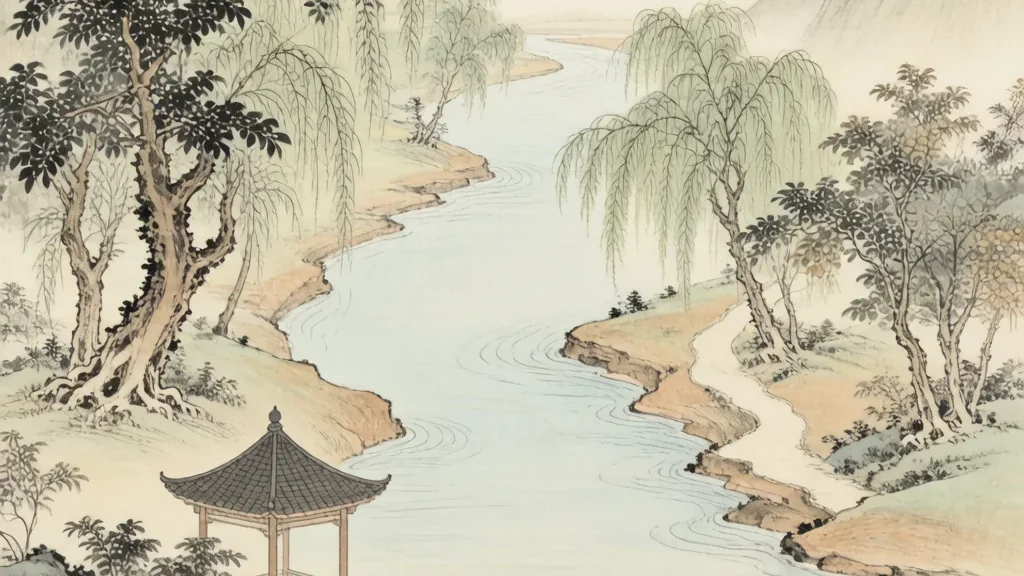
First Aware, Then Thoughtful
A farmer digging an irrigation channel in ancient China knew the water would not wait for perfect completion — but once released, the flow carried silt that naturally shaped and deepened the channel. This observation crystallized into 水到渠成 (shuǐ dào qú chéng), teaching that outcomes emerge naturally when conditions are right, not through forced effort.
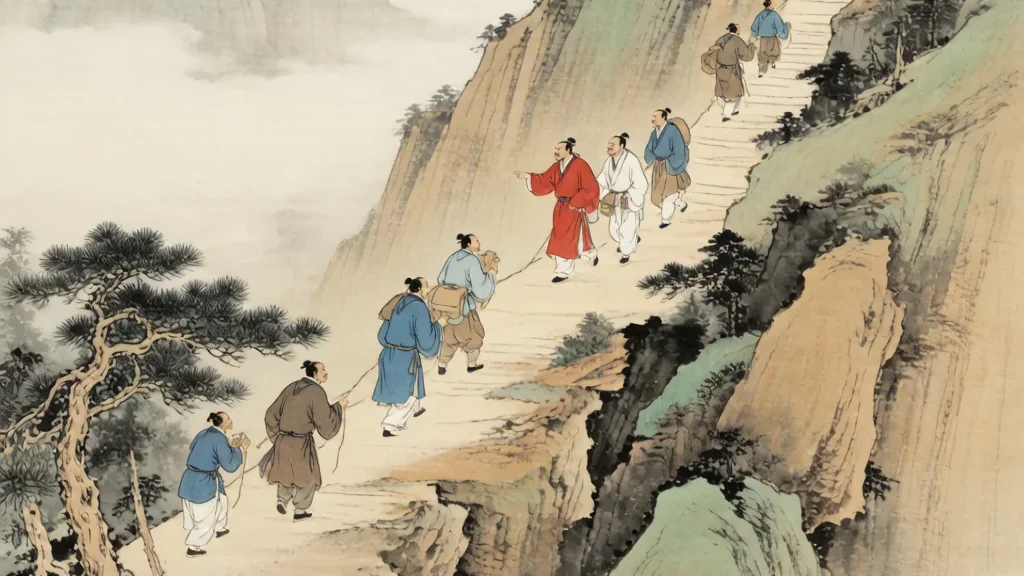
Hearts That Understand Without Words
When Ming dynasty explorer Zheng He prepared to launch his treasure fleet across the Indian Ocean, skeptics warned of impossible distances and uncharted waters. His reported reply: 天下无难事 (tiān xià wú nán shì) — 'nothing under heaven is difficult,' a bold declaration that human effort could overcome any obstacle.
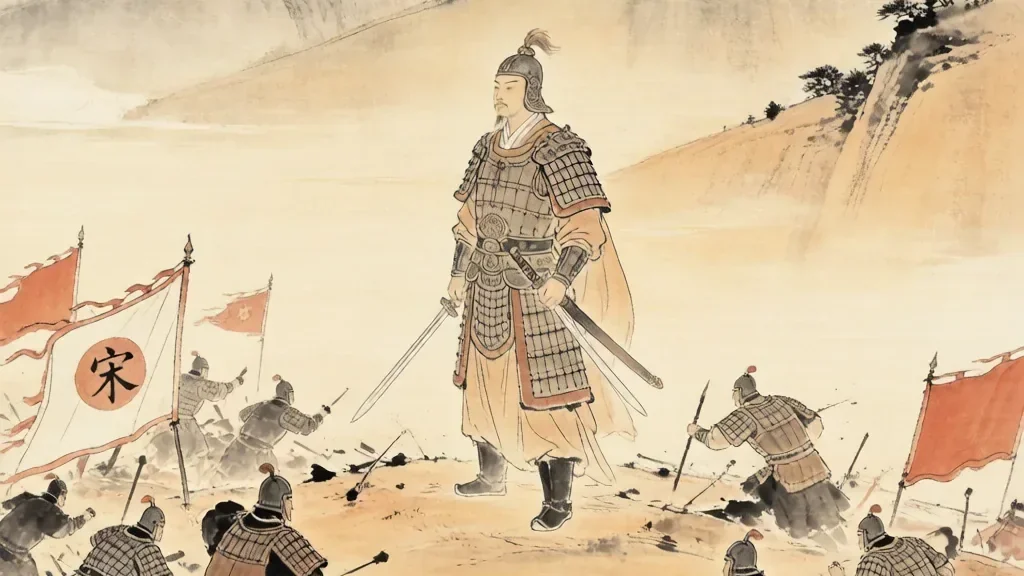
Diligence Compensates for Clumsiness
In the chaos of an ancient Chinese battlefield, a commander who could distinguish the sound of his own army's bells from the enemy's — and know when to advance, retreat, or hold — held the difference between victory and annihilation. The proverb 闻钟求胜 (wén zhōng qiú shèng), 'hear the bell and seek victory,' encapsulates the military wisdom of reading signals accurately under pressure.

Unity of Will Becomes an Impregnable City
When the young philosopher Wang Yangming spent days staring at bamboo trying to understand its principle, he fell ill — and realized that knowledge does not come from external investigation but from inner awakening that then illuminates the world. This experience shaped the proverb 先觉后博 (xiān jué hòu bó): 'first be aware, then be broad.'
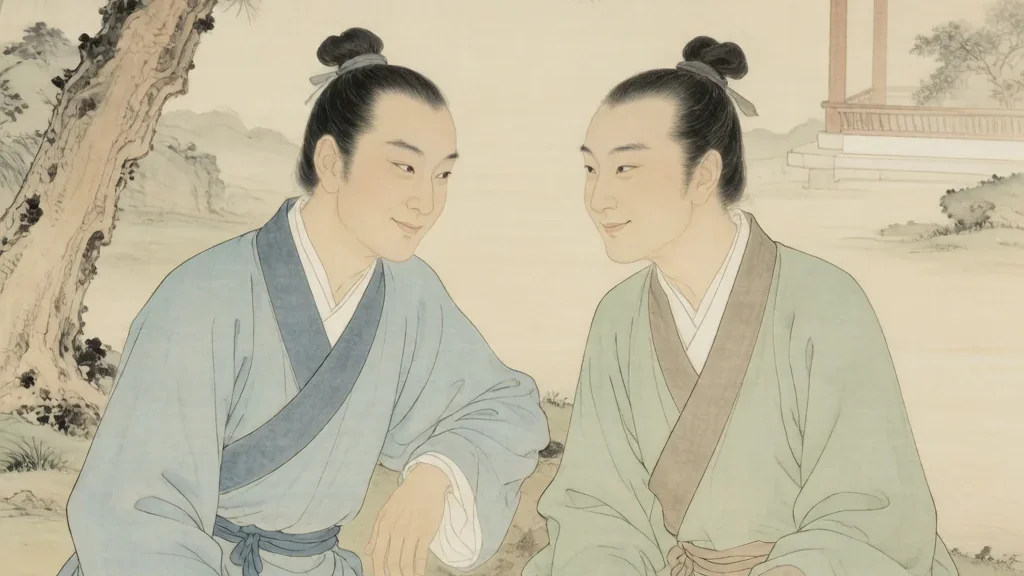
Stillness Before Action
Two old friends sit drinking tea in a mountain pavilion, watching fog roll across the peaks. One mentions an event from thirty years ago; the other nods. No explanation is needed, no elaboration required. This wordless communion is the essence of 心照不宣 (xīn zhào bù xuān): 'the heart shines but is not declared.'
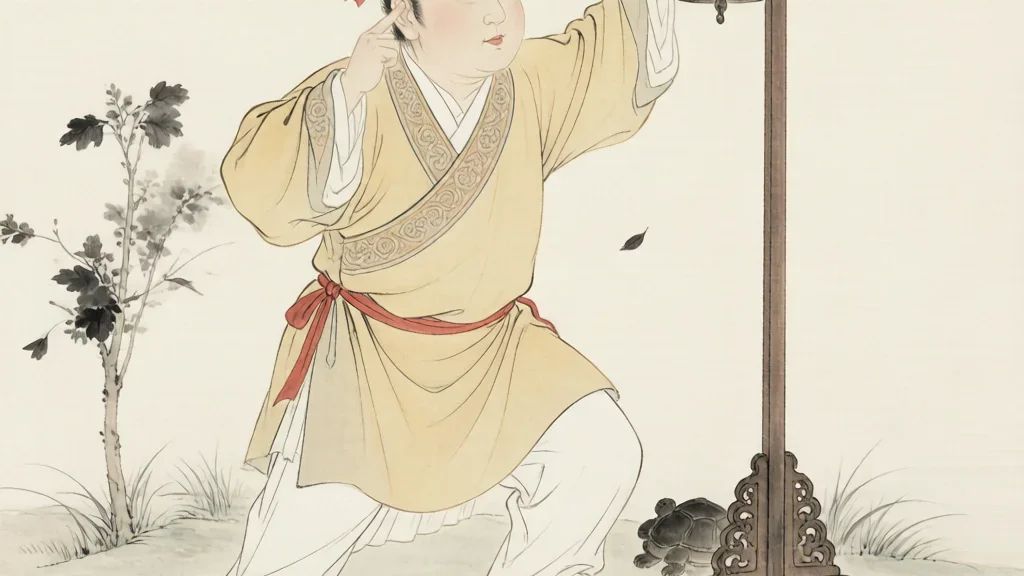
To Do a Good Job, First Sharpen Your Tools
A thief in ancient China wanted to steal a large bronze bell but knew that moving it would make a sound. So he covered his own ears and proceeded — believing that if he could not hear the bell, neither could anyone else. Thus was born 掩耳盗铃 (yǎn ěr dào líng): 'covering the ears to steal a bell.'
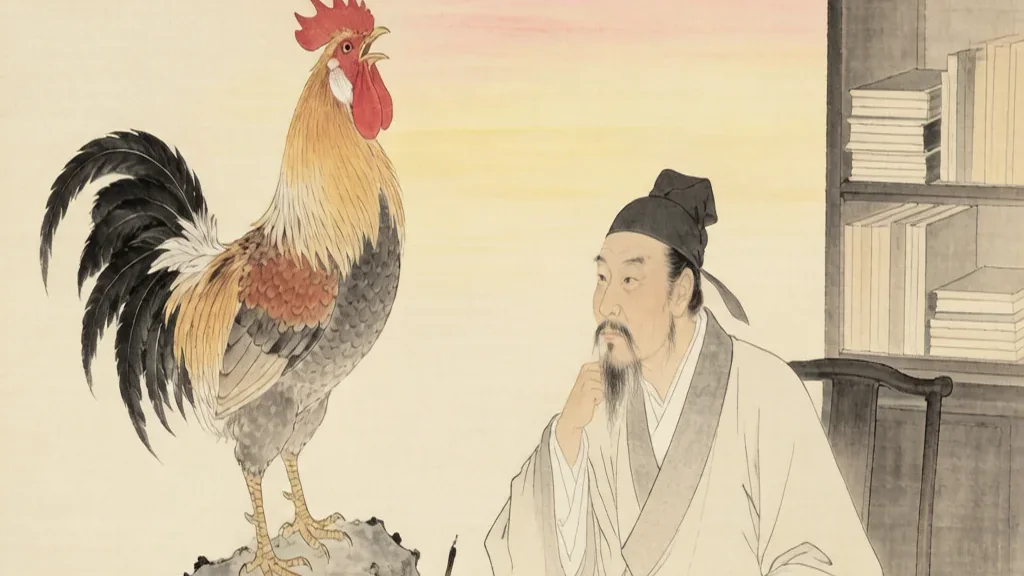
Without Experiencing One Thing
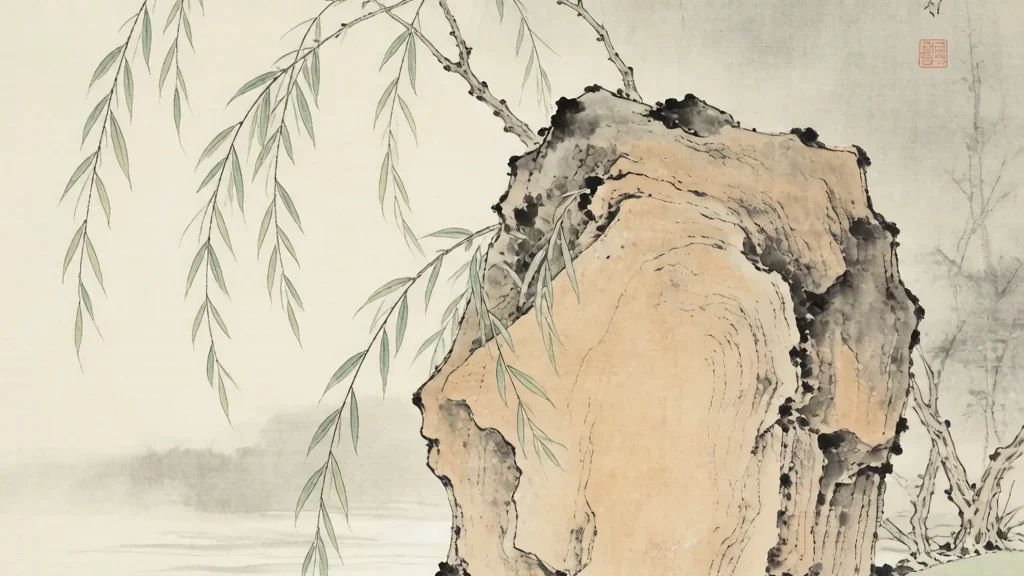
Before electric lights and 24-hour convenience stores, Chinese farmers structured their entire existence around the rising sun — a field weeded at dawn yielded far more than one tended at noon. The proverb 一日之计在于晨 (yī rì zhī jì zài yú chén) distills this agrarian wisdom: plan the day at dawn and the rest will follow.
Past Events Teach Us
Water is the softest substance in the world, yet it can carve canyons through solid stone over time. This observation, central to Daoist philosophy, is crystallized in the proverb 以柔克刚 (yǐ róu kè gāng): 'using softness to overcome hardness.'
Advancing with the Times
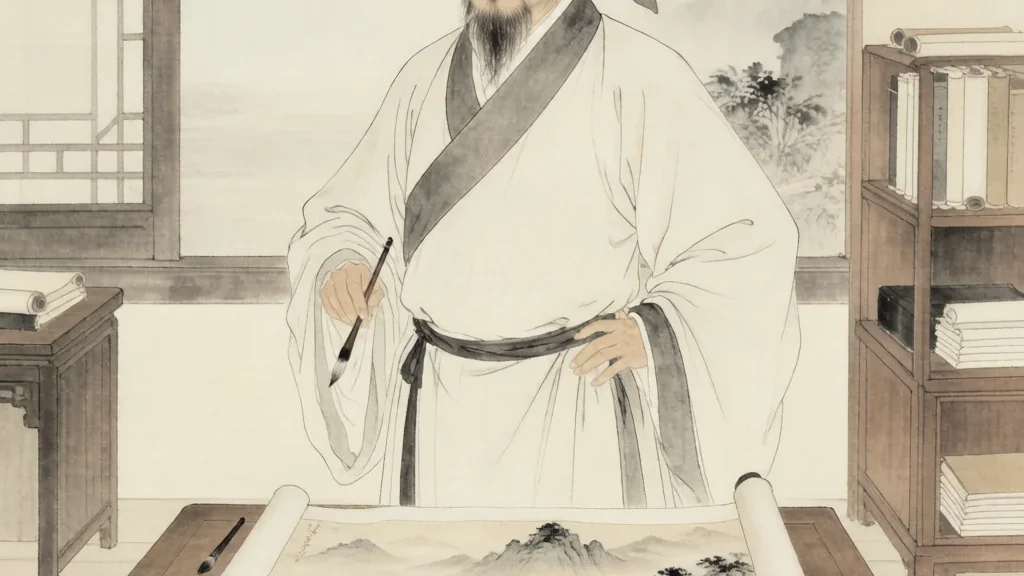
When young General Geng Yan proposed an impossibly bold military campaign to Emperor Guangwu of the Eastern Han dynasty, the emperor uttered a phrase that would echo for two millennia: 有志者事竟成 (yǒu zhì zhě shì jìng chéng) — 'where there is a will, there is a way.'

In Times of Peace, Prepare for Danger
When the modern world came crashing into China in the 19th century, bringing guns, treaties, and ideas that the ancient civilization had never encountered, Chinese thinkers realized that survival required adaptation. The principle 与时俱进 (yǔ shí jù jìn) — 'advance with the times' — became the intellectual foundation of China's modernization.
A Fall in a Pit, a Gain in Wit
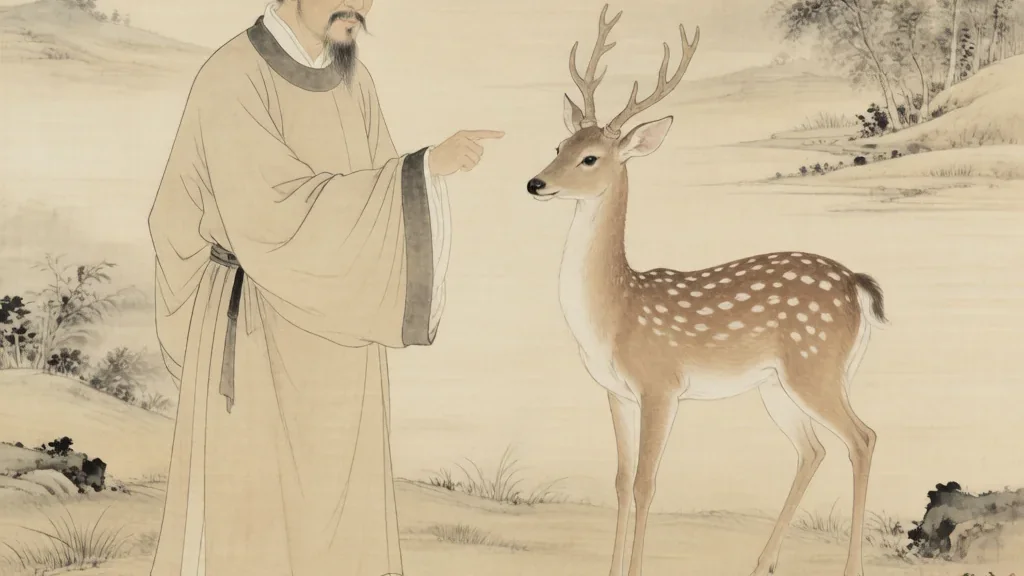
The most powerful eunuch in Chinese history, Zhao Gao, once presented a deer to the Second Emperor of Qin and called it a horse. When the emperor laughed in disbelief, Zhao Gao asked the assembled courtiers to identify the animal — and those who called it a deer were later executed. This chilling episode produced the proverb 指鹿为马 (zhǐ lù wéi mǎ): 'calling a deer a horse.'

Three People Make a Tiger: The Power of Rumor
When King Zhou of the Shang dynasty built a massive wine pool and a forest of hanging meat to indulge his depravity, his people's will hardened against him like a fortress wall — and his dynasty fell. The observation that 'the people's will becomes a fortress' (众志成城, zhòng zhì chéng chéng) captured a revolutionary truth: the power of a ruler depends entirely on the united will of the people.