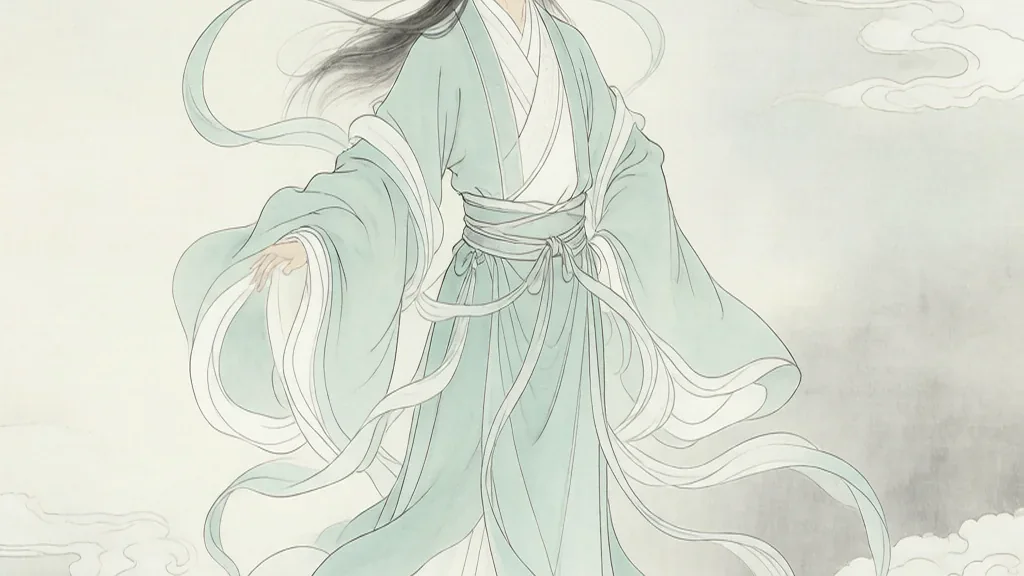
Feng Bo (风伯), the Wind Duke, is the deity who commands the winds in Chinese mythology. A member of the storm pantheon alongside the Rain Master, Thunder God, and Lightning Mother, he stirs the air that brings clouds, scatters seeds, and sometimes wreaks havoc. Though less worshipped than the rain-givers, the Wind Duke embodies an element both necessary and unpredictable — the breath of heaven that ancient farmers learned to read and respect.
Identity and Early Sources
Feng Bo appears in the "Chu Ci" and other early texts, often paired with Yu Shi the Rain Master as companions of the high god or of culture heroes. In some accounts he is named Fei Lian (飞廉), a wind spirit depicted with a bird's body and a deer's horns, able to whip up gales in an instant.
The name "Wind Duke" marks him as a ranked celestial official, part of the same bureaucratic imagination that organized thunder and rain into departments. Wind, like weather generally, was governed, not random.
Fei Lian, the Wind Spirit
Fei Lian is the most colorful form of the Wind Duke. Described as a hybrid beast — swift, horned, bird-winged — he personifies wind's restless speed. Some tales make him a servant of the mythical archer Yi or of the storm gods, summoned to raise or still the air.
As a named individual rather than an abstract office, Fei Lian gave the wind a personality: capricious, fast, and physically present. His image appears in art as a leaping creature trailing streams of air.
Role in the Storm Pantheon
In the weather team, Feng Bo moves first. His winds gather and push the clouds; Yu Shi then releases rain; Lei Gong and Dian Mu supply sound and light. A calm day means Feng Bo is idle; a typhoon means he is unleashed.
Because wind precedes rain, the Wind Duke was logically the opener of storms. Farmers watched his signs — the direction, the feel — to forecast weather, blending observation with the sense that a god was at the helm.
Wind in Agriculture and Navigation
Wind was doubly vital: it carried the rains that nourished crops and, on the coast, filled the sails of traders and fishers. Too little and the fields baked; too much and the boats sank. Feng Bo thus governed both harvest and livelihood.
Coastal and riverine communities paid special attention to him, offering small rites before voyages and after storms. A favorable wind (顺风) was a blessing openly requested, and safe return credited to his mercy.
Myths of Controlled and Violent Wind
Many tales describe heroes binding or hiring Feng Bo. The archer Yi, in some versions, shoots or commands him; the Yellow Emperor is said to have used winds in battle with Chi You. These stories show wind as a force that great figures could direct.
Conversely, uncontrolled wind is a destroyer — uprooting trees, ruining crops, spreading plague-bearing air. The Wind Duke's double nature made him an object of both request and restraint.
Rituals and Avoidance
Unlike the Rain Master, Feng Bo had few grand temples, but he was honored within storm and weather rites and within the broader pantheon of natural spirits. Almanacs noted wind directions as omens, and builders avoided orienting openings against the harsh seasonal winds.
The logic was preventive: one did not so much worship the Wind Duke daily as accommodate him — siting houses, planting windbreaks, and timing travel to his moods. Respect here was practical ecology.
Symbolism of Wind
In Chinese thought wind (风) also means "customs" and "influence" — the wind that shapes public morality as surely as fields. The same character links weather and culture, so the Wind Duke quietly stands for the pervasive force of example and atmosphere.
Poets used wind as a mood: the east wind of spring, the west wind of autumn sorrow. The deity behind it all was Feng Bo, the breath moving both leaves and lyrics.
Legacy Today
Feng Bo survives mainly in the company of the other weather gods — in murals, festival processions, and modern fantasy media where the storm team appears together. His Fei Lian beast-form occasionally shows up in games as a wind monster.
Though no great cult surrounds him, the Wind Duke remains a reminder that the Chinese imagination gave even the invisible air its own lord, and that calm or tempest was someone's doing.
Feng Bo in Seasonal Calendars
Almanacs of the imperial era tracked the "wind of the month," linking each season's characteristic breeze to Feng Bo's mood and to farming tasks. The east wind of spring was read as a sign to sow, while harsh autumn winds warned of harvest hurry.
Farmers learned to read his directions as forecasts, a folk meteorology wrapped in devotion. A steady favorable wind meant the god was pleased; a sudden violent one meant he was roused, and precautions for boats and roofs followed at once.
This calendrical role shows Feng Bo as a rhythm-keeper as much as a storm-maker. He marked the turning of the agricultural year, his invisible breath the metronome of planting and reaping across the countryside.
Sailors developed a special devotion to Feng Bo, reading his moods from the color of the horizon and the taste of the air. A calm favorable wind before departure was counted as his personal blessing on the voyage.
For them the Wind Duke was less a myth than a daily colleague, met at the rail each morning. To respect him was simply seamanship, the practical side of a wind god grown intimate with those who lived by his breath.
❓ Frequently Asked Questions
Who is Feng Bo?
Feng Bo, the Wind Duke, is the Chinese god of wind, a member of the storm pantheon alongside the Rain Master, Thunder God, and Lightning Mother. He stirs the air that drives weather.
What is Fei Lian?
Fei Lian is the wind-spirit form of Feng Bo, described as a hybrid beast with a bird's body and deer's horns, able to raise gales. The two names refer to the same wind deity.
What is Feng Bo's job in a storm?
He moves first, gathering and pushing the clouds so the Rain Master can release water and Lei Gong can thunder. Calm or tempest depends on whether he is idle or unleashed.
Why is wind symbolic beyond weather?
The character for wind (风) also means "customs" and "influence," so the Wind Duke quietly represents the pervasive force that shapes public morality and atmosphere.
Was Feng Bo worshipped much?
He had fewer grand temples than the rain gods but was honored in weather rites and almanac lore, with communities accommodating his moods in building and travel rather than worshipping daily.
Where is Feng Bo seen today?
Mostly with the other weather gods in murals, festival floats, and fantasy media, occasionally as the Fei Lian beast — a wind lord still recognized even without a big cult.