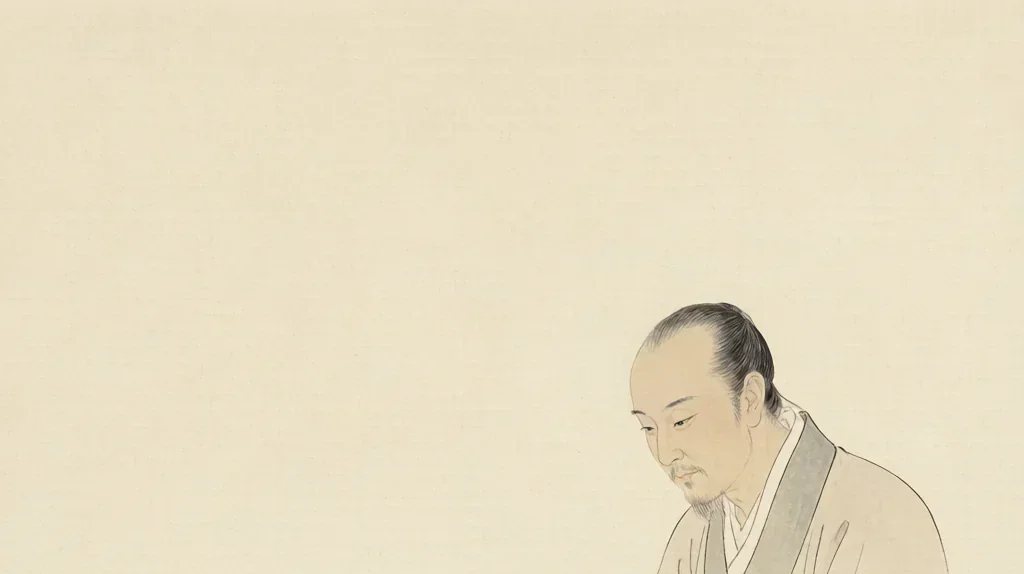
Step into a world where mountains breathe, water flows with meaning, and a single brushstroke can capture the soul of a plum blossom. This is the world of Chinese painting — guohua (国画), literally "national painting" — an art form that has flourished for over two thousand years and remains one of humanity's most profound visual traditions. Unlike Western oil painting, which often seeks to reproduce reality with photographic precision, Chinese painting pursues something deeper: the spiritual essence of its subject, the rhythm of nature, and the inner world of the artist.
At the heart of guohua lies a beautiful paradox. The artist trains for decades to master brush technique, yet the highest praise one can receive is that a painting appears effortless — as natural as wind through bamboo. This tension between discipline and spontaneity defines the Chinese painting tradition and reveals much about Chinese philosophy itself.
The Three Great Subjects: Mountains, Flowers, and Figures
Chinese painting traditionally divides into three principal genres. The most revered is landscape painting (shanshui, 山水), which translates literally as "mountain-water." This is not accidental: mountains represent the yang principle — solid, enduring, reaching toward heaven — while water embodies yin — fluid, receptive, ever-changing. Together they form a complete vision of the cosmos. A shanshui painting is never merely a pretty view; it is a philosophical statement about humanity's place in the natural order.
The second genre is bird-and-flower painting (huaniao, 花鸟). Despite its gentle name, this tradition carries immense symbolic weight. Every subject is chosen for its meaning: the plum blossom blooms in winter, representing perseverance through hardship; the bamboo bends without breaking, symbolizing moral integrity; the orchid grows in secluded valleys, embodying humility and refinement; the chrysanthemum flourishes in autumn frost, standing for noble retirement. Together, these form the "Four Gentlemen" (四君子) — a quartet of plants that every scholar-painter was expected to master as a form of moral self-cultivation.
The third genre, figure painting (renwu, 人物), predates both landscapes and bird-and-flower works. Early figure painting served religious and didactic purposes, depicting Buddhist deities, Confucian exemplars, and scenes of courtly life. The famous Admonitions of the Court Instructress, attributed to Gu Kaizhi (c. 344–406 CE), is among the earliest surviving examples, using fine, unbroken lines to convey both narrative and moral instruction.
The Brush and Ink: Tools of the Spirit
The Chinese painter's toolkit is deceptively simple. The "Four Treasures of the Study" (文房四宝) — brush, ink stick, ink stone, and paper — have remained essentially unchanged for over a millennium. The brush is typically made of animal hair (goat, wolf, rabbit, or a combination) set into a bamboo handle. Its tapered point can produce lines as fine as a hair or as bold as a thundercloud, all depending on pressure, angle, and speed.
The ink stick is made of pine soot or lampblack mixed with animal glue, pressed into molds and often decorated with poetic inscriptions. To prepare ink, the artist grinds the stick against a wet ink stone in a slow, meditative circular motion. This ritual is itself a form of mental preparation — the artist centers their mind while the ink darkens.
Chinese painting uses xuan paper (宣纸), a highly absorbent surface that offers no room for correction. Every stroke is permanent. This demands absolute presence and conviction from the artist. A famous saying captures this perfectly: "The idea must precede the brush" (意在笔先). The painter visualizes the entire composition in their mind before ever touching brush to paper.
Ink Wash: The Art of Absence
Perhaps no technique better illustrates Chinese painting's philosophical depth than ink wash painting (shuimo, 水墨). By varying the ratio of ink to water, the artist creates an infinite spectrum of tones — from the deepest black to the palest ghost-gray. But even more important is what is not painted. The unpainted white space is called liubai (留白), "left white," and it is far from empty. It might be mist, water, sky, or simply the breath of the Dao itself — the pregnant void from which all form emerges.
The great Tang dynasty poet-painter Wang Wei (699–759 CE) is traditionally credited with elevating ink wash to high art. His landscapes, known only through later copies and literary descriptions, reportedly dissolved mountains into mist and suggested vast distances with the lightest of washes. Su Shi (Su Dongpo), the Song dynasty polymath, praised Wang Wei by saying, "In his poetry, there is painting; in his painting, there is poetry." This ideal of "poetry in painting, painting in poetry" (诗中有画,画中有诗) became the gold standard for Chinese art.
The Literati Tradition: Painting as Self-Cultivation
During the Song dynasty (960–1279 CE), a new class of painter emerged: the literati (wenren, 文人). These were scholar-officials who painted not for money or imperial patronage but for personal expression and spiritual cultivation. They distinguished themselves from professional court painters, whom they viewed as mere craftsmen. For the literati, painting was one of the "Four Arts" that every cultivated person should practice, alongside the qin (zither), qi (the strategy game Go), and calligraphy.
This literati ideal transformed Chinese painting. Technical perfection mattered less than qi yun (气韵) — "spirit resonance" or "rhythmic vitality." A painting might be deliberately awkward or simplified if it captured the artist's authentic inner state. The Yuan dynasty masters — Huang Gongwang, Ni Zan, Wu Zhen, and Wang Meng — pushed this aesthetic to its zenith, creating landscapes that feel deeply personal and introspective. Ni Zan's spare, almost barren compositions, with their minimalist trees and distant mountains, speak of solitude and detachment from worldly affairs.
Seals and Inscriptions: The Complete Artwork
Walk through any Chinese painting exhibition and you will notice something that might puzzle the Western eye: the paintings are covered in writing. Red seal impressions and brushed inscriptions are not defacements but essential elements of the artwork. A Chinese painting is a composite art form uniting image, poetry, and calligraphy. The artist adds their signature seal and perhaps a poem inspired by the scene. Later collectors and admirers add their own seals and appreciative comments, creating a visual conversation across centuries.
This tradition means that a Chinese painting is never truly "finished" in the Western sense. It accumulates meaning over time, each seal and inscription adding a new layer of historical and emotional resonance. The Qianlong Emperor (r. 1735–1796) was an especially enthusiastic collector, and his large square seal appears on countless masterpieces in the Palace Museum collections — sometimes controversially, as later critics felt he marred the compositions he so admired.
Modern Transformations and Global Influence
Chinese painting did not end with the imperial era. The 20th century saw vigorous experimentation as artists grappled with Western influence. Xu Beihong (1895–1953) studied in Paris and returned to China with a mission to revitalize Chinese painting through Western realism, becoming famous for his dynamic ink horses. Zhang Daqian (1899–1983) traveled the world and developed a spectacular splashed-color technique inspired by Abstract Expressionism, yet rooted in Tang dynasty precedents.
Meanwhile, Chinese painting has profoundly influenced artists globally. The Abstract Expressionists, including Mark Tobey and Franz Kline, drew inspiration from Chinese calligraphy and ink techniques. Japanese sumi-e painting is a direct descendant of Chinese ink wash. Today, contemporary artists like Xu Bing and Cai Guo-Qiang continue to reinvent Chinese painting traditions for a global audience, proving that guohua is not a museum relic but a living, breathing art form.
📝 Chinese Vocabulary
- 国画 (guóhuà) — National painting; traditional Chinese painting
- 山水 (shānshuǐ) — Landscape painting, literally "mountain-water"
- 水墨 (shuǐmò) — Ink wash painting, literally "water-ink"
- 留白 (liúbái) — Intentional empty space in a composition
- 四君子 (sì jūnzǐ) — The Four Gentlemen: plum, orchid, bamboo, chrysanthemum
Gongbi and Xieyi: Two Modes of Brush
Chinese painting runs on a spectrum between two contrasting modes. At one end is gongbi (工笔), the 'meticulous' manner: the artist lays down a precise ink contour and then builds color in patient, even layers, a method suited to birds, flowers, and palace subjects where accuracy matters. At the other end is xieyi (写意), the 'freehand' manner, which uses wet, spontaneous strokes to capture a subject's spirit rather than its likeness. A single artist might use gongbi for a careful flower study and xieyi for a drinking-game sketch. The contrast is less a rule than a choice of temper: discipline versus spontaneity, description versus suggestion, the two poles that give guohua its remarkable range.
Scrolls, Albums, and Fans
Guohua was made for formats very different from the framed canvas. The handscroll (手卷) is a long horizontal strip viewed inches at a time, unrolled across a table so the picture unfolds like a journey through time and space. The hanging scroll (立轴) is meant for vertical display on a wall, admired briefly then put away. The album (册页) gathers small leaves, each a self-contained vignette, while the fan offers a curved, portable surface. Because ink on xuan paper cannot be corrected, each format demanded that the painter plan the whole composition before the first stroke — the idea, as the old saying goes, must precede the brush.
❓ Frequently Asked Questions
🎉 Fun Facts
- The world's oldest known Chinese painting on silk dates to the Warring States period (c. 475–221 BCE) and depicts a man riding a dragon.
- During the Song dynasty, Emperor Huizong established an imperial painting academy with an entrance exam that asked candidates to paint a line of poetry — judging not technical skill but poetic imagination.
- The longest Chinese painting ever created is Along the River During the Qingming Festival by Zhang Zeduan, a scroll over 5 meters long depicting daily life in 12th-century Kaifeng with astonishing detail.
- A good ink stone can outlast its owner by centuries, its surface deepening as it 'breathes' the ink ground on it.
- The 17th-century Ten-Bamboo Studio manuals were among the first printed books to teach painting through woodblock color prints.
- Some literati painters finished a handscroll over many sittings, unrolling only a few feet at a time so a viewer 'traveled' the scene.