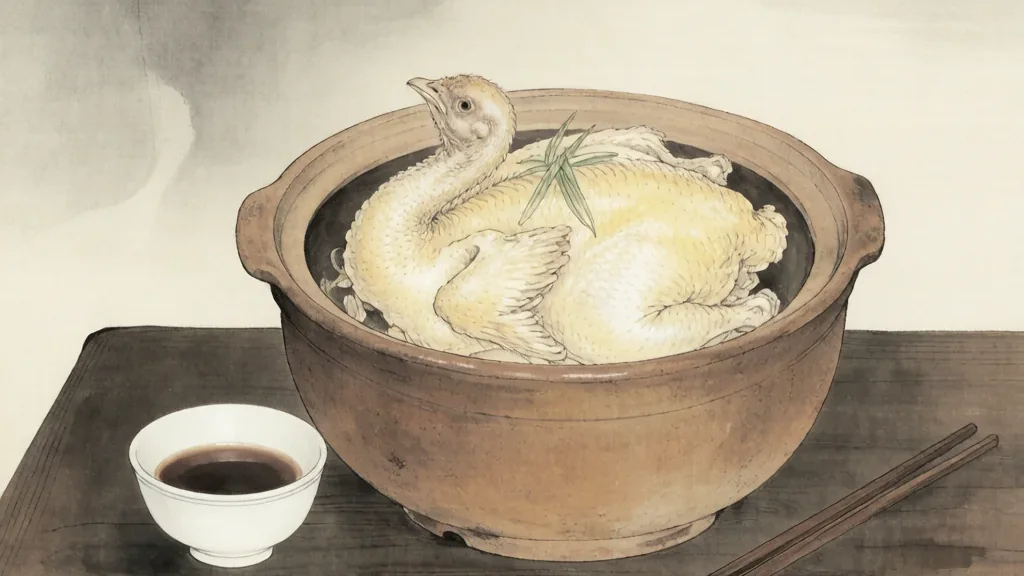
"Fugui" (富贵) means "wealth and honor," and in Chinese food culture it names a whole class of auspicious dishes whose titles and appearances are chosen to broadcast good fortune. Rather than a single fixed recipe, a "fugui" dish is any preparation styled as a token of prosperity—most famously fugui ji (富贵鸡, "wealth and honor chicken," a variant of beggar's chicken) and fugui xia (富贵虾, prawns dressed to look lavish). The tradition reveals how Chinese festive cooking fuses flavor with wishes: a dish is not only eaten but "read," its name a small blessing spoken aloud at the table.
The Meaning of Fugui
The two characters are common in blessing language. Fu (福) is fortune and happiness; gui (贵) is honor, nobility, and high status. Together they form a wish for material comfort and social respect—exactly what hosts hope to wish guests at New Year and other milestones.
Because the phrase is auspicious rather than descriptive, it attaches easily to many dishes. A cook can call a carefully presented chicken or a pile of glossy prawns "fugui" and immediately lift it from ordinary food to a voiced good wish, part of the meal's ceremonial language.
Fugui Ji (Wealth and Honor Chicken)
The best-known fugui dish is a take on beggar's chicken: a whole bird wrapped in lotus leaves and clay and slow-baked or roasted until the meat is perfumed and falling. The "fugui" name elevates the rustic legend—of a chicken buried and baked in mud—into a banquet centerpiece.
Wrapping in lotus leaf keeps the bird moist and scented, and cracking the clay at the table is theatrical, a moment of reveal that suits a celebratory meal. The dish's story and its grand presentation make it a natural carrier of the prosperity wish.
Fugui Xia and Other Luxe Variants
Fugui xia typically presents large prawns—sometimes butterflied and fanned, or braised in a glossy sauce—arranged to look abundant. Shrimp (虾, xiā) also homophones with laughter (笑, xiào) and with "ha" wishes for joy, doubling the auspicious reading.
Other "fugui" styled dishes appear on banquet menus wherever a cook wants a prosperous-sounding title: a platter of mixed delicacies, a stuffed vegetable, or a ornate soup. The label is flexible, applied to whatever the kitchen wishes to present as special.
The Craft of Auspicious Naming
Chinese banquet menus are full of such punning names. Dishes are renamed for homophones and symbols: fish (鱼, yú) for surplus (余), noodles for long life, and fugui for wealth and honor. The name is part of the experience, spoken when the dish arrives.
This is why two restaurants may serve different "fugui" dishes; the constant is the blessing, not the recipe. Understanding the tradition helps a diner read a Chinese menu as poetry of good wishes rather than a literal list of ingredients.
Role at Festivals and Banquets
Fugui dishes anchor occasions that mark status and hope: New Year reunions, weddings, birthdays of elders, and business openings. Serving one signals that the host wishes everyone present both riches and respect in the year ahead.
Because the dishes tend to be showpieces—whole animals, elaborate platters—they also demonstrate the host's generosity. The food's expense and presentation are themselves messages, readable by guests who know the convention.
Ingredients That Signal Wealth
The foods chosen for fugui styling usually read as luxurious: whole poultry, large shellfish, abalone, mushroom "coins," and glossy braised items. Their cost and wholeness convey abundance. Even modest ingredients get a fugui upgrade through careful arrangement and sauce.
Color matters too. Golden, red, and glossy surfaces suggest coins, lanterns, and celebration. A fugui dish is thus designed as much for the eye and the omen as for the palate, balancing show and taste.
Home vs. Restaurant Versions
In home cooking, "fugui" may be a lighter touch—a nicely braised chicken simply named with the wish—while restaurants build elaborate versions with multiple components and theatrical service. Both share the intent of blessing the table.
The gap shows how a single auspicious word scales from everyday hope to formal spectacle. A family can claim fugui with a humble bird; a banquet claims it with clay-baked theater. The word does the cultural work in both.
Why the Tradition Endures
Auspicious food names survive because they bond eating to belonging. To name a dish fugui is to participate in a centuries-old language of wishes shared across dialects and regions, making a meal a small ritual of hope.
For Chinese diaspora communities, these named dishes also carry identity, linking a feast abroad to homeland custom. A "wealth and honor" chicken is therefore both a recipe and a reminder of where one's family wishes come from.
Reading the Banquet as a Poem of Wishes
To eat at a Chinese banquet is to read a sequence of blessings arranged in a deliberate order. A fugui dish near the opening sets the tone of wealth and honor, a later whole-fish course seals the wish for surplus (余, yú), and a noodle dish carries the hope for long life. The menu is composed like a poem, each dish a line of good intention spoken through food.
This framing changes how a guest experiences the meal. The "wealth and honor" chicken is not merely tasty; it is the host voicing luck aloud at the table. Children learn the homophones early, and naming the dishes becomes part of family storytelling, so the food carries memory as well as flavor.
Foreign diners sometimes miss this layer and read names literally, puzzled by a "wealth chicken." But once the convention is known, even a simple home meal reveals itself as a quiet act of hoping well for everyone present, with fugui as one of its most common opening lines.
❓ Frequently Asked Questions
What does fugui mean?
It means "wealth and honor," a common Chinese blessing, and it names dishes styled as tokens of prosperity rather than one specific recipe.
What is fugui ji?
It is a "wealth and honor chicken," typically a whole bird wrapped in lotus leaf and clay-baked, related to the beggar's chicken legend.
Is there a standard fugui recipe?
No; the name is applied to various lavish dishes—chicken, prawns, platters—united by the auspicious wish rather than by ingredients.
Why name food this way?
Chinese banquet culture uses homophones and symbols so a dish's name becomes a spoken blessing for fortune, longevity, or joy.
When are fugui dishes served?
At New Year, weddings, elder birthdays, and business openings—occasions where hosts wish guests prosperity and status.
Are fugui dishes always expensive?
They tend to use luxurious ingredients, but a home cook may simply name a modest braised chicken fugui; the wish, not the cost, is essential.