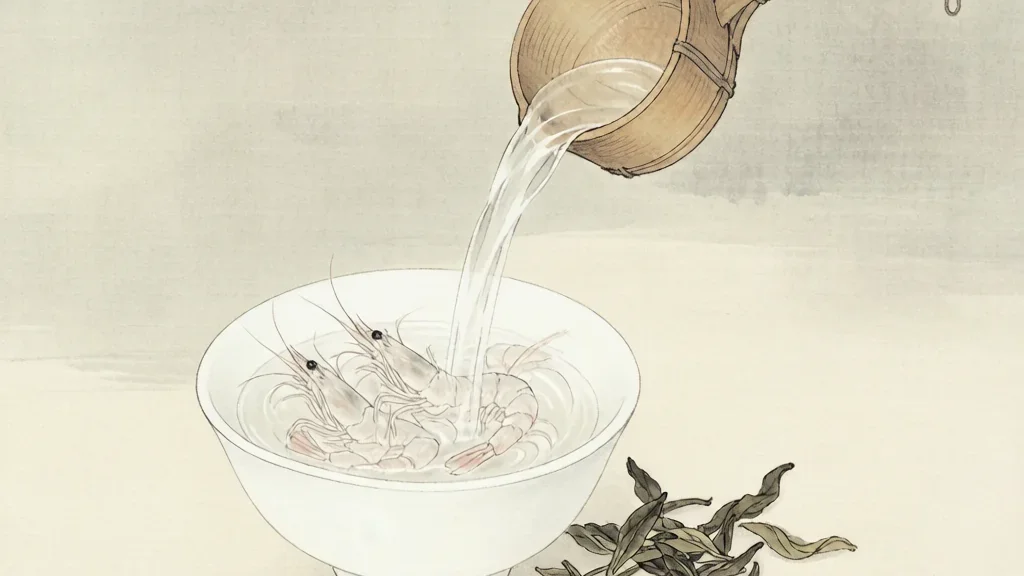
Longjing xia (龙井虾), "Longjing tea shrimp," is a celebrated Hangzhou dish that marries the famous West Lake Longjing green tea with fresh river shrimp, stir-fried quickly so the shellfish stay plump and the tea lends a delicate, grassy aroma. The dish is a showpiece of Zhejiang cuisine's restraint: few ingredients, gentle heat, and a color palette of pale green and pink that mirrors the lakeside spring. More than a recipe, it is a meeting of two Hangzhou icons—the tea that emperors praised and the shrimp of local waters—making it both a seasonal delicacy and a small act of regional patriotism on the plate.
Two Hangzhou Icons
Longjing (龙井, "Dragon Well") is one of China's most revered green teas, grown in hills around Hangzhou, prized for a flat leaf, a sweet vegetal note, and a lingering fragrance. West Lake shrimp are small, sweet freshwater prawns from the region's canals and lakes.
Pairing them is a natural local flourish: the tea's aroma lifts the shrimp's sweetness without masking it, and both speak of Hangzhou's landscape. The dish thus tastes of place as much as of ingredients.
Zhejiang Cuisine's Restraint
Zhejiang cooking, of which Hangzhou is the heart, values freshness, clarity, and subtle seasoning over heavy sauce or spice. Longjing xia is a textbook example: the cook's job is to preserve, not transform, the shrimp's natural character.
This makes the dish look almost plain—pale, lightly sauced, flecked with tea leaves—yet its success depends on precision. The cuisine's elegance is quiet, and the tea shrimp embodies that quietness.
The Shrimp
Freshwater shrimp are preferred for their sweet, tender meat. They are typically shelled (sometimes leaving the tail), deveined, and often lightly "velveted" with a little egg white and starch so they stay silky through the quick fry.
Size matters: small to medium shrimp cook in moments and stay juicy, while large ones risk toughness. The dish's refinement comes from this tenderness, which the fast cooking and the tea's moisture help protect.
The Tea Element
High-grade Longjing is brewed separately, and both the leaves and the cooled tea liquor may enter the wok. The leaves are added near the end so they stay green and fragrant rather than bitter; the liquor can replace part of the cooking liquid for aroma.
Using premium tea is traditional, though the brewing must be light—over-steeped tea turns astringent and would ruin the dish's balance. The leaves also serve as garnish, their flat green blades pretty against the pink shrimp.
The Quick Stir-Fry
Cooking is fast and hot. The shrimp hit a well-heated wok for a minute or two with a little oil, then the tea leaves and a splash of liquor join, and the dish is out almost immediately. Overcooking is the enemy; the shrimp should curl just to opaque.
Seasoning is minimal—a touch of salt, perhaps a few drops of wine—so the tea and shrimp lead. The finished plate is moist but not saucy, with the tea's aroma rising as it is brought to the table.
Seasonality and Occasion
The dish is best in spring, when new Longjing is harvested (the pre-Qingming pickings are most prized) and shrimp are sweet. Serving it then is a way to mark the season, much as other dishes celebrate their own peak ingredients.
It appears at banquets and as a refined home dish for guests, signaling both local pride and hospitality. Its lightness also makes it a welcome contrast on a table of richer foods.
Flavor and Aroma
Done well, Longjing xia is sweet, clean, and faintly floral from the tea, with a mouthfeel that is tender rather than crunchy. The tea contributes bitterness only as a whisper, just enough to keep the sweetness from cloying.
The aroma is the dish's signature: a guest should smell the green tea before tasting the shrimp. That scented first impression is what diners remember and what marks the dish as special.
Cultural Meaning
Longjing xia is often presented as a symbol of Hangzhou itself, the way Dongpo rou is. Together they show the city's range—one rustic and rich, the other refined and light—both rooted in West Lake culture.
For visitors, eating it is a way to taste the region's famous tea in an unexpected form, and for locals it is a quiet boast: our landscape produces both the leaf and the shrimp, and we know how to honor both.
Making It at Home
A home version uses shelled shrimp velveted in egg white and cornstarch, stir-fried briefly, then finished with a small handful of good Longjing leaves and a splash of brewed (cooled) tea. Light salt and speed are the keys.
The common pitfalls are overcooking the shrimp and using bitter tea; both are avoided by restraint. The reward is a dish that feels luxurious yet weighs almost nothing—a fitting close to a Hangzhou meal.
Tea in the Wok
Longjing xia belongs to a small, elegant tradition of cooking with tea, where the leaf is treated as an herb rather than a beverage. Beyond this dish, Chinese kitchens use tea to smoke duck, to perfume eggs, and to braise, each time relying on the leaf's aroma to do what spice cannot.
The practice suits green tea especially, because its fresh, grassy note pairs with delicate proteins like shrimp and fish without overwhelming them. A heavier smoked tea would dominate; Longjing whispers, which is exactly the effect a refined Hangzhou cook wants.
Cooking with tea also carries a cultural pun: to "eat the famous tea" is a playful way to consume local prestige, turning a drink associated with scholars and emperors into a bite on the banquet table. The dish is thus both flavor and a gentle boast of place.
❓ Frequently Asked Questions
What is Longjing xia?
It is a Hangzhou dish of fresh river shrimp quickly stir-fried with Longjing green tea leaves, prized for a delicate, grassy aroma and tender texture.
What kind of tea is used?
High-grade Hangzhou Longjing green tea, lightly brewed; both leaves and cooled liquor may be used, added late so they stay fragrant rather than bitter.
Why is it a Hangzhou dish?
It joins two local icons—West Lake Longjing tea and regional freshwater shrimp—embodying the city's landscape and Zhejiang cuisine's restraint.
How is it cooked?
Shrimp are velveted, then stir-fried very briefly over high heat with tea leaves and a splash of liquor; minimal seasoning keeps the tea and shrimp leading.
When is it best?
In spring, when new Longjing is harvested (pre-Qingming pickings most prized) and shrimp are at their sweetest.
Can I make it at home?
Yes; use shelled, velveted shrimp, stir-fry quickly, and finish with good Longjing leaves and a little cooled brew—avoid overcooking and bitter tea.