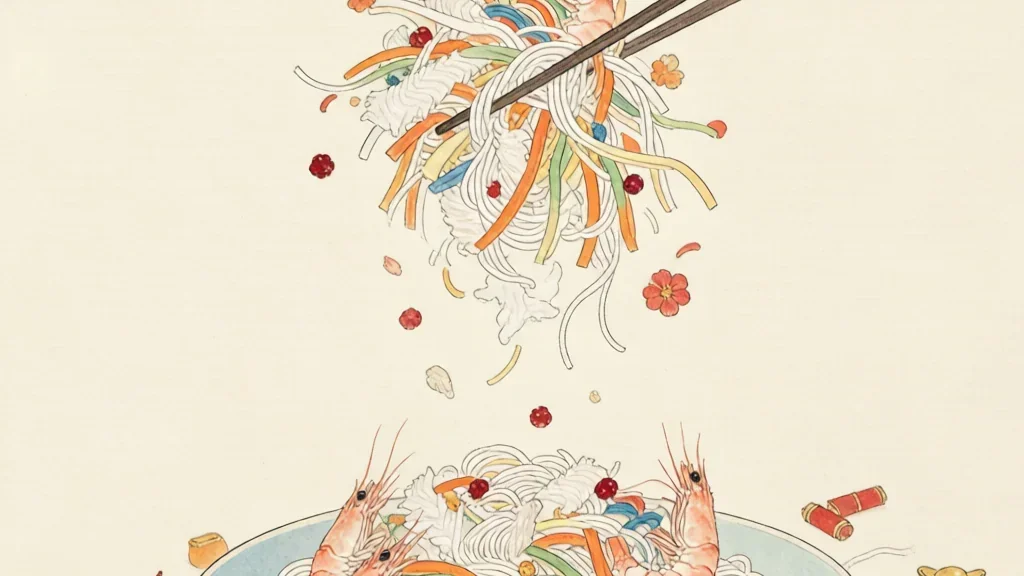
Yusheng, literally "raw fish," is a festive tossed salad of raw fish and a profusion of shredded vegetables, crispy crackers, sauces, and aromatics that is most famously associated with Chinese New Year celebrations among Cantonese communities in Malaysia and Singapore. Eaten not with chopsticks but with chopsticks tossed high into the air amid loud auspicious wishes, the dish is as much a ritual of luck as a meal. Though its roots lie in raw-fish preparations of the Cantonese homeland, the modern "prosperity toss" (lo hei) version was popularized in Southeast Asia in the 1960s. Each ingredient carries a symbolic meaning — wealth, growth, longevity — making yusheng a centerpiece of reunion dinners and a vivid example of how food and fortune intertwine in Chinese culture.
Origins and the Word
The characters yu sheng (鱼生) mean "raw fish." Eating thin slices of fresh raw fish with condiments is an old practice in the Pearl River delta and parts of southern China, akin to simpler versions still found in places like Shunde. The dish traveled with Cantonese migrants, but in the Nanyang — the Chinese term for the Southeast Asian diaspora — it was reinvented as a colorful, celebratory salad.
The Malaysian and Singaporean "lo hei" yusheng is a twentieth-century creation, often credited to chefs in Singapore and Malacca who built on the raw-fish base by adding shredded vegetables, sauces, and a theatrical tossing ritual. It became firmly tied to the lunar new year as a dish of shared fortune.
The Lo Hei Tossing Ritual
The defining feature of Southeast Asian yusheng is lo hei, literally "tossing up," performed at the table. Diners gather around the platter, each holding chopsticks, and on a cue toss the ingredients upward while shouting auspicious phrases such as "huat ah" (prosperity) and wishes for wealth and health. The higher the toss, the greater the luck believed to follow.
This communal act transforms eating into celebration and bonding. Restaurants compete to present ever more elaborate platters, and the toss has become a near-obligatory new-year corporate and family event. The ritual is as important as the flavor, embedding the dish in social memory.
Ingredients and Symbolism
A typical yusheng platter layers many components, each symbolic. The raw fish — often salmon or mackerel — represents abundance. Shredded carrots and white radish stand for good luck and prosperity; crushed peanuts for a household full of children; sesame seeds for a flourishing business; pomelo or lime for luck; and crispy fried crackers (yú piàn) for a rising fortune.
Seasonings include plum sauce, sweet hoisin, sesame oil, and a dusting of five-spice and pepper. The assembly is staged: ingredients are added one by one with a corresponding blessing, so the eating is also a recitation of hopes for the year ahead.
Raw Fish and Safety
Because yusheng contains raw fish, freshness and handling are paramount. Traditionally freshwater fish was used in China, but modern Southeast Asian versions favor ocean fish such as salmon and mackerel that are farmed or sourced for sashimi-grade quality. Vendors emphasize hygiene, and home preparers are advised to use only fish intended for raw consumption.
The communal tossing does raise food-safety considerations, which is why restaurant platters are assembled to order and kept chilled until serving. Some health authorities have at times issued cautions, yet the dish remains beloved, with safe sourcing now standard practice among reputable establishments.
Regional Differences
In Singapore and Malaysia, yusheng is the dominant new-year version, differing slightly by city: Singaporean platters tend toward a set of standard symbolic ingredients, while Malaysian versions in Penang or Malacca may vary in sauce and fish choice. In mainland China, simpler raw-fish dishes persist in Cantonese regions without the elaborate toss.
The "Chinese New Year yusheng" is essentially a Southeast Asian Chinese invention, little known in the north of China, which highlights how diaspora communities adapted homeland food into new traditions that then became markers of their own identity.
Cultural Role in the New Year
Yusheng anchors the lunar new year meal as a starter, setting a tone of shared prosperity before the heavier courses. Its appearance at reunion dinners and office parties reflects the Chinese cultural emphasis on collective fortune and the verbal performance of good wishes. The dish is inseparable from the idea that food can invite luck.
Because each added ingredient is blessed aloud, the meal becomes a kind of spoken charm. Families pass the tradition to children, ensuring continuity, while businesses use it to signal optimism. It is a rare dish whose meaning is performed, not just tasted.
Commercial and Modern Forms
Around the new year, restaurants and hotels offer yusheng in tiers from modest to luxurious, sometimes with abalone, scallop, or smoked duck replacing or joining the fish. Supermarkets sell ready kits with pre-shredded vegetables and sauce packets, letting families perform lo hei at home.
Creative variants include vegetarian yusheng made with mock fish or extra vegetables, and "modern" versions with quail egg or edible flowers. Despite innovation, the tossing ritual and symbolic framing remain constant, proving the format is more tradition than recipe.
Symbolic Phrases and Meanings
During lo hei, specific ingredients are tied to specific wishes. Tossing the fish invokes "nian nian you yu" (may you have surplus year after year). Adding the crispy crackers calls for "cai yuan guang jin" (wealth rolling in). Pepper and cinnamon are shaken on for "sweet and spicy" liveliness, and the sauces poured in a circle suggest a full, rounded year.
Learning these pairings is part of participating in the meal, so the dish functions as a gentle teaching of values — abundance, family, hard work, and gratitude — encoded in food. It is cultural instruction delivered as celebration.
❓ Frequently Asked Questions
What is yusheng?
It is a festive raw-fish salad of shredded vegetables, sauces, and aromatics, famous for the lo hei tossing ritual at Chinese New Year.
Is yusheng safe to eat raw?
When made with sashimi-grade fish and handled hygienically, yes; reputable vendors use fish intended for raw consumption.
Why is yusheng tossed?
The lo hei toss symbolizes tossing up prosperity and luck for the new year, performed with shouted blessings.
Where did yusheng originate?
Raw-fish eating comes from southern China, but the elaborate new-year salad was created by Cantonese communities in Malaysia and Singapore.
What does each ingredient mean?
Fish means abundance, radish prosperity, peanuts many children, sesame flourishing, and crackers a rising fortune, among others.
When is yusheng eaten?
Primarily during the lunar new year, as a reunion-dinner starter and at corporate or family lo hei gatherings.